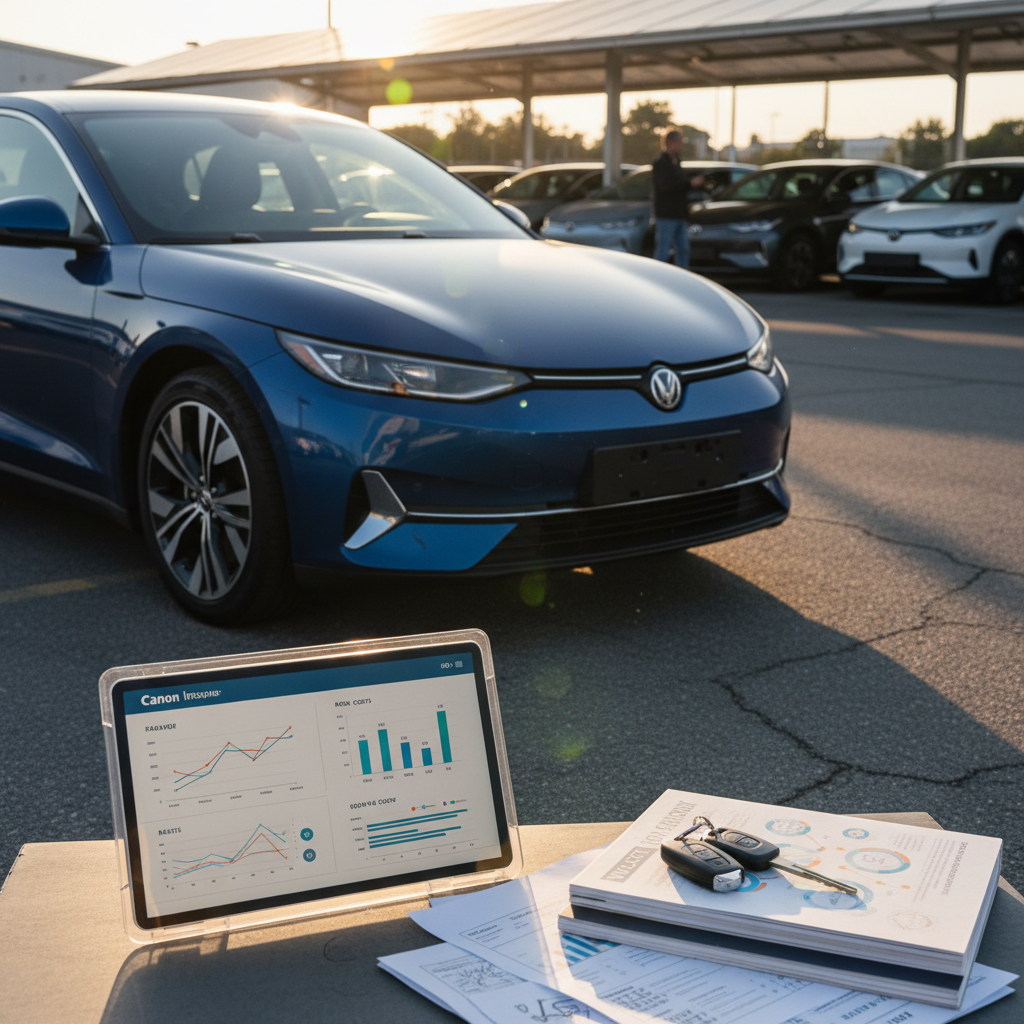
If you’re trying to sell a 2025 Tesla Model 3 and maximize its value, you’re in an odd moment in the EV market. Used Teslas fell hard in 2023–2024, then bounced back in late 2025 and early 2026 as new EV supply tightened and federal tax rules shifted. The good news for you: a clean, low‑mile 2025 Model 3 is still one of the easiest EVs to sell, if you understand where its value really sits and how buyers think.
Why 2025 matters
2025 Tesla Model 3 value: the short version
Quick reality check on 2025 Model 3 value
Market data from 2024–2025 shows the Model 3 still among the strongest resale performers in the EV world, even after the roller‑coaster of Tesla’s new‑car price cuts. The key is not chasing fantasy numbers from online forums, but understanding how depreciation, mileage, and battery health intersect for your specific car.
30‑second value snapshot
What is a 2025 Tesla Model 3 worth in 2026?
Let’s ground this in reality. Exact pricing swings weekly, but by spring 2026, the used Tesla market has largely stabilized after the steep drops of 2023–2024. A 2025 Model 3 is typically a one‑year‑old car, squarely in the “nearly new” bucket.
Illustrative 2025 Tesla Model 3 values in early 2026
These are example ranges for well‑kept, accident‑free cars in much of the U.S., assuming typical options and clean history. Your actual value will depend on local demand and exact configuration.
| Trim & condition (2025 Model 3) | Mileage (approx.) | Trade‑in / instant offer | Private‑party ask |
|---|---|---|---|
| RWD, very good | 8,000–12,000 mi | $30,000–$33,000 | $33,000–$36,000 |
| Long Range, very good | 8,000–15,000 mi | $34,000–$37,000 | $37,000–$40,000 |
| Performance, very good | 8,000–15,000 mi | $38,000–$42,000 | $41,000–$45,000 |
| RWD, higher miles or cosmetic needs | 20,000–30,000+ mi | $27,000–$30,000 | $30,000–$33,000 |
Use these numbers as directional reference, not hard quotes. Always check live offers in your ZIP code.
These are not official appraisals
When you compare these ranges to original 2025 MSRPs, roughly the high‑$30,000s for a base RWD up to the mid‑$50,000s for a Performance, it’s clear that the first owner eats the lion’s share of depreciation. As the second owner, you’re selling into a much calmer part of the curve.
How 2025 Model 3 depreciation really works
EV depreciation used to be simple: it was awful. Tax credits, tech obsolescence, and limited buyer confidence punished early adopters. The Model 3 changed that story. Multiple studies through 2024 found that the Model 3 consistently ranked among the EVs with the lowest five‑year depreciation, often in the 35–40% range over five years, much better than many rivals that lost half their value or more in the same time.
- Tesla chopped new‑car prices in 2023–2024, which dragged down used values temporarily.
- By late 2025, those cuts were largely priced in, and used Tesla values actually ticked up several percent while the broader used‑EV market was still drifting down.
- Policy changes and the end of some federal incentives in 2025–2026 pushed more buyers into the used market, supporting values for desirable EVs like the Model 3.
For your 2025 Model 3, that means you’re likely past the worst of the free‑fall. Most of the pain happens in the first 12–24 months, when the market discovers what a new car is *really* worth. Your mission as a seller is to convince the next buyer that your specific car is an outlier on the high side of that curve.
5 big factors that move your 2025 Model 3’s price
What makes one 2025 Model 3 worth thousands more than another?
Buyers are not just paying for a car, they’re paying to avoid surprises.
1. Mileage
On a one‑year‑old car, every 5,000 miles shows up in the price. A 2025 Model 3 with 8,000 miles will usually be more attractive than one with 24,000 miles, even if both look clean.
Tip: If you’re planning to sell, stop volunteering for every road trip and keep miles reasonable until the deal is done.
2. Battery health & range
Unlike a gas car, the pack is the car. Buyers are hypersensitive to usable range and degradation. A verified high battery health score can be worth more than a fresh set of tires.
That’s why tools like the Recharged Score battery report have become a quiet bargaining chip for sellers.
3. Cosmetic condition
Scratched wheels, curb‑rashed bumpers, or a tired interior push your car into the “project” category. That can knock $1,000–$3,000 off what a picky buyer will pay.
Detailing and smart repairs are cheap compared with a permanent price haircut.
4. Accident & ownership history
One prior owner, clean Carfax, and no airbag deployment is the holy trinity. A reported accident doesn’t make the car unsellable, but expect your realistic price ceiling to move down.
Have documentation ready; uncertainty is what kills offers.
5. Location & season
EVs, and Teslas especially, trade stronger in dense metro areas and EV‑friendly states. In some markets, demand spikes in fall and early winter as commuters look for cheaper daily driving.
If you’re flexible, timing your sale around local demand can mean real money.
Bonus: Software & features
Buyers care about what’s turned on in the software: premium connectivity, Autopilot, and any driver‑assist packages. Some shoppers will happily pay a premium for certain options; others don’t care at all.
Be clear in your listing and screenshots so they know exactly what they’re getting.
Mileage plus accident is a double hit
Decide how to sell: trade‑in, instant offer, or private sale
Once you know roughly what your 2025 Model 3 is worth, the next decision is how much hassle you’re willing to tolerate for more money. Every channel, dealer trade‑in, online instant offer, consignment, private sale, pays you in either cash or convenience, but not both in equal measure.
Trade‑in at Tesla or a dealer
- Pros: Fast, simple, tax advantages in many states (you only pay sales tax on the price difference).
- Cons: Usually the lowest raw dollar value; they need margin when they resell.
- Best for: If you’re already ordering another car and want a one‑and‑done handoff.
Instant offer / online buyer
- Pros: Quick appraisal, pick‑up at your door, no strangers test‑driving your car.
- Cons: Slightly better than trade‑in, but still below a strong private‑party result.
- Best for: If you value time and certainty more than squeezing every last dollar out.
Private‑party sale
- Pros: Highest potential sale price, especially for a well‑optioned, low‑mile 2025 Model 3.
- Cons: You manage photos, listings, test drives, and paperwork; you deal with no‑shows and low‑ball offers.
- Best for: If you’re comfortable screening buyers and have time to wait for the right one.
Marketplace with concierge help (like Recharged)
- Pros: EV‑specialist support, marketing to EV‑focused buyers, and tools like the Recharged Score that can justify a higher price.
- Cons: You may share a small fee or margin, but you offload most of the heavy lifting.
- Best for: Sellers who want near‑retail value without living in their DMs for three weeks.
Where Recharged fits in
Ready to find your next EV?
Browse VehiclesHow to price your 2025 Tesla Model 3
Pricing is where most private sellers flinch. They either anchor on the most optimistic online comp they can find, or panic and underprice a clean car. The right approach is boringly methodical.
A data‑driven way to price your 2025 Model 3
1. Start with guide values
Pull trade‑in and private‑party numbers from at least two major pricing sites for a 2025 Model 3 with your trim, mileage, and ZIP. Note the spread between “good” and “excellent” condition, that’s your first sanity check.
2. Check real listings, not just calculators
Look at actual listings for 2025 Model 3s within 250 miles of you. Filter by similar trim, mileage, and options. What are clean, realistic cars <em>actually</em> advertised for, and how long have they been sitting?
3. Adjust for your car’s specifics
Add a modest premium if your car has unusually low miles, rare color/option combos, or a fresh set of tires. Subtract if you’ve got visible curb rash, a Carfax incident, or borderline tires and brakes.
4. Leave negotiation room, not fantasy land
For private sale, list your car roughly <strong>3–5% above</strong> the number you’d genuinely be happy to take. For instant‑offer style buyers, you’ll get a firm number, decide in advance where “yes” and “no” live.
5. Watch the market for 7–10 days
If inquiries are dead silent for a week, the market is sending a message. Shave $500–$1,000, refresh your photos, and update your description. The right price dramatically reduces time‑wasters.
Don’t chase last month’s market
Prep your 2025 Model 3 to boost perceived value
Value is not just math; it’s theater. Two identical 2025 Model 3s with the same odometer reading can land thousands of dollars apart purely on presentation. The goal is to make a buyer think, “If they cared this much about the details I can see, they probably cared about the ones I can’t.”
High‑impact, low‑cost prep moves
You don’t need to spend thousands, just fix the things buyers obsess over.
Deep interior clean
Steam‑clean carpets, wipe every hard surface, treat leatherette, and remove personal items. A Tesla with dust in the vents and sticky cupholders signals neglect.
Exterior detail + wheels
Good wash, clay bar, polish, and a proper wheel scrub go a long way. Consider repairing curb rash on those aero or sport wheels if it’s severe in photos.
Basics: tires, wipers, fluids
Top off washer fluid, replace streaky wipers, and be honest if tires are near the wear bars. Buyers will notice anyway, better to control the story.
Service & software receipts
Have a folder (digital or paper) with any service visits, tire rotations, and software‑related work. Screenshots of software version and connectivity status help, too.
Real listing photos
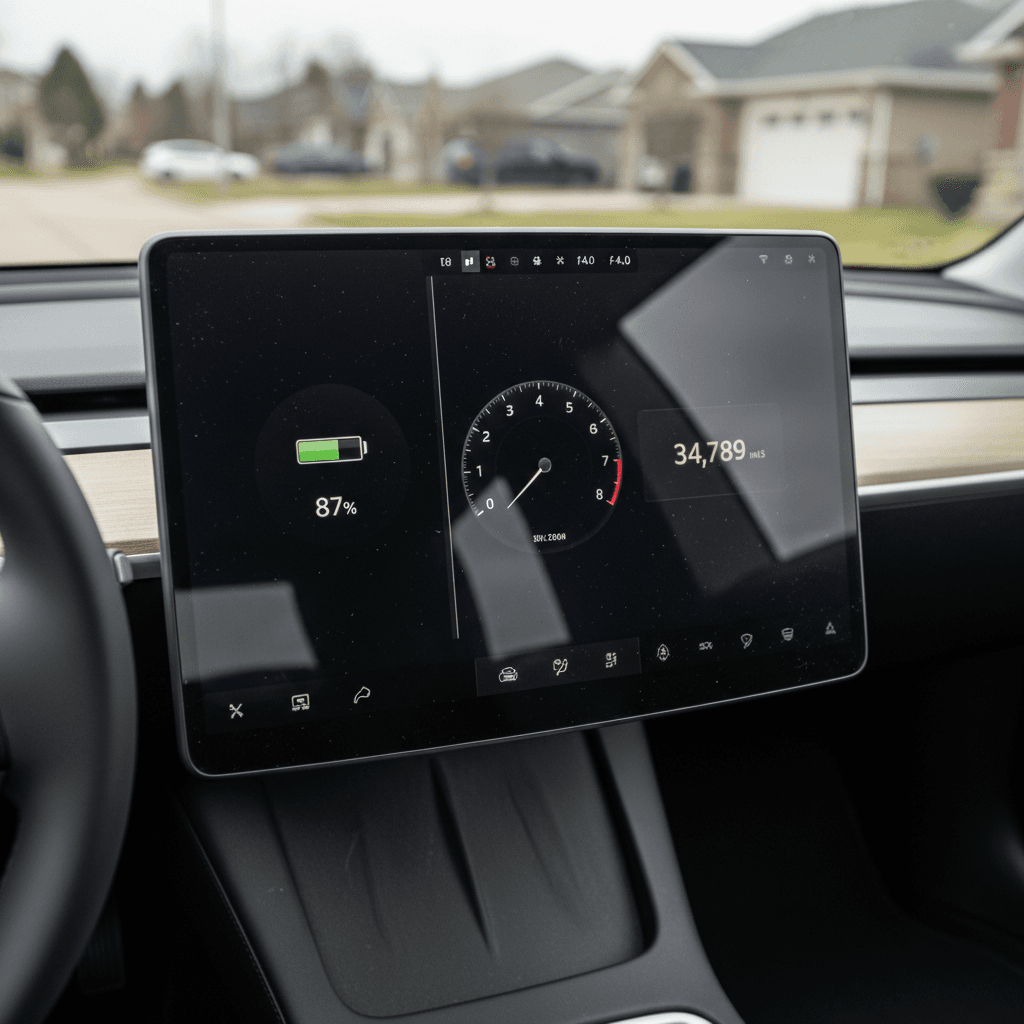
Shoot in soft daylight, not at night under sodium lamps. Capture front 3/4, rear 3/4, both sides, interior, infotainment screen, and close‑ups of any flaws.
One honest “flaws” photo
Include a deliberate photo of the worst cosmetic issue. Counterintuitively, this builds trust; buyers feel like you’re not hiding anything.
Skip the gimmicks
Battery health, range, and the Recharged Score
When someone buys a one‑year‑old 2025 Tesla Model 3, they’re not terrified that the motor will explode. They’re worried about the battery pack, how much range it really delivers and whether they’re inheriting someone else’s fast‑charging habit.
You can ease that anxiety by going beyond “seems fine to me” and providing objective data. That’s where something like the Recharged Score Report matters. Recharged’s technicians run dedicated battery‑health diagnostics, look at pack performance, and roll that into a clear score with context. Buyers see not just that your car is clean, but that its energy storage, the most expensive single component, is healthy.
- Battery health and fast‑charge history are increasingly baked into what lenders and savvy buyers will pay.
- A documented strong battery can justify pricing at the upper end of local ranges.
- If your car’s pack shows more degradation than typical for its age, you’re better off pricing realistically and emphasizing transparency than trying to hide it.
Using Recharged to sell with confidence
Step‑by‑step checklist for selling a 2025 Model 3
From “thinking about selling” to money in your account
1. Lock in your baseline value
Gather at least three data points: Tesla or dealer trade‑in quote, one or two online pricing guides, and a live instant offer from a national buyer or marketplace like Recharged.
2. Decide your selling channel
Be honest about your appetite for hassle. If you want top dollar and can wait, aim for private sale or a marketplace with EV‑savvy buyers. If you need the car gone by the weekend, instant offer or trade‑in may be right.
3. Schedule inspection & battery check
Fix obvious maintenance items, handle any recall work, and consider getting a professional battery health assessment (for example, via a <strong>Recharged Score</strong>). Buyers pay for proof, not promises.
4. Detail the car and gather records
Do a thorough interior and exterior clean, repair inexpensive cosmetic issues, and compile service receipts, software update notes, and charging history if you have it.
5. Build a clear, honest listing
Write a description that highlights year, trim, key options, mileage, battery health, and any flaws. Include high‑quality photos and screenshots of the odometer and battery screen.
6. Screen buyers and structure payment safely
Meet in public, ride along on test drives, and avoid accepting odd payment methods. Use your bank, a cashier’s check verified in person, or an escrow service. If you sell through Recharged, the transaction and paperwork are handled for you.
7. Transfer ownership and digital access
Sign the title or electronic transfer, complete your state’s bill of sale, and remember to remove the car from your Tesla account and any connected apps. Cancel insurance only after transfer is confirmed.
FAQ: Selling a 2025 Tesla Model 3
Frequently asked questions about 2025 Model 3 value
Bottom line for 2025 Model 3 sellers
Your 2025 Tesla Model 3 sits at a fortunate intersection: it’s a desirable, efficient EV in a market that’s finally learned how to price them rationally. To sell a 2025 Tesla Model 3 for the best value, you don’t need secret tricks, you need clean data, honest presentation, and a channel that matches your appetite for effort.
Start with today’s real‑world comps, not last year’s dreams. Prep the car so it looks like it’s been loved, not just used. Put objective proof behind the battery that powers the whole proposition. Whether you opt for a quick instant offer, a patient private sale, or a guided path through a specialist marketplace like Recharged, that combination of clarity plus care is what turns a good Model 3 into a great deal, for you and the next driver.