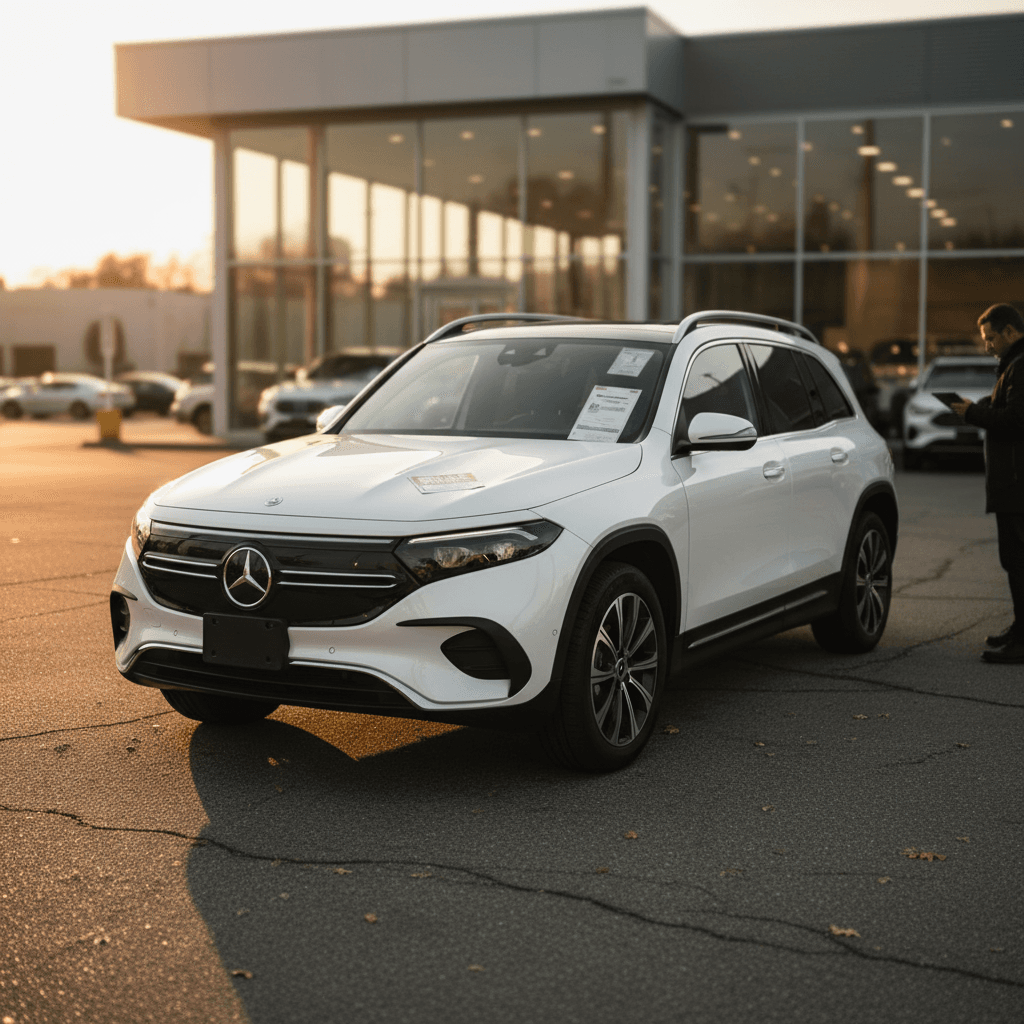
If you’re getting ready to sell a 2025 Mercedes EQB, you’re in a strange corner of the EV market. The EQB is a compact luxury SUV with family‑friendly practicality, but it also lives in a segment where electric Mercedes models have seen aggressive discounting and fast depreciation. That combination can either hurt you, or, if you understand how buyers think and how to showcase battery health, it can help you squeeze real value out of your sale.
Where the 2025 EQB sits in today’s market
Why 2025 EQB resale value is different from gas SUVs
To understand 2025 Mercedes EQB resale value, you have to zoom out past traditional Mercedes logic. Gas GLB and GLC buyers are used to fairly predictable depreciation curves and a wide pool of used buyers. The EQB plays by different rules: EV incentives, battery concerns, and fast‑moving tech all shape what someone will actually pay for your car.
Three forces shaping 2025 EQB resale
Why your EQB won’t behave like a normal Mercedes SUV on the used market
EV price volatility
New EV prices have swung widely as automakers chase volume and react to changing incentives. That volatility filters directly into used values, especially for relatively low‑range luxury EVs like the EQB.
Battery anxiety
Many buyers still worry about battery degradation and replacement cost. If you can prove your pack is healthy, you immediately stand out from other EQBs on the market.
Incentives came and went
Federal EV tax credits ended for purchases after September 30, 2025, and the EQB was never a strong tax‑credit play due to overseas assembly. That history affects how shoppers think about what your 2025 EQB is worth today.
Depreciation on EQBs is front‑loaded
What your 2025 Mercedes EQB is worth right now
Used pricing always depends on mileage, condition, trim, and your local market. But we can outline realistic value ranges for a 2025 EQB in early 2026 based on observed asking prices and transaction anecdotes in the U.S.
Typical 2025 EQB value ranges in early 2026 (U.S.)
These are directional retail asking ranges for clean‑title, accident‑free EQBs with average mileage (~10,000–15,000 miles). Highly optioned or extremely low‑mileage examples can sit near the top of the band.
| Trim | Miles (approx.) | Realistic retail asking range | Likely dealer trade‑in range |
|---|---|---|---|
| EQB 250+ FWD | 10k–15k | $42,000–$47,000 | $36,000–$41,000 |
| EQB 300 4MATIC | 10k–15k | $43,000–$48,000 | $37,000–$42,000 |
| EQB 350 4MATIC | 10k–15k | $45,000–$50,000 | $38,000–$43,000 |
Use this table as a sanity check, your individual EQB could be higher or lower depending on options, history, and local demand.
Those ranges assume you’re selling into a normal retail channel, either as a private‑party sale or through a specialized EV retailer like Recharged. Franchise dealers, especially if they’re long on EQ inventory, may aim lower to protect themselves against further EV price cuts.
2025 EQB depreciation snapshot: where you likely stand
Use multiple data points, not just one website
Key factors that move 2025 EQB value up or down
Two EQBs with the same model year can be thousands of dollars apart in value. The gap usually comes down to a handful of details that EV shoppers have learned to scrutinize.
Factors that boost your EQB’s value
- Clean battery story: Documented battery health and gentle fast‑charging habits.
- Low, consistent mileage: Around 10k–12k miles per year reads as normal personal use.
- No accident history: Clean Carfax/AutoCheck and no paintwork on high‑visibility panels.
- Desirable spec: 250+ for efficiency‑minded shoppers, or 300/350 4MATIC for buyers prioritizing AWD.
- Remaining factory warranty: Both bumper‑to‑bumper and high‑voltage battery coverage reassure used buyers.
Factors that drag down EQB resale
- Ugly fast‑charge history: Heavy DC fast‑charging without documentation of battery health.
- High annual mileage: Anything over ~18k miles per year triggers concerns about rideshare or fleet use.
- Open recalls or warning lights: EV shoppers are risk‑averse; unresolved issues are deal‑killers.
- Poor tires or visible curb rash: These suggest broader neglect, not just cosmetic flaws.
- Missing charging equipment: No charge cable or wall‑box documentation means added cost for the next owner.
Why a documented EQB is worth more

Battery health: how to prove it, and get paid for it
Every used‑EV shopper has the same unspoken question: “Am I buying someone else’s future battery bill?” If you can answer that fear with real data instead of vague assurances, your 2025 EQB value jumps relative to anonymous listings with no proof.
- Pull and save any in‑car battery health readouts or service notes related to the high‑voltage system.
- Gather charging history if your wall‑box or app logs DC fast‑charging sessions, light fast‑charge use is a selling point.
- Ask your service center if they can provide a written battery evaluation or printout.
- Highlight gentle usage in your listing: mostly home Level 2 charging, little exposure to extreme heat, and no repeated 100% DC fast‑charge road trips.
What Recharged’s battery health report adds
Trade‑in vs private sale vs Recharged: which maximizes value?
Once you know roughly what your EQB is worth, the next decision is how to sell it. Each route balances price, effort, and risk differently.
Compare your selling options for a 2025 EQB
What you give up, and gain, across the three main paths
Dealership trade‑in
- Pros: Fast, convenient, can reduce sales tax on your next purchase in some states.
- Cons: Typically the lowest dollar outcome, especially for EVs dealers are nervous about holding.
- Best if: You’re upside‑down on your loan or need to solve everything in a single visit.
Private‑party sale
- Pros: Highest potential sale price if you market it well.
- Cons: Time‑consuming; you handle test drives, paperwork, and fraud risk.
- Best if: You have clean title or manageable payoff and are comfortable vetting buyers.
Recharged instant offer or consignment
- Pros: EV‑specialist pricing, battery health verification, and nationwide buyer reach.
- Cons: You may net slightly less than a perfectly executed private sale, but with far less hassle.
- Best if: You want strong value without becoming a full‑time salesperson.
Blend options if you’re on the fence
Step‑by‑step checklist to sell your 2025 EQB
Get your 2025 Mercedes EQB ready to sell
1. Lock in your payoff and paperwork
Call your lender for an exact payoff quote good for 7–10 days. Confirm you have your registration, lien release (if applicable), and any extended warranty documents that transfer to the next owner.
2. Fix cheap, obvious issues
Replace worn wiper blades, burned‑out bulbs, and cracked key‑fob housings. An EQB that feels turnkey gives buyers fewer excuses to grind you down on price.
3. Get a fresh service and health check
A basic inspection and software update at a Mercedes or EV‑savvy shop, plus a high‑voltage system check, reassures buyers that your EQB is up to date and ready to go.
4. Detail the car like a product, not a possession
Deep‑clean the interior, remove personal items, and address easy cosmetic fixes. A clean EQB photographs better and makes every dollar of your asking price feel more justified.
5. Collect records and charging gear
Gather service history, window sticker or build sheet, both keys, and all charging accessories. Missing equipment is an instant red flag for EV shoppers.
6. Build an honest, data‑rich listing
Highlight battery health, range experience, and how you actually used the EQB (commuting, kid‑duty, road trips). Answer the questions an EV‑curious buyer will ask before they even ask them.
Pricing strategies that actually work for EQBs
Used EV shoppers are ruthless comparison‑shoppers. They’re scrolling between your EQB and half a dozen similar crossovers across multiple apps. Smart pricing is less about squeezing the last dollar out and more about positioning your car as the obvious low‑risk choice.
Anchor to effective MSRP, not the window sticker
Many 2024–2025 EQBs were sold or leased with hefty discounts and lease cash. If your car was effectively a $55,000 transaction on a $64,000 sticker, buyers won’t care about the higher number, they’re looking at what similar cars are listed for today.
Check sold listings and current inventory for your trim, then price within 2–3% of the most competitive clean‑title examples, adjusting for miles and options.
Use strategic price drops, not panic cuts
If your EQB listing is getting views but no inquiries, plan small, scheduled price moves, say, $500 at a time every 10–14 days, rather than a big overnight haircut.
In your listing updates, call out each reduction and remind shoppers of your battery report, warranty status, and clean history so they understand the value story, not just the lower number.
Consider including a “pre‑inspection” price
Ready to find your next EV?
Browse VehiclesCommon mistakes that kill EQB resale value
Most EQB owners don’t deliberately tank their resale value; they just drag gas‑car habits into an EV‑specific market. Avoiding a few predictable mistakes can easily be the difference between a quick, fair deal and weeks of lowball offers.
- Advertising range unrealistically: Claiming “300 miles on a charge” when your trim is EPA‑rated closer to ~205–251 miles will scare off informed buyers and invite skepticism about everything else you’re saying.
- Ignoring charging context: Saying “no issues” without explaining how and where you charged leaves a lot of room for doubt about the battery’s past life.
- Over‑personal photos: Family photos, cluttered cargo areas, and visible baby seats make it harder for buyers to imagine the EQB as their car.
- Leaving warning lights unresolved: EVs are software‑heavy. An unresolved check‑engine or driver‑assist warning will shrink your buyer pool dramatically.
- Waiting too long to price realistically: Every month you wait for an over‑optimistic price, the market moves underneath you, especially as newer, longer‑range competitors hit showrooms.
Don’t hide known issues
FAQ: Selling a 2025 Mercedes EQB
Frequently asked questions about 2025 EQB resale value
Bottom line: Make the EQB market work for you
The 2025 Mercedes EQB lives in a messy but opportunity‑rich part of the EV market. Yes, depreciation has been faster than most buyers hoped, and the disappearance of federal tax credits didn’t help. But if you price against what people actually paid, prove your battery’s health, and choose the right sales channel, you can sell a 2025 Mercedes EQB for solid value rather than walking away frustrated.
Start by gathering your paperwork, getting a battery health report, and reality‑checking your expectations against actual listings. From there, decide whether you want maximum convenience (trade‑in), maximum dollars (private sale), or a balanced, EV‑specialist experience through a marketplace like Recharged. In a segment defined by rapid change, informed and transparent sellers are the ones who come out ahead.