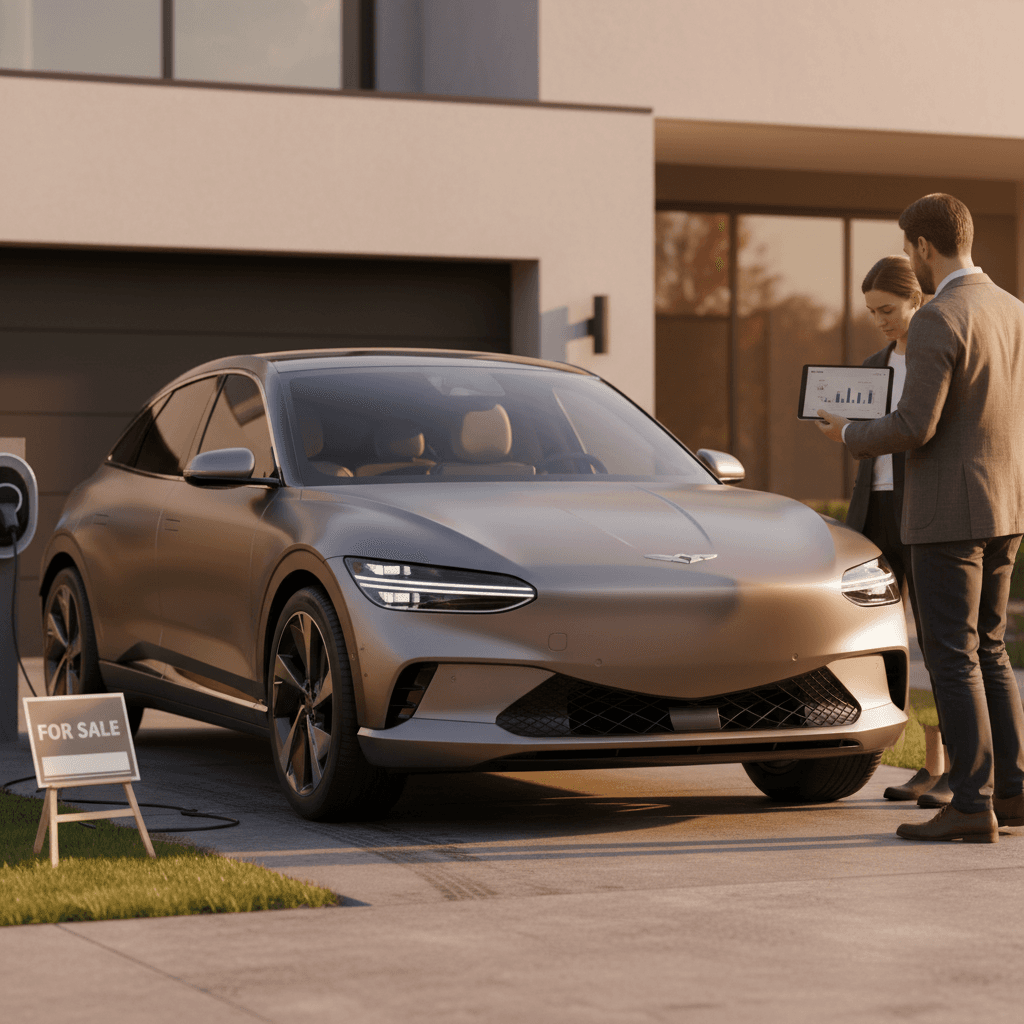
If you’re getting ready to sell a 2025 Genesis GV60, you’re probably seeing some sobering numbers from online appraisers. The GV60 has been one of the steeper‑depreciating luxury EV SUVs, but that doesn’t mean you’re powerless. With the right strategy on timing, pricing, condition, and battery transparency, you can protect thousands of dollars of value when you sell.
Quick takeaway
2025 Genesis GV60 value at a glance
2025 Genesis GV60 value snapshot (U.S., early 2026)
These aren’t promises; they’re directional ranges based on current appraisal tools and cost‑to‑own forecasts. What matters for your 2025 Genesis GV60 value is how your specific trim, mileage, condition, and battery story line up with buyer expectations.
What is your 2025 Genesis GV60 worth today?
By spring 2026, most 2025 GV60s in the U.S. market are between 6 and 18 months old. That puts them right in the steep part of the depreciation curve: the car still looks and drives like new, but market pricing has already moved down from window‑sticker fantasy to used‑EV reality.
Typical 2025 Genesis GV60 value ranges
Approximate U.S. market behavior for early‑life 2025 GV60s. Use this as a starting point, then adjust for your mileage, options, and local demand.
| Scenario (2025 GV60) | Odometer in 2026 | Likely condition | Rough trade-in | Likely private-party |
|---|---|---|---|---|
| Standard RWD, lightly optioned | 8,000–15,000 mi | Clean | $39,000–$42,000 | $42,000–$46,000 |
| Standard AWD, popular options | 10,000–18,000 mi | Clean | $40,000–$45,000 | $44,000–$49,000 |
| Performance AWD, high MSRP | 8,000–15,000 mi | Clean | $43,000–$48,000 | $47,000–$52,000 |
| Any trim, very high miles (25k+ mi) | 25,000–35,000 mi | Clean/average | $34,000–$40,000 | $38,000–$44,000 |
| Any trim, prior accident or rough cosmetics | Any | Below avg | $30,000–$38,000 | $34,000–$42,000 |
These ranges assume clean history and normal mileage; heavily optioned Performance trims and ultra‑low miles can land higher.
Reality check on MSRP
Online tools like KBB, Edmunds, and CarGurus are a good calibration exercise, but they tend to value the GV60 like any other compact luxury SUV. To get top dollar, you need to market what makes yours different: warranty coverage, fast‑charge performance, features like Face Connect, and documented battery health.
Why 2025 GV60 values drop faster than many rivals
If it feels like your GV60 is "worth less than it should be," you’re not imagining it. Early‑generation Genesis EVs have been sitting in one of the steeper depreciation tiers among luxury crossovers, especially compared with Tesla and some German brands. New‑car incentives, limited brand recognition, and high MSRP relative to perceived prestige all feed into softer used values.
- Rich incentives on new GV60s: Lease cash and discounts effectively lower new‑car transaction prices, which drags down used values faster than the window sticker suggests.
- Brand awareness: Genesis still doesn’t have Tesla‑level name recognition. Many buyers shopping used EVs simply filter for brands they already know, shrinking the audience for your GV60 unless it’s marketed well.
- Rapid EV tech turnover: DC fast‑charging speeds, range estimates, and driver‑assist features are improving quickly. A 2025 GV60 is still very competitive, but buyers know that newer models keep coming and price accordingly.
- Market jitters about EV reliability: Online stories about 12‑volt battery or charging‑system issues, even if they’re not universal, can spook shoppers who don’t understand EV warranties. That uncertainty shows up as lower bids from some dealers.
The upside of a "soft" model
Factors that move your 2025 GV60 value up or down
Key value drivers for a 2025 Genesis GV60
Dial these in before you accept any offer.
Mileage & use pattern
Low annual mileage is still one of the strongest value boosters. A 2025 GV60 with under 10,000 miles will usually appraise meaningfully higher than one with 25,000+ miles, even if both are mechanically healthy.
Accident & service history
A clean Carfax/AutoCheck plus complete service records signal low risk. Minor cosmetic repairs are fine, but structural damage or airbag deployment will cap your ceiling with both dealers and private buyers.
Battery health & charging history
Most buyers don’t know how to interpret State of Health (SoH), but they do respond to clear, independent battery checks and consistent DC fast‑charging performance. Transparent battery data helps your GV60 stand out.
Trim, options & color
All‑wheel drive, popular packages, and neutral colors (white, gray, black, blue) typically hold value better. Uncommon colors or unusual interior combos can be polarizing and narrow your buyer pool.
Cosmetic condition
On a modern luxury EV, curb rash, door dings, and worn interiors are value killers. A modest reconditioning budget on wheels, paintless dent repair, and a deep detail often returns more than it costs.
Warranty & software updates
The 10‑year high‑voltage battery warranty and any recall or campaign updates you’ve had done are real selling points. Buyers gain confidence when you show documentation that the car is up to date.
Document everything
Trade-in vs private sale vs Recharged
Dealer trade-in
Trading your 2025 GV60 at a Genesis or multi‑brand dealer is the path of least resistance. You hand them the keys, sign paperwork, and roll your equity (or negative equity) into the next vehicle.
- Pros: Fast, simple, sales‑tax credit in many states when you trade against a new purchase.
- Cons: Offers often assume a conservative auction price and may not fully value EV‑specific features like fast charging and battery warranty.
Private sale or EV specialist
Listing your GV60 on classifieds or bringing it to an EV‑focused retailer like Recharged takes more effort but can close the gap between trade‑in and true market value.
- Pros: Higher upside, more control over price, you can tell the story of your specific car.
- Cons: More time and hassle (test drives, paperwork), and you need to vet buyers yourself unless you work with a marketplace partner.
At Recharged, every vehicle runs through a Recharged Score battery‑health diagnostic and pricing analysis that looks at real EV market behavior, not just generic ICE‑era book values. That can surface value that a traditional dealer or auction‑driven algorithm overlooks, especially for relatively niche models like the GV60.
Step-by-step: how to sell a 2025 Genesis GV60
Pre‑sale checklist for your 2025 GV60
1. Pull real numbers from multiple sources
Get trade‑in and private‑party estimates from at least two online appraisers plus any offers from local dealers. This gives you a realistic value band before you talk to buyers.
2. Get a battery health report
Schedule an independent battery check or work with an EV specialist like Recharged that can generate a <strong>Recharged Score</strong>. Being able to say, “Here’s the verified battery health” is powerful in negotiations.
3. Take care of minor repairs
Fix curbed wheels, rock chips, small dings, and interior wear. On a luxury EV, $300–$600 in cosmetic work often adds well over $1,000 back into your achievable sale price.
4. Make software and recall updates current
Visit a Genesis dealer to confirm all campaigns, recalls, and software updates are complete, especially anything related to charging or the high‑voltage system. Keep the paperwork in your sale folder.
5. Detail and photograph like a listing pro
Do a full interior and exterior detail, then shoot high‑quality photos in good light: front 3/4, rear 3/4, wheels, interior, screens, odometer, and charging port. Strong photos are non‑negotiable in a soft market.
6. Choose your sale channel
Decide whether you’ll trade in, sell privately, or work with a marketplace like Recharged for a curated listing, EV‑savvy buyers, and help with paperwork, financing, and delivery.
Battery health and warranty: how much do they matter?
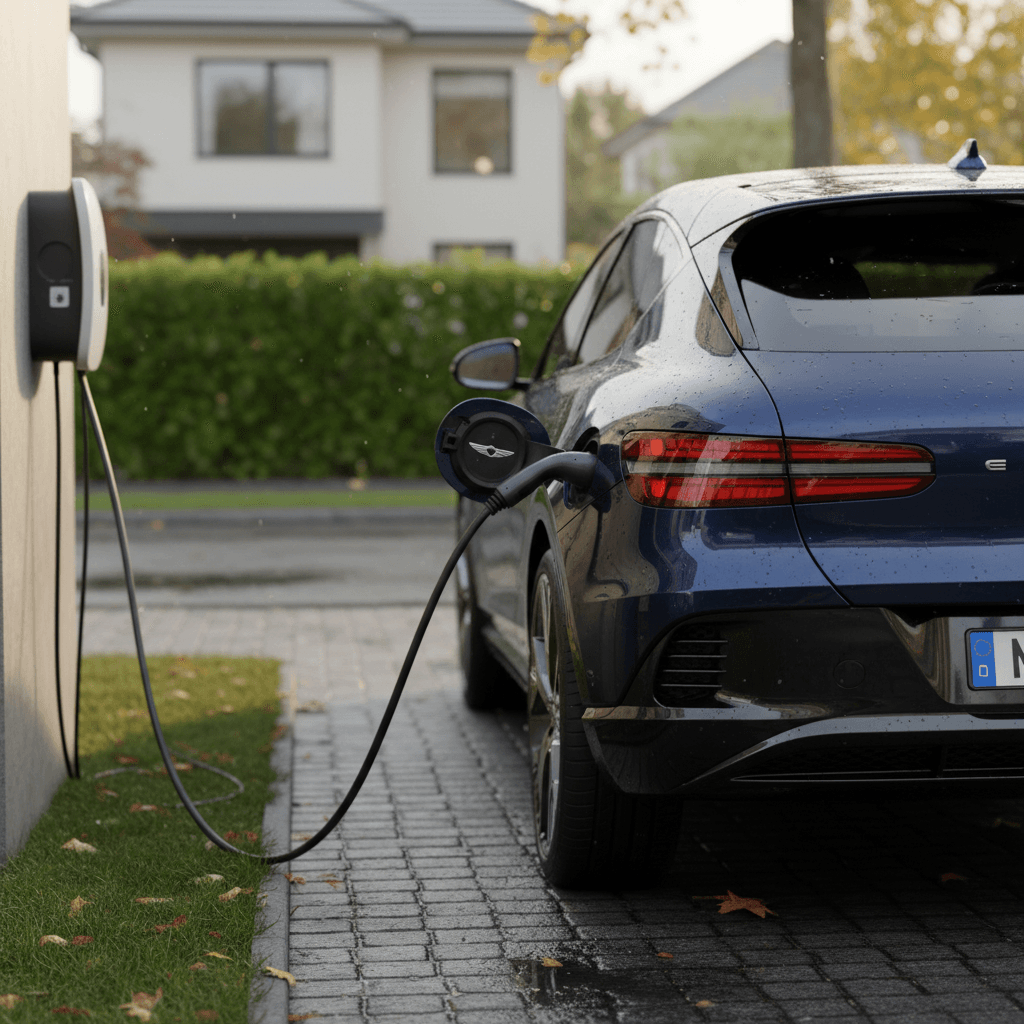
With gasoline cars, buyers obsess over mileage and service records. With EVs, battery health joins that short list. The good news for a 2025 Genesis GV60 is that it’s still early in the pack’s life, and Genesis backs the high‑voltage battery with a long warranty, typically up to 10 years or 100,000 miles in the U.S., even for second owners, for defects and excessive capacity loss.
- If your GV60 still fast‑charges close to its published peak power and delivers range similar to new, you’re in a strong position, provided you can show that with receipts or a battery‑health printout.
- Third‑party battery reports, like the Recharged Score, give buyers something concrete to look at instead of guessing based on odometer alone.
- Be prepared to explain that the main traction battery has a different, longer warranty than the 12‑volt accessory battery, which can fail earlier but is cheap to replace.
Turn warranty into a selling point
Pricing strategy: how to set a realistic asking price
Setting your number is a balancing act. Price too high and your GV60 sits; price too low and you leave thousands on the table in a model that’s already taken chunky early depreciation. The goal is to land slightly above what a dealer would pay you, but still below what a new‑car shopper would pay for a discounted 2026 model.
Build a pricing band
Start by writing down three numbers:
- Low end: The best firm dealer or instant‑cash offer you have in hand.
- Midpoint: Roughly $2,000–$4,000 above that offer for a clean, average‑mile 2025 GV60.
- Stretch goal: Another $1,000–$2,000 above the midpoint if your car is exceptional (very low miles, rare spec, or pristine condition).
Your listing price should usually sit between the midpoint and stretch goal, with room to negotiate.
Adjust for your specific car
From there, adjust up or down based on:
- Mileage: Sub‑10,000‑mile examples can justify a premium; 25,000+ miles put downward pressure on price.
- Trim: A Performance AWD with high original MSRP will often have a wider pricing band than a base Standard RWD.
- Market timing: List just before local EV demand spikes, tax‑refund season, before summer road‑trip months, or ahead of winter if you’re emphasizing AWD.
Anchor to monthly payment, not just price
Common mistakes that cost GV60 sellers thousands
- Accepting the first trade number without shopping it. Different dealers and online buyers have very different appetites for EVs. Always get at least two or three real offers.
- Not treating battery health as part of the inspection. If you can’t tell a buyer how the pack is doing, you’re asking them to price in worst‑case risk.
- Ignoring cosmetic issues on a premium EV. Curb rash, swirl‑marked paint, and stained interiors are instant red flags on a vehicle that still feels new everywhere else.
- Letting the listing look like every other SUV. If you just copy‑paste “one owner, clean” into a generic classified, you’re leaving money on the table. Call out EV‑specific features, charging capability, and warranty remaining.
- Timing the sale around panic, not the market. Offloading your GV60 the week you read a scary forum thread about an isolated failure can mean selling into a local low. Take a breath, gather real data, and time your move around your needs and seasonality, not headlines.
Watch for lowball EV "wholesale" offers
FAQ: Selling a 2025 Genesis GV60
Frequently asked questions about 2025 GV60 value and selling
Bottom line: how to make a soft market work for you
The 2025 Genesis GV60 isn’t the resale champion of the luxury EV world, and by now you’ve seen that in the numbers. But value is about more than averages. A well‑presented GV60 with low miles, documented battery health, clean history, and current software can stand out in a used‑EV landscape where many buyers are chasing far less car for the same money.
If you’re going to sell your 2025 Genesis GV60, treat it like the premium EV it is: invest a little in preparation, make battery health and warranty part of your story, and be strategic about where you sell. Whether you choose a quick trade‑in, a private‑party listing, or a specialist partner like Recharged that lives and breathes used EVs, those choices can easily swing your outcome by thousands of dollars.