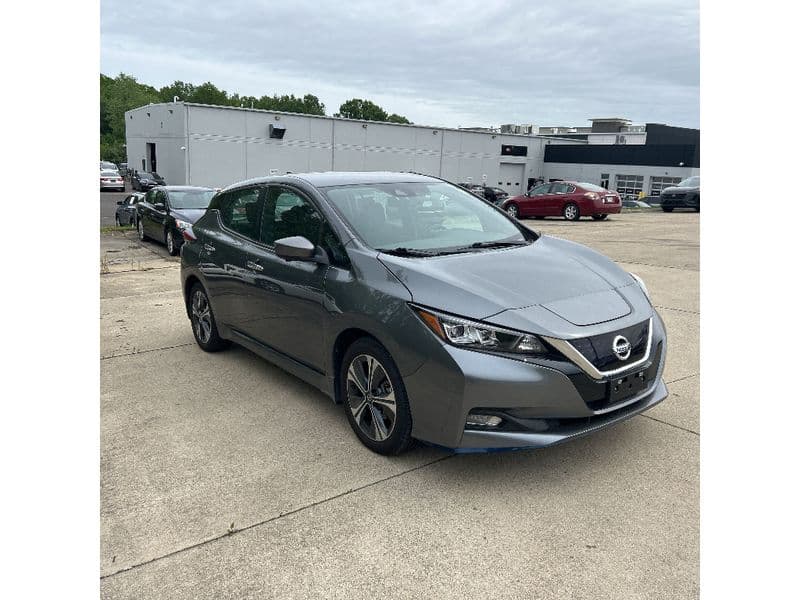
If you own a 2023 Nissan Leaf and you’re thinking about selling, you’re probably discovering a hard truth: sell 2023 Nissan Leaf value is not a happy Google search. The Leaf is a great around‑town EV, but in 2026 its resale values are some of the harshest in the segment. The good news is that if you understand how buyers, batteries, and tax rules work, you can still walk away with a fair check, and avoid getting steamrolled by depreciation twice.
Quick snapshot for 2026
How much is my 2023 Nissan Leaf worth in 2026?
Typical 2026 value ranges for 2023 Nissan Leaf
Online pricing tools will give you a starting point, but they tend to lag real‑world EV trends, especially for a model like the Leaf that’s taken a depreciation beating. Market data from 2024–2026 shows most 2023–2024 Leafs trading hands in roughly the $13,500–$17,000 band for typical mileage cars, with outliers up into the low‑$20,000s for low‑mile, high‑spec SV Plus cars and down into the low‑teens when mileage or battery health is rough.
MSRP is not your reference point
Why 2023 Nissan Leaf values drop so fast
Four forces crushing 2023 Leaf resale value
None of them are your fault, but you need to understand them to price your car realistically.
1. Older battery tech
2. Limited highway range
3. Aggressive incentives on new Leafs
4. Fast‑moving EV market
In other words, your 2023 Leaf didn’t suddenly become a bad car. The rest of the EV world simply sprinted ahead. The Leaf is the nice flip phone in a smartphone era: perfectly usable, but buyers know there’s better tech out there, so they only bite at a discount.
What buyers actually pay: trim, mileage, battery health
When you’re trying to pin down sell 2023 Nissan Leaf value, you really have to think like a used‑EV shopper, not like the person who bought it new. Buyers are comparing your car to three things: other Leafs, other cheap EVs, and whatever new‑car deals are floating around. Here’s how your trim, mileage, and battery condition map to real‑world pricing in 2026.
2023 Nissan Leaf value by trim and mileage (typical 2026 ranges)
These are ballpark private‑party / EV‑marketplace asking ranges for clean‑title cars in average U.S. markets with good battery reports. Hot or cold markets, accidents, or weak batteries will push you down; unusual low miles or perfect reports can push you up.
| Trim & condition | Approx. miles in 2026 | Realistic asking range | What you might actually take |
|---|---|---|---|
| S, average use | 30,000–45,000 | $13,500–$15,500 | $12,500–$14,500 |
| S, low miles | Under 20,000 | $15,000–$17,000 | $14,000–$16,000 |
| SV Plus, average use | 30,000–40,000 | $16,500–$19,500 | $15,500–$18,500 |
| SV Plus, low miles | Under 20,000 | $19,000–$22,000 | $18,000–$21,000 |
| Any trim, weak battery report | Any mileage | Discount of $2,000–$5,000 | Buyers may simply walk away |
Use this as a realistic sanity check next to KBB/Edmunds, not as a guaranteed offer.
Price band, not price point
Battery health: the make‑or‑break factor
With most gas cars, buyers obsess over miles. With a 2023 Leaf, serious shoppers obsess over battery health. A 40,000‑mile Leaf with a strong pack can be a better buy, and command more money, than a 20,000‑mile Leaf whose pack is already tired.
How buyers (and EV marketplaces) judge your Leaf’s battery
You don’t have to be a nerd, but you can’t be vague either.
1. Capacity bars on dash
2. Scan tools like LeafSpy
3. Independent battery reports
Don’t forget the Nissan battery warranty
Trade‑in vs private sale vs EV‑specialist marketplace
Dealer trade‑in
- Pros: Fast, convenient, you’re done in an afternoon.
- Cons: Often the lowest number; most dealers struggle to value used EV batteries and price very conservatively.
- Best for: Negative‑equity situations, or when convenience matters more than every last dollar.
Private sale
- Pros: Highest potential price if you find an informed buyer.
- Cons: Tire‑kickers, explaining EV basics, handling payment and paperwork yourself.
- Best for: Sellers comfortable managing listings, test drives, and negotiation.
EV‑specialist marketplace
- Pros: Platforms like Recharged understand EV depreciation and battery health, so offers track real market value better than generic dealers.
- Cons: Process usually takes longer than a same‑day trade‑in.
- Best for: Getting a fair, data‑backed price without running a full private‑sale circus.
How Recharged fits in
Ready to find your next EV?
Browse VehiclesBoosting your 2023 Leaf sale price: step‑by‑step
Seven steps to squeeze the most out of your 2023 Leaf
1. Get a realistic value baseline
Pull numbers from two or three sources: online price guides, listings of comparable 2023 Leafs near you, and, if possible, an offer from an EV‑focused marketplace like Recharged. Ignore outliers and focus on the middle of the pack.
2. Pull your battery health story together
Photograph the dash showing remaining capacity bars, gather any dealer battery checks, and if you can, get a third‑party or Recharged Score report. Being able to say “here’s the data” is worth real money.
3. Fix cheap cosmetic turn‑offs
A pro detail, paint‑chip touch‑ups, and fixing curb‑rashed wheels or cloudy headlights can easily add several hundred dollars of perceived value. Buyers punish dirty or neglected EVs twice: on condition and on assumed battery care.
4. Organize records and recall work
Collect service receipts, tire invoices, charging equipment receipts, and any recall paperwork. For a tech‑forward car, a tidy paper trail reads like a clean CarFax: it reassures buyers that you didn’t abuse the pack.
5. Decide your walk‑away number
Before you list or visit a dealer, pick a realistic target price and a firm minimum. That way, when a lowball offer arrives, and it will, you’re reacting to the market, not your emotions.
6. Choose your sale channel strategically
If you prioritize time, lean toward trade‑in. If you prioritize money, lean toward private sale or a consignment/instant‑offer option with Recharged. Remember: an extra $1,500 might be worth a couple weeks of effort.
7. Write an honest, EV‑savvy listing
Mention trim, battery size, remaining capacity bars, charging habits (mostly Level 2 vs DC fast), and whether it’s been garaged. Leaf buyers are sensitive; clear information is more persuasive than flowery adjectives.
The best $50 you’ll spend
Tax credits and incentives when you sell a 2023 Leaf
The 2023 Leaf lived through a very strange incentive era. Many were sold new with factory cash, low‑rate financing, or as leases where the captive finance arm grabbed the federal EV tax credit and passed it along as a discount. When you sell in 2026, two questions keep coming up: can you get another credit, and can your buyer?
- If you claimed a federal new EV tax credit when you bought the Leaf, you don’t have to pay it back when you sell, depreciation is your punishment.
- Your buyer may be able to claim the used clean vehicle tax credit (up to $4,000) if the sale price is $25,000 or less and all IRS rules are met, including income caps and buying through a qualifying dealer.
- That used‑EV tax credit effectively raises what a qualified buyer can afford to pay. A marketplace or dealer who can structure the sale to unlock that credit may be able to give you a stronger offer than a traditional trade‑in.
- State and local incentives change constantly; in some regions, scrappage or EV‑switch programs can stack on top of federal benefits, especially if your Leaf is replacing an older gasoline car.
Important: don’t give tax advice
Common mistakes when selling a 2023 Leaf
Avoid these value‑killing missteps
They’re all understandable. They’re also all expensive.
Anchoring to what you paid
Being vague about the battery
Accepting the first trade‑in number
Overselling fast‑charging habits
Watch out for “too good” instant offers
FAQs: selling a 2023 Nissan Leaf
Frequently asked questions about 2023 Leaf value and selling
Should you sell your 2023 Leaf now or wait?
If your 2023 Leaf fits your life, short commute, easy home charging, no winter‑range panic, there’s no law that says you have to flee just because the depreciation looks ugly on paper. The money you “lost” is mostly already gone. But if you’re stretching its range, eyeing longer‑legged EVs, or simply ready to exit before the next round of battery‑tech one‑upmanship, selling in 2026 is defensible strategy.
The trick is not to pretend the market is something it isn’t. Start with realistic value bands for a 2023 Leaf, build a defensible battery‑health story, and compare offers from dealers, private buyers, and EV‑specialist platforms like Recharged. Do that, and you turn a famously brutal depreciation story into a clean, controlled hand‑off, on your terms, not the market’s.