If you’re eyeing a Volvo EX30 in 2026, new or used, you’re probably wondering what it will really cost to maintain over the next few years. The good news is that Volvo EX30 maintenance cost in 2026 stays firmly on the low side compared with similar gas crossovers, but there are a few EV‑specific and Volvo‑specific details you’ll want to understand before you buy.
Quick takeaway
Volvo EX30 maintenance cost overview for 2026
Where the EX30 lands on maintenance costs
Big picture, the EX30 follows the same pattern as most modern EVs: very few scheduled services, almost no under‑hood wear items, and a cost structure dominated by tires, basic inspections, and the occasional brake‑fluid or cabin‑filter change. Where owners can get surprised is less about traditional maintenance and more about software, tires, and what happens after the complimentary service period ends.
Think in 5‑year totals, not single services
Service intervals: what Volvo expects from your EX30
Volvo’s factory maintenance schedule for its fully electric lineup (EX30, EC40, EX40, EX90, etc.) is built around time and mileage rather than oil changes. In practice for an EX30, that means:
- Basic inspection and service roughly every 2 years or around 20,000 miles, whichever comes first. This visit is largely about checks (brake fluid, cooling circuits, suspension, software, etc.).
- Cabin air filter replacement on a regular interval (often every 2 years) to keep HVAC performance and air quality high.
- Brake fluid check at each visit, with actual replacement on a longer interval (often about every 4 years) unless a test shows water contamination earlier.
- High‑voltage battery and drive unit are inspection‑only; there’s no scheduled internal service like you’d see with a gasoline engine.
In other words, the official schedule is fairly light. What actually determines your EX30’s maintenance cost in 2026 is how often you need tires, how aggressive your driving and climate are on brakes and suspension, and how your dealer prices those 2‑year checkups.
Stick with EV‑trained shops
Typical yearly Volvo EX30 maintenance cost
So what will all of this actually cost you in 2026? Let’s break it down into realistic ranges for a U.S. EX30 owner, assuming you’re past the complimentary maintenance window and driving about 12,000–15,000 miles per year.
Estimated yearly Volvo EX30 maintenance cost (2026, U.S.)
Approximate averages for a typical owner once free maintenance expires. Your numbers will vary with mileage, climate, and local labor rates.
| Cost component | Typical 2026 yearly cost | Notes |
|---|---|---|
| Scheduled services (2‑year intervals) | $150–$300 | Averaged out per year; basic inspections, cabin filter, fluid checks |
| Tires | $150–$250 | Assumes a new set every ~3 years at $700–$900 installed |
| Brakes (pads/rotors) | $75–$150 | Regenerative braking stretches intervals; light drivers may average less |
| Misc. wear items | $25–$75 | Wiper blades, key fob batteries, cabin filters between big services |
| Total estimated yearly maintenance | ≈$350–$650 | Realistic range for most EX30 owners after free maintenance ends |
These figures exclude insurance, charging, and registration fees, they’re purely about service and wear items.
These ranges line up with broader EV data, where a mainstream EV typically lands around $300–$500 per year in maintenance for average U.S. driving. The EX30 is a small premium crossover, so it tends to live toward the middle to upper end of that band, especially if you’re in an area with high labor rates.
EX30 vs similar gas crossover
Tires, brakes, and other EX30 wear items
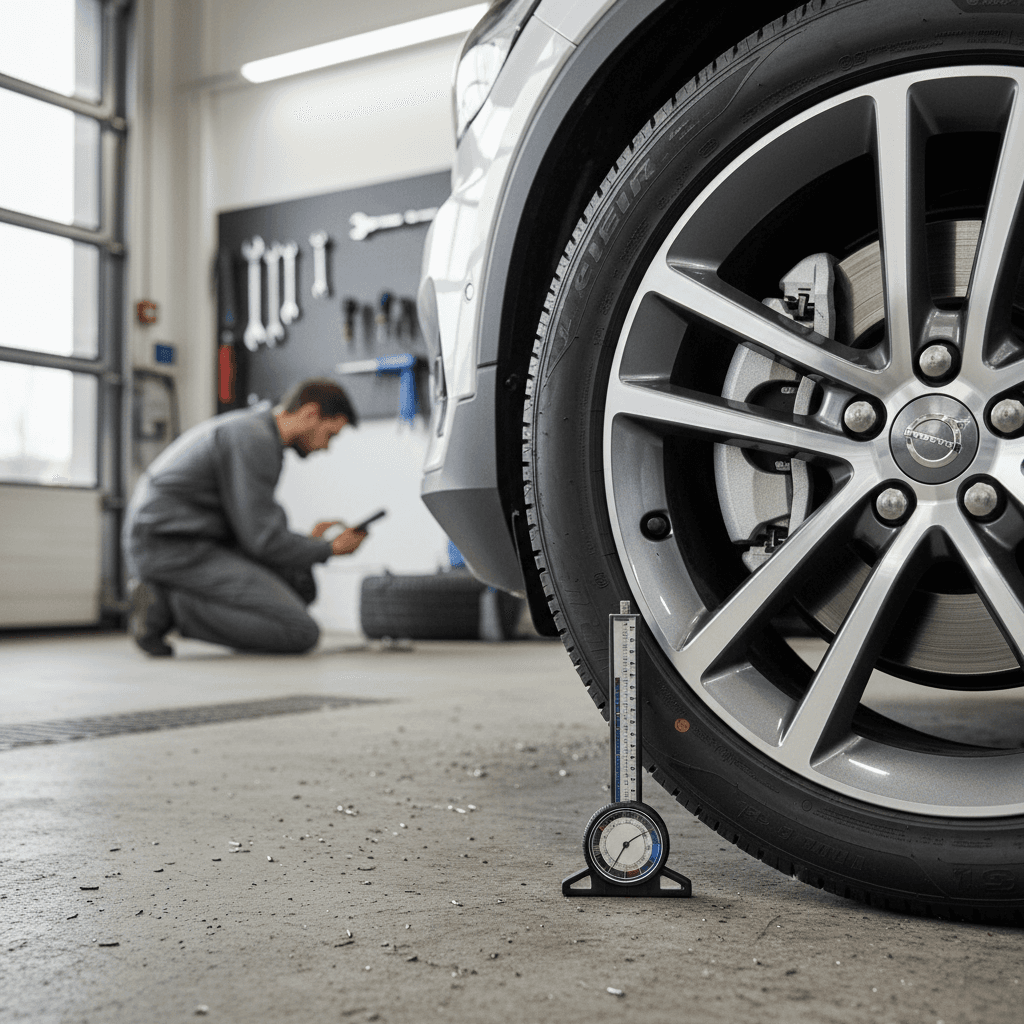
If you talk to existing EX30 and other small‑EV owners, the pattern is almost boring: aside from warranty repairs and recalls, the only recurring line items are tires, wipers, cabin filters, and eventually brake pads. Here’s what that looks like in budget terms.
Major wear items on a Volvo EX30
These are the things most likely to show up on your credit card between 2026 and 2030.
Tires
The EX30’s weight and torque mean you should budget realistically for tires.
- Interval: 25,000–35,000 miles for many owners, shorter if you drive hard.
- Cost: $700–$1,000 for a quality set installed with road‑force balance and alignment.
- Tip: Rotate every 6,000–8,000 miles to stretch life.
Brakes
Electric regen does most of the slowing, so pads and rotors last longer than in gas cars.
- Interval: 60,000+ miles is common on EVs driven smoothly.
- Cost: A full axle (pads + rotors) can run $400–$800 at a dealer.
- Watch for: Rust on rotors if the car sits a lot in wet climates.
Cabin & wipers
Small but predictable items.
- Cabin filter: Often due every 2 years, $75–$150 installed or much less DIY.
- Wiper blades: $40–$80 a year depending on quality and climate.
- Alignment: $120–$200 if you hit a pothole or see uneven wear.
Don’t ignore tire load and EV‑ready specs
Warranty, included service, and paid plans
For U.S. buyers, Volvo has historically bundled complimentary scheduled maintenance for three years or 36,000 miles on new models, and early EX30 documentation followed that pattern. Dealers in some regions have started shifting toward fewer free services on newer model years, so for a 2026‑model EX30 you’ll want to read the fine print on your specific VIN:
- Many 2024–2025 EX30s include 3 years / 36,000 miles of free basic scheduled maintenance (usually the 10k/20k/30k type visits).
- Some 2026‑onward Volvos in dealer communications move toward 2 complimentary services instead of 3; whether that applies to your EX30 depends on build date and region.
- All recent Volvo EVs, including EX30, typically carry an 8‑year / 100,000‑mile high‑voltage battery warranty against defects and excessive capacity loss.
On top of that, many markets offer prepaid service plans that roll a set of future visits into your payment. These plans can make sense if your local dealer’s à‑la‑carte prices are high and you plan to stay within the Volvo network. Just remember that you’re pre‑paying for inspections and filters, not oil changes, EV service plans should be priced accordingly.
How Recharged fits into this
Ready to find your next EV?
Browse VehiclesSoftware updates and non‑obvious ownership costs
Unlike old Volvos that mostly cared about oil and timing belts, the EX30 adds a layer of software and connectivity to the “maintenance” conversation. In 2025 and 2026 owners have seen a steady cadence of over‑the‑air updates that improve charging behavior, driver‑assist features, and bug fixes, but those depend on active digital services and dealer support.
Over‑the‑air updates
Most core EX30 software updates are delivered over‑the‑air at no direct cost. You may need to schedule a brief visit if an update fails or involves high‑voltage components, but in normal cases you’re not billed per update.
Where cost creeps in is time: if your dealer needs the car for an update tied to a service bulletin and it’s out of warranty, they may bundle labor with another paid service.
Subscriptions and data
The EX30 ships with a period of included digital services (connected navigation, certain app‑linked features, and data for the Google‑based infotainment). After that, some features shift to optional subscriptions.
Those aren’t “maintenance” in the traditional sense, but in 2026 they’re part of the true cost of owning a software‑defined car. Budget a modest monthly amount if you rely heavily on in‑car connectivity beyond smartphone mirroring.
Ask what happens after year four
How maintenance looks if you buy a used Volvo EX30
By 2026, the earliest EX30s are already cycling into the used market. From a maintenance‑cost perspective, that can be good news: the steepest depreciation is already behind you, while much of the battery and basic warranty coverage is still in force.
Used EX30: what changes in your maintenance picture?
Buying used shifts the mix of costs more than it increases them.
You inherit the maintenance history
A well‑documented EX30 with on‑schedule dealer visits is worth paying for. You’re less likely to run into deferred maintenance like overdue brake‑fluid changes or badly worn tires.
Always review service records or a digital history from Volvo. With Recharged, this information is summarized in the Recharged Score Report, including tire condition and any visible brake wear.
You still have warranty coverage
Because the EX30 is a relatively new model, a 2–3‑year‑old example bought in 2026 will typically still have:
- Portions of the 4‑year/50k bumper‑to‑bumper warranty remaining.
- Plenty of runway left on the 8‑year/100k high‑voltage battery warranty.
- Possibly unused complimentary services if mileage is low.
That keeps surprise major repairs unlikely in the early used‑ownership window.
Use battery health to benchmark your risk
How to keep Volvo EX30 maintenance costs low
The EX30 already starts from a good place on maintenance, but your habits and choices can move you toward the lower or higher end of that $350–$650 per‑year range. A few simple strategies go a long way.
Practical ways to minimize EX30 maintenance cost in 2026
1. Rotate and align tires on schedule
Tire wear is usually the #1 maintenance expense on a small EV. Rotate every 6,000–8,000 miles and check alignment annually or after big pothole hits. Fewer replacement sets over five years can save you hundreds.
2. Use regen aggressively but smoothly
Maximize regenerative braking in the drive mode you’re comfortable with. Letting the motor do most of the slowing reduces brake wear and keeps pad and rotor replacements infrequent.
3. Avoid unnecessary dealer upsells
When you go in for scheduled service, read the line items. EVs do not need engine flushes, fuel system cleaners, or other ICE‑centric add‑ons. Politely decline anything that doesn’t align with Volvo’s maintenance schedule.
4. Keep software and recalls current
Run over‑the‑air updates when offered and respond promptly to recall notices. Fixing minor software or hardware campaigns early prevents them from turning into larger, out‑of‑warranty issues later.
5. Shop tires intelligently
Stick with EV‑appropriate, low‑rolling‑resistance tires from reputable brands, but don’t feel locked into the Volvo dealer. Independent tire shops can often save you $150–$300 per set while matching the required specs.
6. Plan ownership length around warranty windows
If you expect high mileage, consider how quickly you’ll hit 50,000 and then 100,000 miles. Selling or trading the EX30 while it’s still under battery and basic warranty can cap your long‑tail maintenance risk.
Volvo EX30 maintenance cost FAQ (2026)
Frequently asked questions about Volvo EX30 maintenance in 2026
Bottom line: is Volvo EX30 cheap to maintain?
If you strip away the buzzwords, the Volvo EX30 is a straightforward EV to live with. In 2026, a realistic Volvo EX30 maintenance cost profile is a few hundred dollars a year in scheduled checks and filters, plus the occasional four‑figure tire bill spread over several years. There’s no engine oil to change, no timing belt to worry about, and far fewer opportunities for a shop to nickel‑and‑dime you with extras.
Where you still need to think critically is how the specific car you’re buying has been treated: tires, alignment, early brake wear, and battery health all matter more on a used EX30 than the official maintenance schedule does. That’s exactly why Recharged bakes a Recharged Score battery‑health check, tire assessment, and service‑history review into every EV we sell. It turns a fuzzy estimate of future maintenance into a concrete line item in your ownership plan.
If you’re cross‑shopping the EX30 with other compact EVs, its maintenance story is a strength, not a liability. Spend a little time understanding the schedule, shop carefully for tires, and choose a car with clean history and strong battery health, and the EX30 should be one of the cheaper premium crossovers to keep on the road in the late 2020s.