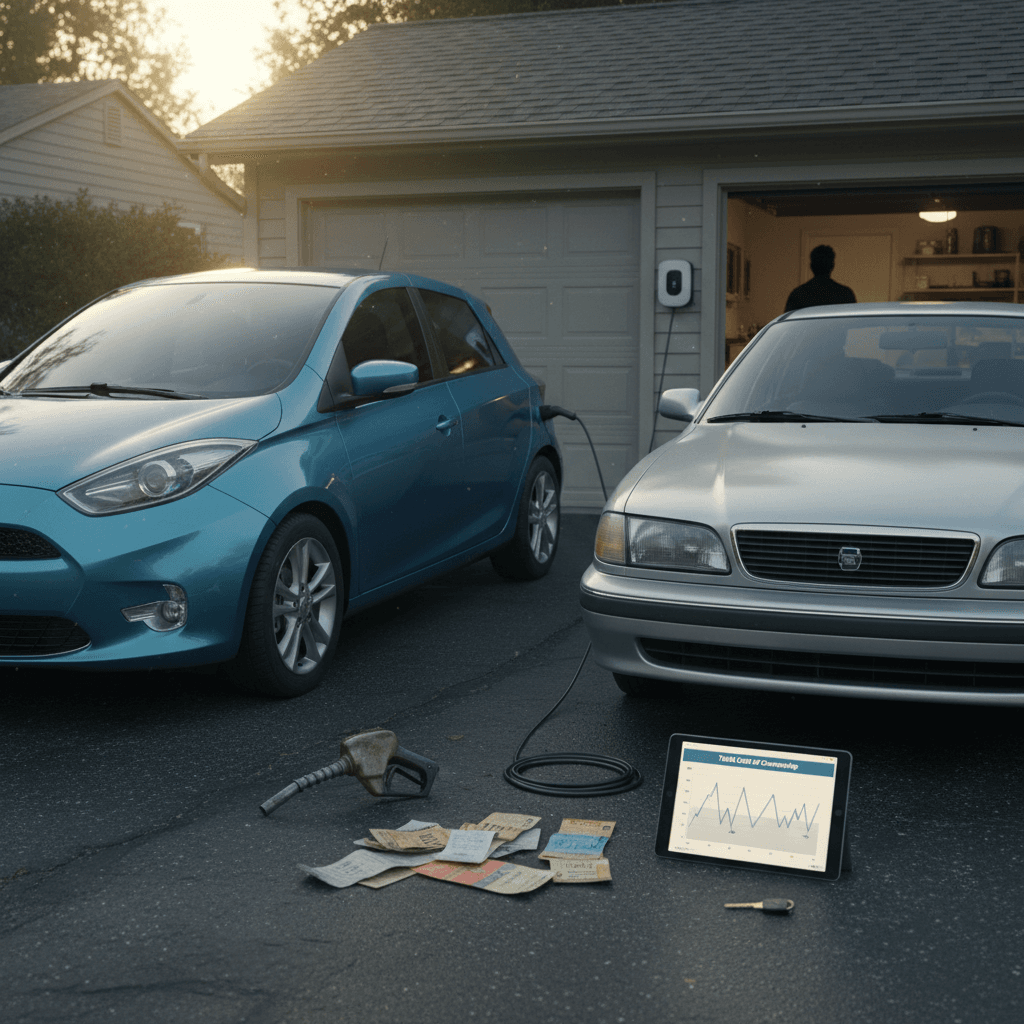
If you’re shopping for your next car, you’re probably wondering: can you actually save money with a used electric car vs a gas car, or is the EV hype overblown? The honest answer is that it depends on how you drive, what you pay for electricity and gas, and which specific vehicles you compare, but when you choose carefully, a used EV can be one of the smartest money decisions you make.
What this guide will do for you
Can a used EV really save you money?
The short version: yes, a used electric vehicle often costs less to own than a comparable gas car, especially if you drive at least 10,000–12,000 miles per year and can charge at home. You’ll likely pay less for energy and maintenance, which can more than offset a slightly higher purchase price. But there are important exceptions, like high electricity rates, long highway commutes on fast chargers, or an EV with a weak battery, that can eat into or erase those savings.
Where used EVs can beat gas on cost
How to compare a used electric car vs gas on cost
Instead of asking, “Are EVs cheaper than gas cars?” a better question is, “Is this specific used EV cheaper to own than this specific gas car over the years I’ll own it?” To answer that, break total cost of ownership into a few buckets:
- Purchase price, taxes, fees, and financing costs
- Fuel vs electricity, including home and public charging
- Routine maintenance and likely repairs
- Insurance (often similar, but worth checking)
- Depreciation and what you’ll be able to sell or trade it for later
- Any one‑off costs like home charger installation
Once you estimate each of these for a used EV and a comparable gas car, you can see which one actually costs less over the time you plan to own it, typically 3–7 years for most buyers.
Purchase price, incentives, and financing
Historically, electric vehicles carried a higher sticker price than gas cars. In the used market, that gap has narrowed significantly in the past few years as early EVs have depreciated faster. Depending on the model, you may even find used EVs priced similarly, or occasionally lower, than comparable gas models of the same age and mileage.
Key purchase‑price factors to compare
Used EV vs used gas car
Compare apples to apples
Match vehicles by size, age, trim, mileage, and equipment. A compact used EV will naturally be cheaper than a full‑size luxury gas SUV, but that doesn’t tell you much about EV vs gas costs.
Out‑the‑door price and financing
Look at the out‑the‑door price (vehicle + fees + taxes) and your interest rate and term. EVs with strong residual value may also qualify for competitive financing offers from some lenders.
Incentives and used EV tax credits
In the U.S., some buyers can qualify for a federal used EV tax credit and state or utility rebates. A credit applied at tax time effectively lowers your net purchase cost.
Total cash at signing
Include your down payment, trade‑in value, and any rebates or credits you expect. A slightly higher purchase price may still make sense if you’ll save more on fuel and maintenance over time.
Tip: Consider real monthly cost, not just sticker price
Fuel vs electricity: where big savings often appear
Fuel is where many drivers see the clearest difference between a used electric car and a gas car. A typical EV uses about 25–30 kWh of electricity per 100 miles. A comparable gas car might use 3–4 gallons of fuel to travel that distance. Whether the EV wins decisively depends on your local electricity and gas prices and how you charge.
Illustrative energy cost comparison
Example costs for 1,000 miles of driving per month. These are rounded estimates to show how EV vs gas can play out numerically, run your own numbers with your local prices.
| Scenario | Energy price assumption | EV energy cost (1,000 mi) | Gas car fuel cost (1,000 mi) |
|---|---|---|---|
| Home charging, average U.S. rates | $0.15/kWh, 28 kWh/100 mi | ≈ $42/month | ≈ $120/month (30 mpg, $3.60/gal) |
| Home charging, higher‑cost electricity | $0.25/kWh, 28 kWh/100 mi | ≈ $70/month | ≈ $120/month |
| Mostly DC fast charging | $0.40/kWh, 28 kWh/100 mi | ≈ $112/month | ≈ $120/month |
| High gas prices, average electricity | $0.15/kWh & $4.50/gal | ≈ $42/month | ≈ $150/month |
Assumes a reasonably efficient EV and gas car of similar size and performance.
If you have reasonably priced home electricity and can charge overnight, a used EV often saves you dozens of dollars per month vs filling a gas tank. If you rely heavily on pricey DC fast chargers, or your local electricity rates are unusually high, those savings shrink and in some cases nearly disappear.
Watch your public charging habits
Maintenance and repairs: where EVs usually win
Electric cars are mechanically simpler than gas cars. There’s no engine oil, no spark plugs, no exhaust system, and no multi‑gear automatic transmission. Over several years of ownership, that simplicity usually translates into lower routine maintenance and fewer unexpected repairs.
- No oil changes or transmission fluid services
- Fewer moving parts in the drivetrain, so fewer mechanical failures
- Regenerative braking reduces brake wear, so pads and rotors last longer
- No timing belts, fuel injectors, or catalytic converters to replace
What you still maintain on a used EV
Used gas car maintenance profile
- Regular oil and filter changes, often every 5,000–7,500 miles
- More fluids to service: coolant, transmission fluid, differential oil
- Exhaust and emissions components that can fail with age
- Higher odds of engine or transmission issues on higher‑mileage cars
Used EV maintenance profile
- Software updates and fewer mechanical wear items
- Brake service less frequent thanks to regeneration
- Cooling system for battery and electronics still needs attention
- Main risk is high‑cost battery or electronics failure, but modern EVs are proving durable
Battery health and replacement risk on a used EV
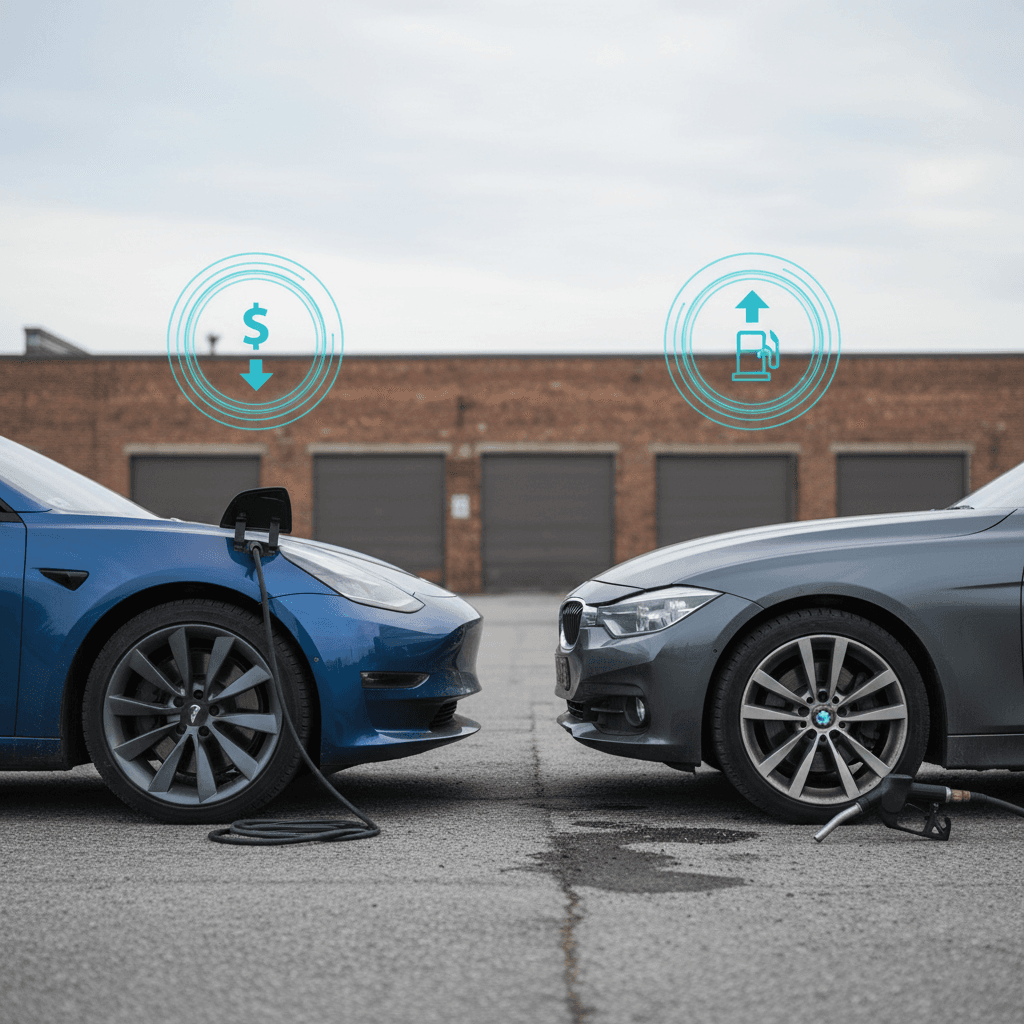
Battery condition is the single biggest wild card when you’re trying to decide if a used electric car will save you money vs a gas car. A healthy pack means years of low running costs; a severely degraded or defective pack can turn into a major expense if you’re unlucky and outside warranty.
How battery health affects your wallet
Key things to evaluate on a used EV
Remaining usable range
A car rated for 250 miles new that now delivers 220–230 miles is behaving normally. Moderate range loss is expected and usually not a deal‑breaker.
Signs of abnormal degradation
Rapid range loss, big drops after DC fast charging, or error messages can indicate battery problems that deserve further diagnosis before you buy.
Warranty coverage and history
Most modern EVs carry 8‑year battery warranties that follow the car. Knowing what’s covered, and seeing service history, reduces your risk.
How Recharged reduces battery risk
Depreciation and resale value: used EV vs used gas
Depreciation, the difference between what you pay for a vehicle and what you sell it for, is one of the biggest, and most overlooked, ownership costs. Early on, new EVs tended to depreciate quickly as technology improved and incentives changed. Today, the used EV market is maturing, and depreciation patterns look more varied by model than by “EV vs gas” alone.
- Popular EVs with strong demand (like well‑known crossovers and sedans) often hold value well, especially in the used market where lower prices attract more buyers.
- Less‑known or short‑range EVs may continue to depreciate faster, but that can work in your favor when buying used, someone else already paid for the steepest drop.
- Gas vehicles with poor fuel economy (like large SUVs and trucks) can take a resale hit when fuel prices spike, while efficient hybrids and EVs may become more desirable.
Why buying used can be a sweet spot
Example: 3‑year used EV vs gas cost comparison
To see how this plays out, let’s run a simplified three‑year comparison between a used EV and a comparable used gas car. These aren’t quotes, they’re ballpark numbers to illustrate how savings can add up.
Illustrative 3‑year ownership cost example
Assumes 12,000 miles per year, average U.S. energy prices, and normal maintenance. Your actual costs will vary, but the pattern is what matters.
| Cost category (3 yrs) | Used EV example | Used gas car example |
|---|---|---|
| Purchase price & interest | Higher upfront: ≈ $22,000 financed, ≈ $2,000 interest | Lower upfront: ≈ $20,000 financed, ≈ $1,800 interest |
| Energy (fuel vs electricity) | ≈ $1,500 total (home charging, mixed driving) | ≈ $4,200 total (30 mpg, moderate fuel prices) |
| Routine maintenance | ≈ $900 (tires, fluids, inspections) | ≈ $1,600 (oil changes, fluids, more wear items) |
| Unexpected repairs | ≈ $600 (conservative allowance) | ≈ $1,200 (older engine/transmission components) |
| Depreciation | EV worth ≈ $14,000 after 3 yrs | Gas car worth ≈ $12,500 after 3 yrs |
| Estimated net 3‑yr cost | ≈ $9,400 (excluding tax/title) | ≈ $11,500 (excluding tax/title) |
Example comparison of a $22,000 used EV vs a $20,000 used gas car over three years.
In this illustrative scenario, the used EV ends up roughly $2,000 ahead over three years, despite a higher purchase price. The biggest drivers are lower fuel and maintenance costs plus slightly better resale value. Your personal outcome will depend on what you pay, how you finance, and how you drive, but this is the kind of gap many real‑world owners see.
When a used EV may not save you money
Used EVs aren’t a one‑size‑fits‑all money saver. There are situations where a conventional used gas car, or sometimes a hybrid, may make more financial sense.
Scenarios where a gas car can be cheaper overall
1. You can’t charge at home or work
If you live in an apartment without onsite charging and your workplace doesn’t offer it, you may end up relying on public chargers. If most of that is DC fast charging, your energy costs can approach, or occasionally exceed, those of an efficient gas car.
2. Your electricity rates are very high
In some regions, residential electricity can be expensive, especially at peak times. If you can’t shift charging to off‑peak rates or you’re on a flat but high rate plan, your monthly savings vs gas shrink.
3. You drive very little each year
If you only drive 4,000–5,000 miles per year, the fuel you’d save with an EV versus an efficient gas or hybrid car may not be enough to justify a higher purchase price or a home charger installation.
4. The EV’s battery is weak or out of warranty
A used EV with a badly degraded battery and no remaining warranty can be risky. A major battery repair could erase years of fuel savings. That’s why good <strong>battery health data</strong> is so valuable when you shop.
5. You need frequent long‑distance towing or hauling
For heavy towing, long highway trips, or remote rural use with limited charging, a gas or diesel truck may still be the more practical and cost‑effective choice, for now.
Don’t ignore battery or charging red flags
How to run the numbers for your situation
The smartest way to decide if you can save money with a used electric car vs gas is to plug in your own numbers instead of relying on generic averages. Here’s a simple, repeatable process.
A simple roadmap to compare used EV vs gas costs
Step 1: Pick realistic comparison vehicles
Choose a used EV and a used gas car you would genuinely own, similar size, age, and features.
Look up fair market prices from multiple sources, not just a single listing.
If possible, favor vehicles with documented service history and clear battery information for the EV.
Step 2: Estimate annual energy costs
Estimate your yearly miles, commute, errands, trips.
For the gas car, divide miles by its realistic mpg and multiply by your local fuel price.
For the EV, use the car’s kWh/100‑mile estimate, multiply by your electricity rate, and adjust for how much you’ll fast charge vs charge at home.
Step 3: Budget maintenance and repairs
Check maintenance schedules for each model, what’s due during the years you’ll own it?
Scan owner forums and reliability data for common trouble spots.
Set a realistic annual allowance for each car (for example, $300–$600 for an EV, more for a complex used gas car).
Step 4: Think about resale or trade‑in
Decide how long you’ll keep the car, 3, 5, or 7 years are common horizons.
Look at current used values for slightly older versions of the same model to get a feel for depreciation.
Remember: buying slightly used often means the previous owner already took the steepest value drop.
Use a simple spreadsheet or calculator
How Recharged helps you buy a money‑saving used EV
If you decide a used EV could be right for you, the next step is finding one that stacks the odds in your favor. That’s where Recharged comes in. Our entire business is built around making used EV ownership simple, transparent, and cost‑effective.
Why shoppers use Recharged for used EVs
Designed to make the money part easier
Verified battery health with Recharged Score
Every vehicle on Recharged includes a Recharged Score Report with objective battery diagnostics, so you know what you’re getting before you buy.
Fair market pricing and trade‑ins
Transparent, data‑driven pricing helps you avoid overpaying. You can also trade in your current vehicle or get an instant offer or consignment option.
Financing tailored to EVs
Recharged offers EV‑friendly financing options and a fully digital experience, so you can understand your real monthly cost before you commit.
Nationwide delivery
Find the right used EV online and have it delivered to your door. You don’t have to live next to a specialty EV dealer to get a good one.
EV‑specialist support
Our EV specialists can help you compare models, estimate charging costs, and understand how a particular car might fit your budget and lifestyle.
Richmond, VA Experience Center
If you’re near Richmond, Virginia, you can visit our Experience Center to see vehicles in person and talk with EV experts face‑to‑face.
Ready to find your next EV?
Browse VehiclesUsed electric vs gas: quick FAQ
Frequently asked questions
Bottom line: can a used EV save you money?
A used electric car isn’t automatically cheaper than a gas car, but when the conditions line up, it can be a very smart financial move. If you can charge at home, drive a typical or above‑average number of miles each year, and choose a model with solid battery health and fair pricing, a used EV can lower your total cost of ownership while giving you a quieter, smoother drive and zero tailpipe emissions.
The key is to compare real numbers for your situation, not just headlines. Use the framework in this guide to weigh purchase price, energy and maintenance costs, and expected resale value. And if you want help finding a used EV that pencils out in your favor, Recharged offers transparent pricing, verified battery diagnostics, EV‑savvy financing, and nationwide delivery to make getting into the right car as straightforward as possible.