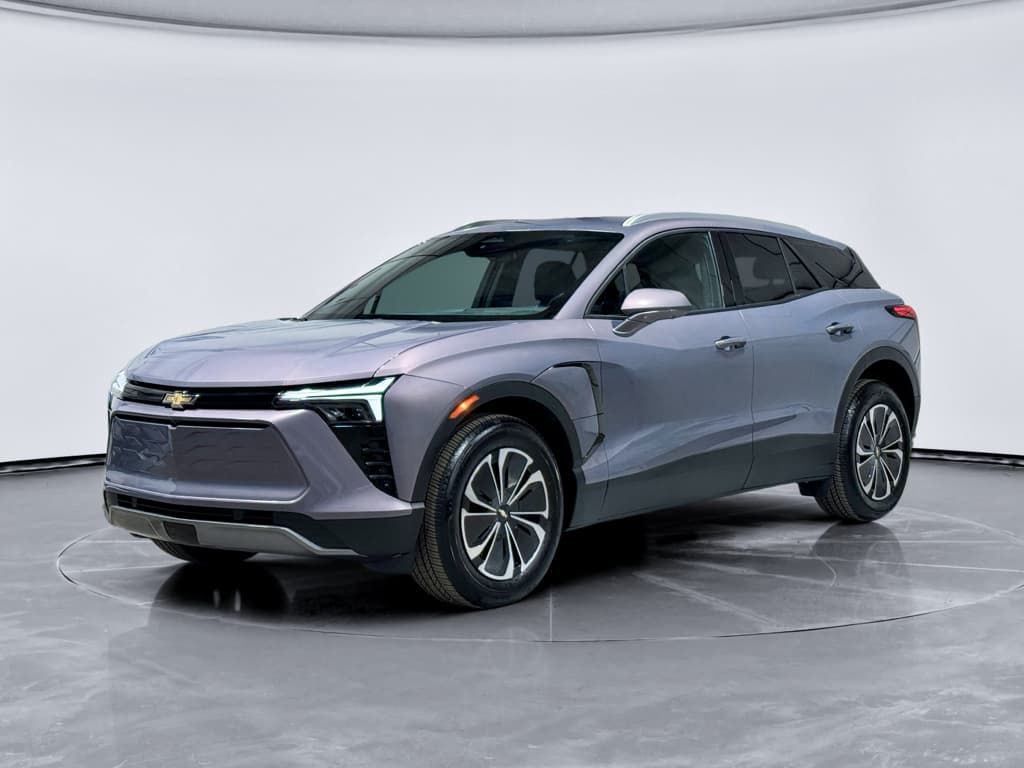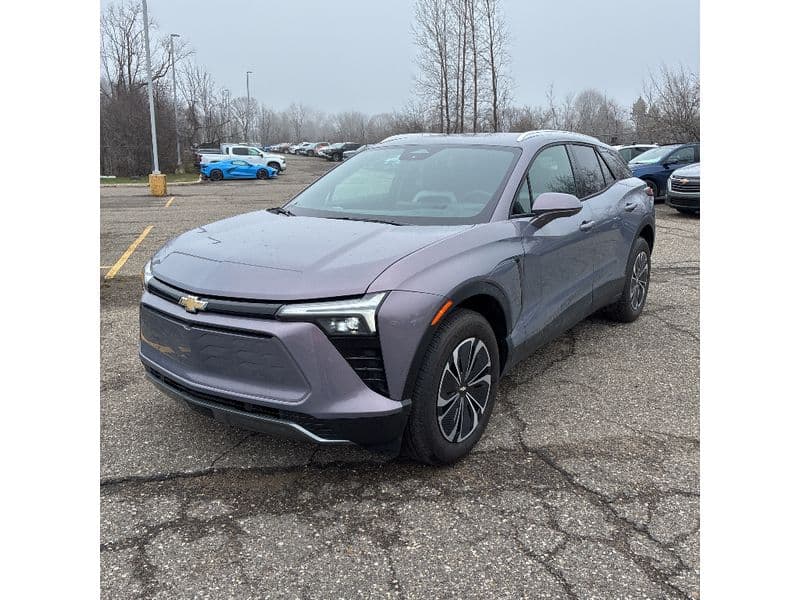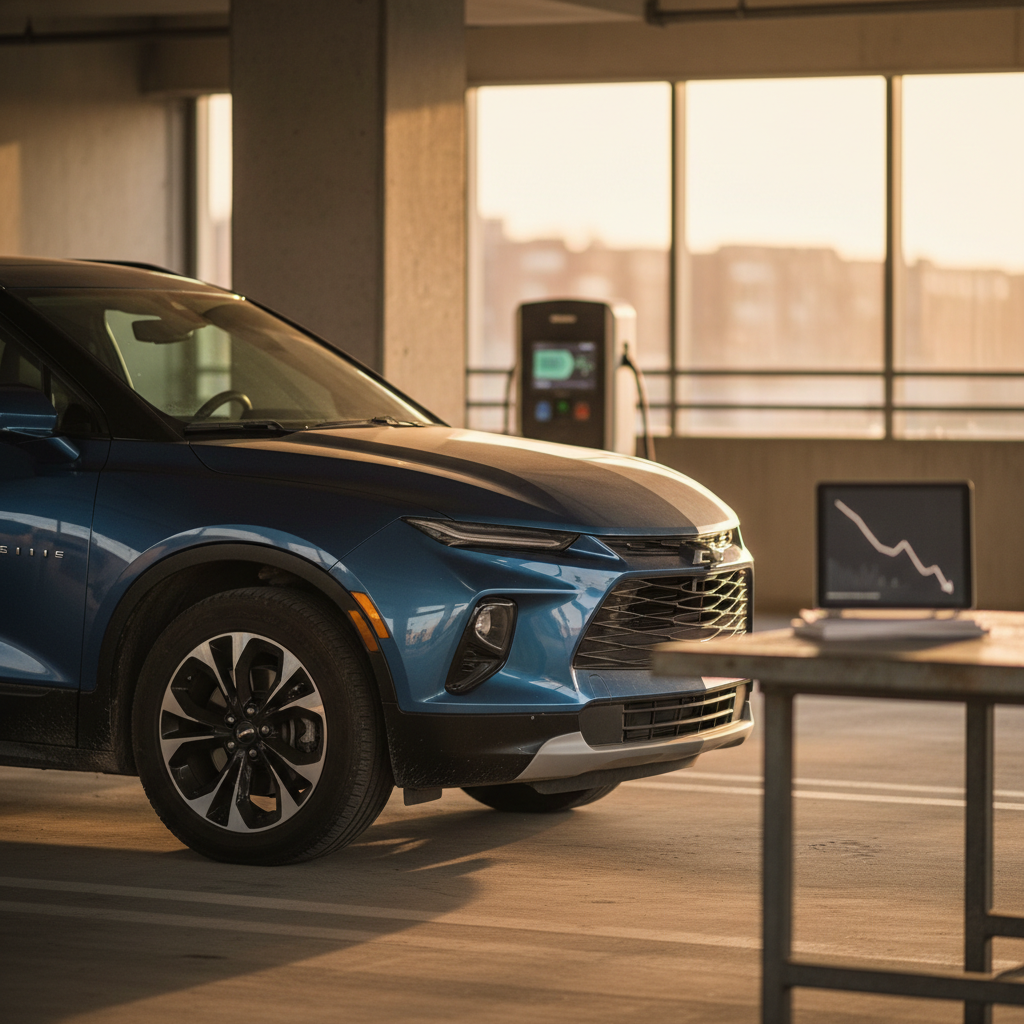
If you’re looking at a Chevrolet Blazer EV and planning to tow a small trailer, bikes, or a camper, you’re probably asking two things: **what’s the Blazer EV’s towing capacity, and how much range will I lose when towing?** This guide walks through official tow ratings, how different trailers impact range, and practical planning tips, especially useful if you’re considering a used Blazer EV from a marketplace like Recharged.
Quick answer
Chevrolet Blazer EV towing overview
The Chevrolet Blazer EV was engineered first as a sporty midsize electric SUV, with towing as a secondary capability. That means you get solid acceleration, a large battery (in the 85–102 kWh class, depending on trim), and available all‑wheel drive, but a relatively modest tow rating compared with body‑on‑frame trucks.
- Blazer EV is rated for light-duty towing, not large RVs or car haulers.
- Most trims that are tow‑rated top out at 1,500 lbs of trailer weight when properly equipped.
- Chevrolet requires the factory or approved hitch and wiring for the official rating to apply.
- Payload (people + cargo) still matters; you can run out of payload before you hit the 1,500‑lb tow cap.
Check your owner’s manual
Blazer EV towing capacity by trim and configuration
Chevrolet doesn’t publish radically different tow ratings for each individual Blazer EV trim the way it does for trucks, but current data for the 2024–2025 model years shows a consistent maximum tow rating of 1,500 lbs when properly equipped across the lineup. That’s in line with other Ultium‑based crossovers set up for light towing.
Approximate Chevrolet Blazer EV tow ratings (2024–2025)
Always verify these numbers in the owner’s manual and trailering guide for your exact model year and configuration.
| Configuration | Drive layout | Approx. max tow rating* | Typical uses |
|---|---|---|---|
| LT | eAWD | 1,500 lbs | Small utility trailer, light cargo, single-axle trailer with bikes or gear |
| RS | RWD or AWD | 1,500 lbs | Similar light-duty towing plus hitch racks and lightweight campers within rating |
| SS (performance) | AWD | 1,500 lbs | Occasional light trailer; more often used for hitch racks than heavy towing |
| Police/PPV & fleet variants | AWD | Typically 1,500 lbs | Equipment trailers, small enclosed units (check fleet guide) |
Blazer EV tow ratings are aimed at small utility and cargo trailers, not large travel trailers.
What 1,500 lbs really means
How towing affects Chevrolet Blazer EV range
Every EV loses range when towing, and the Chevrolet Blazer EV is no exception. The key is understanding that aerodynamics, not just weight, drives most of the loss at highway speeds. A boxy trailer punches a much bigger hole in the air than the SUV alone, which forces the motors to draw more energy from the battery to maintain speed.
Typical EV range loss when towing
For a Blazer EV with an EPA range around 279–334 miles (depending on trim and year), a 40–60% hit drops your practical towing range closer to 110–190 miles per full charge. And because you rarely want to use 0–100% of the pack on road trips, your realistic between‑stop distances can be shorter, often in the 80–150 mile window.
Don’t plan on EPA range when towing
How to estimate your Blazer EV’s range when towing
There’s no perfect formula, but you can get a useful estimate for your Chevrolet Blazer EV by starting with its real‑world highway range and applying a towing factor based on your trailer type, speed, and conditions.
5-step method to ballpark Blazer EV towing range
1. Start with your real highway range
Use what you actually see on trips without a trailer, maybe 260–300 miles on an RS RWD or 230–260 miles on an AWD model, rather than the EPA sticker alone.
2. Classify your trailer
Is it <strong>low and fairly aerodynamic</strong> (kayaks, motorcycles, tiny teardrop) or a <strong>tall, boxy trailer</strong>? The boxier it is, the more range you’ll lose, even if the weight is modest.
3. Choose a towing factor
For a small, low trailer, start with a <strong>35–40% range loss</strong>. For a taller or heavier trailer near 1,500 lbs, use <strong>50–60%</strong>. In winter, add another 10–20 percentage points of loss.
4. Apply the math
If your solo highway range is 260 miles and you expect a 50% hit, your towing range is about <strong>130 miles</strong> per full charge in mild weather. Then subtract a safety buffer (see next step).
5. Add a safety buffer
Plan charging stops based on using only <strong>70–80% of that towing range</strong> to leave room for headwinds, detours, or elevation. That might put your actual target leg length around 90–100 miles in this example.
Use miles/kWh instead of just miles
Real‑world Blazer EV towing scenarios
Scenario 1: Small utility trailer with yard equipment
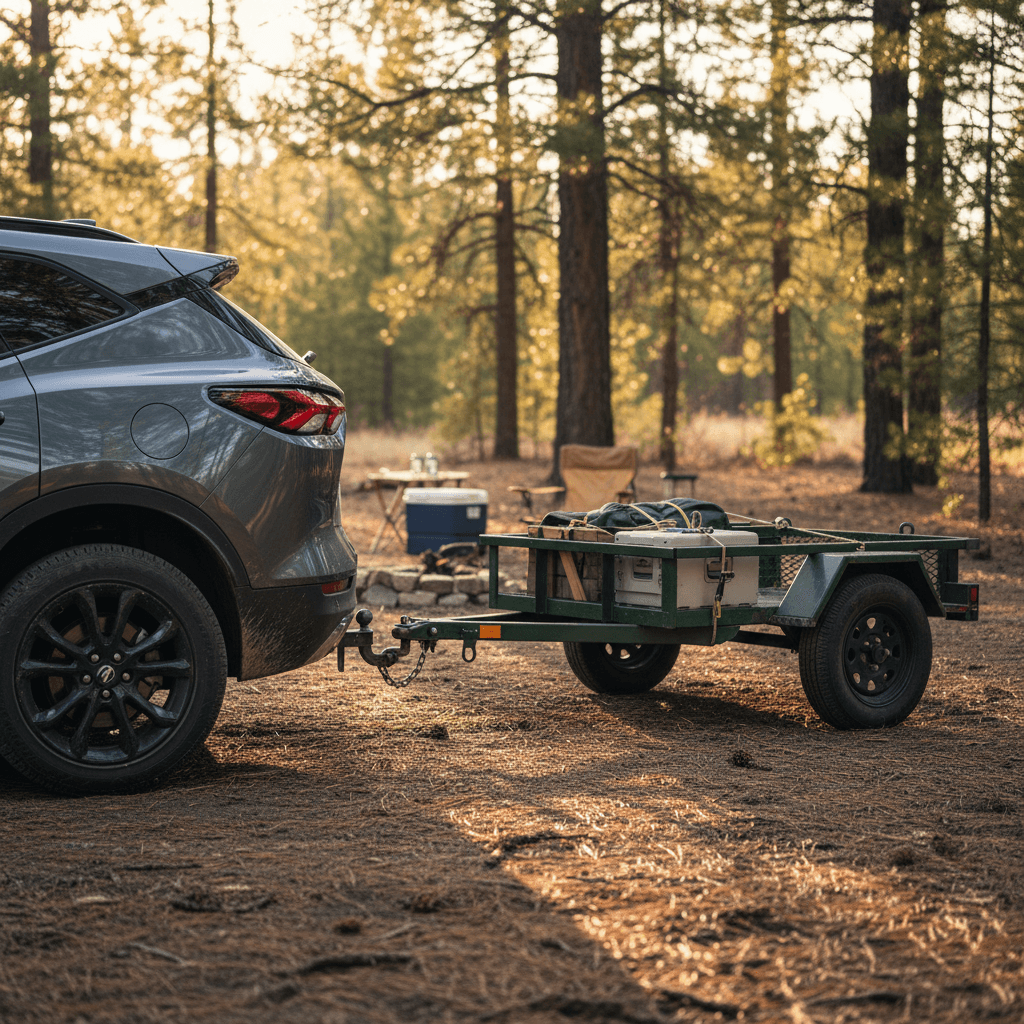
You’ve got a Blazer EV RS AWD rated around 279 miles EPA, and you tow a 1,000–1,200 lb open utility trailer with a mower and tools across mostly flat terrain at 60–65 mph.
- Solo highway range: ~240–260 miles
- Expected range loss: ~35–45%
- Estimated towing range: ~130–170 miles per full charge
- Conservative leg planning: 90–130 miles between DC fast chargers
Scenario 2: Tall, boxy small camper near max tow
You own a 1,450‑lb micro‑camper with a tall, square front. You’re towing with a Blazer EV LT eAWD at 65–70 mph on rolling highways.
- Solo highway range: ~220–240 miles (eAWD, moderate speeds)
- Expected range loss: ~50–60% (aero + hills)
- Estimated towing range: ~90–120 miles per full charge
- Conservative leg planning: 65–90 miles between chargers
Here, the trailer is still within the 1,500‑lb rating, but the aero penalty is huge, so trip planning becomes critical.
Watch your speed
Is the Blazer EV right for your towing needs?
Where the Blazer EV works, and doesn’t, for towing
Match your use case to what the Blazer EV is actually built to handle.
Great fit
- Weekend projects: Mulch, lumber, or a mower on a small open trailer.
- Powersports: One or two dirt bikes or a single jet ski within weight limits.
- Micro‑campers: Very small, lightweight teardrops under 1,500 lbs with good aerodynamics.
- Bike racks and cargo platforms: Hitch‑mounted gear that adds drag and weight but not like a full trailer.
Poor fit
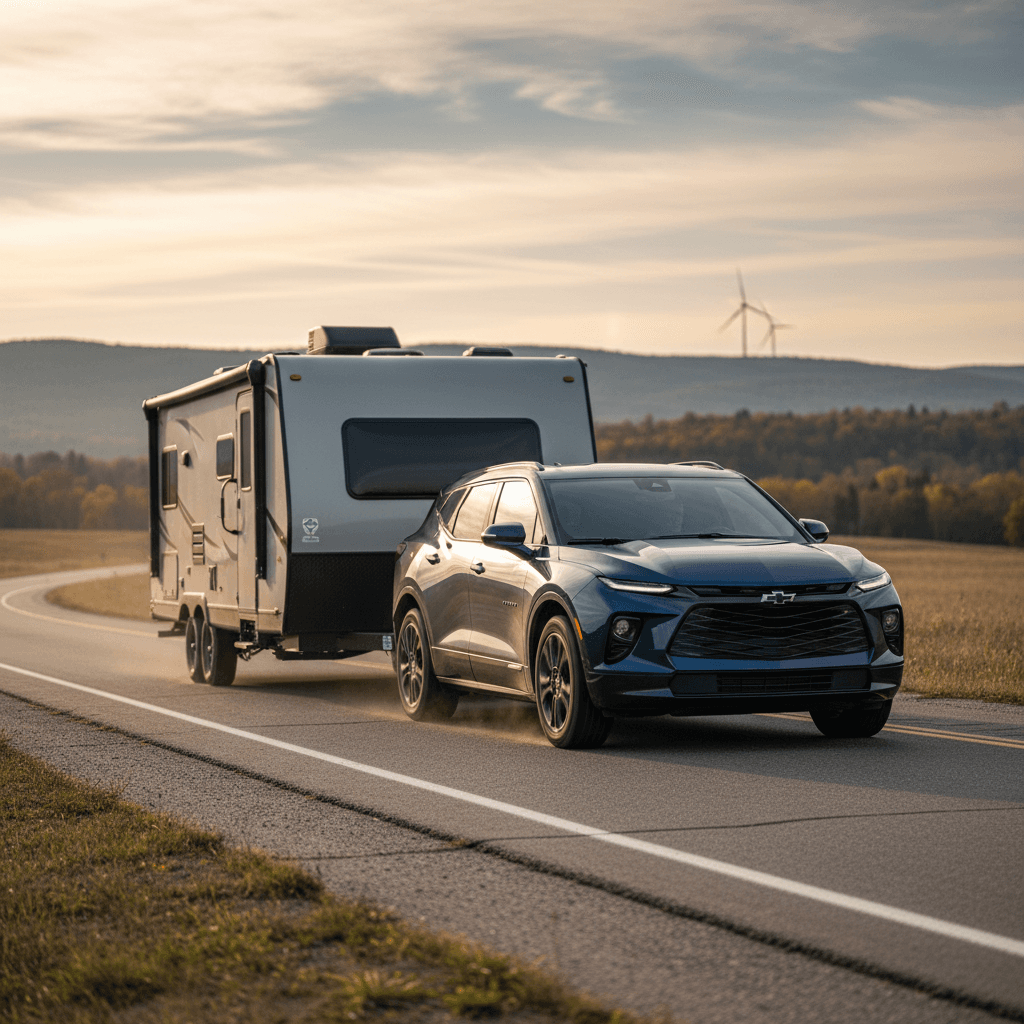
- Full‑size travel trailers: Even if you found one under 1,500 lbs, the aero drag would crush range.
- Car haulers or heavy equipment trailers: These typically exceed the Blazer EV’s tow rating and payload quickly.
- Mountain-state, trailer-heavy road trips: Steep climbs plus a big trailer can make range and charging gaps stressful.
Think of it as an EV SUV that can tow, not a tow rig that happens to be electric
Hitch, wiring and towing equipment basics
To make the most of the Chevrolet Blazer EV’s towing capacity, you need the right hardware. Some used Blazer EVs will already have a factory hitch installed; others will need an aftermarket solution that’s rated correctly for the vehicle.
Key towing equipment for a Blazer EV
Factory or properly rated hitch
Look for a <strong>Class II or higher</strong> hitch that is rated at or above 1,500 lbs of trailer weight and the appropriate tongue weight (often ~150 lbs). Factory hitches integrate more cleanly with the structure and sensor systems.
7‑pin or 4‑pin wiring harness
You’ll need a wiring harness so the trailer’s brake lights and turn signals work properly. On a used Blazer EV, verify that wiring is installed cleanly and functions correctly before towing.
Brake controller (if required)
At 1,500 lbs many small trailers use only mechanical surge brakes or none at all, but if your trailer has <strong>electric brakes</strong>, you may need a compatible brake controller installed.
Proper tongue weight
Aim for <strong>10–15% of trailer weight on the hitch</strong>, and stay within Chevrolet’s published tongue‑weight limits. Too much tongue weight can overload the rear axle; too little can cause sway.
Correct tire pressure
Make sure both the Blazer EV’s tires and the trailer tires are at their recommended towing pressures. Under‑inflation increases rolling resistance and heat, and it eats into range.
Never exceed ratings
Tips to reduce range loss when towing with a Blazer EV
- Slow down: Running 60–65 mph instead of 70–75 mph has an outsized impact on aero drag and energy use.
- Choose a streamlined trailer: Rounded or low‑profile trailers hurt range less than tall, square designs.
- Pack light and low: Keep heavy items centered over the trailer axle and avoid stacking cargo high into the wind.
- Precondition the battery before fast charging: Use the Blazer EV’s route‑based battery conditioning (where available) so you hit chargers with a warm pack and minimize time stopped.
- Use ECO or efficiency modes: Soften acceleration and climate use to stretch each kWh.
- Plan conservative legs: Use PlugShare, A Better Routeplanner, or your preferred app and plan to arrive with 20–30% state of charge, not nearly empty.
Test locally before a big trip
Buying a used Blazer EV for towing: what to check
If you’re shopping the used market, the Chevrolet Blazer EV can be an appealing choice: strong performance, modern tech, and enough towing capacity for many everyday needs. But towing and range expectations should be part of your due diligence, this is where a transparent marketplace like Recharged can help.
Used Blazer EV towing & range checklist
Questions to ask before you buy for light towing duty.
1. Is it officially tow‑rated?
2. How was the hitch installed?
3. What’s the real battery health?
4. Any history of heavy towing?
5. Suspension and brakes
6. Charging access on your routes
Chevrolet Blazer EV towing FAQ
Frequently asked questions about Chevrolet Blazer EV towing
Bottom line: Blazer EV towing capacity and range loss
The Chevrolet Blazer EV offers about 1,500 lbs of towing capacity when properly equipped, plenty for small utility trailers, powersports toys, and hitch‑mounted cargo, but not enough for full‑size campers or car haulers. When you do tow, expect a significant range hit of roughly 40–60% at highway speeds, especially with tall or boxy trailers.
If that matches your needs, the Blazer EV can be a sharp‑driving, comfortable EV that just happens to tow on weekends. The key is honest trip planning and realistic expectations. And if you’re shopping used, a marketplace like Recharged, with battery health diagnostics, transparent pricing, and EV‑savvy advisors, can help you find a Blazer EV that fits both your towing plans and your day‑to‑day range needs.