Shopping between the Rivian R1T vs Chevy Silverado EV means you’re not just picking a truck, you’re choosing what kind of electric‑pickup owner you want to be. One is a tech-forward adventure rig that feels like a premium SUV with a bed; the other is a full-size workhorse built on GM’s Ultium platform with class‑leading range and towing on tap. This guide walks you through the real differences so you can decide which fits your life, driveway, and budget, new or used.
Two Very Different Takes on an Electric Truck
Rivian R1T vs Chevy Silverado EV: Who Are These Trucks For?
Rivian R1T: Adventure & Daily Driver
The R1T is sized closer to a mid‑size truck on the outside but feels like a premium SUV on the inside. It’s ideal if you:
- Split time between city driving and weekend trips
- Care more about tech, design, and ride quality than maximum bed size
- Want serious off‑road capability (air suspension, sophisticated traction control)
- Regularly drive family or friends and want a quiet, upscale cabin
Chevy Silverado EV: Work, Range & Big Jobs
The Silverado EV is a true full‑size pickup with big‑truck dimensions and payload. It’s a better fit if you:
- Tow or haul frequently and need a larger bed
- Want the longest possible range, especially in Work Truck (WT) or Trail Boss trims
- Prefer more traditional Chevy truck styling and ergonomics
- Run a business or fleet and value GM’s dealer/service network
Think About Parking First
Key Specs: Rivian R1T vs Chevy Silverado EV at a Glance
Headline Numbers That Matter
Rivian R1T vs Chevy Silverado EV: Core Specs
Approximate specs for well‑equipped 2025 model‑year trucks. Always verify final numbers for the exact trim you’re considering.
| Spec | Rivian R1T (2025) | Chevy Silverado EV (2025–2026) |
|---|---|---|
| Size class | Mid/full‑size adventure pickup | Full‑size pickup |
| Max EPA range | Up to ~420 mi (Max pack) | Up to ~492 mi WT Max Range; up to ~460 mi RST/Trail Boss |
| Battery packs | Standard, Large, Max | Multiple Ultium packs; Standard, Extended, Max range |
| Peak power | Up to ~850 hp (quad‑motor performance trims) | Up to ~760 hp (RST), ~725 hp Trail Boss |
| Max towing | Up to 11,000 lbs | Up to 12,500 lbs (Trail Boss) |
| Max payload | Approx. 1,700+ lbs (varies by pack) | Around 2,000+ lbs depending on trim |
| Drivetrain | Dual‑motor or quad‑motor AWD | Dual‑motor AWD (front + rear) |
| 0–60 mph (performance trims) | As quick as ~2.9 sec | Around mid‑4s (RST performance) |
| DC fast‑charge peak | ~215–220 kW (recent software updates) | Up to ~350 kW on Ultium-enabled DC fast chargers |
| Bed length | Shorter, adventure‑oriented bed + gear tunnel | Full‑size bed; available Multi‑Flex Midgate on some trims |
Both trucks are seriously capable; the Silverado EV leans toward max range and tow ratings while the Rivian R1T emphasizes performance and maneuverability.
Numbers Can Vary by Trim
Range, Battery & Efficiency: Silverado EV Takes the Crown, On Paper
If range is your top priority, the Silverado EV has the edge. GM’s Ultium battery platform gives WT Max Range trucks an estimated 492 miles on a charge, and even the RST and Trail Boss trims can crest the mid‑400‑mile mark when properly configured. That’s more than enough for a long day of highway driving with range in reserve.
The Rivian R1T counters with multiple pack options. Standard pack models are roughly in the mid‑200‑mile range, while Large and Max packs climb into the high‑200s and up to about 420 miles in ideal conditions. In independent testing, dual‑motor Max pack trucks have proven capable road‑trippers, especially when combined with Rivian’s growing Adventure Network.
Range vs Efficiency: What Really Matters to You?
Silverado EV goes farther; R1T often uses energy more efficiently.
Raw Range: Silverado EV
The Silverado EV WT Max Range is the current range champ among electric trucks, pushing close to 500 miles under EPA test cycles. That’s great if you regularly tow moderate loads or drive long rural routes.
Efficiency: Rivian R1T
In real‑world testing, reviewers often see the R1T deliver better mi/kWh than big‑battery full‑size rivals. That means you can go far on a smaller pack and pay a bit less every time you charge.
Degradation & Battery Health
Both trucks use large packs designed for long life. When you shop used, focus less on the badge and more on verified battery health and charging history, this is where tools like the Recharged Score are invaluable.
How to Read Range Numbers
Power, Towing & Utility: Workhorse vs Adventure Rig
Both pickups are overkill for most day‑to‑day driving. The Silverado EV RST and Trail Boss trims make 700‑plus horsepower look almost casual, and properly equipped trucks can tow up to about 12,500 pounds. That’s squarely in half‑ton territory and more than enough for a decent‑sized toy hauler or equipment trailer.
The R1T, especially in quad‑motor performance trims, plays the "electric sports truck" role. With up to 850 horsepower and a 0–60 mph time around 2.9 seconds, it’s quicker than many supercars yet still rated to tow up to 11,000 pounds when configured correctly. The trade‑off is capacity: its shorter bed and slightly lower payload rating make it less ideal if you’re moving stone, lumber, or tools all week long.
Rivian R1T Utility Highlights
- Innovative gear tunnel for long items (skis, tools, recovery gear)
- Power outlets and air compressor in the bed for camping or job‑site use
- Smaller footprint makes it easier to maneuver with a trailer in tight areas
- Excellent low‑speed control off‑road thanks to independent motors
Silverado EV Utility Highlights
- Traditional full‑size bed with higher payload capacity
- Available Multi‑Flex Midgate (on some trims) for longer cargo
- Higher published tow ratings and more bed volume
- Well‑understood Chevy truck ergonomics for work‑truck drivers
Towing Slashes Range in Both Trucks
On-Road Comfort & Driving Experience
Get behind the wheel and the characters of these trucks really separate. The Rivian R1T feels like a premium crossover meets adventure SUV: quick steering, refined ride quality (especially with air suspension), and a cabin that borrows more from high‑end tech products than blue‑collar pickups. Soft‑touch materials, vegan leather, and smart storage make it an easy daily driver even if you rarely use the bed.
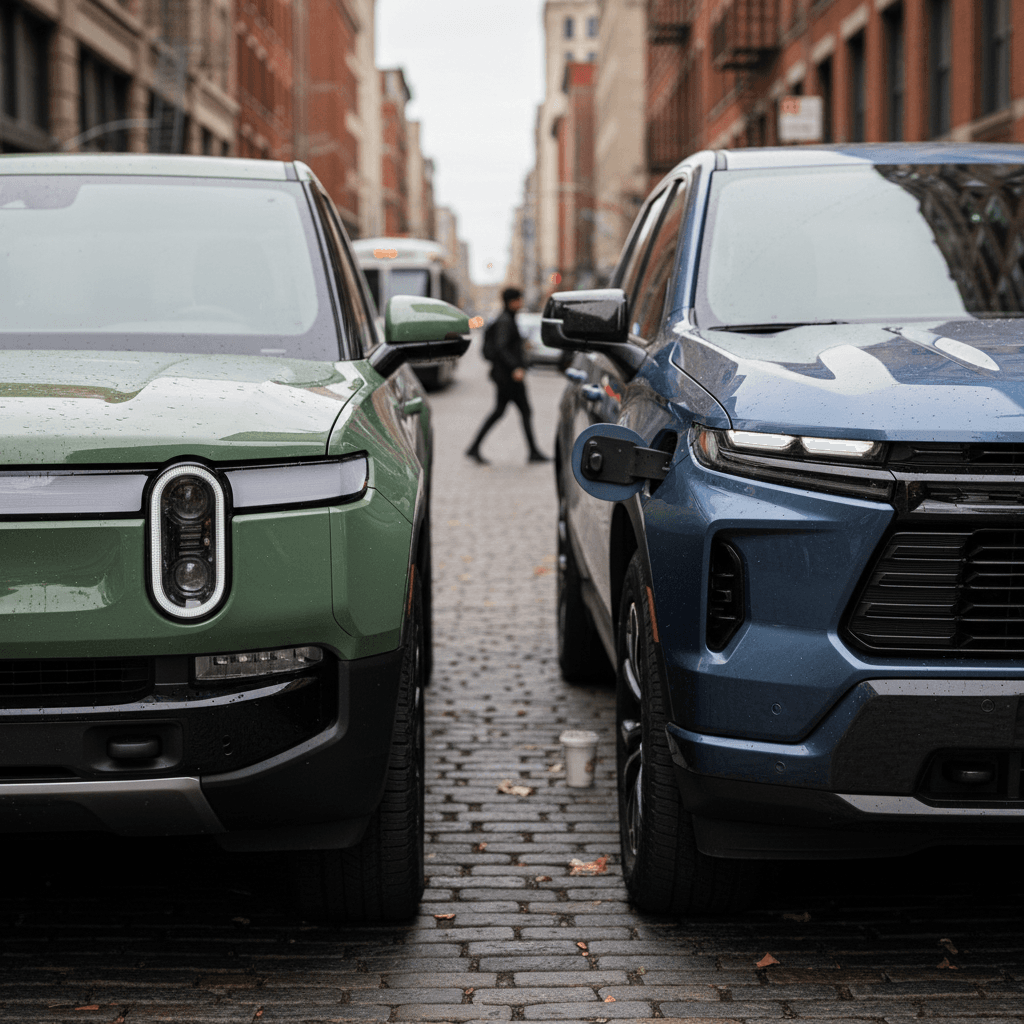
The Silverado EV drives more like a conventional full‑size truck that just happens to be electric. Ultium power makes it smooth and quiet, and trims with adaptive air suspension and four‑wheel steering shrink the truck around you. Still, you’re very aware of the Silverado’s size on narrow suburban streets or older parking garages.
Cabins & Tech: Rivian’s Polish vs Chevy’s Familiarity
Both trucks are packed with screens and driver‑assist tech; they just take different approaches.
Rivian Interior & UX
The R1T leans into minimalist design with a large central touchscreen and digital gauge cluster. Over‑the‑air updates add features over time, and Rivian’s driver‑assist and camera systems are among the best in the EV space.
Silverado EV Cabin
The Silverado EV blends modern screens with familiar Chevy controls. If you’ve driven late‑model Silverados, the seating position and basic ergonomics will feel natural, which can shorten the learning curve for work‑truck drivers.
Hands‑Free Driving & Aids
Chevy’s available Super Cruise remains one of the most polished hands‑free highway systems, including while towing on mapped roads. Rivian counters with excellent adaptive cruise, lane‑keeping, and a strong camera system for maneuvering.
Off-Road Capability and Traction Tech
Both trucks talk a big off‑road game, but they emphasize different strengths. The Rivian R1T, especially in dual‑ or quad‑motor configurations with air suspension, offers generous ground clearance, impressive approach and departure angles, and very fine low‑speed control. Independent motors can meter torque to each wheel, giving you confidence on loose surfaces, rocks, and deep ruts.
The Silverado EV Trail Boss ups the ante with a factory lift, serious all‑terrain tires, and GM’s Sidewinder four‑wheel‑steering mode, which lets the truck move diagonally at low speeds, similar to the Hummer EV’s Crab Walk. It’s designed for larger, more open off‑road spaces where having a big truck isn’t a liability.
Ask Yourself Before You Pick an Off-Road EV Truck
1. How tight are your trails?
If you wheel in dense forests or tight switchbacks, the R1T’s smaller footprint is a real advantage over the Silverado EV’s full‑size body.
2. Camping vs rock‑crawling
Rivian’s gear tunnel, built‑in power, and accessories favor overlanding and camping. Silverado EV’s focus is more tow‑the‑toys‑to‑the‑trailhead than squeeze‑between‑trees.
3. Recovery and service options
Consider who can work on your truck if something breaks far from home. Chevy’s dealer network still dwarfs Rivian’s, which may matter for rural adventurers.
Charging, Road Trips & Daily Usability
On DC fast chargers, both trucks are legitimately road‑trip capable. Recent software updates have pushed the Rivian R1T to around 215–220 kW peak charging, trimming 10–80% sessions into the mid‑30‑minute range with the right battery packs. For lunch‑stop charging, that’s more than livable.
The Silverado EV, riding on GM’s Ultium architecture, supports even higher peak rates (up to around 350 kW on compatible DC fast chargers), which keeps charge times competitive despite its huge battery. In practice, both trucks will spend similar time on chargers during long trips; the Silverado’s extra range just means you may stop less often, especially if you start your day at 80–90% instead of 50–60%.
Home & Workplace Charging
- Both trucks are happiest on a Level 2 (240V) charger at home or work.
- Because the Silverado EV’s battery is so large, charging from very low to full can take longer at the same amperage vs an R1T.
- If you can only install a 40‑ or 48‑amp Level 2 unit, factor that into overnight charge time expectations.
Public Networks & Connectors
- Both trucks can use major CCS/NACS DC fast‑charging networks, depending on adapter availability and model‑year connector changes.
- Rivian owners benefit from the dedicated Rivian Adventure Network in addition to third‑party stations.
- GM is rapidly expanding its Ultium‑compatible fast‑charging footprint, often along major freight and commuting corridors.
Daily Driver Reality Check
Pricing, Trims & Total Cost of Ownership
Sticker prices move quickly in today’s EV market, but the pattern is fairly clear. Well‑equipped Rivian R1T models with Large or Max packs and plenty of options commonly land in the upper‑$80,000s to near $100,000 new. Dual‑motor Standard or Large pack trucks can be more accessible, especially on the used market.
The Silverado EV lineup spans work‑oriented WT trims, mid‑content LT models, and range‑topping RST and Trail Boss variants. Entry‑level fleet‑oriented trucks may undercut Rivian in price, while RST and Trail Boss versions climb into the same neighborhood as a loaded R1T once you add big batteries and options.
Ownership Costs: Where You’ll Actually Spend Money
Purchase price is just the starting point, electric trucks shuffle costs around.
Energy vs Fuel
Both trucks can dramatically cut fuel costs if you’re coming out of a V8 or diesel. An efficient R1T may use fewer kWh per mile, but a Silverado EV charged mostly at home can still be dramatically cheaper to run than a gas truck.
Maintenance
No oil changes, fewer moving parts, and strong regenerative braking mean lower routine maintenance than a traditional pickup. Tires are the wild card, these are heavy, powerful trucks that can eat rubber if you drive them hard.
Incentives & Depreciation
Federal and state incentives, plus corporate fleet programs, can tilt the math toward one truck or the other in your specific situation. On the used side, depreciation has already done you a favor, if you buy carefully.
Run a Real Payment Scenario
Used Market, Resale Value & Battery Health
Because the Silverado EV is still ramping up, the used electric‑truck market today skews toward Rivian R1Ts and a few early Silverado EV WTs and RSTs. That means Rivian shoppers can already cross‑shop multiple model years, battery packs, and mileages, while Silverado EV buyers may face limited selection but steeper early depreciation on the trucks that are out there.
Regardless of badge, the biggest long‑term variable is battery health. A well‑cared‑for R1T or Silverado EV that was mostly home‑charged and rarely fast‑charged from very low to very high state of charge may retain more range than a similar‑mileage truck that lived on DC fast chargers and towed regularly.
Used R1T or Silverado EV: What to Check Before You Buy
1. Verified battery health
Look for documentation of current usable capacity vs original. With Recharged, every vehicle gets a <strong>Recharged Score</strong> and battery‑health report so you’re not guessing about range.
2. Charging and towing history
Ask how often the truck was DC fast‑charged, and how frequently it towed heavy loads. Frequent fast‑charging and high‑load towing can accelerate degradation.
3. Software and recall status
Make sure the truck has current software so you benefit from charging and efficiency improvements, and confirm that any recalls have been addressed.
4. Tires, brakes & suspension
These are heavy, high‑torque vehicles. Inspect for uneven tire wear, worn suspension components, and brake condition, especially on trucks that saw rough roads or job‑site duty.
5. Warranty coverage
Both brands offer long battery and electric‑component warranties. On a used truck, check how many years and miles remain and what’s transferable.
How Recharged De-Risks a Used Electric Truck
Ready to find your next EV?
Browse VehiclesWhich Electric Truck Should You Buy? Real-World Matchups
Match the Truck to Your Life, Not Just the Spec Sheet
Daily Driver + Weekend Adventures
You mostly commute, haul bikes or kayaks, and take a few big trips a year.
You care about design, on‑road comfort, and easy parking.
You value overlanding features like the gear tunnel and built‑in power.
<strong>Best fit:</strong> Rivian R1T, ideally Large or Max pack for flexible range.
Work Truck & Heavy Towing
You tow equipment or trailers regularly and care about payload ratings.
You or your business already run Chevy trucks or have a GM fleet relationship.
You need maximum range to cover rural routes with few chargers.
<strong>Best fit:</strong> Chevy Silverado EV WT or Trail Boss with the largest battery pack you can justify.
Long-Haul Family Road-Tripper
You plan multi‑state road trips with passengers and gear.
You want the least number of charging stops and a roomy cabin.
Charging networks along your favorite routes are robust.
<strong>Best fit:</strong> Silverado EV with extended or max‑range battery; R1T Max pack if you prefer its size and cabin.
Value Hunter on the Used Market
You’re flexible on brand and focused on getting the most truck for the money.
You’re comfortable buying 1–3 model years old if the battery checks out.
You want expert help understanding battery reports and pricing.
<strong>Best fit:</strong> Either truck, shop used R1Ts now and emerging used Silverado EVs, using Recharged’s diagnostics and pricing tools to compare deals.
Don’t Buy More Truck Than You Can Charge
FAQ: Rivian R1T vs Chevy Silverado EV
Frequently Asked Questions
Bottom Line: How to Decide, And How Recharged Can Help
Choosing between the Rivian R1T vs Chevy Silverado EV isn’t about finding a universal “winner.” It’s about matching a very capable electric truck to the way you actually live and work. If you value design, maneuverability, and adventure‑ready features, the R1T makes a strong case. If you need maximum range, payload, and tow ratings in a familiar full‑size package, the Silverado EV leans your way.
Whichever direction you’re leaning, buying the right electric truck means understanding more than just horsepower and brochure range. Battery health, charging behavior, and real‑world usage matter just as much, especially if you’re shopping used. That’s where Recharged comes in. Every truck we list includes a Recharged Score battery‑health report, fair‑market pricing, financing options, and expert EV guidance from first click to final delivery.
If you’re ready to see how a Rivian R1T or Chevy Silverado EV could fit into your life, explore used electric trucks on Recharged, compare real vehicles side by side, and let our EV specialists help you land the truck, and the payment, that actually works for you.