If you’re cross‑shopping a Rivian R1S against a large gas SUV, sticker price is only part of the story. The real question is the one that matters to your budget: over 5–10 years, does a Rivian R1S actually cost less than a comparable gas car? This guide walks through a clear Rivian R1S vs gas car cost comparison using 2025–2026 U.S. energy prices and realistic ownership assumptions.
What this article covers
Why compare the Rivian R1S to a gas SUV?
The Rivian R1S is a three‑row, off‑road‑capable electric SUV with luxury‑adjacent pricing. In the gas world, its natural benchmarks are big 3‑row SUVs like a BMW X7, Mercedes GLS, Jeep Grand Cherokee L, Chevy Tahoe, or Ford Expedition. Those vehicles tend to be:
- Heavy, boxy, and thirsty, often 17–22 mpg combined in real‑world driving.
- Priced in the same ballpark when new, especially in higher trims.
- Used for similar jobs: family hauling, road trips, light towing, and all‑weather commuting.
Quick cost snapshot: U.S. averages in 2025–2026
Use this as a framework, not a quote
Key assumptions for a fair cost comparison
To compare the Rivian R1S versus a gas SUV cleanly, we’ll standardize a few assumptions. You can adjust any of these to better match your situation.
Baseline assumptions: Rivian R1S vs comparable gas SUV
These assumptions are used throughout the 5‑ and 10‑year cost examples.
| Variable | Assumption for this guide | Why it matters |
|---|---|---|
| Annual mileage | 12,000 miles/year | Close to the U.S. average; easy to scale up or down. |
| Holding period | 5 and 10 years | Captures both short‑ and longer‑term ownership. |
| Electricity price | $0.17 per kWh home charging | Approximate recent U.S. average residential rate; many drivers will land near this. |
| Gas price | $3.10 per gallon | Average U.S. gasoline price across 2025; early 2026 is slightly below $3.00. |
| Rivian efficiency | 49 kWh/100 miles | EPA combined use for a 2024 Rivian R1S, i.e., 0.49 kWh/mile. |
| Gas SUV efficiency | 20 mpg combined | Represents a reasonably efficient large 3‑row gas SUV in mixed driving. |
| Purchase type | Lightly used, near‑new (2–3 years old) | Minimizes early depreciation hit and reflects common EV buying behavior on Recharged. |
You can swap in your own mileage, energy prices, or purchase price to run your own numbers.
Quick way to personalize the math
Energy costs: Rivian R1S electricity vs gas SUV fuel
The most visible part of the cost gap between an R1S and a gas SUV is what you spend to move each mile. With 2025–2026 U.S. averages, electricity isn’t “practically free,” and gasoline is cheaper than it was in 2022, but the EV still has a substantial edge for most drivers.
Rivian R1S energy cost per mile
- Efficiency: 49 kWh/100 mi → 0.49 kWh per mile.
- Electricity rate: assume $0.17/kWh at home.
- Cost per mile: 0.49 × $0.17 ≈ $0.083 per mile.
- Annual energy cost (12,000 mi): 12,000 × $0.083 ≈ $996/year.
If your electricity is cheaper, say $0.13/kWh, the R1S drops closer to $760/year. In high‑cost states at $0.25/kWh, you’re closer to $1,470/year.
Gas SUV fuel cost per mile
- Efficiency: assume 20 mpg combined.
- Gas price: use a 2025 average of $3.10/gal.
- Cost per mile: $3.10 ÷ 20 ≈ $0.155 per mile.
- Annual fuel cost (12,000 mi): 12,000 × $0.155 ≈ $1,860/year.
Even with today’s lower gas prices, the typical large SUV driver spends roughly 2× as much on fuel as an R1S owner spends on electricity.
Annual energy cost comparison
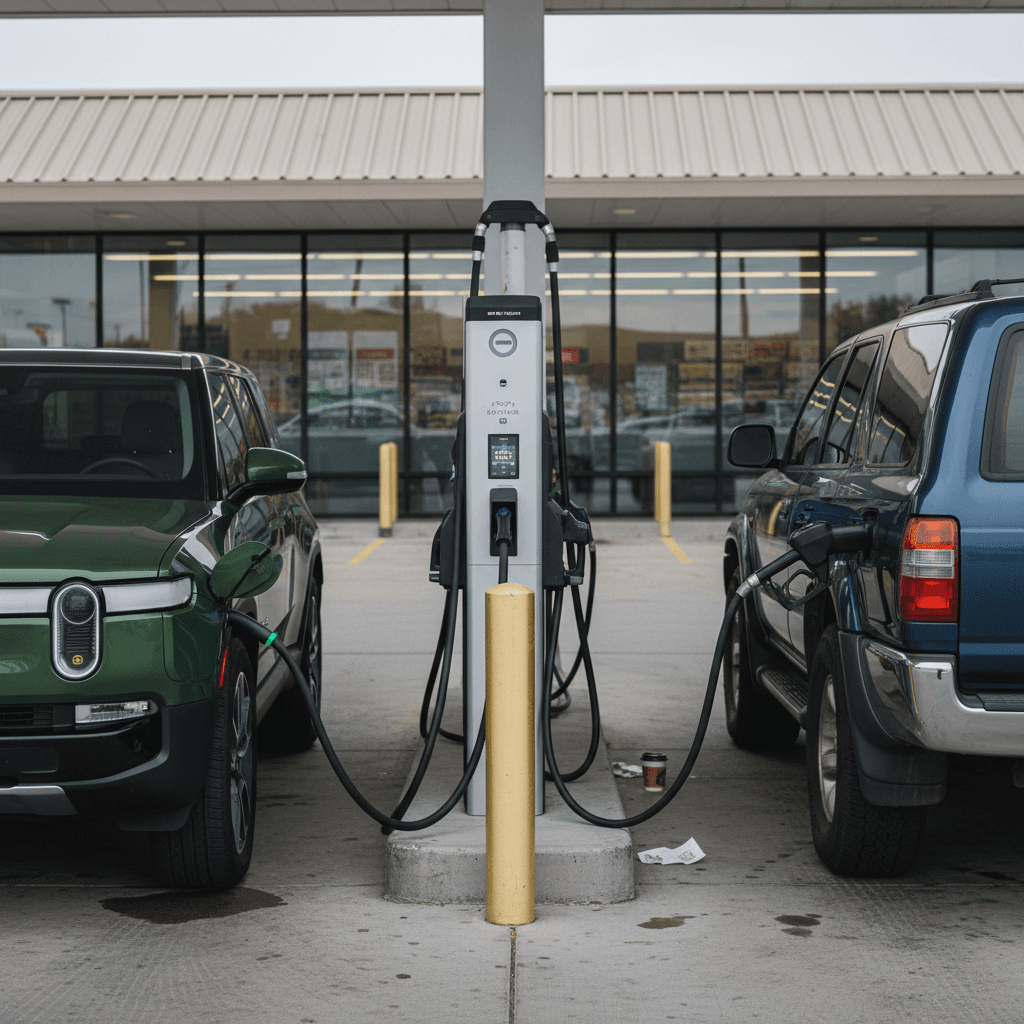
When electricity can be more expensive
Maintenance and repairs: where EVs usually win
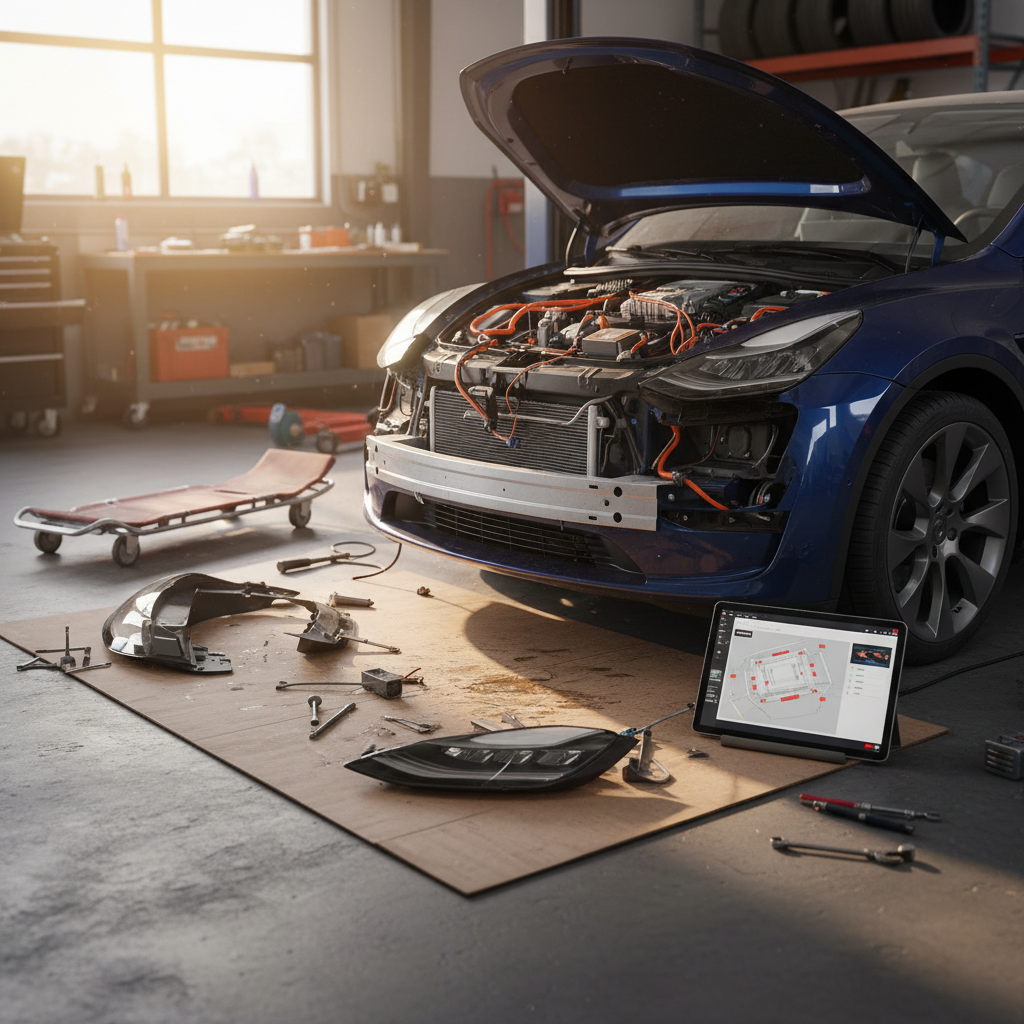
The Rivian R1S eliminates whole systems that drive maintenance on gas SUVs: no engine oil, spark plugs, exhaust, or multi‑gear automatic transmission. It still has brakes, tires, suspension, cooling, and a complex electronics stack, but the maintenance profile is very different from a Tahoe or X7.
Typical maintenance patterns: Rivian R1S vs gas SUV
Exact numbers vary by brand and use, but the pattern is consistent.
Rivian R1S
- No oil changes, timing chains, or exhaust work.
- Long brake life thanks to strong regenerative braking, though heavy off‑road use changes that.
- Over‑the‑air software updates instead of some dealer visits.
- Expect higher‑than‑average tire wear, heavy weight and torque chew through rubber.
Third‑party estimates suggest annual maintenance and repairs often fall in the $600–$900/year range once out of warranty, though the real‑world dataset is still young.
Comparable gas SUV
- Regular oil and filter changes every 5,000–10,000 miles.
- Transmission fluid services, spark plugs, belts, and occasionally more complex engine work over time.
- Emissions‑related components (O2 sensors, catalytic converters) can fail out of warranty.
- Also faces high tire costs for large wheel/tire packages.
All‑in, a luxury or near‑luxury 3‑row SUV can easily average $1,200–$1,600/year in maintenance and repairs over a 10‑year horizon.
How Recharged helps on maintenance risk
Insurance, taxes, and fees
Insurance and taxes don’t favor EVs as cleanly as energy and maintenance do. The Rivian R1S is a high‑value, high‑performance vehicle with expensive components, and insurers price that in.
- Insurance: In many ZIP codes, an R1S will cost more to insure than a mainstream gas SUV, and similar to or slightly more than a premium German SUV. Think in the range of 10–25% higher than something like a Chevy Tahoe, assuming comparable driver profiles.
- Registration & taxes: Some states offer lower registration fees for EVs or reduced emissions‑testing hassles. Others add EV road‑use fees to replace lost gas tax revenue. Over a decade, this category is usually a wash unless your state is particularly aggressive one way or the other.
- Home charging setup: If you don’t already have a 240V outlet, a basic Level 2 home charger install might run $800–$2,000 depending on panel capacity and distance from your service panel. This is a one‑time cost that spreads out over years of ownership.
Don’t forget the one‑time install cost
Depreciation and resale value
Depreciation has been the swing factor for many EV owners over the last few years. Rapid improvements in range and charging, combined with changing incentives and high interest rates, have pushed down used EV prices faster than many gas vehicles. Rivian is no exception, but large luxury SUVs also depreciate heavily.
Rivian R1S depreciation profile
- Like most premium EVs, the R1S has seen significant early‑year depreciation as the used market finds equilibrium.
- That’s bad news if you buy new, but potentially very good news if you’re buying 2–4 years old at today’s prices.
- Battery health and software support heavily influence long‑term value. A documented, healthy pack can keep residuals stronger.
Buying used shifts a lot of the early depreciation onto the first owner, and that’s where the value opportunity lies.
Gas 3‑row SUV depreciation profile
- Large SUVs from mainstream brands (Chevy, Ford, Jeep) usually lose a big chunk of value in the first 3–5 years, then stabilize as their used‑car audience broadens.
- Premium brands (BMW, Mercedes) can hold value reasonably well if maintained, but repairs get expensive as they age, which caps values.
- There’s less technology obsolescence risk than in EVs, but also less upside from new software features.
In dollar terms, a similarly priced gas SUV and R1S can both shed $25,000–$40,000 of value in their first 5–6 years, depending on brand, incentives, and mileage.
Why battery health matters so much for EV depreciation
Five‑year total cost of ownership: side‑by‑side math
Now let’s roll energy, maintenance, and approximate insurance differences into a simple 5‑year picture. We’ll assume both vehicles are bought lightly used (roughly 2–3 years old) for similar money, so the purchase price and depreciation hit are comparable.
Illustrative 5‑year ownership costs (12,000 mi/year)
Purchase price and depreciation are treated as roughly equivalent between the used Rivian R1S and a similarly priced used gas SUV for this example, so we focus on running costs.
| Category (5 years) | Rivian R1S (used) | Gas 3‑row SUV (used) | Notes |
|---|---|---|---|
| Energy | ≈$5,000 | ≈$9,300 | R1S assumes ~$1,000/yr electricity; gas SUV ~$1,860/yr fuel. |
| Maintenance & repairs | ≈$4,000 | ≈$7,000 | R1S at ~$800/yr; gas SUV ~$1,400/yr as it ages. |
| Insurance | ≈$7,500 | ≈$6,500 | Assumes the R1S costs ~15% more to insure. |
| EV charging install | ≈$1,500 | $0 | One‑time Level 2 home install for the R1S. |
| Registration, taxes, misc. | ≈$3,000 | ≈$3,000 | Assumed roughly equal over 5 years. |
| Subtotal (running costs) | ≈$21,000 | ≈$25,800 | Excludes depreciation, which we assume is similar in this used‑purchase scenario. |
All numbers are rounded estimates. Customize these figures with your own quotes for a more precise comparison.
Under these assumptions, the Rivian R1S comes out roughly $4,800 ahead over 5 years on running costs alone, even after you pay for a home charging install and somewhat higher insurance. If you drive more than 12,000 miles per year, the fuel savings grow faster and the EV’s advantage widens.
High‑mileage drivers tilt the scales toward EVs
10‑year outlook and the role of battery health
Over 10 years, the compounding effect of lower energy and maintenance costs becomes more dramatic, but only if the Rivian’s battery and power electronics hold up well. That’s where due diligence, and buying used with good diagnostics, really pay off.
Key 10‑year cost factors for a Rivian R1S
Battery health over time
Modern EV packs are designed to retain the majority of their capacity well past 100,000 miles, but real‑world outcomes depend on climate, fast‑charging habits, and software updates. A healthy pack preserves both range and resale value.
Out‑of‑warranty repairs
After factory coverage ends, you’ll want to budget for wear items, potential suspension work, and complex electronics. This isn’t unique to Rivian; high‑end gas SUVs have similar or higher out‑of‑warranty risk.
Charging behavior
If your 10‑year plan involves mostly home charging at stable rates, your long‑term energy savings are predictable. If you rely heavily on DC fast charging, particularly at high prices, you should model higher energy costs and some added battery wear.
Software and support
EVs depend heavily on software. Over a decade, ongoing updates and parts availability from the manufacturer will influence both usability and resale value.
Why a used R1S with a strong Recharged Score is compelling
When a Rivian R1S saves you money, and when it doesn’t
The Rivian R1S isn’t universally cheaper than a gas SUV in every scenario. The economic story is very good in the right conditions, and less clear in others. Here’s how to sanity‑check your own use case.
Scenarios where the R1S shines vs where gas can still make sense
Use these as guardrails when thinking about your own situation.
Rivian R1S usually wins when…
- You can charge at home, mostly at off‑peak or standard residential rates.
- You drive at least 12,000–15,000 miles per year.
- You’re open to buying lightly used, letting someone else eat the steepest depreciation.
- You value smooth performance, quiet driving, and strong winter traction as part of the ownership "return."
Gas SUV can still make sense when…
- You can’t install home charging and must rely on expensive public fast charging.
- Your annual mileage is low (under about 8,000 miles), so fuel savings are small.
- Your local electricity rates are very high relative to gas prices.
- You can get a deep discount on a used gas SUV with strong reliability and low running costs.
How buying a used Rivian R1S changes the math
For many shoppers, the smartest way to make a Rivian R1S “win” financially over a gas SUV is to start with a used vehicle with verified battery health. That way you get most of the EV’s long‑term savings without paying new‑car money.
Advantages of a used R1S vs new
- Someone else absorbs the steepest 2–3 years of depreciation.
- You can see real‑world reliability and owner feedback before you buy.
- Tools like the Recharged Score give you quantified battery health, so you’re not guessing about pack condition.
- Lower purchase price means you finance less, which cuts interest costs.
How Recharged fits into the picture
Recharged is built specifically for used EV buyers. When you shop an R1S on our platform, you get:
- A transparent Recharged Score Report with battery diagnostics and pricing that reflects real‑world condition.
- Financing options tailored to EVs, including pre‑qualification with no impact to your credit.
- Trade‑in and consignment options if you’re moving out of a gas SUV.
- Expert EV specialists who can walk you through the cost differences for your exact driving pattern.
FAQ: Rivian R1S vs gas SUV costs
Frequently asked questions
Bottom line: should you pick a Rivian R1S over a gas SUV?
If you drive a meaningful number of miles each year, can install home charging, and are open to buying a lightly used Rivian R1S with verified battery health, the numbers tend to favor the EV over a comparable gas SUV. Energy and maintenance savings stack up steadily, and over 5–10 years they usually outweigh slightly higher insurance costs and the one‑time expense of a home charger.
On the other hand, if you drive very little, face unusually high electricity prices, or would be forced to rely on expensive DC fast charging, the cost advantage narrows and may even flip in favor of a well‑chosen gas SUV. That’s why it’s worth running your own numbers using the framework in this guide.
If you’re ready to explore a Rivian R1S, or any used EV, Recharged can help you compare options, understand real‑world battery health, line up financing and trade‑in options, and see how the total cost of ownership stacks up against the gas SUV in your driveway. That way, when you do make the switch, you’re not just buying an EV, you’re buying a better long‑term deal.