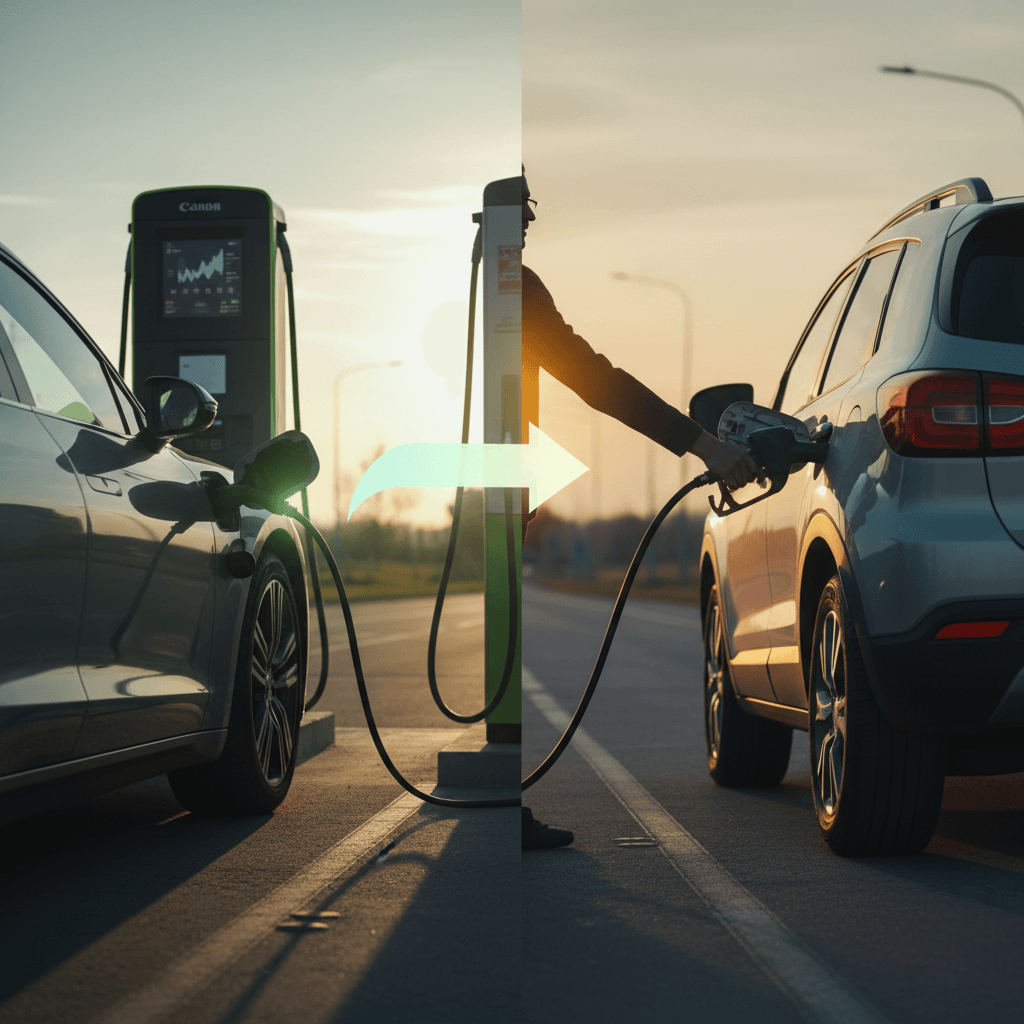
If you drive about 40 miles a day, you’re in the sweet spot where an electric vehicle can quietly demolish a gas car on fuel costs. In 2025–2026, with gas flirting with $4 a gallon in many places and electricity still relatively stable, the EV vs gas cost for a 40‑mile commute isn’t a close call, especially if you can charge at home.
Quick answer
Why a 40‑Mile Commute Is the Perfect EV vs Gas Test
A 40‑mile round trip, 20 miles each way, is a Goldilocks commute: long enough that fuel costs really add up, but short enough that every modern EV can handle it on a single charge, even in winter. That makes it an ideal real‑world scenario to compare electric vs gas cost per mile without worrying about range drama or road‑trip edge cases.
- 40 miles x 5 workdays = about 200 miles per week
- That’s roughly 800–900 miles per month, depending on vacations and errands
- Over a year, you’re looking at 10,000–12,000 commuting miles, enough to feel every penny per mile
Think in cents per mile
Key Numbers: Prices, Efficiency and Assumptions
Before we start crunching the EV vs gas cost for a 40‑mile commute, we need a clean set of assumptions. You can (and should) tweak these later for your own situation, but here’s a realistic 2025–2026 baseline for a U.S. commuter.
Baseline assumptions for 2025–2026
To keep the math honest, we’ll run three gas‑car scenarios (25, 30 and 40 mpg) and two EV scenarios (efficient and average). Then we’ll show you how those pennies per mile roll up into daily, monthly, and annual commuting costs.
EV Cost for a 40‑Mile Commute
Most modern EVs land between about 3 and 4 miles per kWh in mixed driving. For commuter duty, especially at suburban speeds, you’re often at the upper end of that range. Let’s walk through two sample EVs for a 40‑mile day, assuming home charging at 17¢/kWh.
Sample EV cost for a 40‑mile daily commute
Two realistic efficiency scenarios, assuming home charging at 17¢/kWh.
| Scenario | Efficiency (mi/kWh) | kWh per 40 miles | Electricity price | Daily cost | Monthly cost* | Annual cost* |
|---|---|---|---|---|---|---|
| Efficient EV (compact sedan) | 4.0 mi/kWh | 10.0 kWh | $0.17/kWh | $1.70 | $37 | $450 |
| Typical EV (small SUV) | 3.2 mi/kWh | 12.5 kWh | $0.17/kWh | $2.13 | $46 | $560 |
Your exact numbers will vary, but this shows how cheaply most EVs cover a 40‑mile round trip.
*Monthly assumes 22 workdays; annual assumes 260 commuting days. If your rate is lower, say, 13–14¢/kWh overnight, the daily cost slides even closer to $1 for 40 miles in an efficient EV.
What if you can’t charge at home?

Gas Cost for a 40‑Mile Commute
Gasoline math is simpler: you just divide miles by miles‑per‑gallon, then multiply by the price per gallon. What makes it tricky in real life is that your car’s EPA sticker number rarely matches your stop‑and‑go commute, and gas prices can swing wildly year to year.
Sample gas cost for a 40‑mile daily commute
Three different fuel‑economy scenarios at two gas prices.
| Scenario | Real‑world MPG | Gallons per 40 miles | Gas at $3.25/gal | Gas at $4.00/gal | Monthly cost* at $3.25 | Monthly cost* at $4.00 |
|---|---|---|---|---|---|---|
| Thirsty compact SUV | 25 mpg | 1.60 gal | $5.20 | $6.40 | $114 | $141 |
| Typical modern sedan | 30 mpg | 1.33 gal | $4.32 | $5.33 | $95 | $117 |
| Efficient hybrid | 45 mpg | 0.89 gal | $2.89 | $3.56 | $63 | $78 |
If your commute is mostly city traffic, use the 25 mpg row. If it’s smoother highway, you may be closer to 35–40 mpg.
Again assuming 22 commuting days per month, even a very efficient hybrid can’t quite match a typical EV’s fuel cost per day when you’re charging at home. The gap gets wider as you move toward crossovers and compact SUVs, exactly where many commuters shop.
EV vs Gas: Side‑by‑Side Cost Comparison
Cost per mile
- Efficient EV (4 mi/kWh @ 17¢): about 4.3¢ per mile
- Typical EV (3.2 mi/kWh @ 17¢): about 5.3¢ per mile
- Gas car (30 mpg @ $3.25): about 10.8¢ per mile
- Gas car (30 mpg @ $4.00): about 13.3¢ per mile
Even on a modest 40‑mile day, the EV is usually less than half the cost per mile of a comparable gas car.
Daily, monthly, yearly
- Efficient EV (40 miles): ~$1.70/day → ~$37/month → ~$450/year
- Typical EV (40 miles): ~$2.13/day → ~$46/month → ~$560/year
- Gas car, 30 mpg @ $3.25: ~$4.32/day → ~$95/month → ~$1,130/year
- Gas car, 30 mpg @ $4.00: ~$5.33/day → ~$117/month → ~$1,385/year
Annual difference: A typical EV vs a 30‑mpg gas car can easily save $500–$900 per year on fuel for a 40‑mile commute alone.
Where a used EV shines
Ready to find your next EV?
Browse VehiclesHow Electric Rates and Gas Prices Change the Math
Energy prices move. Your EV vs gas cost for a 40‑mile commute will look different in rural Oklahoma than in coastal California. But the basic relationships hold up across most of the U.S., you just plug in different prices.
Three quick “what if” scenarios
How sensitive your 40‑mile commute is to gas and electricity swings
Gas spike, normal electricity
Gas at $4.25/gal, power at 17¢/kWh
Your 30‑mpg car jumps to about 14.2¢/mi (~$5.68/day), while a typical EV stays near 5¢/mi (~$2/day). Savings grow to roughly $900–$1,000/year for that 40‑mile commute.
High electricity, cheap gas
Gas at $3.00/gal, power at 25¢/kWh
A 30‑mpg gas car runs about 10¢/mi (~$4/day). A 3.2 mi/kWh EV at 25¢ is about 7.8¢/mi (~$3.10/day). EV still wins, but the margin is slimmer, maybe $200–$300/year instead of $600+.
Off‑peak charging win
Gas at $3.50/gal, off‑peak power at 12¢/kWh
Scheduled overnight charging drops an efficient EV to ~3¢/mi (~$1.20/day). Against a 30‑mpg gas car at 11.7¢/mi (~$4.68/day), your 40‑mile commute saves about $800–$900 per year.
Ask your utility about off‑peak EV rates
Home Charging vs Public Charging for Commuters
The EV vs gas story for a 40‑mile commute is incredibly strong if you can plug in at home. It’s more nuanced if you rely on public charging, especially DC fast charging along highways or at high‑traffic urban stations.
Cost impact of different charging habits
How your daily 40‑mile commute cost changes with different charging mixes.
| Charging mix | Typical price | Effective EV cost per mile* | 40‑mile daily cost | Approx. monthly spend |
|---|---|---|---|---|
| 100% home Level 2 | 17¢/kWh | 5.3¢/mi (3.2 mi/kWh) | $2.13 | $46 |
| 80% home, 20% public Level 2 | 17–30¢/kWh blended | ~6–7¢/mi | $2.40–$2.80 | $53–$62 |
| 50% home, 50% DC fast | 17–45¢/kWh blended | ~8–11¢/mi | $3.20–$4.40 | $70–$97 |
| Mostly DC fast | 40–55¢/kWh | 12–16¢/mi | $4.80–$6.40 | $105–$140 |
Public DC fast charging is fantastic for road trips and emergencies, but it’s a pricey way to fuel a commuter car.
*Assumes a typical 3.2 mi/kWh EV. Efficient models will skew slightly lower, big trucks a bit higher. Once fast‑charging rates creep into the 40–50¢/kWh range, your fuel cost starts to look more like an average gas car’s, only with less variability day to day.
The one scenario where a gas car may win
Beyond Fuel: Maintenance, Depreciation and Time
Fuel is only one line on your spreadsheet. Over a few years of 40‑mile commuting, you’ll feel differences in maintenance, resale, and even how much time you spend fueling.
Other costs that matter on a 40‑mile commute
Fuel is the headline, but not the whole story
Maintenance
EVs skip oil changes, spark plugs, exhaust systems, and complex transmissions. You’ll still buy tires, cabin air filters, and brake fluid, but many commuters see lower routine maintenance costs than with a gas car.
Battery health
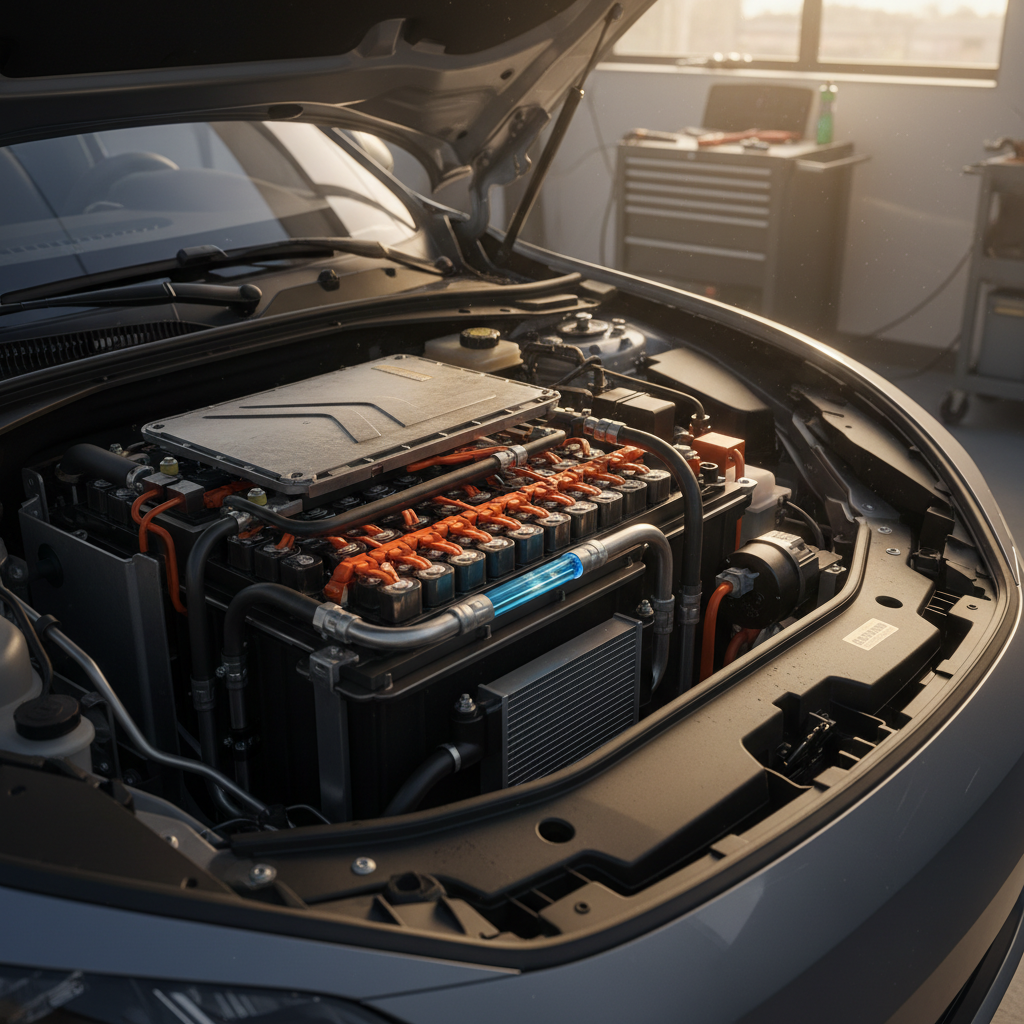
A gentle 40‑mile daily cycle is easy duty for most packs, especially if you’re not fast‑charging every day. On Recharged vehicles, the Recharged Score includes a battery‑health snapshot so you know what you’re buying in a used EV.
Your time
With home charging, “fueling” is plugging in once in the evening and unplugging in the morning. No weekly gas‑station detours. Over a year of commuting, that’s hours of your life back.
For a typical 40‑mile commute, the fuel savings from an EV are real, but the quiet, low‑maintenance daily routine is what converts most people for good.
When a Used EV Makes the Most Sense for Commuters
If you’re commuting 40 miles a day, a used EV can hit a sweet spot: lower upfront price, strong fuel savings, and battery usage that’s well within the car’s comfort zone. The key is knowing the health of the pack and paying the right price for the miles already on the clock.
Is a used EV right for your 40‑mile commute?
1. You can reliably charge at home
A driveway or garage with access to a 120V or 240V outlet is the single biggest predictor that an EV will save you money on a 40‑mile commute. If you’re apartment‑based, check whether your building or workplace offers charging.
2. Your daily round trip is within 60–80% of real range
You want a comfortable buffer for weather, HVAC, and detours. For a 40‑mile commute, most used EVs with 150+ miles of real‑world range are more than adequate.
3. You have trustworthy battery‑health info
Look for vehicles with documented battery tests. Every EV on Recharged comes with a <strong>Recharged Score Report</strong> that includes independent battery‑health diagnostics, critical when you’re buying used.
4. You’re okay swapping gas stops for plugging in
Owning an EV changes your fueling routine. If the idea of simply plugging in at night appeals more than standing at a pump in February, that’s a good sign.
5. You plan to keep the car a few years
Fuel savings compound over time. At $600–$900 in annual fuel savings for a 40‑mile commute, a three‑ to five‑year ownership window really lets the EV’s lower running costs shine.
Checklist: Calculate Your Own Commute Costs in 10 Minutes
Rules of thumb are helpful, but nothing beats running your own numbers. Here’s a simple way to calculate the EV vs gas cost for your 40‑mile (or any‑length) commute using real prices and your specific vehicles.
DIY EV vs gas commute cost calculator
Step 1: Confirm your daily miles
Use your trip odometer or a maps app for a week. Note round‑trip miles for your usual route, including daycare, coffee stops, or evening activities. Use the <strong>highest typical day</strong> as your working number.
Step 2: Find your electricity rate
Look at your power bill for your <strong>all‑in cost per kWh</strong> (including fees), or log into your utility account. If you’re on a time‑of‑use plan, record both peak and off‑peak rates.
Step 3: Get your EV’s real efficiency
Check your EV’s dash display for average <strong>mi/kWh</strong> over the last few months, or use the EPA combined rating as a starting point. In many commutes, real‑world efficiency is a bit lower than the EPA sticker in winter and a bit higher in mild weather.
Step 4: Calculate EV cost per mile
Use the formula: <strong>Electricity price ÷ mi/kWh = cost per mile</strong>. Example: 17¢ ÷ 3.5 mi/kWh ≈ 4.9¢/mi. Multiply by your daily miles for daily cost, then by 22 for a rough monthly commuting bill.
Step 5: Calculate gas cost per mile
Use: <strong>Gas price ÷ real‑world mpg = cost per mile</strong>. Be honest about your actual fuel economy from the trip computer or fuel‑tracking app, commuter traffic is rarely as kind as the EPA city/highway blend.
Step 6: Compare and annualize
Subtract EV cost per mile from gas cost per mile, then multiply by your annual commuting miles. That tells you how much cash a switch to electric could keep in your pocket each year.
FAQ: EV vs Gas for a 40‑Mile Daily Commute
Frequently asked questions
Bottom Line: Should You Switch to an EV for Your Commute?
When you reduce EV vs gas to the cost for a 40‑mile commute, the numbers tell a simple story. If you can charge at home at roughly average U.S. electricity rates, a typical EV turns that 40‑mile round trip into a $1.75–$3 habit. A similar gas car will usually cost $4–$7 for the same drive, and more when gas spikes.
Over a year of commuting, that difference can easily reach $500–$900 in fuel savings, plus lower routine maintenance and fewer gas‑station stops. Even in regions with pricier electricity, off‑peak rates and reasonable EV efficiency keep the math in your favor most of the time.
If that sounds appealing, a well‑chosen used EV can be an especially smart move. At Recharged, every vehicle comes with a Recharged Score Report for verified battery health and fair pricing, plus EV‑specialist support to help you understand how your commute, energy prices, and budget fit together. Run your own numbers, be honest about where and how you’ll charge, and if the spreadsheet smiles back at you, it may be time to let your last gas commute fade into the rearview mirror.