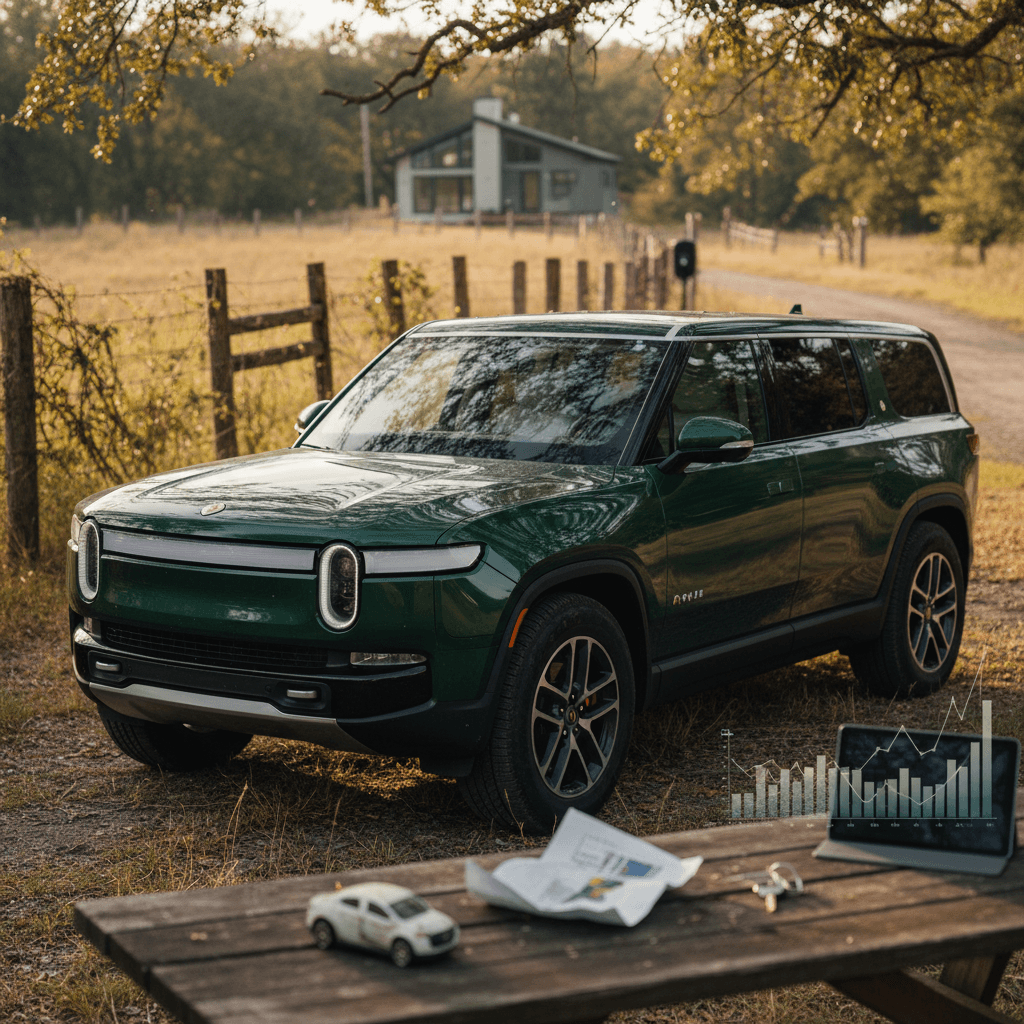
If you're searching for a Rivian R1S 100,000 mile review, you're probably wondering whether this adventure-ready electric SUV still makes sense once the odometer is deep into six figures. That’s a fair question, Rivian is a young brand, and many early R1S SUVs are only now aging out of warranty and racking up serious mileage.
Context: Why 100,000 Miles Is a Big Deal
Quick Take: Is a High-Mile Rivian R1S a Good Idea?
Rivian R1S Past 100,000 Miles: Pros and Cons
What long-term owners and early data are telling us
The Good
- Battery packs are aging well so far, with many owners reporting little to no noticeable degradation even above 60,000–100,000 miles.
- Performance and ride quality stay strong; the R1S still feels like a premium SUV.
- Over-the-air updates keep adding features and refining the driving experience.
The Tradeoffs
- Early-build trucks can have fit-and-finish quirks and software gremlins.
- Some suspension and 12‑volt battery issues have cropped up as miles pile on.
- Service is improving but still less convenient than legacy brands in some areas.
The Money Question
- High-mile R1S pricing can be tens of thousands less than new.
- Lower routine maintenance than a gas SUV, but out-of-warranty repairs can be expensive.
- Battery longevity is promising, good news for used buyers focused on long-term value.
Bottom Line Up Front
Battery Health and Range at 100,000 Miles
When you think "Rivian R1S 100000 mile review," battery health is almost certainly your first concern. The good news: early high-mileage data from R1T and R1S owners suggests very modest degradation so far, even for drivers who fast-charge frequently and don’t baby their packs.
What Owners Report on High-Mile Rivian Packs
In other words, there’s no widespread evidence of rapid Rivian pack fade as mileage climbs. You’ll see the normal EV pattern, some range loss in cold weather, and range estimates that bounce around based on recent driving, but the underlying capacity story looks solid so far.
How to Judge Battery Health on a Used R1S
Real-World Efficiency and Range Expectations
Even with a healthy pack, a 100,000‑mile Rivian R1S won’t deliver EPA numbers in most conditions. This is a heavy, brick-shaped, adventure SUV, and owners consistently report real-world range at 65–75% of the sticker number once you factor in speed, weather, and accessories.
What Owners Commonly See
- On highway trips at 70–75 mph, many R1S drivers report planning around roughly two-thirds of rated range.
- On mixed city/suburban driving at modest speeds, you can often get closer to 75–80% of the official figure.
- Off‑road, towing, roof boxes, and crosswinds can all take big bites out of range, regardless of mileage.
What Changes at 100,000 Miles?
- Assuming a healthy battery, the biggest variable isn’t age, it’s use, how fast you drive, climate, tire choice, and payload.
- You might see small efficiency differences due to tire wear or alignment, but battery age alone isn’t causing dramatic drops for most owners yet.
- Software updates can tweak how the R1S estimates range, which sometimes feels like degradation even when capacity is stable.
Don’t Confuse Range Estimates With Degradation
Reliability and Common Issues as Miles Add Up
High‑mile Rivian R1S ownership is about more than just the battery. As with any new marque, early trucks have had a mix of minor annoyances and a few more serious issues, some of which become more visible beyond 50,000–100,000 miles.
Typical Trouble Spots Reported by Long-Term Owners
Not every R1S will see these, but they’re worth checking on a high-mile example
Software & Infotainment
- Occasional screen freezes or glitches after over‑the‑air updates.
- Rare need for a hard reset or brief service visit.
- Improving over time, but something you’ll notice more than mechanical issues.
Suspension & Alignment
- Some owners report clunks, noises, or alignment drift with higher mileage, especially if the vehicle has seen off‑road use.
- Rivian has issued suspension‑related recalls and service campaigns; verify completion on any high‑mile truck you’re considering.
12‑Volt Battery & Misc.
- 12‑volt battery replacement is a known maintenance item; some owners have needed a new unit earlier than expected.
- Minor fit‑and‑finish items, trim, seals, rattles, show up as miles and years accumulate, similar to other large SUVs.
Recent Recall Note
Maintenance: Tires, Brakes, and Running Costs
An electric SUV like the R1S eliminates oil changes, spark plugs, and transmission services, but it’s not maintenance‑free, especially at and beyond 100,000 miles. The biggest consumables are tires, alignment, and suspension components.
Typical Maintenance Touchpoints by 100,000 Miles
These are patterns seen in owner reports and EV maintenance norms, not a replacement for the official maintenance schedule.
| Item | Likely Status by 100k Miles | What to Ask/Check |
|---|---|---|
| Tires | On 2nd or 3rd set | Uneven wear? Noise? Recent replacement with quality, load‑rated tires? |
| Brakes | Plenty of life left | Any pulsing or noise? Evidence of corrosion on rotors in winter climates? |
| Suspension Components | May show wear | Any clunks, squeaks, or floaty feel over bumps? Alignment records? |
| 12‑Volt Battery | Often replaced once | When was it last replaced? Any history of no‑start conditions? |
| Cabin Air Filter & Fluids | Should have been serviced multiple times | Service records for filters, brake fluid, and cooling system checks? |
| Glass & Seals | Dependent on climate and roads | Any wind noise, leaks, or cracked glass from off‑road use? |
Actual wear will depend heavily on driving style, road quality, and how much off‑road or towing the R1S has done.
Use EV Strengths to Your Advantage
Depreciation and Resale Value of a High-Mile R1S
Depreciation is where the Rivian R1S 100000 mile review gets interesting. Like most luxury EVs, early R1S models took a sizable hit in the first few years as new‑EV prices, incentives, and interest rates all shifted. The upside: a high‑mile R1S can now cost dramatically less than a new build while delivering similar capability.
- High-mile examples usually trade at a steep discount to low‑mile, late‑build trucks, even when the battery is healthy.
- Because the battery appears to age well, the main value questions revolve around out-of-warranty repairs and how much you value the latest hardware revisions.
- Three-row electric SUVs are still relatively rare, which helps support demand for clean, well‑optioned R1S models, even with higher mileage.
Watch Model Year and Hardware Generation
What to Check on a Used Rivian R1S With 100k Miles
If you’re serious about a six‑figure‑mileage R1S, you want more than a quick test drive. You want to know how it’s been used, how it’s been charged, and what the data says about the battery and key components.
High-Mileage Rivian R1S Inspection Checklist
1. Pull a True Battery Health Report
Don’t rely solely on the range estimate. Use a professional report, like the <strong>Recharged Score</strong>, that analyzes charge sessions and pack behavior to estimate remaining capacity and spot abnormalities.
2. Review Service & Recall History
Confirm that all open recalls and campaigns are complete, especially around suspension, software, and safety systems. Ask for invoices or a digital service history from Rivian.
3. Inspect Tires, Wheels, and Alignment
Uneven tire wear or constant steering correction can point to alignment or suspension issues. On an off‑roaded truck, check wheels and underbody for impact damage.
4. Listen for Suspension & Body Noises
On the test drive, find a bumpy road. Clunks, rattles, or squeaks over imperfections or when changing ride height are worth investigating before purchase.
5. Test All Doors, Seats, and Glass
Power liftgate, third‑row access, seat controls, window regulators, and the panoramic roof should all operate smoothly, especially important on a three‑row family SUV.
6. Evaluate Charging Behavior
If you can, observe a DC fast‑charge session. Extremely low charge rates or repeated session failures can signal issues that deserve closer inspection.
Avoid Buying Blind
How Recharged Evaluates High-Mileage Rivians
Buying a high‑mile R1S is very different from grabbing a used gas SUV off a corner lot. That’s why every Rivian we list at Recharged goes through an EV‑specific intake process designed to answer the questions that matter most to long‑term owners.
Inside the Recharged Score for a Used Rivian R1S
How we de‑risk high‑mileage EVs for buyers
Deep Battery Diagnostics
Mechanical & Safety Review
Fair Market Pricing & Support
Why This Matters for 100,000-Mile Buyers
FAQ: Rivian R1S 100,000-Mile Ownership
Rivian R1S 100,000-Mile Review – Common Questions
Should You Buy a 100,000-Mile Rivian R1S?
If you’re looking for a rugged, three‑row electric SUV that can handle road trips, ski runs, and the occasional trail, a well‑vetted, high‑mile Rivian R1S can make a lot of sense. Early evidence suggests the battery and drivetrain age gracefully, and you can often buy into Rivian’s capability and design at a substantial discount once the odometer hits six figures.
The flip side is that this is still a premium, complex vehicle from a young automaker. Out‑of‑warranty repairs, especially for suspension or electronics, can add up. That’s why you should treat a Rivian R1S 100000 mile review as a starting point, and insist on real battery diagnostics, a documented service history, and a careful inspection of any individual SUV you’re considering.
If you’d rather not navigate that alone, shopping through Recharged gives you access to a curated selection of used EVs, often including Rivian R1S models, with a transparent Recharged Score, expert EV guidance, financing, trade‑in options, and nationwide delivery. That way, when you do decide to bring home a high‑mile R1S, you’ll know exactly what you’re getting for the next 100,000 miles.