If you’ve just moved into an EV, the first surprise is often what happens when you lift off the accelerator. Instead of coasting, the car slows, sometimes gently, sometimes like you’ve brushed the brake pedal. That’s regenerative braking, and most modern EVs let you choose how aggressive it is. In this guide, we’ll put regenerative braking levels side by side so you can pick the setting that fits your driving style, your passengers, and your range goals.
Quick definition
What Is Regenerative Braking, Really?
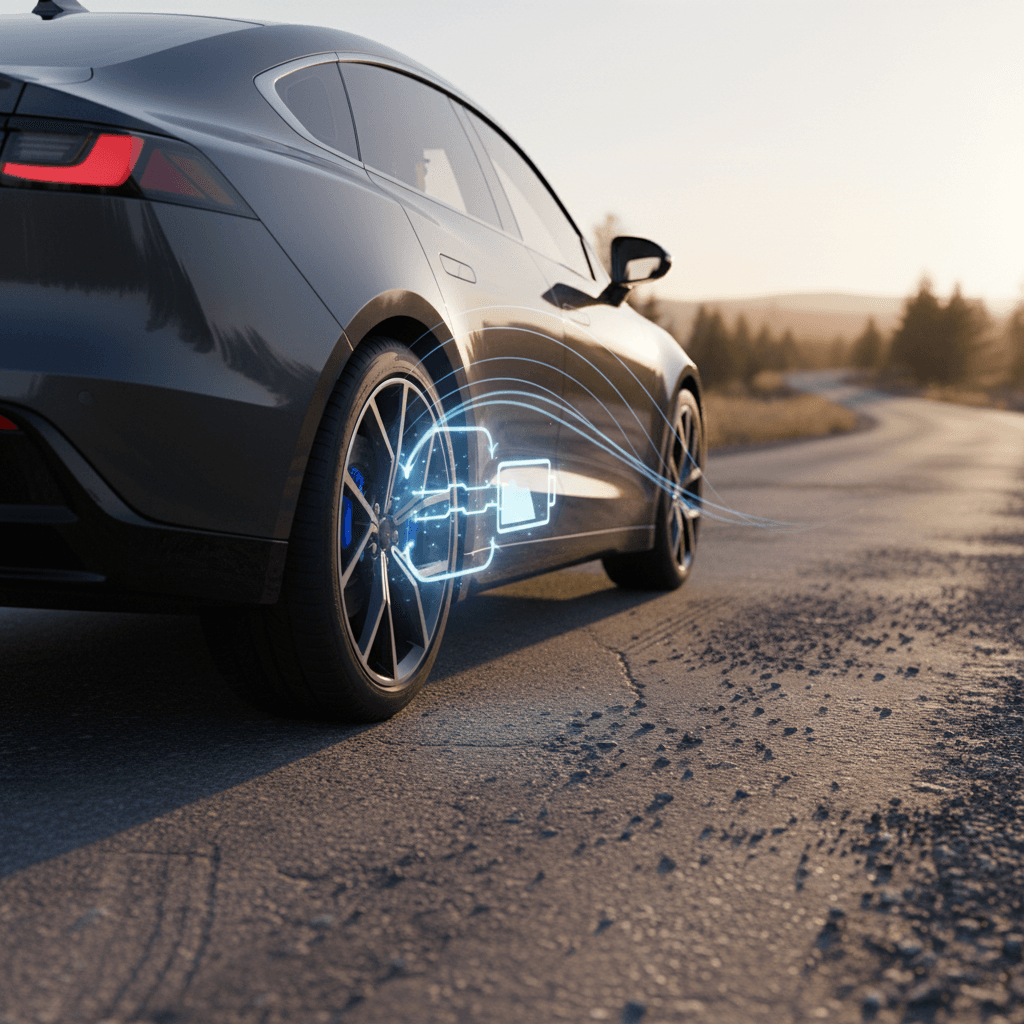
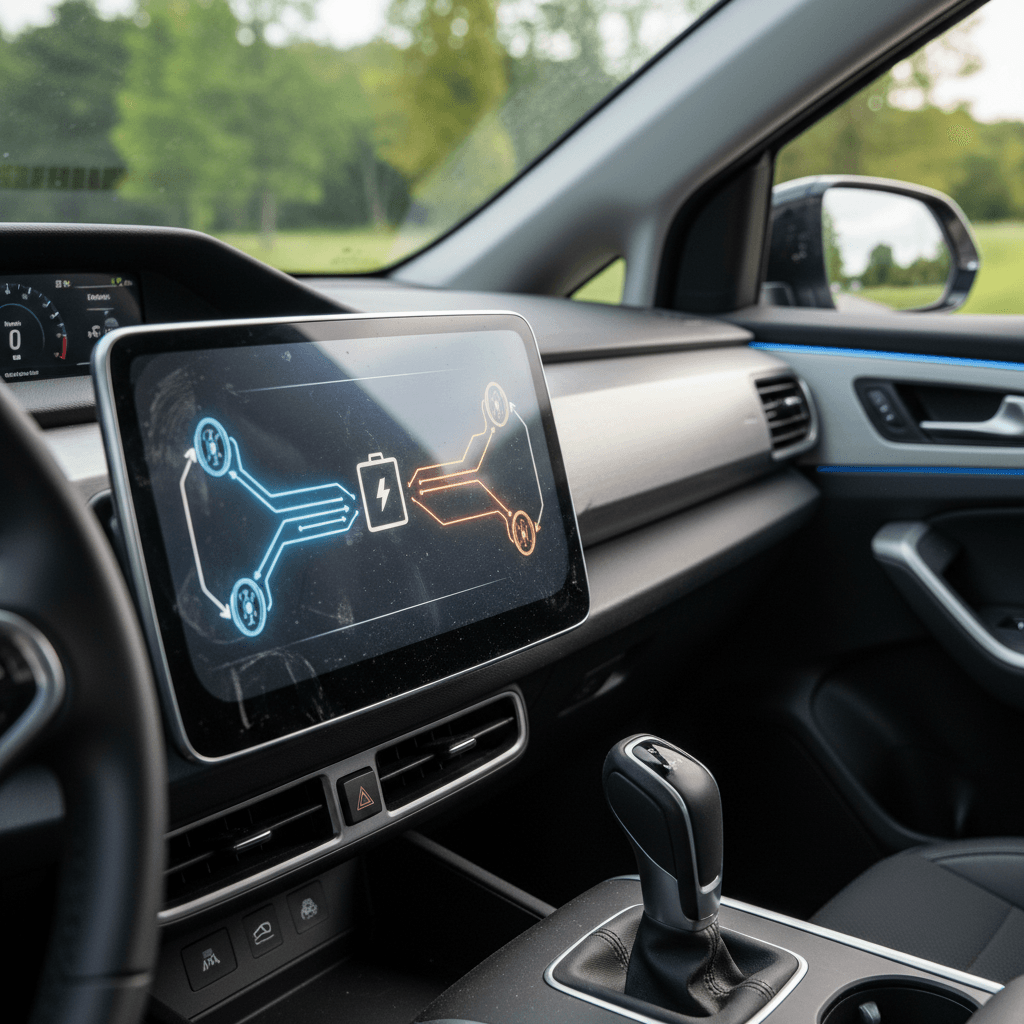
In a gasoline car, braking converts motion into heat at the brake pads and rotors. That energy is gone forever. In an EV, the traction motor can run backward as a generator. When you come off the accelerator, or press the brake pedal gently, the car’s control system uses the motor to slow the wheels and push electricity back into the battery. That’s regenerative braking.
- Low regen: The car mostly coasts; you use the brake pedal more, like a traditional automatic.
- Medium regen: Noticeable deceleration when you lift, similar to downshifting a gas car.
- High / one‑pedal regen: Lift your foot and the car slows aggressively, often down to or near a complete stop. Many drivers barely touch the brake pedal in town.
Most EVs blend regen and friction braking. Press the pedal lightly and you get mostly regeneration; push harder and the hydraulic brakes join in. The exact blending, and how many regen levels you can choose, varies widely by brand, which is where things get interesting.
How Regenerative Braking Levels Work
Think of regen levels as a sliding scale of lift‑off deceleration. They don’t usually change how hard the car can brake in an emergency, that’s still handled by the pedal and ABS. Instead, they change what happens when you simply come off the accelerator.
What changes between regen levels?
Same hardware, different software tuning
Amount of generator torque
Lift‑off deceleration rate
Battery charge acceptance
Regen isn’t always available
Common Regenerative Braking Level Schemes by Brand
Carmakers have taken wildly different approaches to regen levels and how much control they give you. Here’s how some popular systems compare so you can translate those settings into real‑world behavior.
How different EVs handle regen levels
Examples of common regenerative braking level designs. Exact behavior can vary by model year and software version, but the patterns are consistent.
| Brand / System | Selectable Levels | Control Method | One‑Pedal Driving? | Notes |
|---|---|---|---|---|
| Tesla (Model 3/Y, S/X) | 2 main: Standard, Low | Touchscreen menu | Yes (Standard behaves like light one‑pedal) | No paddle control; some models now default to higher regen with strong lift‑off decel. |
| Hyundai / Kia (Ioniq 5, EV6 etc.) | 0, 1, 2, 3 + i‑Pedal + Auto | Steering‑wheel paddles | Yes (i‑Pedal) | Regen 0 coasts; 1–3 are progressively stronger. Hold left paddle for max regen; i‑Pedal gives true one‑pedal in traffic. |
| Nissan (Leaf, Ariya) | D, B, e‑Pedal modes | Shifter + console button | Yes (e‑Pedal) | B adds stronger lift‑off regen; e‑Pedal can bring the car almost to a stop. |
| VW Group (ID.4, Audi Q4 e‑tron) | D, B + some profiles | Shifter + drive modes | Partial | B increases regen but still not as strong as Tesla or Hyundai i‑Pedal in many cases. |
| GM Ultium (Lyriq, Blazer EV, etc.) | Regen level + "Regen on Demand" paddle | Touchscreen + paddle | Yes (strongest level) | Paddle can add strong, momentary regen even if base setting is low, handy for fine control. |
| Ford (Mustang Mach‑E, F‑150 Lightning) | Standard / One‑Pedal toggle | Touchscreen | Yes (One‑Pedal) | One‑pedal mode is aggressive; standard mode feels closer to a conventional automatic. |
Use this as a translation guide when switching between brands or test‑driving used EVs.
Quick translation
Regen Levels Compared by Driving Feel
The easiest way to compare regenerative braking levels is by how they feel in your right foot and your passengers’ necks. Below is a cross‑brand, driving‑feel spectrum you can map onto almost any EV, even if the labels are different.
Low or zero regen (coasting‑biased)
Think: Hyundai/Kia Level 0, VW "D" mode, Tesla on Low, some GM setups at their gentlest.
- Feel: Lifting off gives only mild slowing; it feels like a conventional automatic in top gear.
- Best for: Highway cruising in light traffic, new EV drivers, motion‑sensitive passengers.
- Downside: You’re leaving some energy on the table and using the brake pedal more.
Medium regen (engine‑braking feel)
Think: Hyundai/Kia Level 1–2, VW "B" mode, many default settings.
- Feel: Lifting off slows the car noticeably, like downshifting a gas car one or two gears.
- Best for: Everyday mixed driving, rolling suburban traffic, mild hills.
- Downside: Still need the pedal for final stopping; some passengers may notice more pitch.
High regen (strong lift‑off decel)
Think: Tesla Standard, Hyundai/Kia Level 3, Nissan B mode in some profiles.
- Feel: Lift off and the car digs in; you can scrub a lot of speed without touching the brake.
- Best for: Hilly city driving, conserving range in stop‑and‑go traffic, drivers who quickly adapt to EV feel.
- Downside: Can feel abrupt to new EV passengers; requires smoother throttle work.
One‑pedal / max regen
Think: Hyundai/Kia i‑Pedal, Nissan e‑Pedal, Ford and GM One‑Pedal modes.
- Feel: True one‑pedal driving. Time your lift‑off and the car can come to a smooth stop at lights without touching the brake.
- Best for: Dense urban driving, heavy traffic, drivers who enjoy precise control.
- Downside: Steeper learning curve; not everyone loves the constant decel when you ease off.
Watch your passengers
Regen Levels Compared for Efficiency and Range
Here’s the twist: more regen isn’t always more efficient. In city traffic, big lift‑off regen is a win because you’re constantly slowing from moderate speeds and can recapture plenty of energy. On an open highway, though, the most efficient move is simply not to slow down in the first place.
How regen levels typically affect efficiency
Simple rule of thumb
Safety: Brake Lights, Traction and Passenger Comfort
Automakers have quietly spent a lot of engineering effort making higher regen levels feel natural and safe. A few details are worth understanding so you’re not surprised by how your car behaves, or how the driver behind you interprets your deceleration.
Three safety angles for regen levels
It’s not just about range
Brake light behavior
Slippery conditions
Passenger comfort
Don’t use max regen to show off
City vs. Highway: Which Regen Level Should You Use?
There’s no single "correct" regenerative braking level; the right choice depends on speed, traffic, weather and taste. But after watching thousands of EV miles, and listening to owners argue online, some clear patterns emerge.
Choosing regen levels by scenario
1. Dense city traffic
High or one‑pedal regen shines. It reduces pedal fatigue, lets you micro‑adjust gaps with your right foot, and recovers energy from every red light. Just practice smooth lift‑offs so passengers aren’t bobbing.
2. Suburban stop‑and‑go
Medium regen is often the sweet spot, enough decel to feel useful, but not so abrupt that people complain. If your car has an "Auto" mode that looks ahead with radar or cameras, this is a great place to use it.
3. Open highway cruising
Low or coasting‑biased regen usually makes the most sense. Set your speed, leave space, and avoid unnecessary slowing. You’ll still get regen whenever you touch the brake pedal; you’re just not scrubbing speed every time you twitch your foot.
4. Long downhill grades
Crank regen up high before the descent. Watch the power gauge; if regen is maxed and the battery is getting full, downshift (if your car simulates gears) or be ready to use more friction braking to avoid overheating.
5. Wet, icy or gravel surfaces
Consider stepping regen down a level, especially if your car doesn’t have a snow‑specific traction mode. Sudden lift‑off with max regen on a slick corner can feel spooky. Smooth is safe.
6. Teaching a new EV driver
Start with the gentlest regen setting that still feels EV‑distinctive. Once they’re comfortable modulating the accelerator, let them try a higher level on a quiet street so they understand what the car can do.
How to Test and Tune Your Preferred Regen Setting
The best way to compare regenerative braking levels is to treat your EV like a new pair of hiking boots: break them in deliberately. Here’s a simple approach you can run in an afternoon.
A simple plan to "fit" your regen levels
1. Find a quiet, straight stretch of road
Early on a Sunday or in an industrial park after hours works well. You want room to slow from 40–50 mph multiple times without annoying anyone.
2. Start in your gentlest regen setting
Bring the car to 40 mph, then lift completely off the accelerator and count how many seconds it takes to reach 20 mph. Notice the pitch, your body’s motion, and whether the brake lights come on.
3. Repeat at each higher level
Run the same 40–20 mph test at medium and high regen, plus one‑pedal if you have it. Don’t stare at the gauge, pay attention to how easy it is to be smooth and where your passengers start to comment.
4. Practice timing for a smooth stop
Pick a reference point, a sign or light pole, and practice lifting earlier or later so you roll to a stop exactly where you want without touching the pedal. That’s the essence of elegant one‑pedal driving.
5. Log a week in each setting
Once you’ve picked a favorite, live with it for a week. Then try the next setting up or down for another week. Compare your energy consumption and, more importantly, how relaxed you feel in traffic.
6. Save context‑based favorites
Many EVs remember regen per drive mode (Eco, Normal, Sport). You can set Eco with higher regen for city errands and Normal with lower regen for the boring part of your commute.
Why Regen Levels Matter When You’re Buying a Used EV
Regenerative braking levels are easy to ignore on a quick test drive, but they reveal a lot about both the car and its prior owner. When you’re shopping used, especially online, it’s worth paying attention to.
1. Driving feel and family acceptance
A car whose "low" regen is still quite strong may be perfect for you and intolerable for someone in your household. If you’re cross‑shopping, try to drive each candidate in its gentlest and strongest regen modes.
At Recharged, we encourage shoppers to think not just about range and 0–60 times, but about day‑to‑day driveability. Regen tuning is a big part of that.
2. Battery health and regen use
There’s no evidence that using higher regen levels harms a healthy battery, in fact, it tends to keep friction brakes cleaner. But a car that has spent its life doing lots of short, high‑regen trips may show different range patterns than one that mostly cruised the highway.
Every vehicle on Recharged comes with a Recharged Score Report and verified battery health diagnostics, so you can focus on how the car feels rather than guessing how past regen habits might have affected it.
Question to ask a seller
FAQ: Regenerative Braking Levels Compared
Frequently asked questions about regen levels
The Bottom Line on Regenerative Braking Levels
Regenerative braking levels are one of the quiet superpowers of driving electric. Dialed in correctly, they make the car feel calmer in traffic, stretch your usable range, and keep your brake components almost comically fresh. Cranked up blindly, they can make your passengers queasy and your winter commute more stressful than it needs to be.
Use low or coasting‑biased regen when the road is clear and your goal is smooth, uninterrupted progress. Use higher and one‑pedal settings when traffic, hills or urban chaos are scrubbing your speed anyway. And when you’re shopping for a used EV, whether you’re browsing local listings or exploring Recharged’s inventory, take a moment to understand how each model’s regen levels are tuned. It’s one of those subtle details that turns an EV from something you tolerate into something you actually look forward to driving every day.