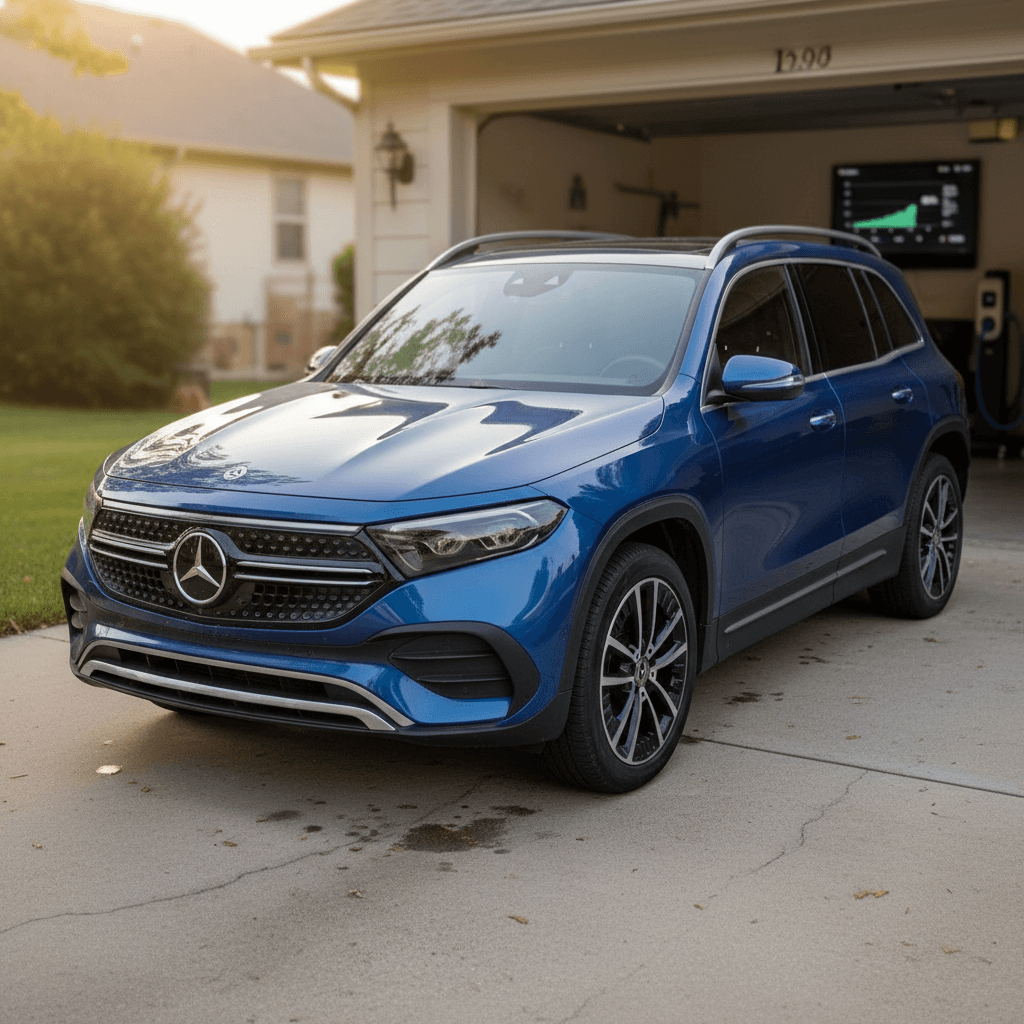
If you’re eyeing a compact luxury EV with three rows, the Mercedes EQB probably sits high on your list. But by 2026, plenty of EQBs are coming off lease, early adopters have stacked 30,000–60,000 miles, and the big question becomes: how does the EQB hold up long term, and is a used one a smart buy?
What this 2026 long‑term EQB review covers
Mercedes EQB long‑term overview in 2026
What owners still like after years
- Comfortable, quiet ride that feels more premium than most mainstream EV crossovers.
- Compact footprint, big interior: boxy GLB roots mean an airy cabin and optional third row.
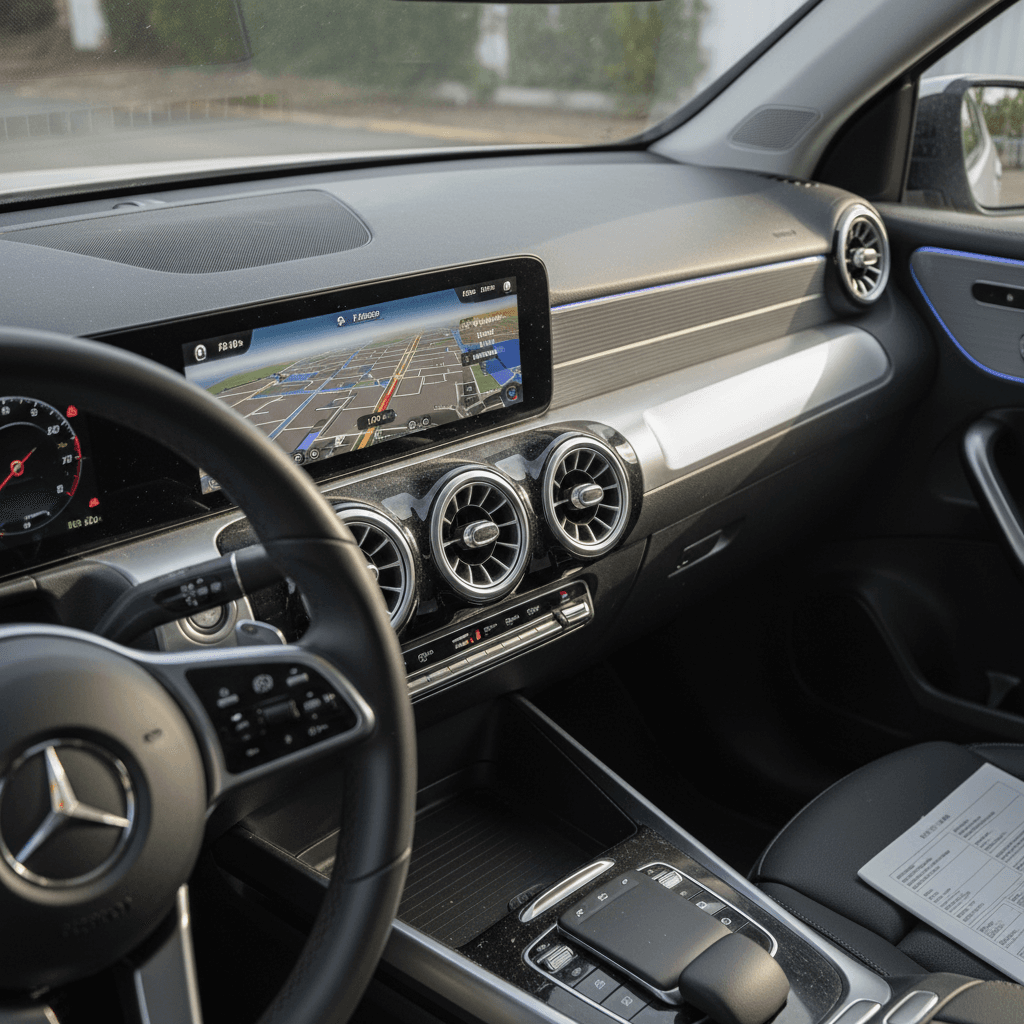
- Familiar Mercedes cabin tech with twin screens and strong driver‑assistance suite.
- Reasonable efficiency for a luxury brick‑shaped SUV, especially in EQB 250+ form.
Where cracks start to show
- Heavy depreciation as early EQ products chase aggressive lease and finance deals.
- Battery‑related recalls on 2022–2024 EQB packs that cap usable charge until repaired.
- Mixed reliability stories: many trouble‑free, but some high‑profile shutdowns and software gremlins.
- Just-OK DC fast charging (~100 kW max), which isn’t class‑leading by 2026.
Mercedes EQB key long‑term numbers (2026 snapshot)
The upshot: as of 2026, the EQB is an appealing value play on the used EV SUV market if you understand its battery recall history, realistic range, and depreciation curve. For family buyers who want a compact, upscale EV with a third row and don’t spend every weekend running 300‑mile road trips, it can make a lot of sense, especially when you buy with verified battery health from a marketplace like Recharged.
EQB 250+, 300 or 350? Trims that matter used
Most used EQBs you’ll see in 2026 fall into three buckets: EQB 250+, EQB 300 4MATIC, and EQB 350 4MATIC. They share the same basic boxy body and battery family, but they don’t drive, or range out, the same way.
Mercedes EQB trims to know on the used market
How the core EQB variants differ for long‑term buyers.
| Trim | Drive layout | Power feel | Official EPA range (approx.) | Best for |
|---|---|---|---|---|
| EQB 250+ | FWD, single motor | Smooth, not fast | ~245–250 miles | Maximizing range and efficiency |
| EQB 300 4MATIC | AWD, dual motor | Noticeably quicker | ~220–230 miles | All‑weather traction, balanced performance |
| EQB 350 4MATIC | AWD, dual motor | Quickest EQB | ~210–220 miles | Drivers who value punch over range |
Specs are typical U.S. figures; exact numbers vary by model year and wheel/tire choice.
Trim choice tip
All three variants benefit from the same practical upright cabin and available three‑row layout. On the used market, you’ll also see big price gaps driven more by options packages (AMG Line, Premium, big wheels, panoramic roof) than by trim alone, so budget‑focused buyers may be better off with a modestly optioned 250+ or 300 that hasn’t spent its life on 20‑inch wheels.
Real‑world range and efficiency over time
The EQB launched with WLTP and EPA numbers that looked fine on paper, but by 2026 we have enough real‑world datapoints to know what these cars actually deliver once the novelty wears off.
Typical EQB highway range after a few years
Based on U.S. highway testing and owner reports in mixed conditions.
EQB 250+
Warm weather, 70 mph: 230–240 miles from 100–0%.
Cold weather, 70 mph: 180–200 miles.
Expect slightly less by year 4–5 due to normal 1–2%/year degradation.
EQB 300 4MATIC
Warm weather, 70 mph: 205–215 miles.
Cold weather, 70 mph: 170–190 miles.
AWD traction comes at the cost of efficiency, especially on highway runs.
EQB 350 4MATIC
Warm weather, 70 mph: 195–205 miles.
Cold weather, 70 mph: 165–185 miles.
The performance edge is obvious, but plan your road trips accordingly.
So far, high‑mileage EQBs, think 40,000–70,000 miles, typically report only modest range loss, in line with other modern EVs: roughly 1–2% of capacity per year when properly maintained and updated. That’s helped by the EQB’s sizeable buffer between the pack’s gross and usable capacity and by Mercedes’ conservative charging strategy.
Watch for software‑limited range
If you buy through a platform like Recharged, the listing’s Recharged Score will call out verified battery health and recent range testing, so you’re not guessing from a single demo drive or an optimistic dashboard estimate.
Battery health, warranty and the 2025–26 recalls
Battery longevity is the question most shoppers ask about the EQB, and it’s where you need to separate normal EV aging from the specific high‑voltage battery recalls that hit 2022–2024 models.
- EQB uses a roughly 70.5 kWh usable lithium‑ion pack (in 250+ and related trims).
- U.S. factory battery warranty is 8 years or 100,000 miles against excessive capacity loss and defects.
- Most daily‑driven EQBs show limited degradation so far when charged modestly and not stored at 0% or 100% for long stretches.
Important: 2022–2024 EQB battery fire‑risk recall
In practice, that means two things for long‑term buyers in 2026:
- Demand proof of recall status. You want service invoices or OEM recall lookup printouts, not just a shrug and “the dealer said it’s fine.”
- Read the fine print on replacements. Some owners are receiving replacement packs that may match the original pack’s mileage rather than being brand‑new. The upside is that you’re getting a thoroughly inspected unit; the downside is that you shouldn’t assume it resets the degradation clock to zero.
Battery advantage when you shop verified used
Ready to find your next EV?
Browse VehiclesCharging experience: home, public and road trips
Charging behavior is a big part of any long‑term EV review. The EQB doesn’t set records on speed, but it’s predictable and easy to live with if your expectations are right.
EQB charging profile after a few years
What you can realistically expect from AC and DC charging in 2026.
Level 2 home charging
- Onboard AC charger: about 9.6 kW on recent models.
- On a 40‑amp Level 2, you’ll usually gain 25–30 miles of range per hour.
- A full 10–80% charge at home typically takes 4–5 hours.
- Long‑term, keeping your daily charge between 20–80% is kinder to the pack.
DC fast charging on the road
- Peak DC rate: roughly 100 kW when the battery is warm and low.
- 10–80% sessions often take 30–35 minutes when conditions cooperate.
- In very cold or very hot weather, or with older software, speeds can be slower.
- By 2026, many competitors charge notably faster, but for most family trips the EQB remains workable with modest planning.
Road‑trip planning tip
In daily use, school runs, commutes, errands, the EQB behaves like any other modern EV. Plug in at home most nights, grab cheap off‑peak electrons where available, and the charging curve is more than good enough. The limitations really show up on back‑to‑back highway days, not Tuesday evenings heading to soccer practice.
Reliability: what owners are actually seeing
Reliability is where owner stories start to diverge. Many EQB drivers report nothing more than scheduled services and the occasional software update. Others, especially among early 2022–2023 builds, have experienced multiple warning lights, sudden shutdowns, or prolonged repair times while parts shipped in.
Issues that pop up in long‑term use
- Battery and BMS recalls leading to temporary charge limits and dealer visits.
- Infotainment glitches like frozen CarPlay, navigation crashes, or phantom warning messages.
- 12‑volt battery weakness that can trigger no‑start conditions if not proactively replaced.
- Occasional reports of unexpected shutdowns or limp‑mode events, usually tied to sensors or software.
Where the EQB holds up well
- Motors, reduction gears, and core driveline components generally show little wear even at higher mileage.
- Interior materials, seats, switchgear, soft‑touch surfaces, resist squeaks and wear better than many mainstream rivals.
- Suspension and brakes are robust, and regen means pads often last far longer than in a comparable gas GLB.
Dealer experience can vary
Independent reliability scores put the EQB around the middle of the EV luxury pack, better than some larger EQ models but not yet at the bulletproof level we see from the most mature EV platforms. The biggest long‑term wild card isn’t the electric drivetrain itself; it’s software, recall campaigns, and dealer follow‑through.
Running costs and maintenance over the years
Once you’re past the initial purchase, the long‑term EQB story gets more positive. Routine maintenance is light compared with a gas GLB, and the car’s efficiency keeps electricity bills reasonable.
What to expect for EQB running costs
Annual service visits
Mercedes typically calls for yearly inspections that include cabin filters, fluid checks, and software updates. Costs run higher than a mainstream brand but lower than a comparable gas AMG product, especially without oil changes or complex exhaust work.
Tires and brakes
The EQB’s weight and instant torque can wear tires quicker than a gas compact SUV, particularly on big‑wheel AMG Line models. Brakes, however, tend to last a long time thanks to regenerative braking, pads may go well past 60,000 miles.
Electricity vs. gasoline
In many U.S. markets, especially with off‑peak EV rates, powering an EQB costs the equivalent of 70–100 mpg. That’s a major reason total cost of ownership can look appealing, even with luxury‑brand parts pricing.
Out‑of‑warranty surprises
Out past year 4–5, plan a budget buffer for infotainment repairs, suspension components, and 12‑volt batteries. A high‑voltage pack failure is rare and generally covered under the 8‑year warranty window, but it’s worth confirming coverage timelines before you sign.
The “Mercedes tax” in context
Depreciation and used EQB values in 2026
If you’re shopping in 2026, depreciation is working in your favor. Like many early luxury EVs, the EQB has shed value faster than its gas counterpart, especially for 2022 and 2023 model years that launched into a rapidly shifting EV incentive and pricing landscape.
EQB depreciation snapshot
For long‑term buyers, that steep early slope is actually good news: you’re letting someone else absorb the big hit, then stepping into a still‑young EV with years of battery warranty left. The flip side is that if you plan to keep the car only another two or three years, the depreciation story is less friendly.
Use data, not guesses, on used pricing
How the EQB compares to other used EV SUVs
Tesla Model Y
- Pros: Stronger charging network, better efficiency, quicker DC fast‑charge speeds, OTA software polish.
- Cons: Firmer ride, more minimalist cabin, no true third row in most trims, different brand feel.
- EQB angle: If you value a traditional luxury interior and don’t need maximum range, the EQB feels cozier and more conventional.
Hyundai Ioniq 5 / Kia EV6
- Pros: Excellent 800‑volt charging, sharp styling, strong warranties, good tech.
- Cons: Less upright seating and cargo flexibility, no three‑row option, dealer markups in some regions.
- EQB angle: EQB counters with a taller, more wagon‑like shape and available third row, at the cost of slower fast charging.
Volvo XC40 Recharge / C40
- Pros: Scandinavian design, strong safety story, comfortable seats.
- Cons: Range and efficiency that are only average, limited third‑row or big‑family flexibility.
- EQB angle: The EQB feels roomier for families and offers more seating flexibility, though the Volvo pair can match it on comfort and style.
Where the EQB still stands out in 2026
Buying checklist for a used Mercedes EQB
By 2026 the difference between a great used EQB and a problematic one usually comes down to documentation and how the first owner treated the car. Use this checklist to sort the keepers from the question marks.
Key checks before you buy a used EQB
1. Confirm battery recall and software status
Run the VIN through an official recall checker and ask for dealer paperwork showing any high‑voltage battery repairs or software updates. Be wary of cars still under an 80% charge cap with no clear fix scheduled.
2. Review battery health and real‑world range
Ask for a recent photo of the instrument cluster at 100% and at a typical daily state of charge. Better yet, use a third‑party report, like Recharged’s Score, to see tested usable capacity and estimated degradation.
3. Inspect tires, wheels and suspension
Uneven tire wear or curbed wheels can hint at previous impacts or alignment issues. Listen for clunks over bumps and check that adaptive dampers (if fitted) behave normally.
4. Test all driver‑assist systems
On a test drive, verify that adaptive cruise, lane‑keeping, blind‑spot monitoring, and parking sensors all work smoothly. Glitches here can point to sensor damage or outdated software.
5. Check charge speeds on a public station
If possible, plug into a DC fast charger with the pack around 20–40% and see if the car approaches its expected 90–100 kW peak. Very slow speeds can stem from cold batteries, recalls, or technical issues.
6. Scrutinize service history
Look for regular annual services, early 12‑volt battery replacements, and quick resolution of any past warnings. Long gaps with no visits at all can be a red flag for neglected software campaigns.
7. Evaluate seating and cargo for your family
If you need the third row, sit adults and kids back there before buying. The EQB’s rearmost seats are best for kids and short trips, and folding configurations matter a lot in daily use.
Make the process easier with Recharged
Mercedes EQB long‑term FAQ
Frequently asked long‑term EQB questions
Is the Mercedes EQB a good used buy in 2026?
Taken in full, the Mercedes EQB long‑term picture in 2026 is nuanced but encouraging. This is not the quickest‑charging, longest‑range EV SUV you can buy, but it is one of the few that blend a traditional luxury badge, an upright family‑friendly body, a third‑row option, and now‑affordable used pricing.
If you prioritize comfort, packaging, and a familiar Mercedes driving experience over bleeding‑edge charging speeds, the EQB makes sense as a 5‑ to 8‑year companion, especially in EQB 250+ or 300 guise with verified battery health and completed recall work. The key is to buy with your eyes open: confirm battery campaigns, scrutinize software history, and favor cars with strong documentation over the cheapest listing in your search results.
Shopping through a used‑EV specialist like Recharged can tilt the odds further in your favor. Every EQB comes with a Recharged Score Report that lays out battery diagnostics, pricing fairness, and condition in plain English, along with optional financing, trade‑in, and nationwide delivery. Do that homework up front, and a used Mercedes EQB can be a smart, distinctive way to go electric in 2026 without paying new‑car money.