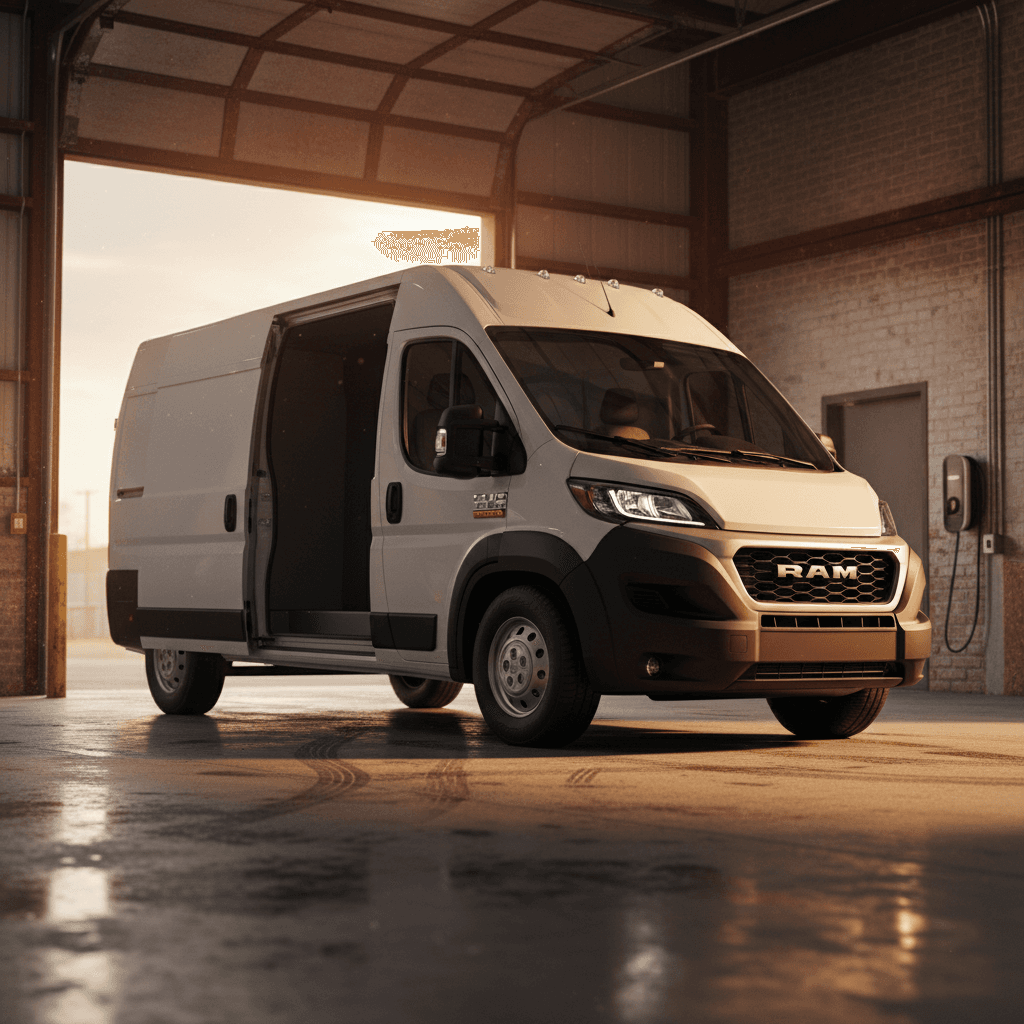
If you run delivery routes, service calls, or mobile trades, the Ram ProMaster EV is Ram’s answer to the Ford E‑Transit and Mercedes‑Benz eSprinter. It takes the familiar front‑wheel‑drive ProMaster body and swaps the V6 for a big battery and powerful electric motor, promising lower running costs and zero tailpipe emissions without forcing you to retrain your drivers.
Quick Take
Overview: What the Ram ProMaster EV Is (and Isn’t)
Ram launched the ProMaster EV as its first modern, mass‑market electric vehicle in North America, built on the same full‑size van platform as the gas ProMaster. Like the gas model, it’s front‑wheel drive and aimed squarely at commercial buyers, with cargo and delivery body styles and a wide range of roof and length configurations.
- Fully electric version of the ProMaster cargo/delivery van
- Front‑wheel drive with a single electric motor and large battery under the floor
- Offered first as a Delivery Van for last‑mile fleets, with Cargo Van configurations following
- Designed to compete directly with Ford E‑Transit and Mercedes‑Benz eSprinter in urban and suburban routes
Not a Camper First…Yet
Key Specs: Battery, Range, Payload and Power
Ram ProMaster EV Headline Specs
Under the floor sits an approximately 110 kWh battery pack feeding a single front‑mounted electric drive module. Ram quotes output of about 268 horsepower and just over 300 lb‑ft of torque, which is stout for a commercial van and more than enough to hustle a loaded ProMaster EV away from lights without drama.
Ram ProMaster EV Core Specifications (Representative Fleet Config)
Exact figures vary by wheelbase and roof height, but these numbers capture what most US fleets will see in a typical high‑roof configuration.
| Spec | Ram ProMaster EV | What It Means For You |
|---|---|---|
| Battery capacity | ~110 kWh | Enough for most city and suburban routes in a single shift |
| Motor output | 268 hp / ~302 lb‑ft | Stronger than many gas vans off the line, even when loaded |
| Drive layout | Front‑wheel drive | Stable in snow and rain, familiar to gas ProMaster drivers |
| Estimated usable range | Roughly 150–180 miles | Varies with load, temperature, and speed, plan for the lower end for safety |
| Max payload (delivery) | ≈2,030–2,780 lb | Good for parcels and light commercial gear, not bricks or pavers |
| Max towing | Up to ~6,410 lb (select configs) | Possible, but towing will hammer range, treat as occasional use |
Use these specs as a ballpark when you’re comparing quotes or planning routes.
Spec Sheet vs. Real Routes
Driving Impressions: How the ProMaster EV Drives and Rides
If your drivers live in ProMasters already, the EV will feel instantly familiar from the driver’s seat, just quieter and quicker. The steering is light, visibility is excellent thanks to the tall seating position and huge windshield, and the boxy body makes it easy to place the van at loading docks and in alleys.
On‑Road Feel in Everyday Use
What your drivers will actually notice on route one.
Smooth off‑the‑line power
Much quieter cabin
Built for city streets
Safety and Driver Aids
Charging the Ram ProMaster EV: What Fleet Managers Need to Know
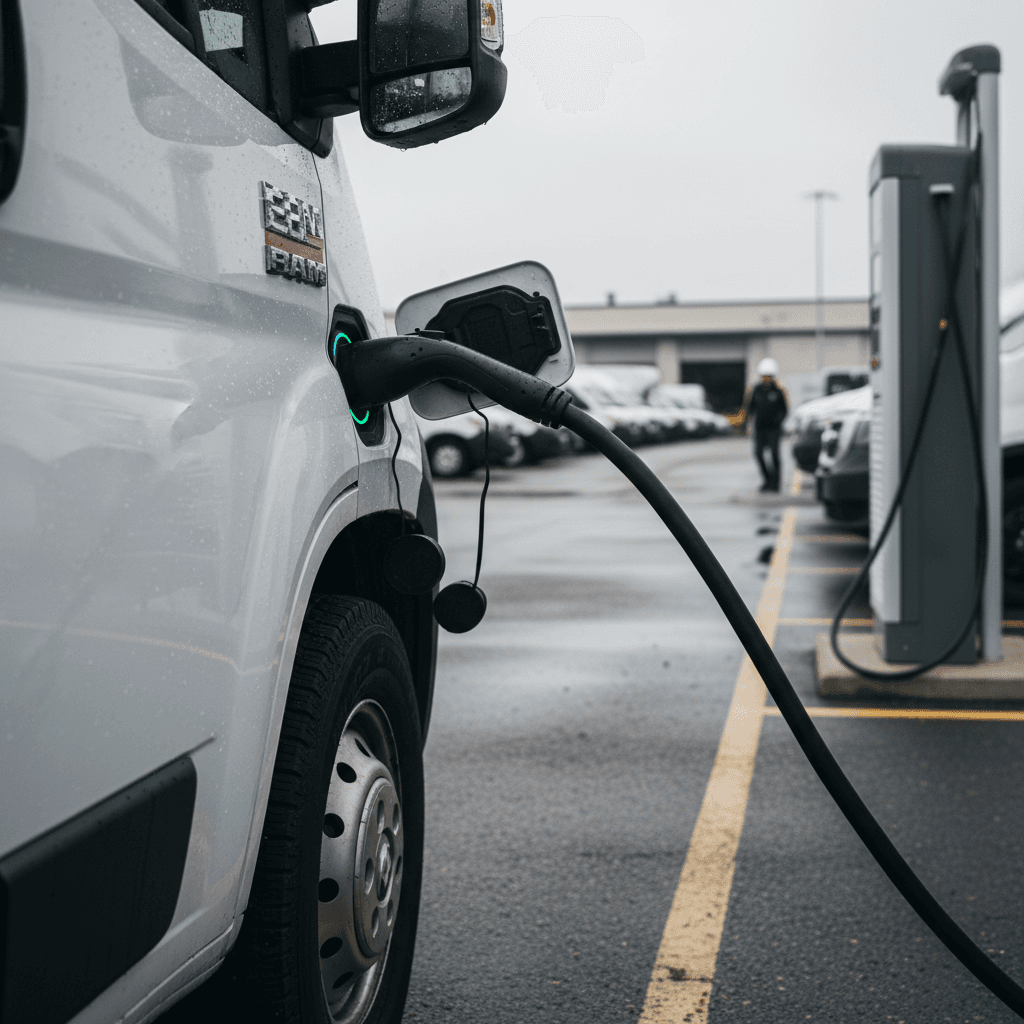
With a big battery and commercial duty cycles, charging strategy is everything with the ProMaster EV. Ram allows Level 2 AC charging at the depot and DC fast charging on the road; the exact charge rates depend on equipment, but the pattern is similar to other large electric vans.
Level 2 Depot Charging
- Ideal for overnight charging at 240 V.
- Expect a full charge in roughly 8–12 hours depending on the onboard charger and circuit.
- Perfect for fleets that return to base every evening and don’t exhaust the full pack daily.
For many US businesses, a bank of Level 2 chargers in a secure lot is the most cost‑effective starting point.
DC Fast Charging
- Best for mid‑shift top‑ups or occasional longer routes.
- As with rivals, the last 20% of the battery fills slowly; plan around 10–80% sessions to minimize downtime.
- Public DC networks vary in reliability, so depot‑based fast charging is ideal where budget allows.
If your routes push past 120–140 miles regularly, you’ll want a clear, repeatable DC fast‑charge strategy.
Mind the Infrastructure Gap
Ram ProMaster EV vs Ford E‑Transit and Mercedes eSprinter
The two obvious cross‑shop rivals are the Ford E‑Transit and the Mercedes‑Benz eSprinter. All three play in the same sandbox: medium‑range, full‑size vans aimed at last‑mile and urban logistics. The differences come down to body flexibility, range, and brand ecosystem.
Ram ProMaster EV vs Key Electric Van Rivals
High‑level comparison of the main electric vans a US fleet manager is likely to consider.
| Feature | Ram ProMaster EV | Ford E‑Transit | Mercedes eSprinter |
|---|---|---|---|
| Drive layout | Front‑wheel drive | Rear‑wheel drive | Front‑wheel drive |
| Battery size | Large (~110 kWh) | Smaller pack (varies by model) | Mid‑sized pack with multiple options |
| Estimated range | Competitive city range; strong for dense routes | Shorter range in many specs; fine for pure urban use | Efficient highway manners, solid range with right battery |
| Payload (typical) | Lower than ICE, similar to EV rivals | Similar to Ram EV depending on spec | Comparable payload; check individual trims |
| Upfit flexibility | Excellent boxy load area, popular with upfitters | Deep Ford fleet ecosystem, many body options | Premium feel, strong European upfit network |
| Brand strengths | Familiar ProMaster footprint and front‑drive feel | America’s fleet workhorse, easy Ford dealer access | Premium image, efficient drivetrains, tech‑forward interiors |
Exact range and specs vary by configuration, but this snapshot shows how the Ram stacks up conceptually.
Where the ProMaster EV Shines
Is the ProMaster EV’s Range Enough for Your Routes?
On paper, the ProMaster EV’s large battery enables competitive range for a full‑size electric van. In practice, whether it works for you comes down to route design, climate, and how heavily you load the van. Fleets that keep daily mileage under about 120–140 real‑world miles will have a much easier time than those that routinely push farther.
Route Fit Checklist: Will the Ram ProMaster EV Work For You?
1. Map your longest daily routes
Look at your <strong>actual telematics data</strong> or fuel logs. What are the top 10% longest days in miles? If they’re consistently under 150 miles, you’re in the ProMaster EV’s sweet spot.
2. Factor in weather and load
Cold temps, hills, and heavy payloads can knock 20–30% off range. If winter routes plus full loads still keep you under 120–130 miles, you’re fine. If not, you’ll need mid‑shift charging.
3. Check dwell times at the depot
How long do vans sit at your lot overnight? Can they plug in immediately on return? Long dwell times make Level 2 depot charging extremely cost‑effective.
4. Identify mid‑shift “anchor stops”
If some vans need a boost, can drivers pause at a reliable fast charger near a lunch stop or hub? Build these locations directly into route planning.
5. Consider splitting fringe routes
For a handful of outlier days, it may be cheaper to <strong>rework those routes or use gas vans</strong> than to overbuy electric range you rarely use.
Cold‑Weather Reality Check
Ownership Costs: Where the ProMaster EV Wins and Loses
Sticker price for a new Ram ProMaster EV is still higher than a comparable gas ProMaster, but the total cost of ownership story is more nuanced. Electricity is cheaper and more predictable than gasoline or diesel, and maintenance drops sharply when you lose oil changes, exhaust components, and complex multi‑gear transmissions.
Cost Advantages
- Fuel savings: Even at today’s US electricity rates, cost per mile is typically well below gas or diesel for stop‑and‑go work.
- Lower routine maintenance: No oil changes, fewer filters, no spark plugs or timing chains, vastly simpler drivetrain.
- Predictable energy cost: Depot charging on commercial electricity rates is easier to budget than volatile fuel prices.
Cost Considerations
- Higher upfront price: The van and charging infrastructure both require capital, even after available incentives.
- Battery health risk: Over many years, range will decline. How fast depends on duty cycles and charging habits.
- Downtime planning: A charging or infrastructure hiccup can sideline a van; redundancy matters.
Model It Before You Buy
Who the Ram ProMaster EV Is (Actually) Right For
Best‑Fit Use Cases for the Ram ProMaster EV
Think routes, not romance. Here’s where this van earns its keep.
Parcel & last‑mile delivery
Mobile service & trades
Local retail & food logistics
Where You May Want to Stay ICE, for Now
Buying New vs Used Ram ProMaster EV
Because the ProMaster EV is still relatively new to US roads, the used market is just starting to form. That’s both a challenge and an opportunity: you won’t find thousands of options yet, but early off‑lease or fleet units can deliver meaningful savings if you know how to evaluate them.
Why Battery Health Matters More Than Odometer
Used ProMaster EV Buying Checklist
Verify battery health with data
Ask for a recent <strong>battery health report</strong> rather than relying on guesswork. At Recharged, every EV, including commercial vans, gets a Recharged Score with independently verified battery diagnostics.
Review charging history
Frequent DC fast charging, especially to 100%, can accelerate battery wear. Look for vans that primarily lived on depot or home Level 2 charging if possible.
Inspect for commercial wear
Look at cargo floors, door hinges, and interior trim. Hard parcel service can beat up the body even if the driveline is solid.
Confirm software and recalls
Make sure all <strong>software updates, recalls, and service campaigns</strong> have been completed so you’re not inheriting old bugs or degraded performance.
Plan your charging from day one
Whether you buy new or used, have a clear plan for depot or workplace charging, and budget for installation before the van arrives.
If you’d rather skip the guesswork, Recharged can help you source a used electric van and understand its true condition. Our Recharged Score Report pairs verified battery health with fair market pricing and expert guidance, so you can tell whether a ProMaster EV, or a rival like the E‑Transit, fits your routes and your budget.
Ram ProMaster EV FAQ
Frequently Asked Questions About the Ram ProMaster EV
Bottom Line: Ram ProMaster EV Review Verdict
The Ram ProMaster EV isn’t the electric van for absolutely everyone, and that’s okay. It’s a purpose‑built tool: a powerful, quiet, front‑drive work van tuned for dense routes, depot charging, and predictable daily duty cycles. If that describes your operation, the combination of lower fuel costs, reduced maintenance, and a familiar ProMaster footprint makes it a compelling entrant in the still‑young electric van class.
If you’re trying to decide between a ProMaster EV, an E‑Transit, an eSprinter, or a used gas van, take the time to match real routes to real range, then run the numbers. And if you’d like help translating specs and spreadsheets into a van that actually works for your business, Recharged’s EV specialists can walk you through options, trade‑in values, financing, and battery health reports so your next workhorse, electric or otherwise, earns its keep from day one.