You’d think every electric car would be whisper‑quiet. No engine, no drama, just serenity. In reality, some EVs are tomb‑silent at 70 mph, while others bombard you with tire roar and wind hiss. This guide ranks some of the quietest electric cars and explains what really makes an EV calm inside, so you can shop, and test‑drive, like a noise snob.
What “quiet” actually means
Why “quiet” matters more in electric cars
In a gasoline car, the engine is the loudest guest at the party. In an EV, that guest has gone home, so you suddenly notice the other sounds: **tire noise**, **wind rushing around the mirrors**, suspension thumps, even the HVAC fan. The actual decibel level might be similar to a good gas sedan, but because the noise is mostly broadband hiss instead of a steady engine thrum, your brain fixates on it. That’s why some drivers complain their new EV feels "noisier" than the old V6, even when the meter disagrees.
EV noise, by the numbers
How we ranked the quietest electric cars
There’s no single global decibel leaderboard everyone agrees on, and different magazines test on different roads at different speeds. Instead of pretending there’s one sacred list, we’ve built a **consensus‑based ranking** that leans on multiple factors:
- Independent instrumented tests from major outlets (especially 60–70 mph sound readings).
- Owner impressions and long‑term tests, where people live with the car on real roads.
- Vehicle design: wheelbase, tire choice, glass thickness, and known NVH (Noise, Vibration & Harshness) engineering.
- Our own EV‑focused experience at Recharged, especially with popular used models customers cross‑shop.
Rankings are directional, not absolute
Overall quietest electric cars ranked
If you simply want the hush of a high‑end recording studio on wheels, start here. These models are widely regarded as some of the quietest electric cars on sale today, especially at highway speeds where most EVs begin to unravel.
Quietest electric cars: overall standouts
Ranked primarily by highway cabin serenity, not performance or price.
| Rank | Model | Class | What it feels like inside |
|---|---|---|---|
| 1 | Lucid Air | Luxury sedan | Eerily calm; faint tire rustle on coarse pavement, almost no wind noise. |
| 2 | Mercedes-Benz EQS | Luxury sedan | Classic Mercedes cocoon: pillowy ride, heavy isolation, subdued everything. |
| 3 | BMW i7 | Full‑size luxury sedan | Library hush; thick glass and adaptive suspension smother the outside world. |
| 4 | Genesis Electrified GV70 | Luxury SUV | One of the quietest cabins ever instrument‑tested at 70 mph; upscale and calm. |
| 5 | BMW iX | Midsize luxury SUV | Soft, isolating ride with impressive suppression of wind noise around the A‑pillars. |
These EVs are consistently praised for exceptionally low wind and road noise at cruising speeds.
If you want the quietest of the quiet
Quietest luxury electric cars
Luxury EVs earn their keep by turning chaos into background radiation. You pay not just for leather and screens, but for miles of butyl rubber, acoustic glass, and obsessively tuned suspension bushings. Here are the standout luxury EVs if you want silence with your status.
Luxury EVs with whisper‑quiet cabins
When your main driving soundtrack is your own thoughts.
Lucid Air
The Lucid Air is the current quiet‑cabin benchmark among luxury EV sedans. Long wheelbase, slippery aerodynamics, and meticulous sealing make it feel like someone turned the outside world down a few clicks.
- Superb high‑speed stability and calm.
- Particularly good at muting wind noise around mirrors.
- Best if you live on the highway instead of the boulevard.
Mercedes-Benz EQS
If you’ve ever driven an S‑Class and thought, "I want this, but electric," the EQS is your car. Mercedes throws the full NVH tool kit at it, double‑pane glass, thick carpets, mass‑loaded insulation panels.
- Ride tuned for isolation more than sport.
- Cabin hush holds even on broken concrete.
- Fantastic if you’re a road‑warrior who lives on calls.
BMW i7 & iX
BMW’s flagship EV sedan and SUV are both deeply quiet, but in different ways. The i7 does old‑school limousine isolation; the iX pairs calm with a softer, cushy ride.
- Excellent wind management around pillars and mirrors.
- Standard acoustic glass and heavy sound deadening.
- iX feels more lounge‑like; i7 is formalwear‑quiet.
Luxury quiet tip
Quietest mainstream & affordable EVs
You don’t have to spend six figures to get a peaceful cabin. Several mainstream EVs punch way above their weight in highway refinement, especially if you choose your wheels and tires wisely.
Quiet mainstream electric cars to look for
These EVs balance attainable pricing with above‑average cabin quietness.
| Model | Segment | Why it’s quiet‑friendly |
|---|---|---|
| Hyundai Ioniq 6 | Streamlined midsize sedan | Teardrop aero profile reduces wind noise; composed ride keeps impact thumps out of the cabin. |
| Kia EV6 | Crossover | Generally low wind noise and solid insulation; quieter on touring tires than on sporty OEM rubber. |
| Volkswagen ID.4 | Compact SUV | Soft suspension and good tire isolation; many owners note it’s calmer than some pricier rivals. |
| Chevrolet Equinox EV | Compact SUV | Very quiet at highway cruise in recent testing; strong showing for a family‑friendly EV. |
| Genesis GV60 | Premium compact crossover | Compact size but luxury‑grade materials and sealing; feels more expensive than its footprint suggests. |
Think of this as your short list if you want quiet but don’t need a palace on wheels.
Sedan vs SUV: shape matters
Features that actually make an EV quiet
Every EV ad seems to promise "serene silence," but the physics are not that easily bribed. Look past the brochure language and check for these concrete features that really move the needle on cabin quiet.
Key quiet‑cabin features to look for
These details matter more than the badge on the hood.
Acoustic glass & sealing
Acoustic glass is laminated with a sound‑damping layer that cuts wind and traffic noise. Look for:
- Acoustic windshield (now common).
- Acoustic front side windows on higher trims.
- Thick, continuous door seals with no obvious gaps.
Tires & wheels
Tires are often the loudest part of an EV. Quieter cars usually run:
- Touring or "EV‑specific" tires with foam liners.
- Smaller‑diameter wheels (18–19 in.) with taller sidewalls.
- Moderate, not ultra‑aggressive, tread patterns.
Suspension tuning
Stiff sport suspensions can make sharp impacts boom through the cabin. For quiet, you want:
- Compliant, well‑damped ride.
- Suspension that settles quickly instead of "crashing" over potholes.
- Optional air suspension, which usually adds refinement.
Active noise control
Some EVs use **road‑noise cancellation**: microphones hear low‑frequency rumble and speakers play opposite waves to cancel it out.
It’s not magic, but trimming a few dB of low‑frequency noise can make long drives much less tiring.
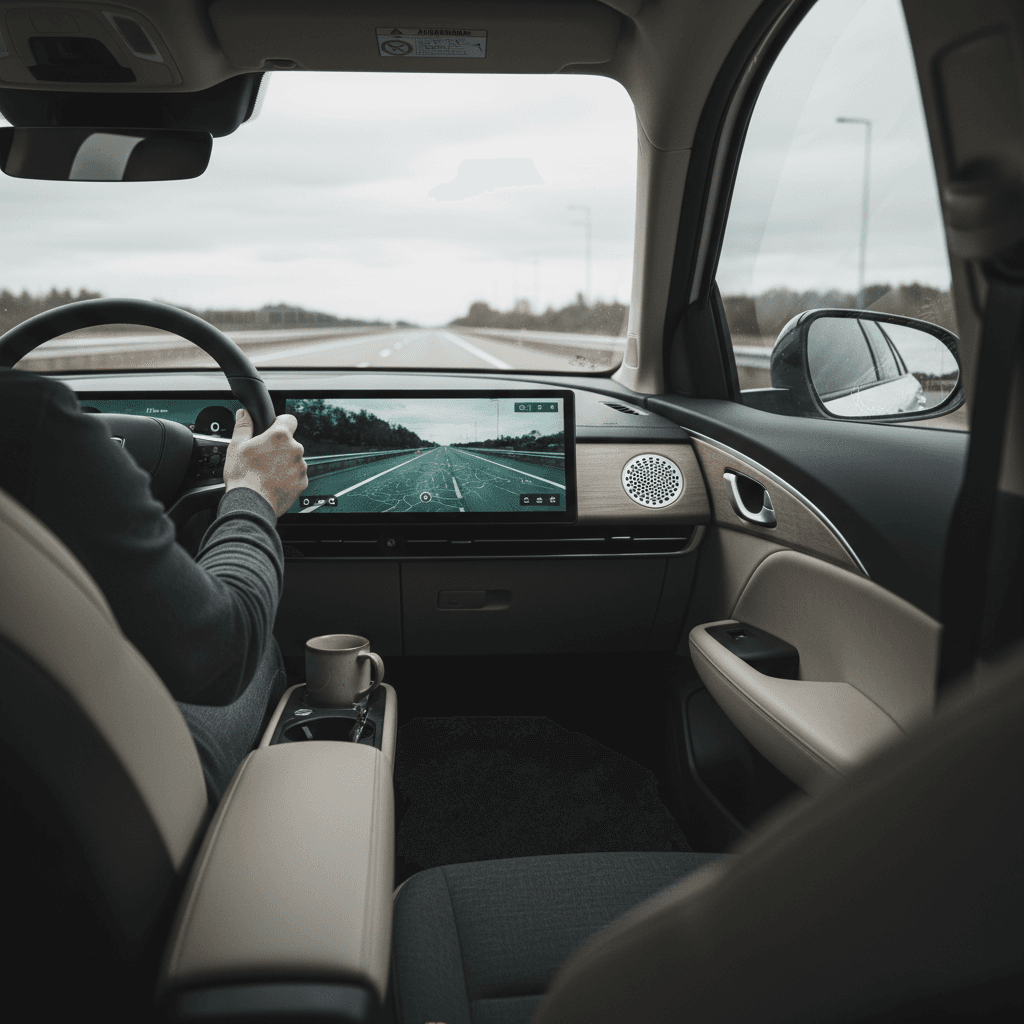
How to test-drive an EV for quiet on the highway
Noise is personal. You might be more sensitive to high‑frequency hiss than to low‑frequency rumble, or vice versa. The only way to know if a car is truly quiet *for you* is to do a deliberate noise test on your drive, not just a loop around the block with the salesperson monologuing about wireless CarPlay.
Quiet‑cabin test drive checklist
1. Start in silence
Begin with climate control and stereo off. On a smooth street, roll at 25–30 mph and listen for creaks, buzzes, or whistling around mirrors and seals.
2. Do a 65–75 mph highway run
Get onto a highway you actually use. Hold a steady speed and note wind rush around the A‑pillars, tire roar over expansion joints, and how much voice you need to talk.
3. Try different pavement
If possible, hit both fresh asphalt and older, coarse concrete. Some cars fall apart sonically on rougher surfaces; quiet EVs stay composed.
4. Sit in the back seat
Have a friend drive while you ride in back. In many EVs the rear wheel wells are louder than the front, and that’s where kids, or clients, will be sitting.
5. Check noise when passing trucks
Briefly pass a semi or large pickup at speed. A well‑insulated cabin will blunt the roar and buffeting instead of amplifying it.
6. Compare multiple cars back‑to‑back
If you’re noise‑sensitive, schedule test drives of two or three candidates on the same route. Your ears are much better at A/B testing than at remembering what "quiet" felt like last weekend.
Don’t rely on around‑the‑block drives
Quiet electric cars as used EV buys
Here’s the good news: you don’t have to buy new to get a serene EV. Many of the quietest electric cars make brilliant used purchases, and a few mainstream models are stealth‑luxury on the noise front.
Great quiet EVs to target used
- Luxury road‑trip machines: Mercedes EQS, BMW iX, Genesis Electrified GV70 and GV60, Lucid Air (for shoppers comfortable with a newer brand).
- Under‑the‑radar calm: Volkswagen ID.4, Kia EV6, Chevy Equinox EV (once they start appearing off‑lease).
- Premium but attainable: Genesis GV60 and Hyundai Ioniq 6, especially on smaller wheels.
Used EV noise checks
- Inspect door and hatch seals for damage, compression marks, or DIY tape "fixes".
- Look for mismatched or worn tires; cheap replacements can ruin a car’s quiet character.
- On the test drive, listen for wind leaks suggesting prior accident repairs.
- Check that all glass is OEM; non‑acoustic aftermarket glass can add hiss.
How Recharged can help
Ready to find your next EV?
Browse VehiclesFAQ: Quietest electric cars
Frequently asked questions about quiet EVs
Bottom line: Choosing the right quiet EV
If you’re hunting for the quietest electric cars ranked, think of the badges we’ve talked about, Lucid Air, Mercedes EQS, BMW i7 and iX, Genesis Electrified GV70 and GV60, as the top shelf. Below that, cars like the Hyundai Ioniq 6, Kia EV6, VW ID.4 and Chevy Equinox EV deliver a lot of calm per dollar, especially if you skip the giant wheels. The trick is to shop with your ears as much as your eyes: insist on a real highway test drive, pay attention to tires and glass, and don’t be shy about walking away from a car that drones or hisses more than you’d like.
And if you’re looking at the used market, Recharged can help you sort the genuinely serene from the merely electric. With verified battery health, transparent pricing, and EV‑savvy specialists on tap, you can zero in on a car that’s quiet, comfortable, and still makes sense on your monthly budget, no guesswork, no surprises, just a calmer drive every day.