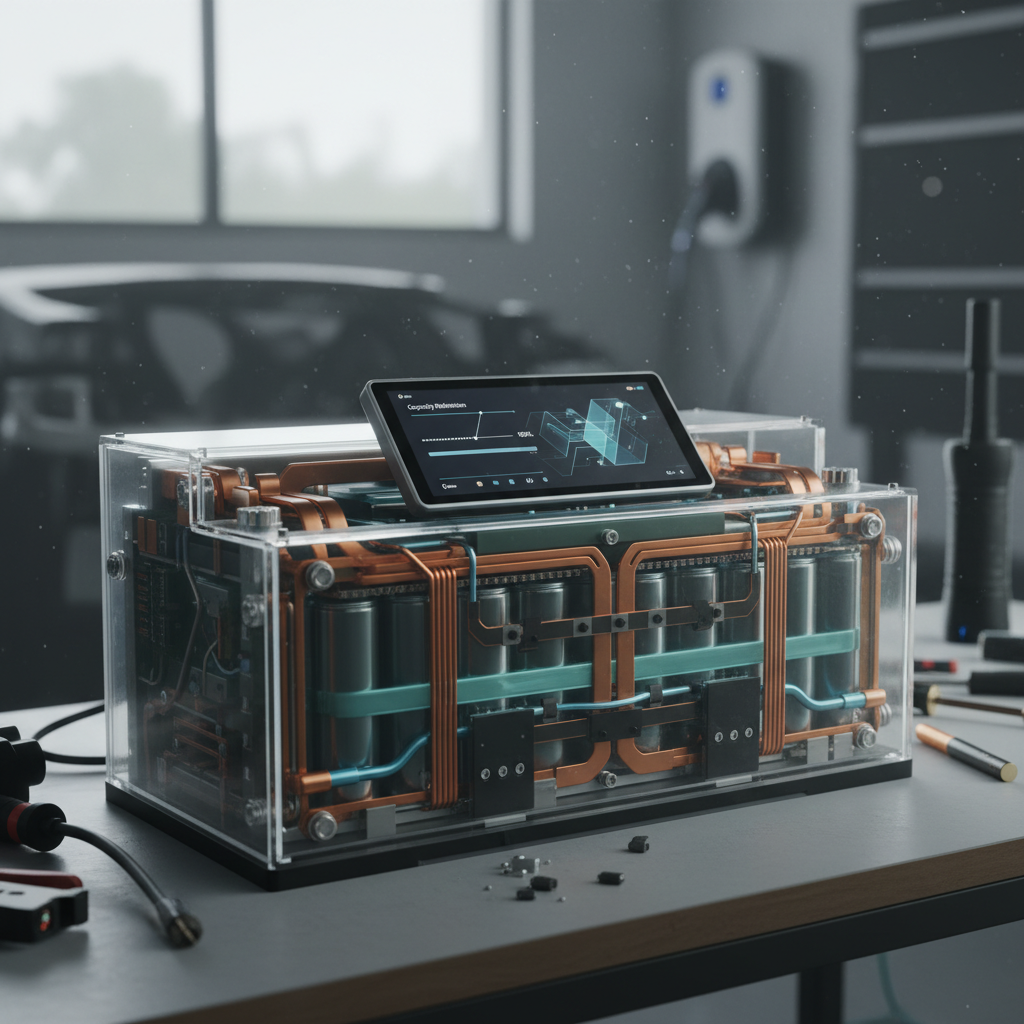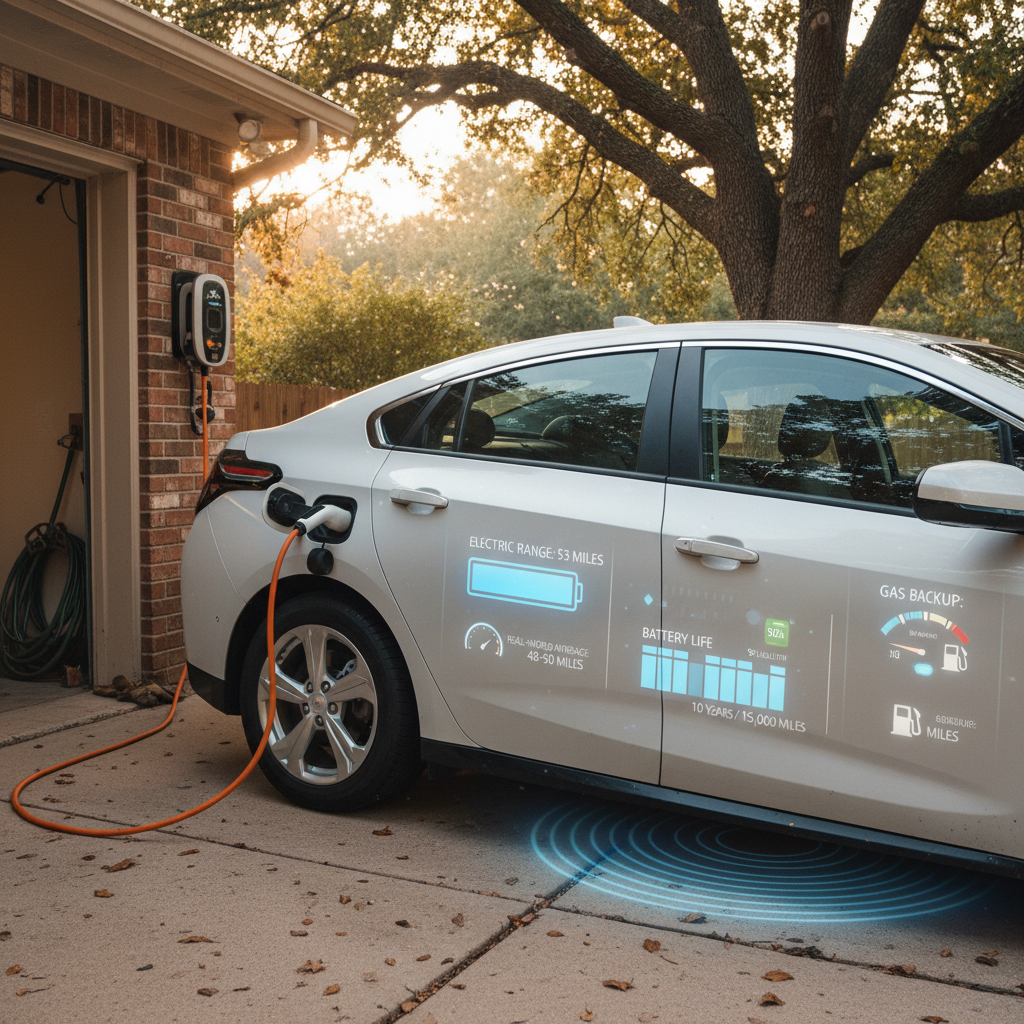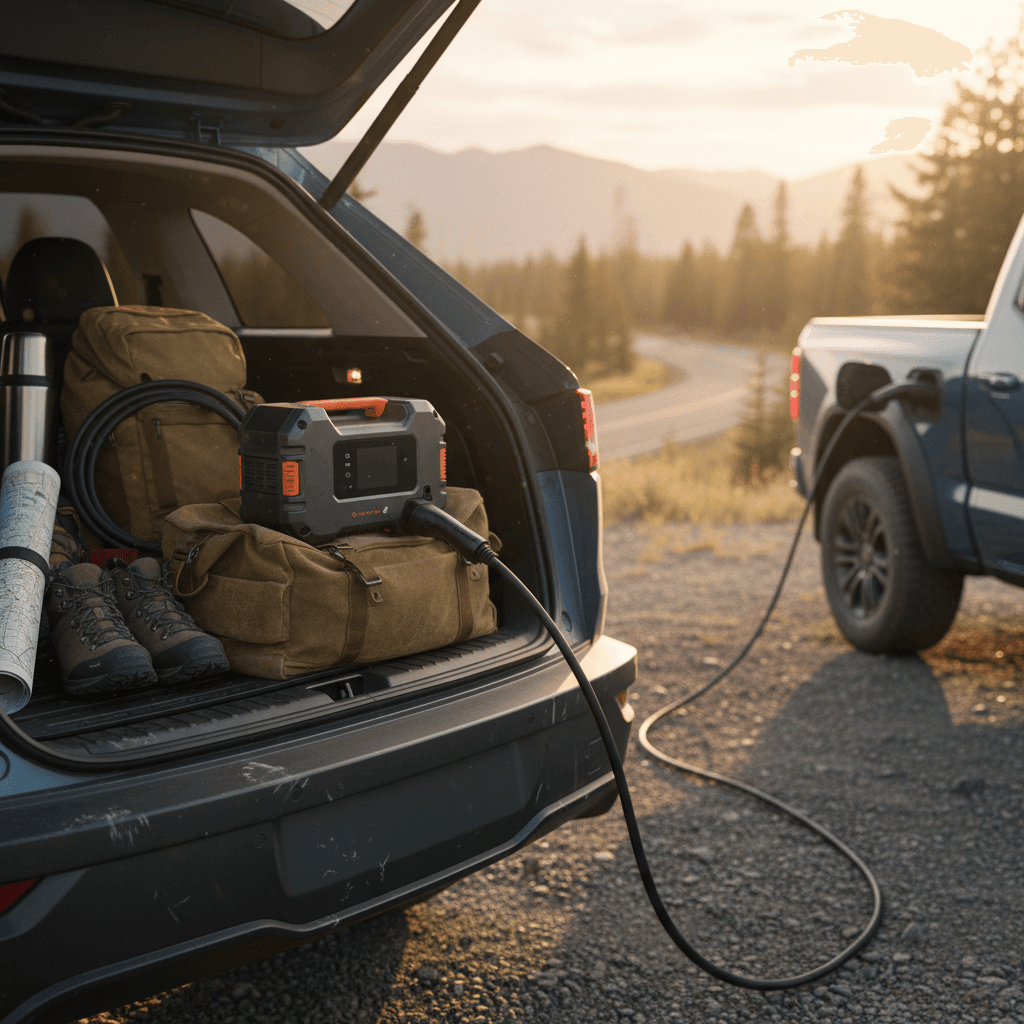
A portable “charger” is technically a portable EVSE, or electric vehicle supply equipment: it safely delivers electricity while the car’s onboard charger converts that power for the battery. The most useful travel unit can connect to an ordinary 120-volt outlet for a slow fallback and an appropriate 240-volt outlet for faster Level 2 charging. It gives you flexibility at overnight destinations, but only when a compatible, properly wired outlet is available and you have permission to use it.
The best type for most travelers
A dual-voltage mobile EVSE is the most flexible choice for most EV travelers because it can cover both emergency Level 1 charging and destination-based Level 2 charging. A simpler cord may still make sense if you know exactly which outlet you’ll use. These are the four practical choices:
Portable EV charging options compared
Choose by where you expect to plug in, not by the largest advertised charging number.
| Option | Best for | Power source | Main limitation |
|---|---|---|---|
| Dual-voltage mobile EVSE | Most road trips | 120V or 240V | Needs correct adapters |
| 120V Level 1 cord | Emergency fallback | Household outlet | Very slow charging |
| Portable 240V EVSE | Regular destinations | Specific 240V outlet | Less outlet flexibility |
| Automaker mobile cord | Simple compatibility | Varies by kit | Adapters may cost extra |
Actual charging power is limited by the outlet, circuit, EVSE and vehicle.
Don’t choose solely by an EVSE’s maximum amperage. Your real charging rate is governed by the lowest limit among the electrical circuit, outlet, portable EVSE and vehicle’s onboard AC charger. A higher-rated cable cannot make a low-capacity circuit deliver more power.
How do you check charger compatibility?
You need to match both ends of the charging setup: the vehicle connector and the wall receptacle. Your car may use J1772 for AC charging or NACS, short for North American Charging Standard. An adapter can sometimes bridge that difference, but it must explicitly support AC charging and your specific vehicle, an adapter intended for DC fast charging isn’t automatically suitable for a portable AC unit.
Check these details before buying or packing
Vehicle connector
Confirm whether your EV accepts J1772 or NACS for AC charging and whether an approved adapter is required.
Voltage support
Verify that the EVSE automatically or manually supports the voltage you plan to use.
Outlet and plug
Match the plug to the exact receptacle. Similar-looking 240-volt outlets can have different wiring and circuit limits.
Adjustable current
Look for a unit that can be set appropriately for the available circuit instead of assuming maximum output is safe.
Safety certification
Choose equipment evaluated by a recognized electrical testing organization, and follow the vehicle and EVSE manufacturers’ instructions.
Cable and weather rating
Confirm that the cord reaches without tension and that the complete setup is rated for expected outdoor conditions.
A plug adapter does not upgrade an outlet
Where a portable charger fits into a road trip
A portable EVSE works best while the car will already be parked for hours, such as overnight at a rental home, campground or family member’s house. For travel days, plan around public DC fast chargers and use the portable unit as destination charging or backup. Before leaving, ask the property owner which outlet is available, whether EV charging is permitted and whether the circuit is shared with other equipment; our EV road-trip planning guide can help you build the rest of the route.
On one trip from Richmond, our Cybertruck picked up about 160 miles during a little over seven hours on Level 2 at the office. That kind of parked time is where AC charging helps; on the highway, we switched to DC fast charging.
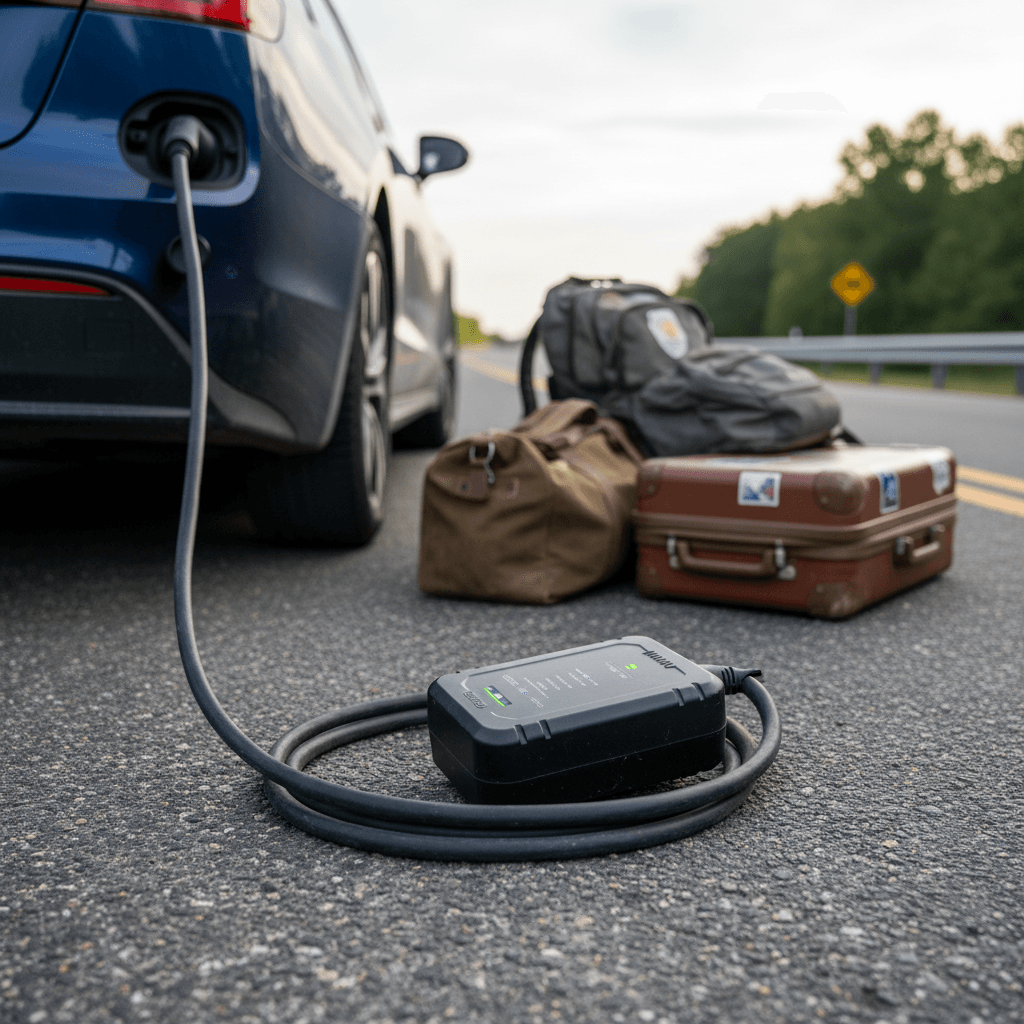
That experience illustrates the role rather than promising a universal charging rate. Different vehicles, batteries, temperatures, circuits and onboard chargers produce different results. A portable AC unit also cannot reproduce a DC fast charger’s speed because the two systems deliver power to the vehicle differently; see EV charging levels explained for the practical distinctions.
What Recharged battery data means for trip planning
Recharged data shows why verified vehicle range should guide your itinerary before the backup cable comes out. Across 2,242 Recharged Score inspections, tested remaining battery capacity averaged 93.9% of original capacity, while tested real-world range averaged 266 miles. Those fleet averages aren’t a promise for an individual car, so check your EV’s condition, recent efficiency and expected weather rather than assuming it will match another vehicle.
The takeaway is simple: a portable charger adds options, but it doesn’t replace an accurate understanding of your battery. Recharged includes verified battery diagnostics in its Recharged Score Report because usable capacity and tested range are more relevant to travel planning than a generic estimate. Learn what to examine in our EV battery health guide.
Recharged data
Used EV battery health
94%
avg remaining capacity
From Recharged battery inspections, not manufacturer estimates.
- Lowest
- 63%
- Median
- 95%
- Highest
- 100%
- Est. range
- 266 mi avg
- Cell balance pass
- 100%
- Quick charges
- 18 avg
- Slow charges
- 65 avg
Average cell imbalance: 7.3 mV
Based on vehicles Recharged tested
Recharged data
Used EV prices at Recharged
$30,997
median list price
Current list prices for matching inventory at Recharged.
- Lowest
- $12,996
- Average
- $34,803
- Highest
- $146,998
Average Recharged Score on these listings
4.8 / 5
Range
3.7 – 5.0
Based on available listings
Every EV is battery-tested with a Recharged Score. Nationwide delivery.
Safe charging starts with the outlet
Safe travel charging starts by treating an unfamiliar outlet as an unknown until its condition and circuit are confirmed. An outlet that fits your plug may still be worn, incorrectly wired, ungrounded or shared with another heavy electrical load. If anything looks questionable, skip it and use a known charging station instead.
- Inspect the outlet, plug and cable for looseness, cracks, scorching, corrosion or exposed conductors before use.
- Plug directly into a suitable receptacle unless the EVSE manufacturer explicitly approves a specific accessory; don’t rely on an ordinary household extension cord.
- Keep connectors out of standing water and protect any connection that is not designed for outdoor exposure.
- Fully uncoil the cable, keep it away from traffic and avoid closing doors or trunk lids on it.
- Stop charging if the plug, outlet or cable becomes unusually hot, smells burnt, sparks or repeatedly disconnects.
- Never defeat a ground pin, improvise a multi-adapter chain or use an outlet without the owner’s permission.
Instant offer, trade-in, or consignment. Pickup available.
Portable EV charger FAQ
The bottom line
Buy a dual-voltage portable EVSE if you want the broadest combination of overnight charging and emergency flexibility. Match the vehicle connector, wall plug, voltage and current setting before you travel, and favor tested safety equipment over cheap multi-adapter bundles. Pack it as a backup to a well-planned public charging route, not as permission to connect to any outlet you encounter.