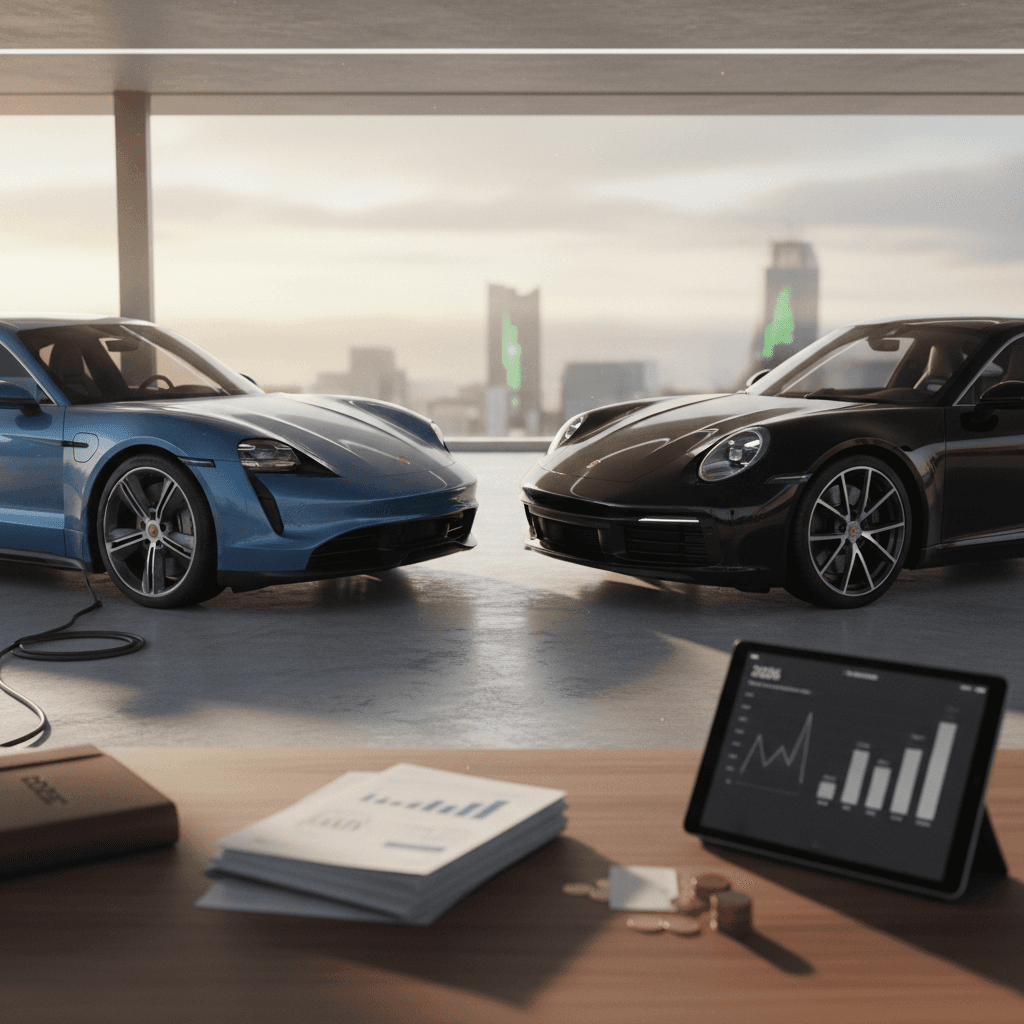
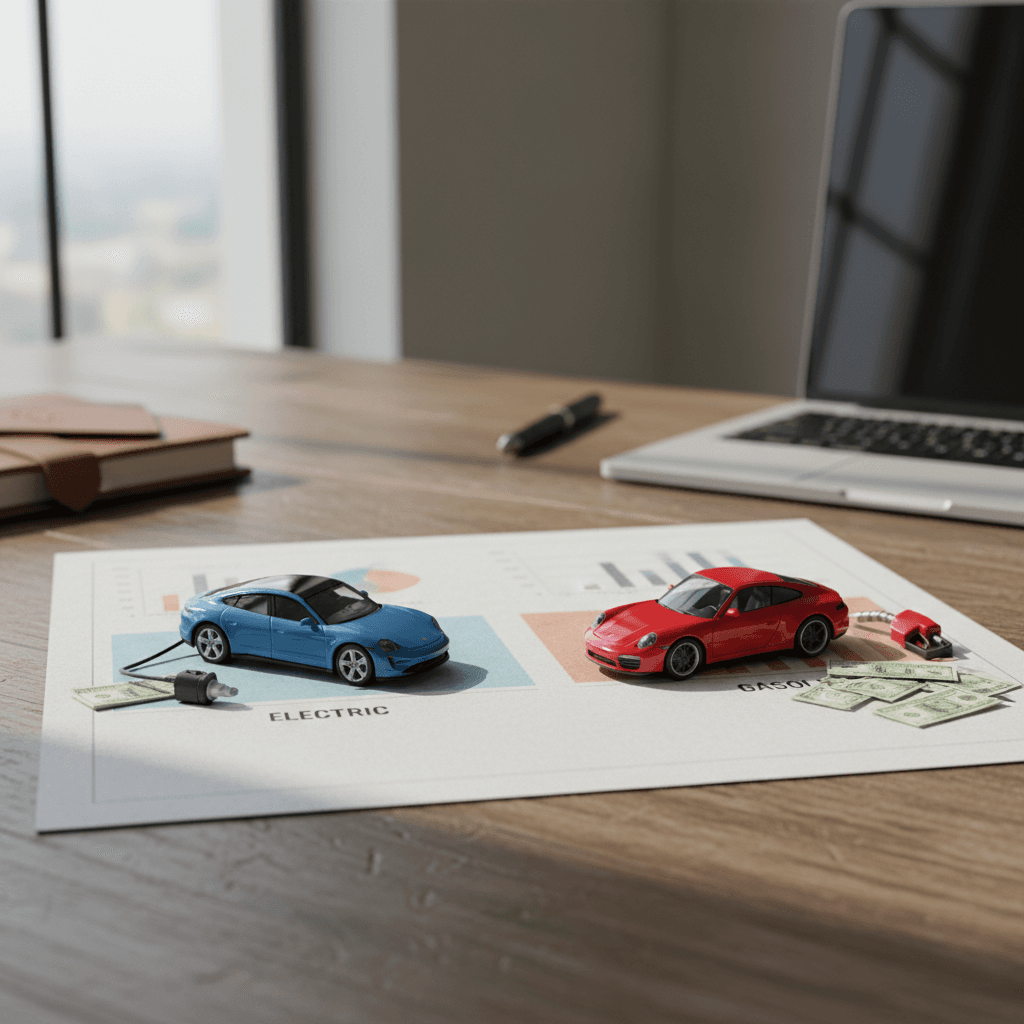
If you’re cross‑shopping a 2026 Porsche Taycan against a 2026 Porsche 911, you’re not just choosing between electric and gasoline, you’re choosing between two very different ownership cost profiles. The Taycan often costs more upfront but less to run day‑to‑day, while the 911 tends to hold its value better. In this 2026‑focused cost comparison, we’ll walk through sticker price, depreciation, fuel or electricity, maintenance, insurance, and real‑world strategies to keep your total spend under control.
Quick takeaway
Taycan vs 911: Who this 2026 cost comparison is for
This guide is aimed at shoppers in the United States who are looking at a Taycan or 911 as a daily driver, fun second car, or occasional track toy and want to understand what each will really cost over 5–10 years. We’ll focus on mainstream trims, think Taycan, Taycan 4S, Taycan GTS versus 911 Carrera, Carrera S, and GTS, rather than GT3 and Turbo halo cars that follow their own pricing and depreciation logic.
- You’re torn between electric and gasoline but want a Porsche either way.
- You care more about total cost of ownership than the monthly payment alone.
- You’re curious whether a used Taycan is a smarter value play than a new or used 911.
- You’re open to buying used and want to understand how 3‑ to 5‑year‑old cars pencil out.
Tip for budget‑conscious enthusiasts
Headline numbers: 2026 prices and 5‑year cost snapshot
Taycan vs 911: High‑level 5‑year cost picture (2026 U.S. estimates)
These are directional, not quotes
Purchase price: MSRP and real‑world transaction prices
On bare MSRP, the 2026 Taycan and 2026 911 live in similar neighborhoods, but options and dealer behavior make a big difference in what you’ll actually pay.
Typical 2026 Porsche Taycan vs 911 pricing (US)
Approximate base MSRPs and realistic out‑the‑door ranges for popular trims in early 2026, excluding any EV incentives.
| Model (2026) | Approx. base MSRP | Typical options bump | Realistic OTD range* |
|---|---|---|---|
| Taycan (RWD) | ≈$105,000 | $10k–$20k | $115k–$135k |
| Taycan 4S | ≈$125,000 | $15k–$25k | $140k–$165k |
| Taycan GTS | ≈$145,000 | $15k–$30k | $165k–$190k |
| 911 Carrera | ≈$115,000 | $10k–$20k | $125k–$145k |
| 911 Carrera S | ≈$130,000 | $15k–$25k | $145k–$170k |
| 911 Carrera GTS | ≈$155,000 | $20k–$35k | $180k–$205k |
Always check a current configurator or dealer quote for exact pricing, as Porsche regularly adjusts MSRPs.
Porsche has pushed prices up more than once since 2024, and 2026 MSRPs reflect both inflation and added tech. Because many 911 buyers select pricey options, rear‑axle steering, performance packages, custom paint, the average transaction price for a 911 can easily leapfrog a moderately optioned Taycan. On the flip side, heavy equipment on a Taycan (Performance Battery Plus, premium audio, leather upgrades) adds up fast as well.
Negotiation and discount reality
Incentives, taxes, and EV perks
Here’s where the Taycan can claw back some of that sticker‑price disadvantage, but not always. Federal and state EV incentives in the U.S. have shifted toward vehicles built in North America, and the Taycan is built in Germany, so many trims don’t qualify for the full federal clean‑vehicle credit when purchased new.
How incentives can narrow the Taycan–911 price gap
Availability depends heavily on how you buy and where you live.
Federal EV credit (new)
For 2026, imported luxury EVs like the Taycan often do not qualify for the full federal clean‑vehicle credit when purchased new, but rules continue to evolve. A leased Taycan may effectively pass through some of the credit via lower payments.
State & local incentives
Some states and utilities offer rebates on home chargers or smaller EV incentives that a Taycan can still tap. There is no equivalent incentive for a 911’s gasoline usage.
Home‑charging & HOV perks
Many regions offer time‑of‑use electricity rates, reduced registration fees, or HOV‑lane access for EVs. Over years of commuting, that can save both money and time in a Taycan.
Ask the dealer two questions
Depreciation: Taycan vs 911 value after 5 years
Depreciation is where the 911 absolutely shines and the Taycan struggles, at least in the early years. Multiple resale‑value studies rank the 911 among the very best vehicles in the world at holding value, often losing only around a third of its MSRP over five years. By contrast, most data and real‑world transaction history suggest Taycans commonly lose well over half their value in the same window.
Illustrative 5‑year depreciation: Taycan vs 911 (bought new in 2026, sold in 2031)
Rounded estimates based on recent market behavior and cost‑to‑own modeling. Actual numbers will vary by trim, options, and mileage.
| Model | Example 2026 MSRP | Est. 5‑yr value kept | Est. 2031 resale value | Est. dollar loss |
|---|---|---|---|---|
| Taycan (≈$115k OTD) | $115,000 | ~42% | ≈$48,000 | ≈$67,000 |
| Taycan GTS (≈$175k OTD) | $175,000 | ~45% | ≈$79,000 | ≈$96,000 |
| 911 Carrera (≈$135k OTD) | $135,000 | ~65% | ≈$88,000 | ≈$47,000 |
| 911 Carrera GTS (≈$195k OTD) | $195,000 | ~68% | ≈$133,000 | ≈$62,000 |
These aren’t guarantees, they’re working assumptions to help you compare shapes of the curves.
Why Taycan depreciation looks so ugly on paper
If you’re buying new and trading in 3–5 years
If you care deeply about resale, the 911 is usually the safer bet. You may pay similar money upfront but lose fewer dollars to depreciation. For many buyers, that alone justifies staying with gasoline.
If you’re buying used and holding 5–10 years
A 3‑ to 5‑year‑old Taycan can be a bargain, especially if you let someone else absorb the early depreciation. At that point, you’re buying closer to the “bottom” of the curve, so additional drops may be shallower.
Where Recharged fits in
Energy costs: Electricity vs premium gas
On the running‑cost side, the Taycan finally gets to play offense. Electricity is typically cheaper per mile than premium gasoline, especially if you charge mostly at home. The 911 doesn’t drink fuel like a muscle car, but it’s still a thirsty, high‑performance machine.
Estimated 5‑year energy costs (7,500 miles/year, U.S. averages)
Rounded assumptions: Taycan at ~2.7–3.0 mi/kWh and $0.15–$0.20/kWh home electricity; 911 at ~20 mpg on premium at $4.00/gal.
| Vehicle | Efficiency assumption | Energy price assumption | Miles driven (5 yrs) | Estimated 5‑yr energy cost |
|---|---|---|---|---|
| Taycan | ~2.8 mi/kWh | $0.17/kWh | 37,500 | ≈$6,000–$7,500 |
| 911 Carrera | ~20 mpg | $4.00/gal premium | 37,500 | ≈$15,000–$18,500 |
Public DC fast charging for the Taycan can raise costs, while cheaper off‑peak home rates can lower them.
Charging habits matter more than EPA labels
Maintenance, repairs, and warranty coverage
Both cars are Porsches, so routine service isn’t cheap. But the way those dollars show up is a bit different. The Taycan has no oil changes and fewer moving parts in the drivetrain, while the 911 benefits from decades of refinement and a huge independent‑shop ecosystem.
Maintenance cost themes: Taycan vs 911
Same brand, different pain points.
Scheduled maintenance
Porsche’s scheduled maintenance plans suggest mid‑to‑high four‑figure costs over the first six years for both vehicles. The Taycan skips oil and spark‑plug services, but cabin filters, brake fluid, and brake wear still add up.
Battery & EV hardware
The Taycan’s high‑voltage battery is covered by a lengthy warranty (typically 8 years/100k miles in the U.S.), which limits risk in the first ownership phase. Out‑of‑warranty replacement would be very expensive, but most buyers will sell long before that decision.
Engine & transmission
The 911’s flat‑six and dual‑clutch gearbox are robust, but out‑of‑warranty repairs can be costly. Over a decade, a 911 may need more traditional mechanical work than a Taycan, but catastrophic battery surprises aren’t on the table.
Don’t ignore tires and brakes
Insurance and other running costs
Insurance on both cars tends to be above average, but for different reasons. The 911 is a high‑performance sports car that invites spirited driving; the Taycan is a heavy, ultra‑quick EV with expensive bodywork and electronics. Many owners report premiums in the low‑to‑mid four figures per year for either car, depending on driving record and location.
- In some areas, insurers price the Taycan slightly higher because EV collision repairs can be complex and parts‑dependent.
- In others, the 911’s performance reputation and higher theft risk push rates above an equivalent Taycan.
- If you track your 911 or modify it, specialty insurance may add to the bill, less common with Taycans used as daily drivers.
- Registration, luxury taxes, and property taxes (in states that levy them) often track with original MSRP, so a heavily optioned Taycan or 911 will both sting.
Practical insurance move
Buying strategies: New vs used Taycan vs 911
When you zoom out from individual line items, the smartest cost move often isn’t “Taycan or 911?” so much as “new 911 vs used Taycan vs carefully chosen used 911.” Here are three common paths and how they tend to pencil out.
3 common Porsche cost‑optimized paths
1. New 911, short‑to‑medium hold
You pay near‑MSRP, enjoy low depreciation relative to other sports cars, and likely come out ahead of a new Taycan over 3–5 years. Great if you prioritize resale and the emotional pull of a 911 flat‑six.
2. New Taycan, long hold
You accept heavier early depreciation but aim to keep the car 8–10 years. Lower fuel spend and fewer mechanical complexities can even out some of the 5‑year paper loss if you genuinely keep it long‑term.
3. Used Taycan, value play
You let the first owner eat the big depreciation hit, then buy a 3‑ to 5‑year‑old Taycan at a large discount to original MSRP. If the battery health checks out and you hold the car, this can be the lowest‑cost gateway into Porsche ownership.
When a 911 makes more financial sense
- You plan to stay in the car for only 3–4 years.
- You’re sensitive to resale value and want a slow‑depreciating asset.
- You’re less concerned about fuel costs and more about emotional satisfaction.
When a Taycan can win on cost
- You’re willing to buy used with documentation of battery health.
- You’ll charge mostly at home and put on moderate annual mileage.
- You value quiet, instant‑torque commuting as much as weekend thrills.
How Recharged helps you manage Taycan costs
Because the used Taycan market is so shaped by depreciation and battery confidence, you want more than a Carfax and a test drive. That’s where a specialized marketplace like Recharged can tilt the math in your favor.
Buying a used Taycan through Recharged
Stack the deck in your favor when you exploit depreciation rather than fear it.
Recharged Score battery diagnostics
Every Taycan on Recharged comes with a Recharged Score Report that quantifies battery health, charging history patterns, and real‑world range. That separates healthy cars from those you should avoid, crucial when the battery is the single most expensive component.
Fair market, depreciation‑aware pricing
Recharged benchmarks each Taycan against nationwide data and current market conditions, so the asking price reflects its true place on the depreciation curve. You’re less likely to overpay for a car that’s already taken a big hit.
Financing, trade‑ins & delivery
From financing that’s tailored to used EVs to accepting your trade‑in and arranging nationwide delivery, Recharged is set up to make used Taycan ownership almost as seamless as ordering a new 911 from a dealer.
Ready to find your next EV?
Browse VehiclesA smarter way into the Porsche club
FAQ: Porsche Taycan vs 911 cost questions
Frequently asked Taycan vs 911 cost questions
Bottom line: Which Porsche costs less to own?
When you add it all up for 2026, a new Taycan is usually more expensive to own than a comparable new 911 over the first five years because depreciation overwhelms its savings on electricity and some maintenance. But that’s only half the story. If you’re open to buying used and keeping the car longer, a properly evaluated Taycan can deliver Porsche‑level performance and refinement for far less cash than the 911 you originally had in mind.
The key is to match the car to your time horizon and risk tolerance. If you’re a serial flipper who trades out every three or four years, the 911’s legendary resale value will probably serve you better. If you’re comfortable keeping a car longer, charging at home, and doing a bit more homework up front, using a tool like the Recharged Score Report on a used Taycan can turn today’s scary depreciation headlines into tomorrow’s value opportunity. Either way, you end up with a Porsche in the garage, that’s a nice problem to have.