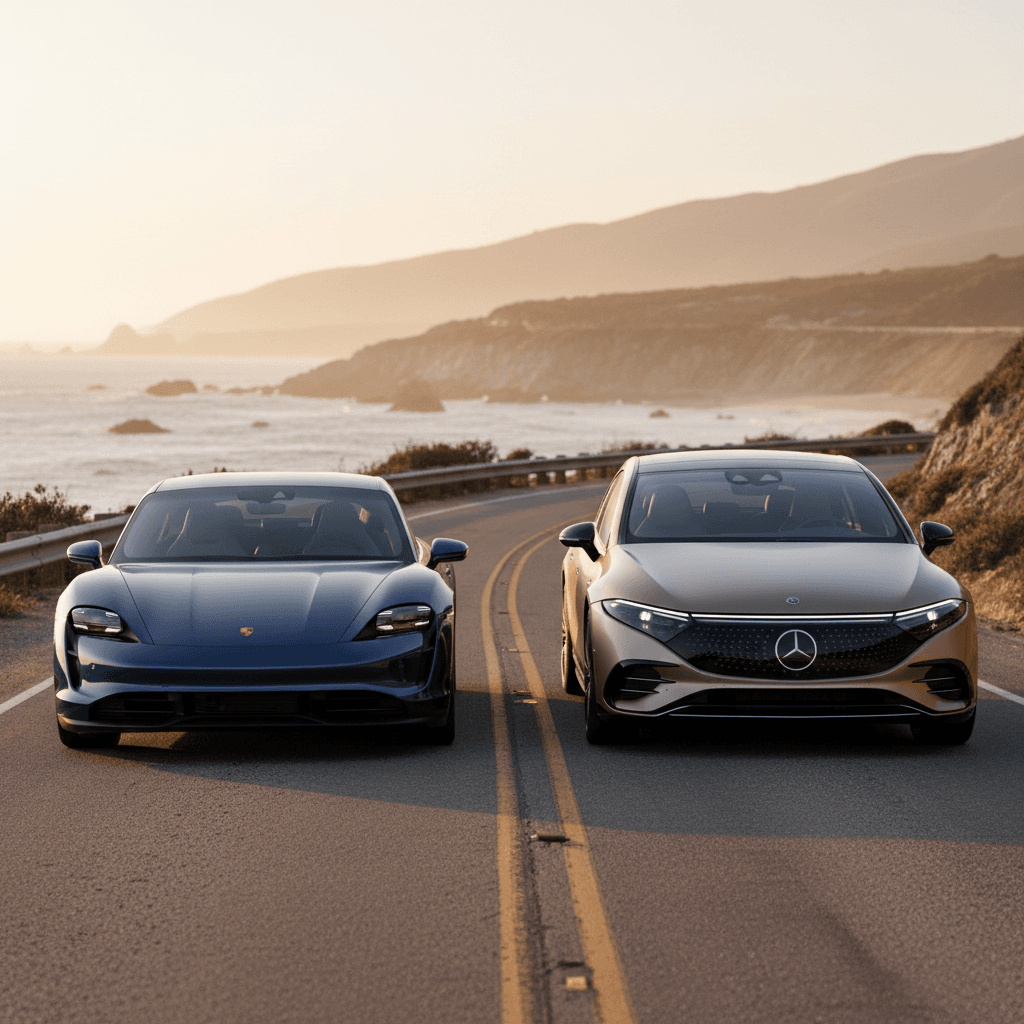
You don’t cross-shop the Porsche Taycan and Mercedes EQE by accident. Both are premium electric sedans with big price tags and even bigger personalities. If you’re asking “Porsche Taycan vs Mercedes EQE – which is better?”, what you’re really asking is which one fits your life, your roads, and your budget.
Same mission, very different moods
Porsche Taycan vs Mercedes EQE: quick overview
Before we zoom into numbers, it helps to set expectations. The Taycan plays in the “driver’s EV” space with razor-sharp steering, an 800‑volt architecture, and a reputation for repeatable fast charging. The EQE leans into softness: air-suspension comfort, a hushed cabin, and that big-wall-of-glass Hyperscreen (on some trims). Both offer multiple power levels and rear- or all-wheel drive options.
Personality snapshot: Taycan vs EQE
Two different takes on electric luxury
Porsche Taycan
Best for drivers who:
- Care more about steering feel than rear-seat legroom
- Regularly use DC fast charging on road trips
- Prefer a firm, sporty ride and low seating position
- Want one of the most engaging EVs to drive, period
Mercedes EQE
Best for drivers who:
- Prioritize comfort, quiet, and tech-forward interiors
- Do most miles around town or on relaxed highway cruises
- Need more usable back seat and trunk space
- Value a softer ride and classic Mercedes luxury feel
Taycan vs EQE in today’s EV market
Key specs at a glance
Exact numbers vary by trim and model year, but this comparison table gives you a reality check for mainstream versions you’re likely to find new or used in the U.S. today.
Porsche Taycan vs Mercedes EQE: core spec comparison
Approximate specs for popular trims rather than edge-case performance models.
| Spec | Porsche Taycan (RWD / 4S) | Mercedes EQE (EQE 350+ / 350 4MATIC) |
|---|---|---|
| Battery capacity (usable) | ~79–93 kWh | ~90 kWh |
| EPA-rated range* | ~220–245 mi (early years), higher for 2025+ updates | Mid‑200s to low‑300s depending on trim |
| Peak DC fast charge | ~270+ kW on 800V chargers | Up to ~170 kW |
| AC home charging | Up to 9.6–19.2 kW (depending on onboard charger) | Up to ~9.6 kW |
| 0–60 mph (typical trims) | ~3.8–5.0 sec | ~5.6–6.0 sec |
| Drive layout options | RWD or AWD | RWD or AWD |
| Body style | Low, sporty sedan (plus Cross Turismo wagon) | Mid-size luxury sedan |
| Ride/handling | Firm, highly controlled, very sporty | Soft, relaxed, comfort-first |
Always verify the exact specs of the specific car you’re considering; options and wheels can noticeably change range.
Specs are just the starting line
Driving character & performance: sharp vs serene
Taycan: the driver’s EV
The Taycan feels like Porsche’s engineers built an electric 911 that grew four doors. The steering is fast and precise, the chassis stays flat in corners, and the brake pedal is one of the best in any EV, firm, with a natural transition between regen and friction.
Even in non‑Turbo trims, acceleration is serious: many models sprint to 60 mph in under 4 seconds. The tradeoff is a firmer ride, especially on big wheels, and a lower seating position that some drivers love and others find a bit athletic to climb in and out of every day.
EQE: quiet, effortless pace
The EQE doesn’t rush you. It glides. Steering is lighter, the suspension is tuned for absorbent comfort, and road noise is well muted. There’s more body roll and less communication through the wheel, but if your daily drive is stop‑and‑go commuting or long highway runs, that calm demeanor can be exactly what you want.
Performance is still strong, instant electric torque makes any EQE feel quick off the line, but this car is tuned to be a luxury sedan first, performance EV second.
Test-drive tip
Range and charging: how far, how fast
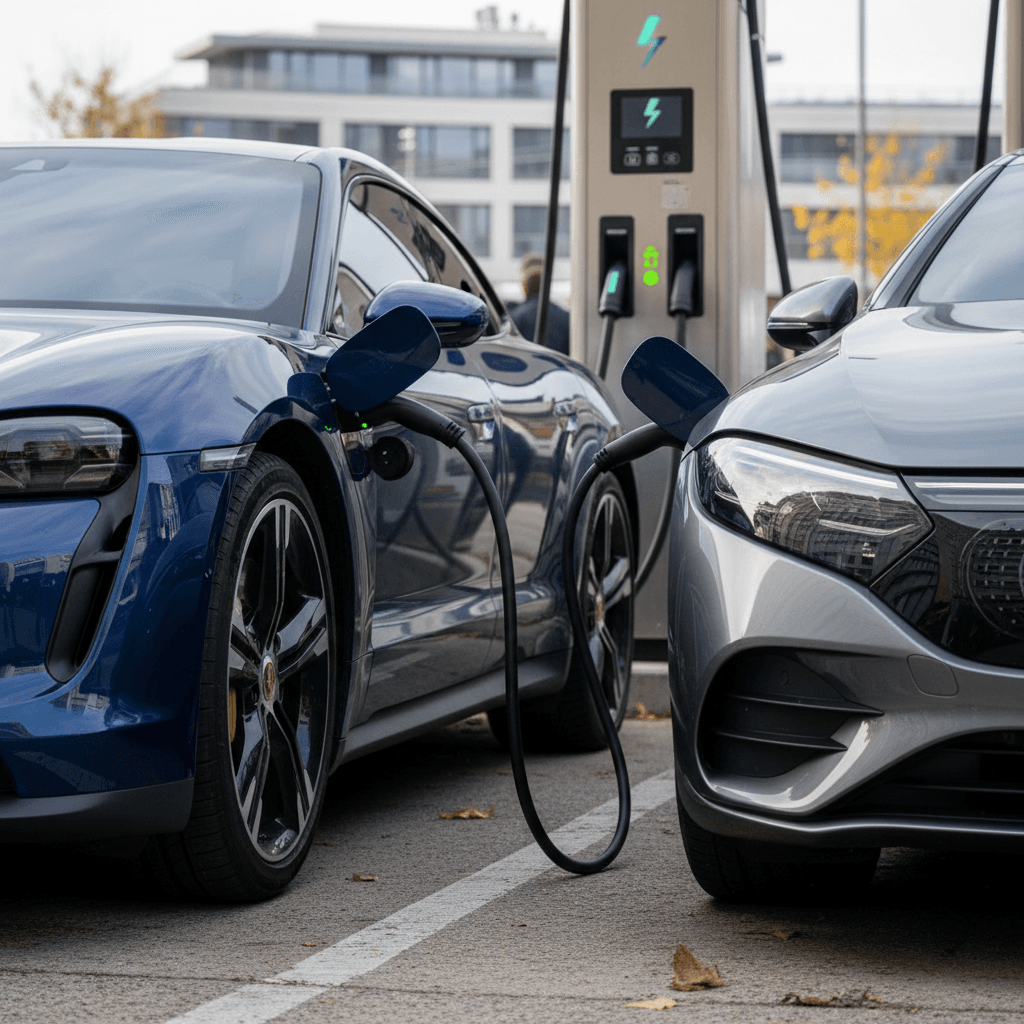
Both the Taycan and EQE live in a similar range neighborhood, especially once you factor in real-world driving at U.S. highway speeds. Where the Porsche tends to pull ahead is charging speed and consistency, thanks to its 800‑volt system and excellent thermal management.
Range & charging comparison highlights
Think about your longest regular drive, not just the EPA label.
Real-world range
Expect many Taycan and EQE trims to deliver somewhere in the 220–300 mile range on the highway, depending on wheels, weather, and speed. The EQE can edge out the Taycan in outright range on some trims, especially in lighter rear‑drive versions.
Fast charging behavior
Taycan’s 800‑volt architecture lets it hit very high DC rates and hold them well, turning 10–80% sessions into quick coffee stops on the right charger. EQE’s peak is lower and it tends to taper earlier, so road trips add a bit more time at each stop.
Home charging
Both cars are happy on a Level 2 home charger. Taycan can take advantage of higher‑power home setups on some trims; EQE tops out around ~9.6 kW, which is still plenty for overnight charging in a typical U.S. garage.
Planning road trips
Comfort, space, and ride quality
If you’re regularly hauling adults or growing teenagers, this section may matter more than 0–60 times. The Taycan’s low-slung sports‑sedan silhouette eats into headroom and trunk practicality. The EQE’s more upright shape and Mercedes packaging tilt the daily‑driver score in its favor.
Everyday usability: Taycan vs EQE
Where your passengers and luggage actually live.
| Practicality factor | Porsche Taycan | Mercedes EQE |
|---|---|---|
| Seating position | Very low, sporty, legs‑out | Higher, more traditional sedan posture |
| Rear headroom | Tight for tall adults | More generous, easier entry/exit |
| Cargo space | Decent trunk + small frunk; Cross Turismo improves it | More conventional trunk; versatile but less wagon‑like |
| Ride comfort | Firm, especially on big wheels; adaptive air helps | Soft and compliant, tuned to soak up bad pavement |
| Cabin vibe | Driver‑centric, minimalist, sporty | Cocooned, high‑tech, classic Mercedes luxury |
Exact volumes vary by trim and whether you choose a Taycan sedan or Cross Turismo wagon, but the broad differences stay similar.
Family duty winner
Tech, features, and driver assistance
Both cars are rolling tech showcases, but they take very different approaches to screens and controls. The Taycan offers multiple displays yet stays relatively restrained, with more traditional switchgear and a strong focus on the driver’s view. The EQE leans into the big‑glass experience, especially with the optional Hyperscreen, and a deeper menu system for comfort and ambient‑lighting customization.
- Taycan’s interface feels more like a driver’s cockpit, clear instruments, relatively simple menus, physical controls where you want them.
- EQE’s interface can feel more like a high‑end smartphone glued across the dash: lots of capability but also more layers and learning curve.
- Both offer adaptive cruise and lane‑keeping systems; Mercedes leans more heavily into driver-assist comfort on long highway runs.
- Over-the-air software updates and app connectivity are improving in both brands, but expect the usual hiccups and learning as the automakers iterate.
Software reality check
Ownership costs and used market realities
You can’t talk about “which is better” without talking money. Both Taycan and EQE take a healthy depreciation punch from new, which is frustrating for first owners and a gift if you’re buying used. Insurance, tires, and brakes sit firmly in luxury‑car territory.
Cost and ownership comparison
Where the dollars go over time
Purchase price & depreciation
As new, the Taycan generally stickers higher than an EQE with similar equipment. On the used market, you’ll often find both clustered between $55,000 and $90,000, with early Taycans and EQEs dipping below that depending on miles and options.
Maintenance & repairs
Neither of these is a budget EV to maintain. Brakes last longer thanks to regen, but tires, suspension parts, and interior repairs are all premium‑priced. Out‑of‑warranty electronic gremlins can be costly, so extended coverage or a very careful pre‑purchase inspection is worth its weight in Advil.
Battery health & warranty
Both brands offer roughly 8‑year / 100,000‑mile high‑voltage battery warranties on recent models. But warranty is a floor, not a guarantee of painless ownership. Real‑world battery health can vary car‑to‑car depending on charging habits and usage.
How Recharged fits in
Which EV fits you better? Real-world scenarios
Let’s answer the question you actually typed: Porsche Taycan vs Mercedes EQE – which is better? The honest answer is that each wins in different lives. Here’s how that shakes out when you plug in real people and real roads.
Taycan vs EQE: who should pick what?
Match the car to your life, not your Instagram feed.
Choose the Porsche Taycan if…
- You live for a great back road and want steering feel that rivals sports cars.
- Your daily drive is solo or with one passenger, and rear-seat comfort is a bonus, not a requirement.
- You road trip often on DC fast‑charging corridors and care about quick, consistent charging sessions.
- You’re okay trading a bit of ride softness and cabin space for a huge grin every time you merge.
Choose the Mercedes EQE if…
- Your priority is comfort, quiet, and tech for you and your passengers.
- Rear-seat access and space matter for your family, friends, or clients.
- Your usual day is commuting, errands, and relaxed highway cruising, not chasing apexes.
- You’d rather your car feel like a rolling lounge than a four‑door sports car.
How to compare used Taycan vs EQE smartly
If you’re shopping the used market, and that’s where Recharged lives, no two Taycans or EQEs are truly alike. Trim, wheels, software version, and how the last owner charged it all matter. Here’s how to stack two actual cars against each other.
Used Taycan vs EQE: must‑check items
1. Battery health and range today
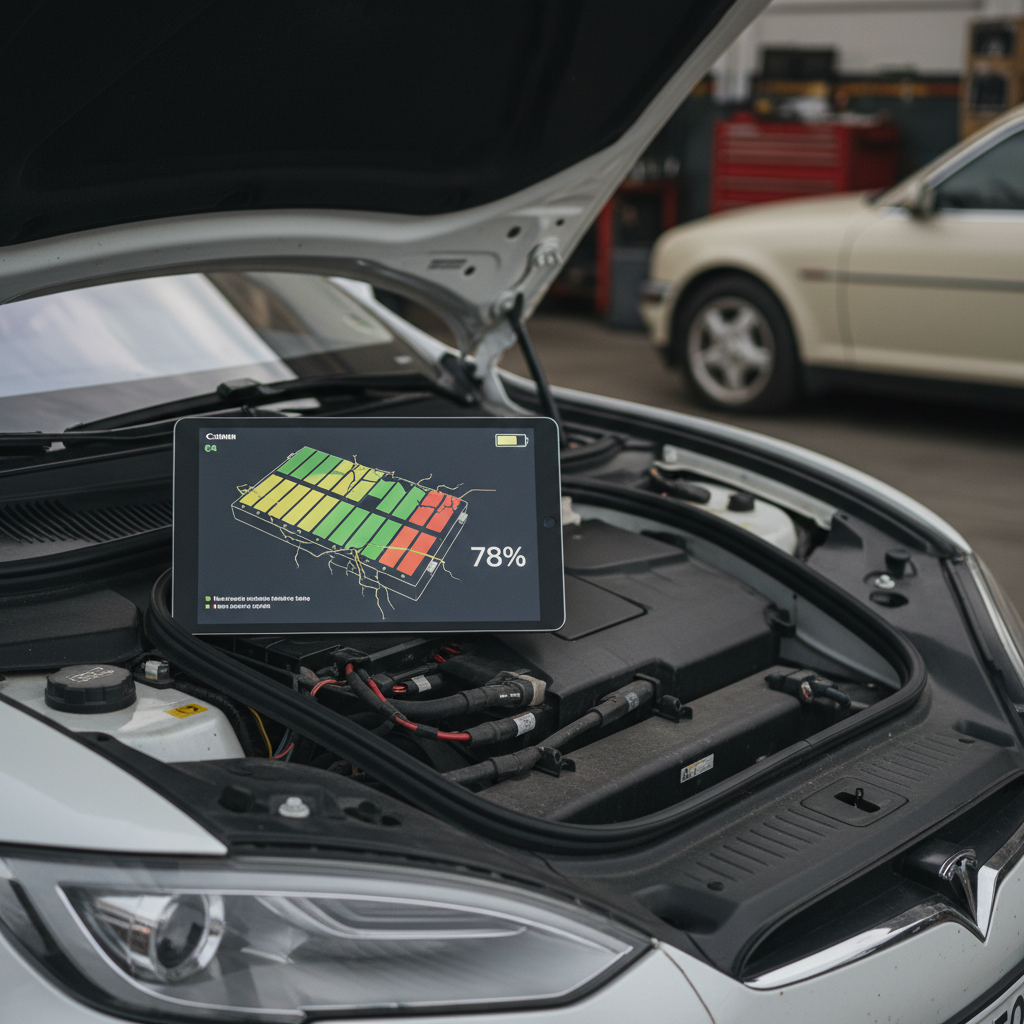
Look beyond the original EPA sticker. Ask for a <strong>battery health report</strong> and recent real‑world range numbers at highway speeds. A Taycan that’s been DC‑fast‑charged to 100% daily will age differently than an EQE mostly trickle‑charged at home, and vice versa.
2. Charging behavior
Test how each car charges at a DC fast charger and at Level 2. Note the peak rate, how quickly it rises, and how early it tapers. A Taycan that never gets above 120 kW on a known‑good 350 kW charger may need a closer look; so does an EQE that falls off a cliff at 40% state of charge.
3. Software level and feature set
Confirm the current software version and which features are active, some driver‑assist or infotainment options can be software‑tied. Make sure everything from DC fast charging to parking cameras works as advertised.
4. Tires, brakes, and suspension
Heavy, powerful EVs chew through tires faster than you might think, especially Taycans driven enthusiastically. Inspect tire wear patterns and ask when they were last replaced. Listen for suspension clunks over broken pavement.
5. Interior wear and squeaks
Luxury cabins look great when new, but creaks, rattles, and worn switchgear can sneak up as miles accumulate. A careful test drive over rough roads with the radio off tells you a lot about how gently the last owner treated the car.
6. Ownership costs and coverage
Compare not just prices but <strong>warranty coverage</strong>, including any remaining factory battery warranty, CPO coverage, or third‑party service contracts. A slightly more expensive Taycan or EQE with better coverage can be the better deal long‑term.
Don’t skip diagnostics
FAQ: Porsche Taycan vs Mercedes EQE
Frequently asked questions
Bottom line: Porsche Taycan vs Mercedes EQE
If you’ve read this far, you already know there’s no single winner in the Porsche Taycan vs Mercedes EQE debate. The Taycan is the better car for the driver who lives for a great road and hates wasting time at chargers. The EQE is the better car for the driver who wants a quiet, comfortable, tech‑rich cabin and an easygoing daily‑drive experience.
In other words: Taycan is the electric sports sedan; EQE is the electric luxury sedan. Both are excellent, just in very different ways.
If you’re ready to compare real cars instead of spec sheets, start with vehicles that come with verified battery health, transparent pricing, and EV‑savvy support. That’s exactly how Recharged approaches every used electric vehicle, from Taycan Turbos to EQE sedans, so you can pick the car that fits you, not the one that surprises you later.