If you’re planning to haul bikes, skis, a roof box or even a rooftop tent, you need to know the **Porsche Taycan roof rack weight limit** before you start piling gear on top. Porsche’s numbers look simple at first glance, but the details, dynamic vs static load, factory vs aftermarket racks, sedan vs Cross Turismo, matter a lot for safety and warranty.
Headline number
Overview: Taycan roof rack weight limits in plain English
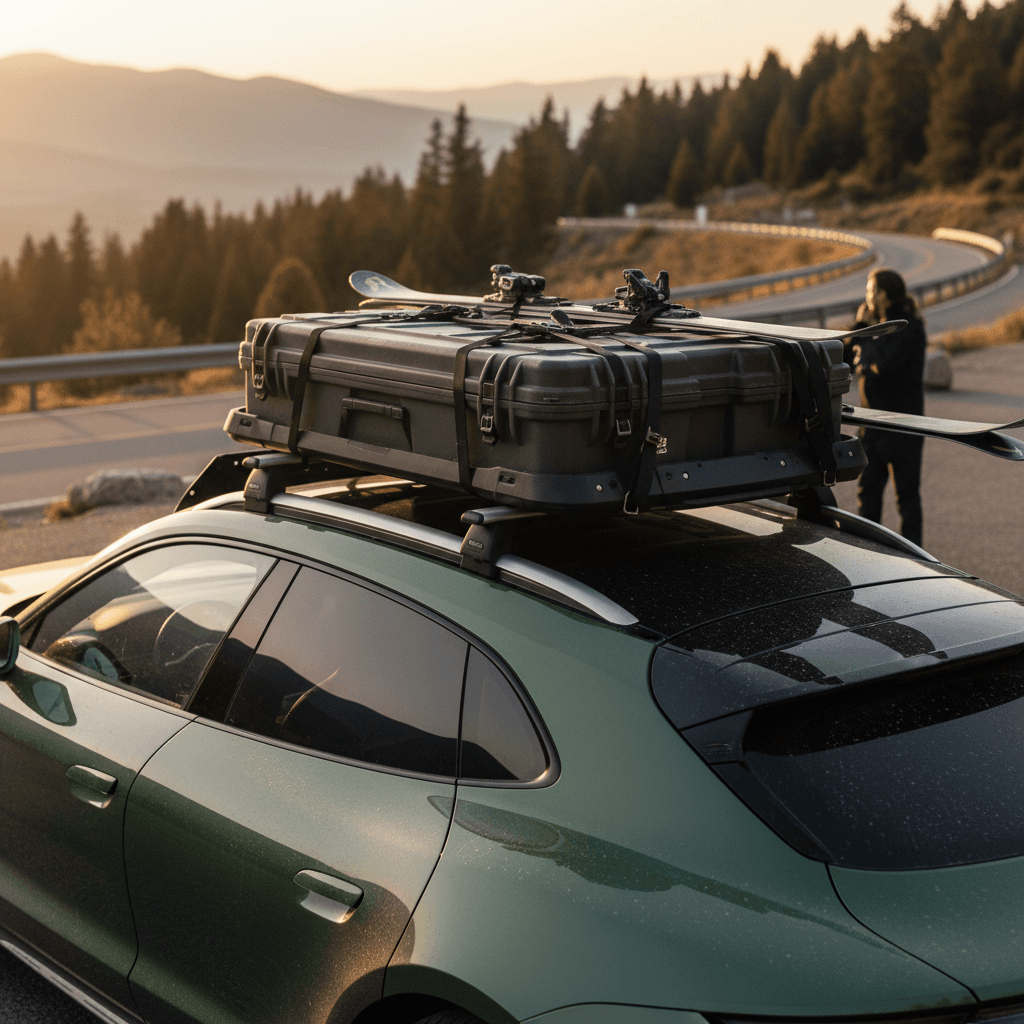
Porsche publishes a roof load limit for the Taycan in its spec sheets and in the description of the **Porsche Roof Transport System** (the factory cross bars that mount to the fixed points on the roof). That number is **75 kilograms, or about 165 pounds**, and it applies while the car is moving. In practice, that means you add together the weight of the bars, any boxes or bike carriers, and whatever you’re carrying. If the total goes past 75 kg, you’re officially over the limit.
- 75 kg / 165 lb = **maximum dynamic roof load** for Taycan with Porsche Roof Transport System
- Limit applies to **sedan, Cross Turismo and Sport Turismo** variants, unless your owner’s manual states otherwise
- Figure includes **everything above the roof**: bars, box or racks, and the cargo itself
Always trust your VIN-specific manual
Factory specs: Roof rack weight limit by Taycan model
While Porsche doesn’t market different roof load numbers by trim, it does publish the same **75 kg maximum permissible roof load** in technical data for key Taycan variants when equipped with the Porsche Roof Transport System. Here’s how that plays out by body style.
Taycan factory roof load limits (roof rack weight)
Summary of typical Porsche-published roof load limits for Taycan models when using the Porsche Roof Transport System. Always confirm for your specific VIN.
| Taycan body style | Typical model examples | Roof rack compatibility | Max roof load (dynamic) | Notes |
|---|---|---|---|---|
| Sedan (saloon) | Taycan, 4S, Turbo, Turbo S, GTS | No rails; uses fixed mounting points and Porsche Roof Transport System cross bars | 75 kg / 165 lb | Same figure repeated across multiple sedan spec sheets when rack is fitted |
| Cross Turismo (shooting brake) | Taycan 4 Cross Turismo, 4S, Turbo, Turbo S | Standard roof rails plus Porsche Roof Transport System cross bars | 75 kg / 165 lb | Porsche highlights 75 kg permissible roof load in Cross Turismo launch materials |
| Sport Turismo (where offered) | Taycan Sport Turismo variants | Roof rails optional/standard by spec; uses same Porsche cross bars | 75 kg / 165 lb | Uses same engineering basis as Cross Turismo unless otherwise noted |
Values are maximum dynamic loads and include rack + accessories + cargo.
Where Porsche states the limit
Dynamic vs static load: Why 75 kg isn’t the whole story
One big point of confusion: the **75 kg roof rack weight limit is a dynamic rating**, what the roof structure and mounts are designed to handle safely while you’re driving, cornering, and braking. Static load (when the car is parked) can be higher, which is why rooftop tents are even a conversation on a Taycan.
Dynamic vs static load on a Taycan roof
Two different limits, two different use-cases.
Dynamic load (on the move)
What it is: Weight your roof sees while you’re driving.
- Porsche’s 75 kg / 165 lb limit is a dynamic rating.
- Covers bumps, cornering forces and emergency stops.
- Exceeding it can stress mounting points and affect stability.
Static load (parked)
What it is: Weight on the roof when the car is stationary.
- Effectively higher because there are no dynamic forces.
- Relevant for rooftop tents and people sleeping up top.
- Not usually listed in owner’s manuals; follow tent and rack maker guidance.
Don’t treat static like infinite
How much gear can you really carry on a Taycan roof?
The trick is to work backward from the **75 kg roof rack weight limit** and subtract everything that isn’t your actual cargo. Once you do that, you’ll realize you don’t have as much headroom as you might think, especially with big boxes or multiple bikes.
Step-by-step: Estimating safe Taycan roof cargo weight
1. Start with 75 kg (165 lb)
This is Porsche’s maximum dynamic roof load with the factory roof transport system installed. Treat this as a hard ceiling for all weight above the roof while driving.
2. Subtract the cross bars
Porsche’s aluminum cross bars and mounts typically weigh around 5–6 kg (11–13 lb). After that, you’re down to roughly 69–70 kg (~150 lb) of remaining capacity.
3. Subtract the box, basket or carriers
A large, hard-shell roof box can easily weigh 18–25 kg (40–55 lb) empty. Three bike trays might add 12–18 kg (25–40 lb). Subtract these from the remaining number.
4. What’s left is your gear allowance
On a Taycan with a big box, it’s common to end up with **30–40 kg (65–90 lb)** of real payload space. With bike carriers, your remaining space is usually similar, once the trays and bikes themselves are counted.
5. Factor in weight distribution
Keep the heaviest items centered between the racks and as low as possible in the box. Avoid heavy overhangs front or rear that can add leverage and stress to the mounts.
6. Re‑check after loading
If you’re close to the limit, weigh your gear or at least estimate carefully. When in doubt, remove an item or move it into the Taycan’s trunk or rear-seat area instead.
Real-world example
Can you run a rooftop tent on a Taycan?
Rooftop tents on a Taycan Cross Turismo make the rounds on social media, and Porsche has even showcased branded tents on its roof transport system. The key is understanding **dynamic vs static limits** and how tent manufacturers rate their products.
When you’re driving
- The **75 kg dynamic limit still applies**. Add up the weight of the bars, the tent, and any gear inside the tent while driving.
- Many hard-shell RTTs weigh 55–75 kg (120–165 lb) empty, plus the bars. That alone can hit or exceed the Taycan’s dynamic limit.
- Soft-shell and ultralight tents are more realistic, but you must run the math carefully.
When you’re parked
- Static capacity is higher, which is why a tent can support two adults and gear once you’re stationary.
- Porsche’s own tent packages are designed to stay within the structure’s capacity when used as directed.
- Still, the underlying rule holds: **never exceed the lowest rated component**, and follow both Porsche and tent-maker guidance.
Approach rooftop tents conservatively
Aftermarket racks vs Porsche system: Which limit wins?
Plenty of aftermarket cross bars list **load ratings of 75–100 kg (165–220 lb)** for the Taycan. That doesn’t mean your Porsche suddenly gains a stronger roof. The **vehicle’s rated roof load still governs** what you can do.
Which rating do you follow?
Short answer: always respect the lowest number.
Vehicle roof limit (Porsche)
- Engineered to protect the body shell, roof structure and handling.
- For Taycan with Porsche roof transport system, that’s **75 kg**.
- Overloading here risks structural damage and affects crash performance.
Rack manufacturer limit
- Specifies what the cross bars and feet can carry without failing.
- Some will quote 75–100 kg, often matching or slightly exceeding OEM.
- Does not override the vehicle’s own roof rating.
The “lowest number wins” rule
Loading & driving best practices to protect your Taycan
Staying under the published roof rack weight limit is just the starting point. How you load the rack and how you drive with weight up high can make the difference between a confident road trip and a sketchy one.
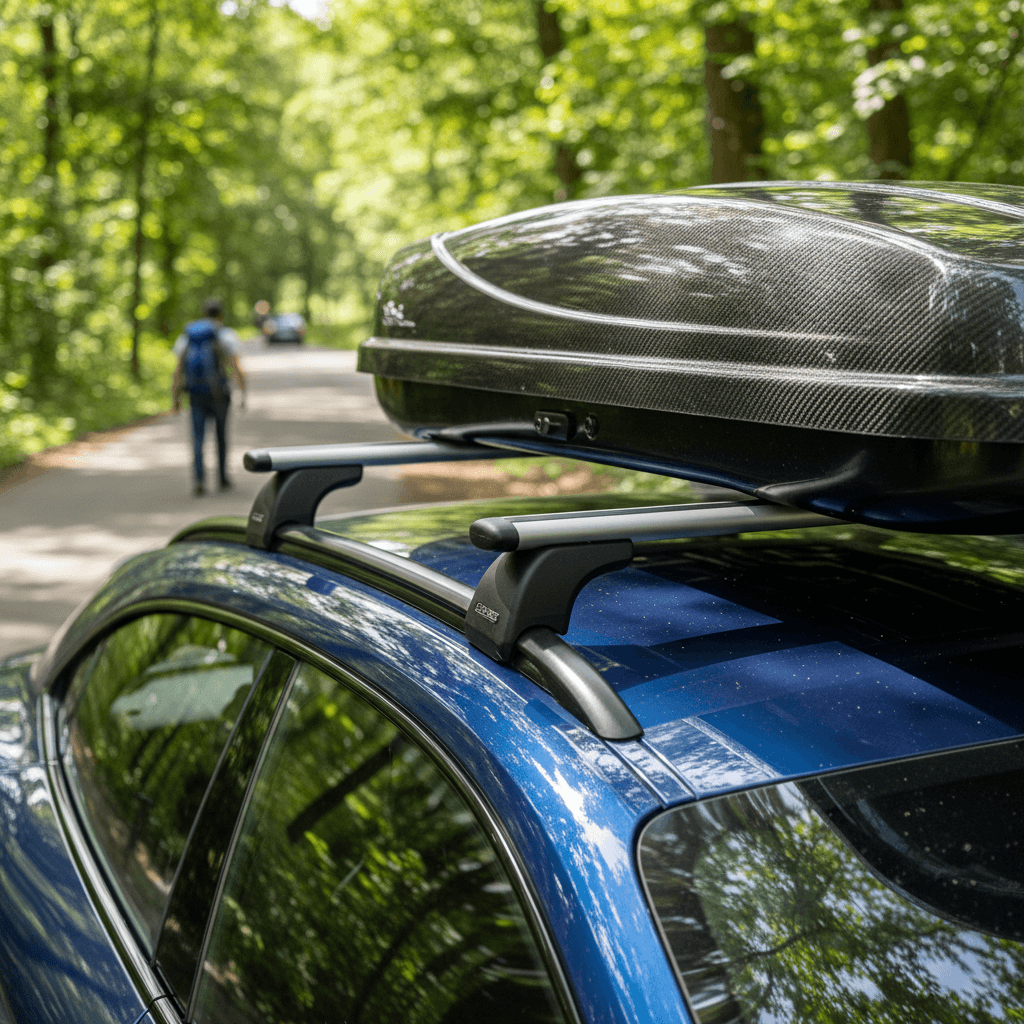
- Keep heavy items inside the car when possible; use the roof for **bulky but lighter** gear.
- Center mass between the cross bars and keep weight spread evenly left-to-right.
- Use **low-profile boxes and carriers** to cut drag and wind noise.
- Re‑torque rack fasteners after the first few hundred miles of use, per the manufacturer’s instructions.
- Reduce speed when fully loaded on the roof; high speed + high roof weight amplifies forces at the mounting points.
- Avoid off-road abuse; the Taycan Cross Turismo is adventure-friendly but still a road car, and big bumps spike roof loads.
EV‑specific driving tip
Buying a used Taycan? Roof rack checks to make
On the used market, Taycans that have lived adventure lives, boxes, bikes, even tents, can be great finds, but only if the roof hardware has been treated properly. This is where a structured inspection and solid data, like the **Recharged Score** battery and vehicle health report, pay off.
Used Taycan inspection: Roof & rack items to review
1. Inspect mounting points and rails
Look for cracks in the paint, distortion around the fixed points or roof rails, and any evidence of repairs. Overloading or poorly fitted racks can leave subtle but important clues.
2. Ask about rooftop tents or heavy use
If the seller used a rooftop tent or regularly carried multiple bikes, ask how they calculated weight and what rack system they used. You’re trying to gauge whether the **75 kg limit** was respected.
3. Check for water leaks and wind noise
Aftermarket rack installs or repeated removals can disturb seals. On a test drive, listen for wind noise from the roof area, and inspect headliner and pillars for past water intrusion.
4. Confirm approved accessories
Factory Porsche Roof Transport System hardware is engineered specifically for the Taycan. If the car comes with aftermarket racks, verify that they’re correctly specified for the model and professionally installed.
5. Review documentation
Service invoices or accessory receipts can help you understand exactly what’s been mounted on the roof and whether dealers or specialists did the work.
6. Get the full health picture
Beyond the roof, a used Taycan’s value hangs on battery health, charging history, and overall condition. A <strong>Recharged Score Report</strong> adds verified battery diagnostics and fair‑market pricing to the story, so you’re not buying blind. You can browse used Taycans with full reports directly on <a href="/">Recharged</a>.
FAQ: Porsche Taycan roof rack weight limits
Frequently asked questions about Taycan roof rack weight limits
If you remember just one number, make it **75 kg (165 lb)**, the Porsche Taycan’s typical maximum dynamic roof rack weight limit with the factory roof transport system. From there, it’s all about doing honest math, loading carefully, and respecting that the roof is a structural safety component, not a free‑for‑all storage shelf. Whether you’re shopping for a used Taycan or outfitting your current car for road‑trip duty, taking roof loads seriously will help you protect your EV investment and enjoy the extra practicality without unwanted drama.