If you’re looking at a Porsche Taycan in 2026, you’ve probably noticed two things: the **EPA range numbers look modest**, and owners can’t stop talking about how far they actually go on a charge. This guide cuts through the marketing to focus on the Porsche Taycan real world range in 2026, how the updated 2025 models behave, what earlier cars deliver, and what you should expect if you’re shopping new or used.
Model years covered
Why real-world range matters more than EPA numbers
On paper, the Taycan has always looked a little short-legged. Early U.S. EPA ratings for 2020–2023 cars hovered around **200–250 miles**, while rivals boasted 300+ miles. Yet owners and testers kept reporting surprisingly strong real-world results, often **40–60 miles beyond the sticker estimate** on highway drives. That gap is still there in 2026, just with bigger numbers on both sides.
How the EPA test works
The U.S. EPA range label is based on standardized city and highway cycles, then adjusted with a conservative multiplier. Porsche historically leans conservative in how it presents that data, which helps avoid disappointed owners but can make the Taycan look weak in comparison charts.
How you actually drive
Your real-world range depends on speed, temperature, elevation changes, and how hard you use that right pedal. The Taycan’s efficiency-focused software means it often does better than its EPA number on steady highway runs, especially in temperate weather and with smart route planning.
Taycan range at a glance (2025–2026)
Quick answer: Porsche Taycan real-world range in 2026
Let’s put some realistic, *live-with-it* numbers on the table. These are broad, driver-tested ranges you can expect from a healthy Taycan in 2026, assuming mostly highway driving around **70–75 mph**, moderate weather, and the larger Performance Battery Plus where available:
- **2025+ rear-wheel-drive Taycan sedan** (Performance Battery Plus): plan on **320–360 miles** of real-world highway range when it’s 60–80°F and you’re driving smoothly.
- **2025+ Taycan 4S sedan**: typically **280–330 miles** at highway speeds. Independent testing has seen about 330 miles in a 75‑mph loop, *slightly better than its EPA figure*.
- **2025+ Taycan Turbo / Turbo S / Turbo GT**: more power, more tire, more drag; count on **240–290 miles** of highway range depending on wheel/tire combo and driving style.
- **Earlier 2020–2024 Taycan sedan with big battery**: think **220–280 miles** of highway range in similar conditions, even though many are EPA‑rated closer to ~200–250 miles. These cars quietly overdeliver in real-world use.
- **Cross Turismo / Sport Turismo wagons**: add a little frontal area; expect **10–20 miles less** than an equivalent sedan in the same conditions.
A simple planning rule
How the 2025 Taycan update changed range
The 2025 model-year Taycan (on sale through 2026) is more than a nip-and-tuck. Porsche reworked the powertrain, battery, and thermal management, and the result is a car that **charges faster and goes significantly farther** than the original Taycan without feeling like a science project.
2025 Taycan range-focused upgrades
What changed under the skin, and why it matters on the road
Larger Performance Battery Plus
The big underfloor pack grows to roughly 105 kWh usable capacity, up from around 93 kWh in earlier cars. More energy on board, same basic footprint.
Smarter power electronics
New rear-axle motor hardware and an updated pulse inverter help the car deliver more power when you want it and sip less energy when you’re cruising.
Improved thermal management
A next-gen heat pump, revised cooling strategy, and smarter all-wheel-drive logic let the Taycan run more efficiently over long stretches, especially at highway speeds.
On the road, the updated Taycan’s **EPA combined range jumps into the high 200s and low 300s**, depending on trim and wheel package, and real-world testing shows highway range gains of **about 30–50%** versus many 2020–2023 versions. The key takeaway: in 2026, a new or lightly used 2025 Taycan finally *looks* as good on the window sticker as it has quietly behaved on the interstate for years.
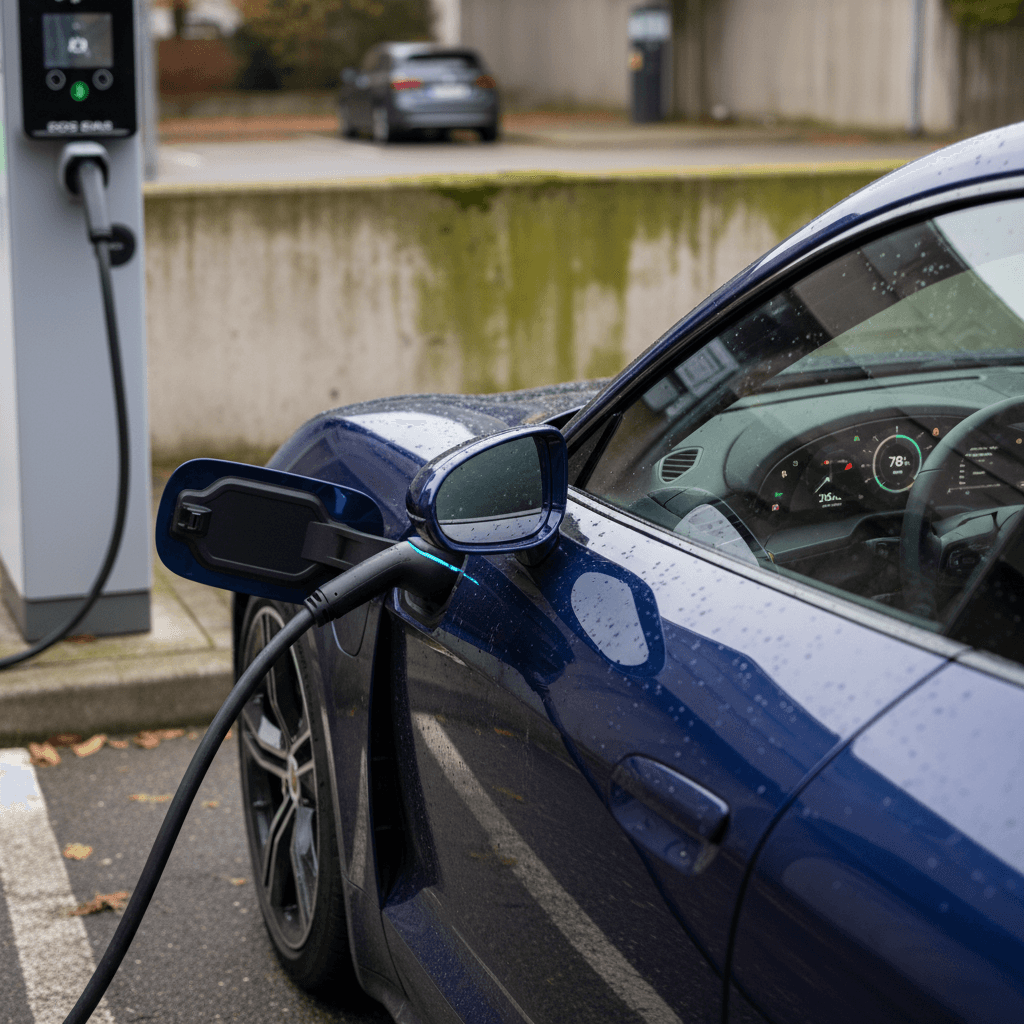
Real-world range by Taycan model
Because you don’t buy a base Taycan and a Turbo GT for the same reasons, you shouldn’t judge them by one blunt range number. Here’s how the main variants shake out in 2026 from a **real-world, U.S. owner** perspective.
Approximate real-world range by Taycan variant (2025–2026)
Assumes a healthy battery, Performance Battery Plus where available, 70–75 mph highway cruising, mild weather, and reasonably efficient driving. Numbers are approximate bands, not guarantees.
| Model (2025 MY+) | Body style | Typical HWY range (mi) | Conservative trip-planning range (mi) |
|---|---|---|---|
| Taycan (RWD) | Sedan | 320–360 | 280 |
| Taycan 4S | Sedan | 280–330 | 250 |
| Taycan GTS | Sedan | 270–310 | 240 |
| Taycan Turbo | Sedan | 260–300 | 230 |
| Taycan Turbo S | Sedan | 250–290 | 220 |
| Taycan Turbo GT | Sedan | 240–280 | 210 |
| Taycan 4 / 4S Cross Turismo | Wagon | 260–310 | 230 |
| Earlier 2020–2024 Taycan (big battery) | Sedan | 220–280 | 200 |
Use these bands as planning tools, not promises, your speed, weather, wheels, and driving style will move the needle.
Why your numbers may be lower
What kills Taycan range in the real world
The Taycan is efficient for a high-performance EV, but physics is still running the show. You’ll see big swings in range depending on how and where you drive. Here are the heavy hitters that shrink your “miles to empty” faster than you’d like.
Biggest Taycan range killers
The usual suspects, and what to do about them
High sustained speeds
Above about 75 mph, aerodynamic drag climbs fast. Expect a noticeable range hit at an indicated 80–85 mph, and a big one if you sit there for hours. On a 2025 Taycan, that can mean losing 40–70 miles of range vs. a 70‑mph cruise on the same route.
Cold weather
Below freezing, the battery needs energy just to warm itself, and you’re running cabin heat on top of that. In a harsh winter highway slog, it’s normal to see **20–30% less range**, sometimes more if you’re stacking short trips.
Big wheels, sticky tires
Those gorgeous 21‑inch wheels and performance tires add both weight and rolling resistance. Swapping from an efficient 19‑inch wheel/tire setup to a heavy, wide 21‑inch package can easily cost you **20+ miles** of real-world range.
Hills, headwinds, and cargo
Long climbs, strong headwinds, roof boxes, and a car packed to the rafters all work against you. Regeneration helps on the way back down, but you never get all that energy back.
How to blunt those range losses
Use Range or Normal mode on the highway
Sport and Sport Plus keep more systems on high alert and may lean on the front motor more often. For long stints, Range or Normal mode will generally give you the best efficiency without turning the car into a slug.
Pre-condition while plugged in
Use the Taycan’s scheduling tools to warm or cool the cabin and battery while you’re still connected to AC or DC power. You’ll spend less stored energy getting comfortable and more on actual miles.
Favor smaller, more efficient wheels
If range matters more than maximum cornering grip, stick with the standard 19‑inch or an efficient 20‑inch wheel and touring‑oriented tire. It’s an unsexy change that can add meaningful highway range.
Watch your cruising speed
The difference between cruising at 70 mph and 82 mph is huge over a 3–4 hour drive. Backing off by 5–7 mph can give you a noticeably bigger buffer without adding much time to your trip.
How the Taycan compares to other luxury EVs
In a spec-sheet war, the Taycan’s range numbers are still more conservative than many rivals in 2026. If you’re glancing at window stickers, an EQE, i5, or Model S may show higher EPA figures. But out on the road, the story gets a lot more interesting.
Against Tesla Model S
The Model S still carries one of the biggest EPA range stickers in the business, and if you’re hypermiling, it’ll go farther. But at **75 mph and up**, especially in colder temps, owners often see a sharper range drop than Taycan drivers. The Porsche tends to deliver more honest, repeatable range right up to fast‑cruise speeds.
Against BMW, Mercedes, Audi, Lucid
BMW’s i5/i7, Mercedes’ EQE/EQS, and Audi’s e-tron GT all live in the Taycan’s neighborhood. Some carry bigger official numbers, particularly the more comfort‑oriented sedans. The Taycan usually trails them slightly if you’re just loafing along, but the gap narrows, or disappears, once you start driving like someone who actually bought a Porsche.
Where Taycan shines
Range and battery health when buying a used Taycan
By 2026, the Taycan has a solid track record: it’s no longer the new kid, and plenty of 2020–2023 cars are reaching the sweet spot where price, performance, and usable range line up nicely. The big question for any used EV, including a Taycan, is **how much of that original range is still there**.
Used Taycan range: what to look for
You’re shopping with your heart and your head, here’s how to keep both happy.
Battery health
Most well‑cared‑for Taycans show **modest degradation** after several years, often still delivering well over 80–90% of their original usable range. What matters is the individual car’s history: fast‑charging habits, climate, and storage.
Owner’s real-world range
Ask the seller for screenshots or photos showing typical consumption and predicted range on their usual routes. A car that consistently performs well on their commute is more reassuring than any single number on paper.
Independent range & battery report
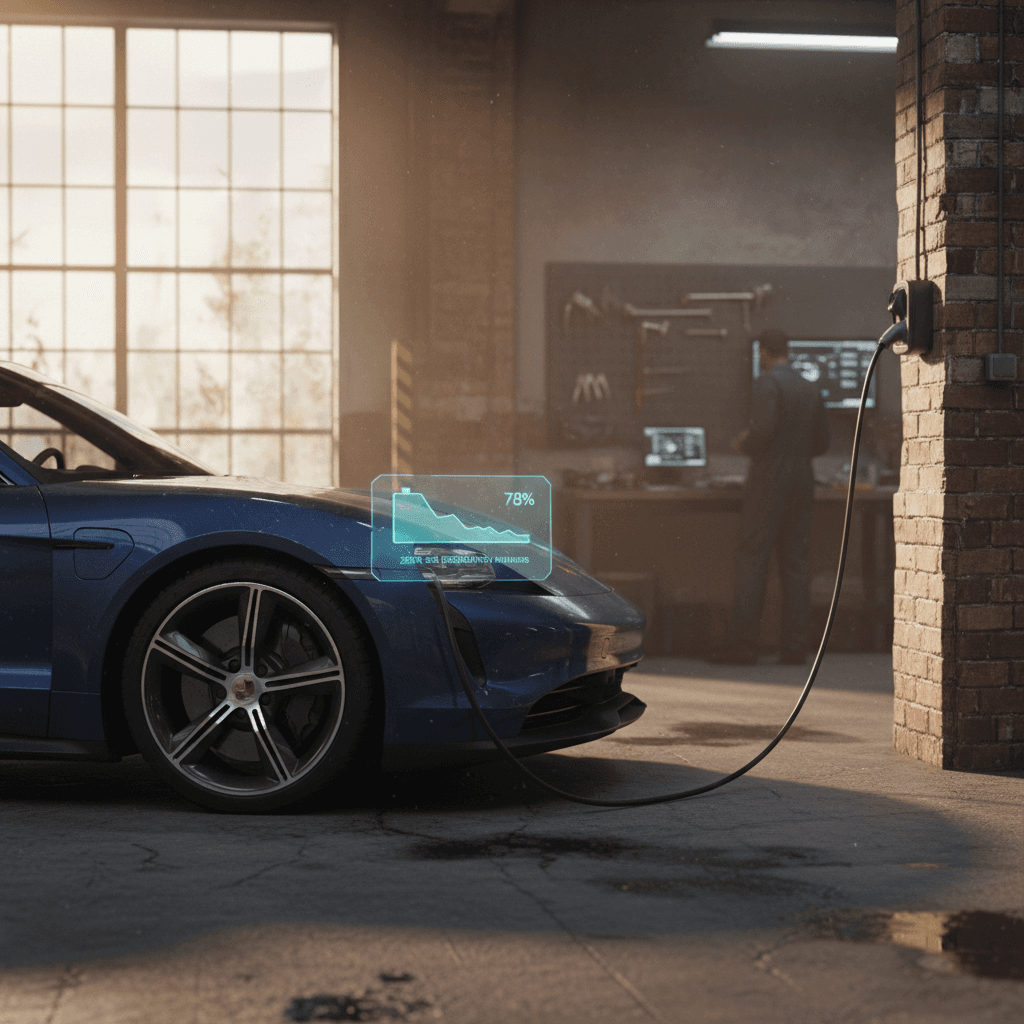
A proper battery health check tells you far more than a quick test drive. At Recharged, every EV we list comes with a Recharged Score Report that includes verified battery diagnostics, so you know how much real‑world range you’re actually buying.
How Recharged helps Taycan shoppers
Maximizing your Taycan’s range day to day
Whether your Taycan is brand-new or a few years old, a handful of habits can easily swing your usable range by 10–20 percent. That’s the difference between arriving with a comfortable buffer and sweating your way to the next fast charger.
Simple habits for more Taycan range
1. Trust the built-in trip planner
Use Porsche’s native navigation with EV routing. It understands your car’s consumption, the terrain, and fast-charger locations better than a generic maps app, which means fewer surprises and more realistic arrival SOC estimates.
2. Use preconditioning before road trips
Before a highway run or a DC fast-charging stop, set your destination charger in the nav so the car can warm or cool the battery for peak efficiency and fastest charging. This pays off in both range and time saved at the plug.
3. Don’t fear 10–80% charging
The Taycan is happiest living between roughly 10% and 80–90% state of charge in daily use. On road trips, that window also lines up with the **fastest part of the charging curve**, so you cover more miles per minute plugged in.
4. Dial back climate extremes
On moderate days, lean on the seat and wheel heaters (or ventilated seats) rather than blasting cabin HVAC. In winter, even a tiny reduction in cabin temperature can claw back a few percentage points of range over a long trip.
5. Learn your personal consumption number
Spend a few weeks watching your kWh/100 mi or mi/kWh in typical driving. Once you know your own efficiency, predicting real-world range becomes easy math instead of guesswork.
"The Taycan has always been better in the real world than its numbers suggest. The 2025 update finally lets the spec sheet catch up to the experience from behind the wheel."
FAQ: Porsche Taycan real-world range in 2026
Frequently asked questions about Taycan range
Bottom line: Is the Taycan’s range good enough?
If you’re chasing the biggest number on a spec sheet, the Porsche Taycan will rarely win the range war in 2026. But if you care about **how the car actually behaves** on real roads, at 75 mph, in bad weather, with a family and luggage on board, the Taycan, especially the updated 2025 models, delivers more than the label suggests. You get a car that feels like a Porsche, charges like a modern EV, and quietly turns in **real-world range that’s finally on par with its luxury peers**.
If you’re thinking about a used Taycan, don’t buy blind. The right diagnostics and a transparent seller make all the difference between a thrilling long‑legged GT and a car that falls short of your life. Recharged was built for exactly that moment, pairing **verified battery health and fair pricing** with expert EV guidance so you know, before you sign anything, what kind of range you’ll wake up to every morning.