If you own a Porsche Taycan, you’ve probably punched your VIN into Kelley Blue Book to see what it’s worth. The trouble is, the Porsche Taycan KBB value is only one piece of a very complicated puzzle: luxury EV pricing, rapid tech change, battery health, and plain old market mood all tug that number up or down.
Quick take
Why Porsche Taycan KBB value matters now
The Taycan was Porsche’s opening statement in the EV era: wild acceleration, Autobahn manners, and a price tag that induced light vertigo. New 2025 Taycan MSRPs sit around the low six figures for the base sedan and well into the mid‑$200,000s once you wander into Turbo S territory. Kelley Blue Book’s cost‑to‑own analysis pegs a 2025 Taycan’s 5‑year cost at over $115,000, with about $63,900 of that being pure depreciation, money that effectively evaporates from the window sticker to year five.
That depreciation is why your Taycan’s KBB value matters. It influences trade‑in offers, private‑party pricing, lease buyout decisions, and insurance payouts. Get it wrong by ten grand and you’ve essentially gifted someone a year of payments.
EV values move faster
How KBB actually calculates Porsche Taycan value
When you look up your Taycan on Kelley Blue Book, you’ll see several numbers: trade‑in value, private‑party value, and sometimes an estimated instant cash offer. Behind those simple tags is a stew of auction data, dealer transactions, asking prices, equipment lists, and regional trends.
- Base data: Original MSRP and options by VIN or trim, including battery size, performance packs, and interior upgrades.
- Wholesale and retail activity: Actual auction hammer prices and dealer sales on similar Taycans, adjusted for mileage and condition.
- Time and mileage assumptions: KBB assumes average annual mileage (often ~12,000 miles) and “typical” usage unless you tell it otherwise.
- Regional adjustments: EV‑heavy markets (California, Northeast urban centers) often support stronger Taycan pricing than areas with sparse charging.
- Channel adjustment: Trade‑in values are intentionally conservative versus private‑party values, reflecting dealer reconditioning and risk.
Use the right condition rating
Current Taycan values by model year
Exact KBB values change week to week and depend on your ZIP, options, and mileage. But we can sketch the landscape using recent KBB and market data for typical, well‑kept cars as of early 2026:
Approximate Porsche Taycan values by model year
Illustrative U.S. value ranges for common Taycan trims in good condition as of early 2026. Your specific KBB value will vary by options, mileage, and region.
| Model year | Typical KBB / appraisal range* | Real‑world asking prices** | Notes |
|---|---|---|---|
| 2020 Taycan | Mid–$50,000s to low–$60,000s | Low–$60,000s (higher for 4S/Turbo) | First‑year cars; values driven heavily by battery health and warranty time left. |
| 2021 Taycan | High–$50,000s to mid–$60,000s | Low– to mid–$70,000s | Cross Turismo wagons and performance trims command a premium. |
| 2022 Taycan | Around $50,000 resale for base trims | Mid–$60,000s to low–$70,000s | KBB pegs a 2022 Taycan’s current resale near $50,100 with trade‑in around $45,500 for typical mileage. |
| 2023 Taycan | Mid–$60,000s and up | Upper‑$60,000s to well into six figures | You’ll see huge spread here: base RWD sedans on one end, Turbo S wagons on the other. |
| 2024–2025 Taycan | High–$70,000s and up, depending on spec | Often $90,000+ | Near‑new cars; KBB cost‑to‑own modeling shows steep early‑year depreciation. |
Use this as a sanity check against your KBB report and local listings.
About those ranges
KBB value vs real-world Taycan prices
If you spend ten minutes on used‑car sites, you’ll notice something: asking prices on Taycans rarely line up perfectly with KBB value. In early 2026, average used Taycan listing prices hover around the low‑$80,000s, with 2020–2022 cars often advertised from the mid‑$50,000s to mid‑$70,000s depending on trim and mileage. Meanwhile, KBB’s modeled resale on a 2022 Taycan in average condition sits closer to $50,000.
KBB tends to lag reality
KBB leans on historical data and big‑picture trends. When EV prices swing quickly, because interest rates jump, incentives change, or a new Taycan update lands, listings can move faster than the underlying KBB curve. That’s why a dealer may point at KBB and still lowball you, arguing that “the market is softening.”
Listings are not sold prices
On the flip side, sellers, especially private owners of a prestige badge, often start high and bargain down. A 2021 Taycan 4S listed at $78,000 might quietly sell at $72,000. KBB values are closer to that real transaction number than to the aspirational asking price.
How to sanity-check your value
Depreciation: how fast does a Taycan lose value?
All luxury cars depreciate like a dropped stone; luxury EVs add a lead weight marked “technology.” Yet the Taycan actually holds up better than many peers. Independent resale studies show five‑year depreciation for the Taycan in the roughly 50–60% range, versus well over 60% for the average large luxury EV sedan.
Porsche Taycan depreciation snapshot
The important nuance: those percentages are averages. A base rear‑drive Taycan with the larger battery and modest options will age differently from a Turbo S Cross Turismo loaded with every catalog oddity. High‑spec cars take the biggest absolute dollar hit early on but can still command strong used prices from the right buyer.
EV tech risk is real
How battery health changes your Taycan’s value
KBB looks at mileage and age; it does not actually plug into your Taycan’s battery management system. In the EV world, that’s like appraising a racehorse without checking its lungs. For Taycan buyers, real‑world usable range and DC fast‑charging behavior matter as much as leather color or wheel design.
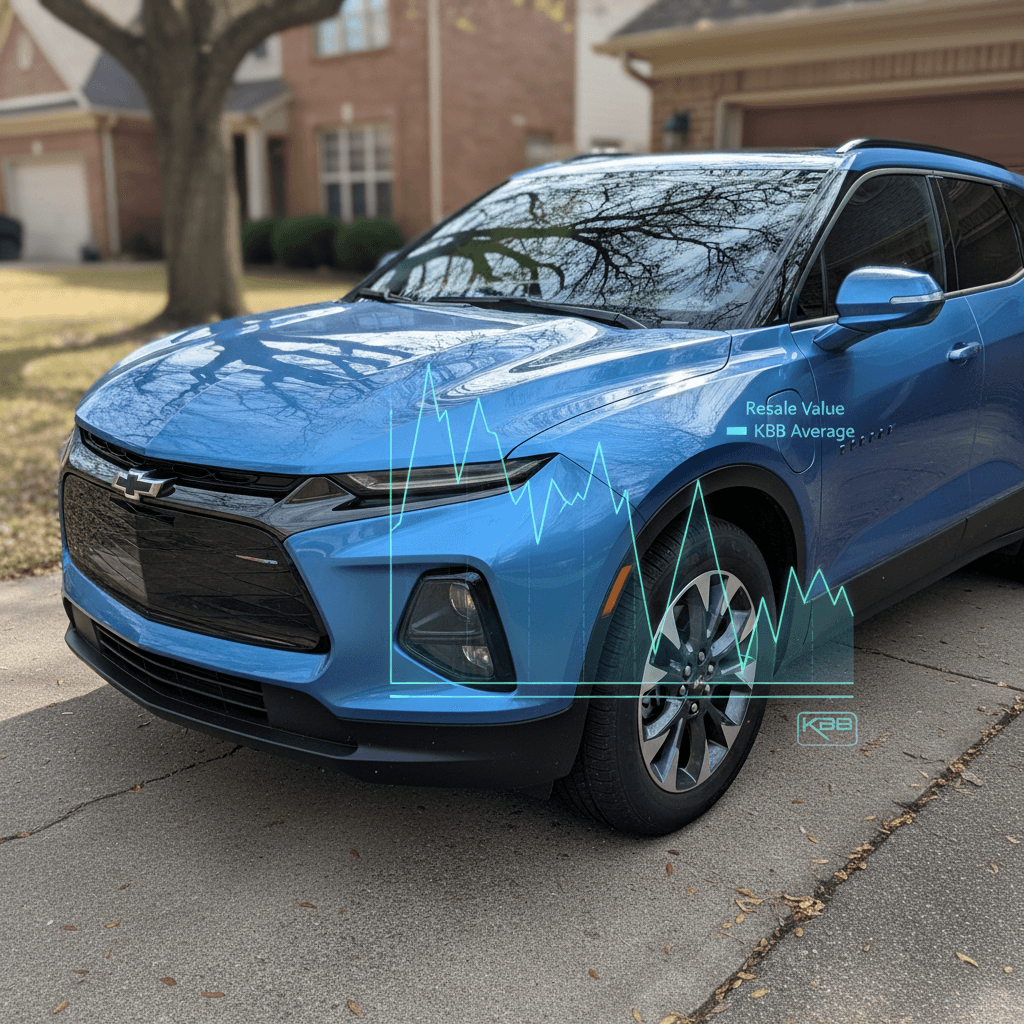
Two identical Taycans, two very different values
Why a generic KBB value isn’t the full story for EVs
Car A: Healthy battery
- Shows range close to original EPA estimates.
- Fast‑charges at expected speeds on 150–350 kW DC chargers.
- No battery‑related warnings, normal thermal behavior.
Result: Buyers are comfortable paying near the top of KBB’s range, or even above, if documentation is solid.
Car B: Tired battery
- Noticeably reduced real‑world range.
- Slow or inconsistent DC fast‑charging.
- Maybe a prior fast‑charge or battery fault on record.
Result: Expect lower offers, longer time on market, and buyers using degradation as leverage against KBB’s number.
This is exactly why Recharged builds a Recharged Score battery health report into every used EV we sell. Instead of guessing from age and miles, we use diagnostics and live data to verify pack health, projected range, and charging behavior, so the value attached to a Taycan isn’t just wishful thinking.
If you’re selling your Taycan privately
How to maximize your Taycan’s KBB value before you sell
You can’t undo depreciation, but you can decide whether you’re on the high or low side of the curve. Before you type your VIN into KBB, there are a few easy wins.
Pre‑sale checklist to support a higher KBB‑aligned price
1. Get software and service up to date
Make sure your Taycan is current on Porsche software updates, recalls, and scheduled maintenance. EV buyers pay attention to service records, missing stamps give buyers ammunition to walk your price down below KBB.
2. Fix the visible stuff
Curb rash, cracked glass, worn tires, yellowed headlamps, these are the first things a buyer sees. A few hundred dollars at a reputable shop can easily protect thousands in final sale price.
3. Detail the car properly
It sounds cosmetic because it is. But a properly detailed Taycan, clean wheels, fresh interior, no lingering odors, signals “cared for,” which makes your chosen KBB number feel more believable.
4. Gather EV‑specific documentation
Compile home‑charging receipts, public charging history if you have it, and any battery diagnostics. If you’ve had the HV battery inspected or replaced under warranty, that’s gold, include it in your listing or trade‑in file.
5. Be honest about condition in KBB
When you run the KBB tool, choose the condition rating you’d pick if you were the buyer. That conservative baseline helps avoid disappointment when you compare your number to Recharged, dealer, or private offers.
Timing the market
Getting a fair offer: KBB vs dealers vs Recharged
Once you’ve got your KBB value in hand, the next question is where to turn it into money. Each route treats that Blue Book number differently.
How different buyers use, or ignore, KBB value
Traditional dealers
Dealers look at KBB but weigh auction data more heavily. For specialty EVs like the Taycan, many franchise stores simply don’t want to carry the risk, so they’ll anchor on the low end of the KBB trade‑in range or below and send it straight to auction.
Private-party buyers
Private buyers often start their search on KBB and listing sites, so they’re somewhat KBB‑anchored. But they’re also cautious about EVs and batteries. Strong documentation and transparent pricing can justify asking near the top of KBB’s private‑party range.
Recharged
Because Recharged specializes in used EVs, we put real weight on diagnosed battery health, not just age and miles. Our instant offers factor in KBB values, auction data, and a Recharged Score report, so well‑cared‑for Taycans aren’t punished by generic assumptions about EV risk.
If you’re looking to sell or trade your Taycan, Recharged can give you an online offer backed by EV specialists, not a generic “we’ll see what it does at auction” shrug. And if you’re shopping for a used Taycan, every vehicle on our marketplace comes with a Recharged Score battery health diagnostic, fair‑market pricing analysis, and nationwide delivery options.
Porsche Taycan KBB value: FAQ
Frequently asked questions about Porsche Taycan KBB value
Bottom line: what your Taycan is really worth
Kelley Blue Book gives you a valuable starting point for understanding your Porsche Taycan’s KBB value, but it’s just that, a starting point. The real story is written by fast‑moving EV market trends, your car’s specific options and mileage, and, above all, the health of the battery pack hiding under that beautifully stamped metal.
If you’re selling, aim to make your Taycan look better than the average KBB data point: clean, serviced, documented, and transparently represented. If you’re buying, don’t be hypnotized by a low asking price that ignores battery degradation or looming warranty deadlines. And whether you’re on the buying or selling side, working with an EV‑focused marketplace like Recharged, with Recharged Score battery health diagnostics, fair‑market pricing, transparent reports, and nationwide delivery, can turn a nervous six‑figure guess into a confident decision.