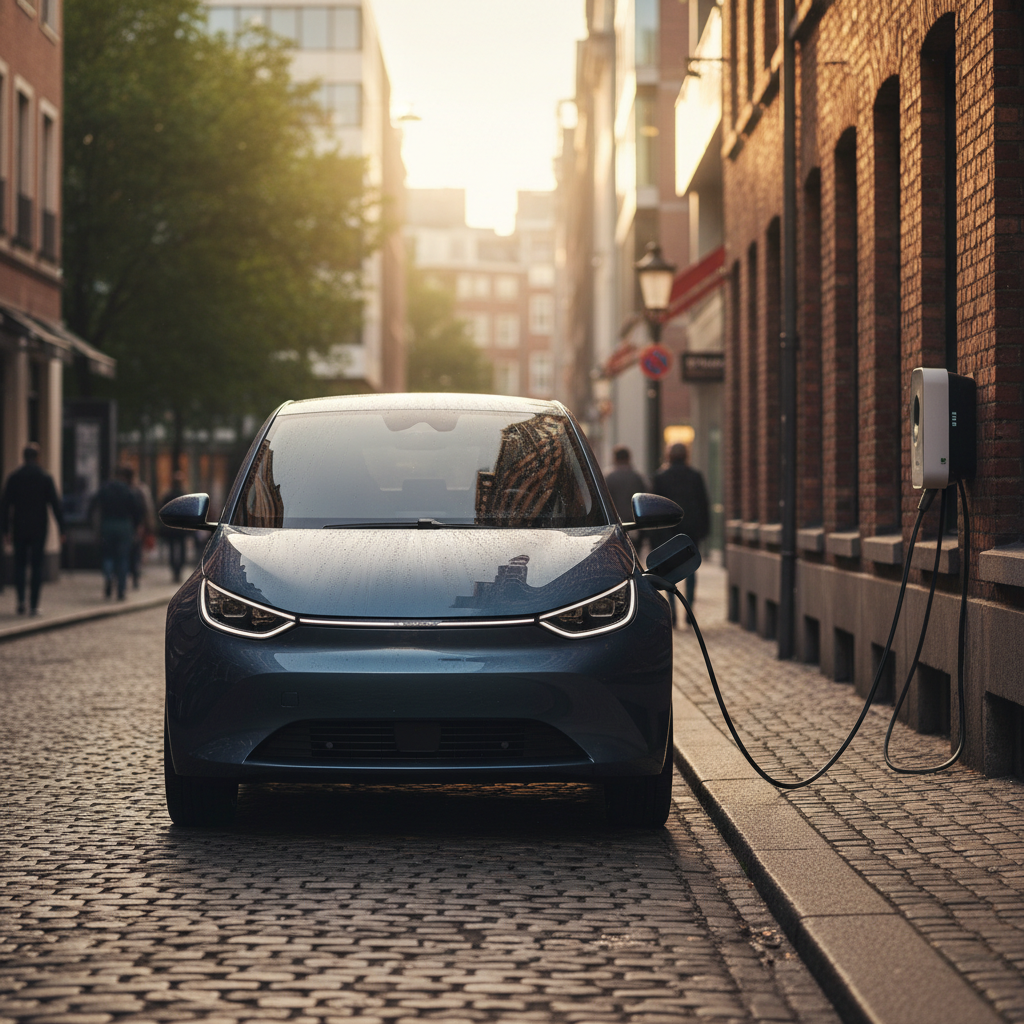
If you drive or are thinking about buying an EV, you’re probably wondering how reliable EV charging stations in New Haven, CT really are, especially if you’re commuting into downtown, working at Yale, or parking in city garages. The short answer: the network is growing quickly, but how convenient it feels depends on where you live, whether you can charge at home, and how often you need fast charging.
Snapshot: Charging in New Haven right now
EV charging in New Haven, CT: what to expect
Connecticut EV & charging landscape at a glance
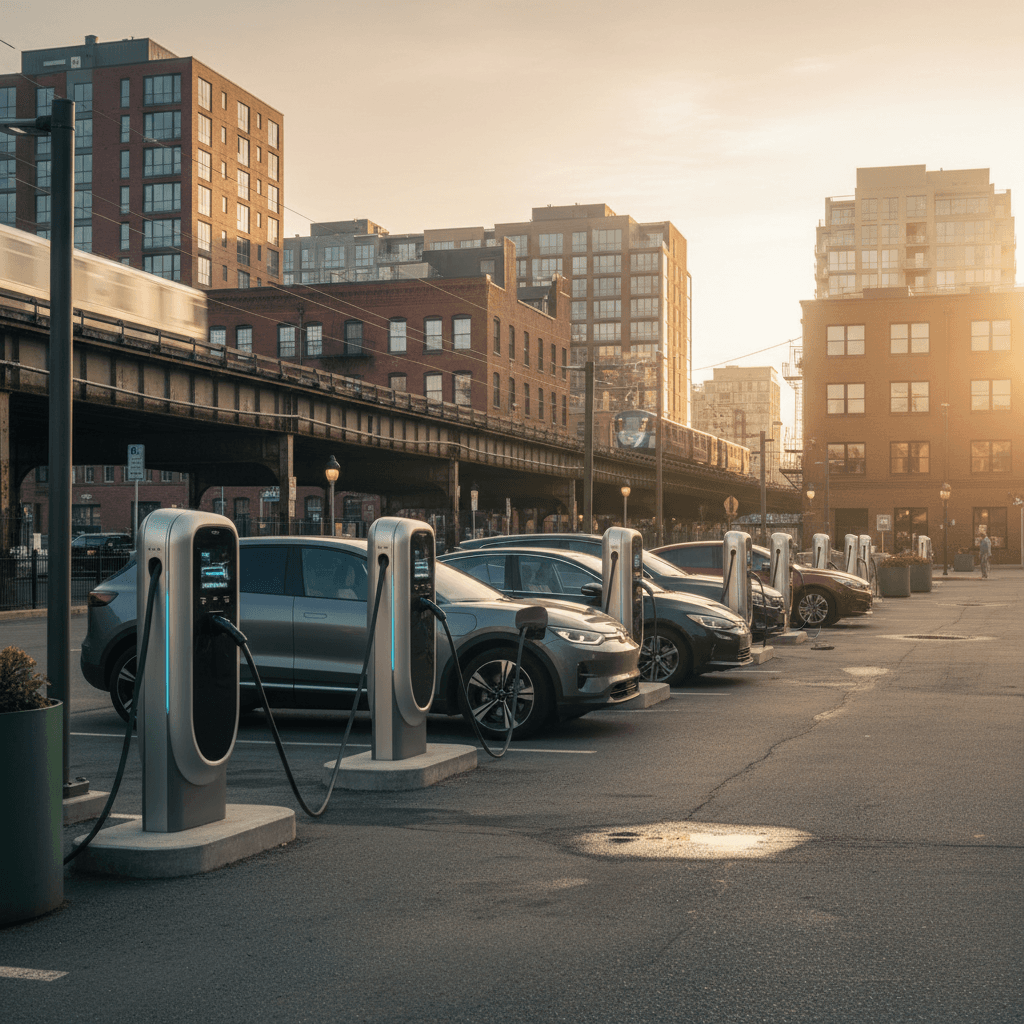
For a compact city, New Haven punches above its weight on public charging. Downtown garages, Yale-area lots, and nearby highway sites give you options whether you’re topping up while you work, grabbing dinner on Chapel Street, or just passing through on I‑95. The growth curve matters here: even if a favorite garage doesn’t have chargers today, there’s a good chance it’s on a utility or city roadmap within the next year.
Use a locator app as your single source of truth
Where to find EV charging stations in New Haven
Main places you’ll charge in and around New Haven
Think in terms of where your car naturally sits for 1–8 hours at a time.
City garages & lots
New Haven’s municipal garages and Park New Haven facilities are quickly becoming EV hubs. The city’s partnership with G9EV is adding dozens of dual-port Level 2 chargers through 2026, so expect to see more plugs in popular garages near downtown, the Green, and Yale.
These are ideal for commuters and visitors who park for several hours and want to return to a nearly full battery.
Campus & hospital areas
Yale-affiliated garages and hospital campuses typically include a handful of Level 2 chargers for staff and visitors. Some are restricted-access, others are public but require payment via a network app.
If you work or study on campus, check internal parking maps for EV-designated spots, policies differ by lot.
Highway fast chargers nearby
You won’t find a massive DC fast hub tucked inside the Green, but I‑95 and I‑91 corridors just outside downtown host multiple DC fast sites. These are your go-to options for rapid top‑ups on road trips or when you can’t charge at home.
Use your car’s navigation or a public app to route to the closest DC fast site when you’re low on time and battery.
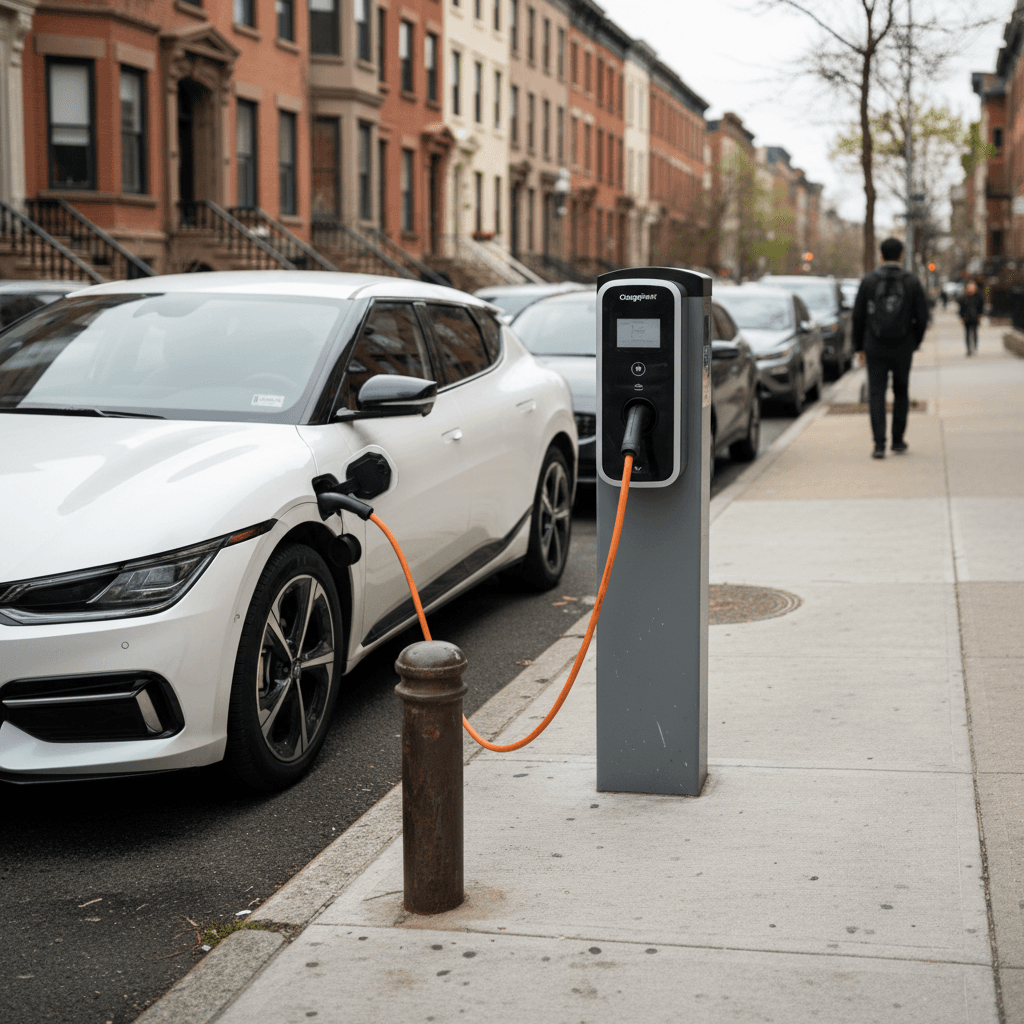
Day to day, most New Haven drivers rely on Level 2 stations in garages and lots and reserve DC fast charging for road trips or emergencies. If you live in East Rock or Fair Haven without a driveway, those public Level 2 ports effectively become your “fueling station,” so it’s worth learning which garages and lots fit your routine.
Level 1, Level 2, and DC fast: which chargers you’ll actually use
Level 1 (120V)
- Uses a standard household outlet.
- Adds ~3–5 miles of range per hour.
- Best for very light drivers or as a backup.
If you drive less than 25–30 miles a day and can plug in overnight in a driveway or garage, Level 1 can work, but most New Haven drivers eventually want more speed.
Level 2 (240V)
- Typical public and home chargers in New Haven.
- Adds roughly 20–40 miles of range per hour, depending on your car.
- Great for workplaces, garages, and overnight charging.
This is the backbone of New Haven’s charging build‑out, especially with new Level 2 ports coming online in city garages.
DC fast ("Level 3")
- High‑power stations typically located along I‑95 and I‑91.
- Can charge many EVs from 10–80% in about 20–30 minutes.
- Best for long trips or when you can’t charge at home.
Convenient, but more expensive and harder on your battery if used constantly, think of it like highway gas stations, not a daily habit.
Don’t rely on DC fast charging as your only plan
How much does EV charging cost in New Haven?
Charging prices in New Haven vary by network and time of day, but most drivers end up paying less per month than they did for gas, especially if they can plug in at home overnight. Public charging is more expensive than residential electricity, but still competitive with gasoline for many efficient EVs.
Typical EV charging costs for New Haven drivers
Ballpark numbers only; always check your specific utility rate and charger pricing in your app before plugging in.
| Charging setup | Where you charge | Typical pricing | Best use case |
|---|---|---|---|
| Home Level 1 or 2 | Driveway or garage in New Haven | Based on UI/Eversource residential rates; often equivalent to paying around $0.12–$0.25 per kWh | Overnight charging for daily driving |
| Public Level 2 | City garages, lots, workplace, campus | Often billed by the hour or kWh; roughly similar to $0.25–$0.35 per kWh once you factor in fees | Topping up while you work, shop, or attend class |
| DC fast charging | Sites along I‑95 / I‑91 near New Haven | Usually the most expensive, with effective rates that can feel closer to premium gasoline on a per‑mile basis | Road trips or emergency fast top‑ups |
| Free or discounted chargers | Select workplaces, hotels, retail locations | Sometimes free for a limited time or subsidized as an amenity | Occasional convenience charging if you park there anyway |
Public charging rates are changing as networks and utilities refine their business models, so consider these directional rather than locked in.
Estimate your real fuel savings
Home EV charging in New Haven: costs and setup
If you own a single‑family home or have deeded parking with access to electrical service, installing a Level 2 charger is usually the most convenient and cost‑effective option. Once it’s in, your EV “refuels” while you sleep, and you can treat public stations as backups instead of lifelines.
Typical home charger costs in New Haven (2026)
Step-by-step: setting up home charging in New Haven
1. Confirm your electrical capacity
Check your main panel size (often 100–200 amps) and see if you have room for a new 240‑V circuit. If you’re unsure, an electrician can evaluate it as part of a quote.
2. Decide between plug‑in vs. hardwired
Many Level 2 chargers can either plug into a 240‑V outlet (like a NEMA 14‑50) or be hardwired. Plug‑in units are easier to replace later; hardwired can be cleaner and sometimes required outdoors.
3. Get at least two electrician quotes
In New Haven, labor and permit costs can push a project toward the higher end of the $1,400–$1,500 range if your panel is far from your parking spot. Compare quotes and ask who handles permits.
4. Check incentives before you commit
Connecticut’s incentives and utility rebates have changed several times in the last few years. Before you sign a contract, confirm eligibility for federal tax credits and any current Eversource or UI programs.
5. Enroll in managed charging programs if offered
Your utility may ask you to opt into off‑peak or managed charging in exchange for better incentives. Read the fine print around required hardware, data sharing, and charging schedules.
6. Test your setup with your daily routine
Once installed, track how much range you gain overnight and adjust your charge limit and schedule. Many drivers find they only need to charge to 70–80% most nights, preserving battery health.
Safety first: don’t DIY a 240‑V install
Workplace and apartment charging options
Not every New Haven resident has a driveway. If you rent in a triple‑decker in East Rock or live in a downtown apartment, workplace and multifamily charging can make the difference between EV ownership feeling easy or like extra homework.
Finding and advocating for shared charging
Use these strategies whether you’re a tenant, condo owner, or employer.
For renters & condo owners
- Ask your landlord or HOA if any parking spaces already have outlets or conduit that could support Level 2 charging.
- Point them to Connecticut’s utility programs that offset costs for multifamily chargers, especially in environmental justice or underserved communities.
- Offer to help with the legwork: gathering quotes, documenting demand from other residents, or applying for incentives.
Landlords respond better when you bring them a clear, incentive‑supported proposal instead of a vague request.
For employers
- Work with your facilities team and Eversource/UI to explore workplace charging rebates for Level 2 stations in employee lots.
- Decide whether charging will be free, subsidized, or fully paid by employees via a network app.
- Start with a small pilot, 4–8 ports, and use utilization data to plan expansion as more staff switch to EVs.
Workplace charging lets employees arrive with a half‑empty battery and still drive home with plenty of range, even without home chargers.
Why New Haven is attractive for car‑free or car‑lite EV owners
Planning routes, avoiding queues, and winter tips
Public charging in a small city lives and dies on predictability. The more your charging pattern lines up with your regular schedule, the less time you’ll spend circling blocks hunting for an open plug, especially in winter, when EVs use more energy to keep the cabin and battery warm.
Smart charging habits for New Haven EV drivers
Build a weekly “anchor” charging session
Pick one reliable Level 2 location, home, work, or a specific garage, and plan to fully charge there once a week. Use other chargers only for top‑ups.
Avoid peak evening hours when possible
After‑work crowds can create queues at popular chargers, especially near restaurants and the Green. Mid‑morning and mid‑afternoon are often quieter.
Use preconditioning before winter fast charging
If your EV supports it, pre‑warm the battery before a DC fast stop on cold days. You’ll charge faster and spend less time exposed to the elements.
Keep a backup plan in your app
Bookmark at least two alternate charging sites near downtown and along your main highway route in case your first choice is busy or offline.
Mind parking rules and time limits
Some New Haven chargers sit in spots with posted time limits or overnight restrictions. Violating them can still earn you a ticket, even while you’re plugged in.
Don’t chase 100% on DC fast
On road trips, it’s usually faster to charge from 10–60 or 70% at a DC fast charger and get back on the road than to trickle charge all the way to full.
Connecticut incentives that affect New Haven drivers
Connecticut has been aggressive on EV policy and incentives, but the details shift frequently. As of early 2026, both vehicle and charging incentives are still in play, though several are scheduled to ramp down or expire between September 2025 and June 2026.
Key EV and charging incentives touching New Haven
Always confirm current rules before you buy or install.
CHEAPR vehicle rebates
The state’s CHEAPR program offers rebates on new and used EVs, with higher amounts for income‑eligible buyers. Standard rebates have tightened recently, but many New Haven buyers can still stack CHEAPR on top of federal tax credits for purchases made before federal programs sunset.
These incentives don’t directly change charging in New Haven, but they reduce total ownership costs and make EVs more competitive with gas cars.
Charging incentives & utility programs
Eversource and United Illuminating run EV Charging Programs that help fund public, workplace, and multifamily Level 2 and DC fast projects, up to tens of thousands of dollars per site, with higher caps in environmental justice or underserved communities.
Those incentives are a big reason city garages and multifamily properties in and around New Haven can justify adding chargers.
Federal charger tax credit (through June 2026)
Through June 30, 2026, many households and businesses in qualifying tracts can claim a federal tax credit of up to 30% of EV charger hardware and installation costs, capped at $1,000 for residential installs.
Eligibility depends on where you live and your tax situation, so talk to a tax professional before you bank on it.
Targeted residential incentives
Recent Connecticut legislation tightened residential charger incentives for single‑family homes, focusing them on income‑limited households and specific census tracts. That makes it even more important for homeowners in New Haven to check program rules before scheduling installation.
Multifamily and public sites still have robust support, which is good news for renters.
Where to verify incentives
Buying a used EV around New Haven? Charging & battery tips
Used EVs are increasingly common on Connecticut lots, and many New Haven drivers are looking at pre‑owned cars to sidestep new‑vehicle pricing. That makes charging and battery health even more important: a great public charging map can’t compensate for a tired pack or incompatible connector.
Check compatibility with local chargers
- Most non‑Tesla EVs use the CCS connector for DC fast charging and J1772 for Level 2.
- Newer models are shifting to NACS (the Tesla‑style plug), but public networks are adding support over time.
- If you buy an older model, confirm that fast‑charging standards line up with the DCFC sites you plan to use near New Haven.
Adapters can bridge some gaps, but relying on a dongle for every fast charge isn’t ideal.
Prioritize verified battery health
- Battery degradation matters more in a hill‑to‑hill city like New Haven, where winter and highway driving both eat into range.
- Look for independent battery diagnostics or seller‑provided reports instead of guessing based on a test drive.
- Factor in your actual routes, New Haven to Hartford, Stamford, or New York City, and make sure a used EV’s effective range leaves comfortable buffer.
A cheaper EV with a tired pack can quickly lose its appeal if you’re constantly hunting for chargers.
How Recharged can help New Haven buyers
FAQ: EV charging stations in New Haven, CT
Frequently asked questions about New Haven EV charging
Key takeaways for New Haven EV drivers
- New Haven’s EV charging network is firmly in growth mode, with over 100 new Level 2 ports slated for city garages by 2026, great news if you park downtown or near Yale.
- Level 2 chargers will handle most of your needs; think of DC fast chargers on I‑95 and I‑91 as your road‑trip and emergency safety net.
- Home Level 2 charging in New Haven typically runs $1,400–$1,500 installed, but incentives and federal tax credits can soften the hit if you qualify.
- Renters and condo owners should lean on workplace and multifamily programs, which still enjoy strong utility support for adding shared chargers.
- If you’re shopping for a used EV, don’t just compare sticker prices, verify battery health, connector compatibility, and how the car will fit into New Haven’s specific charging landscape.
The bottom line: owning an EV in New Haven, CT is no longer a leap of faith. Between expanding public Level 2 coverage, highway DC fast sites, and a shrinking but still meaningful mix of incentives, the city gives you real options, whether you have a driveway in Westville or an apartment downtown. If you’re exploring a used EV, platforms like Recharged can help you pair detailed battery health data with a clear picture of how and where you’ll charge in New Haven, so your first electric car fits your life on day one and five winters from now.