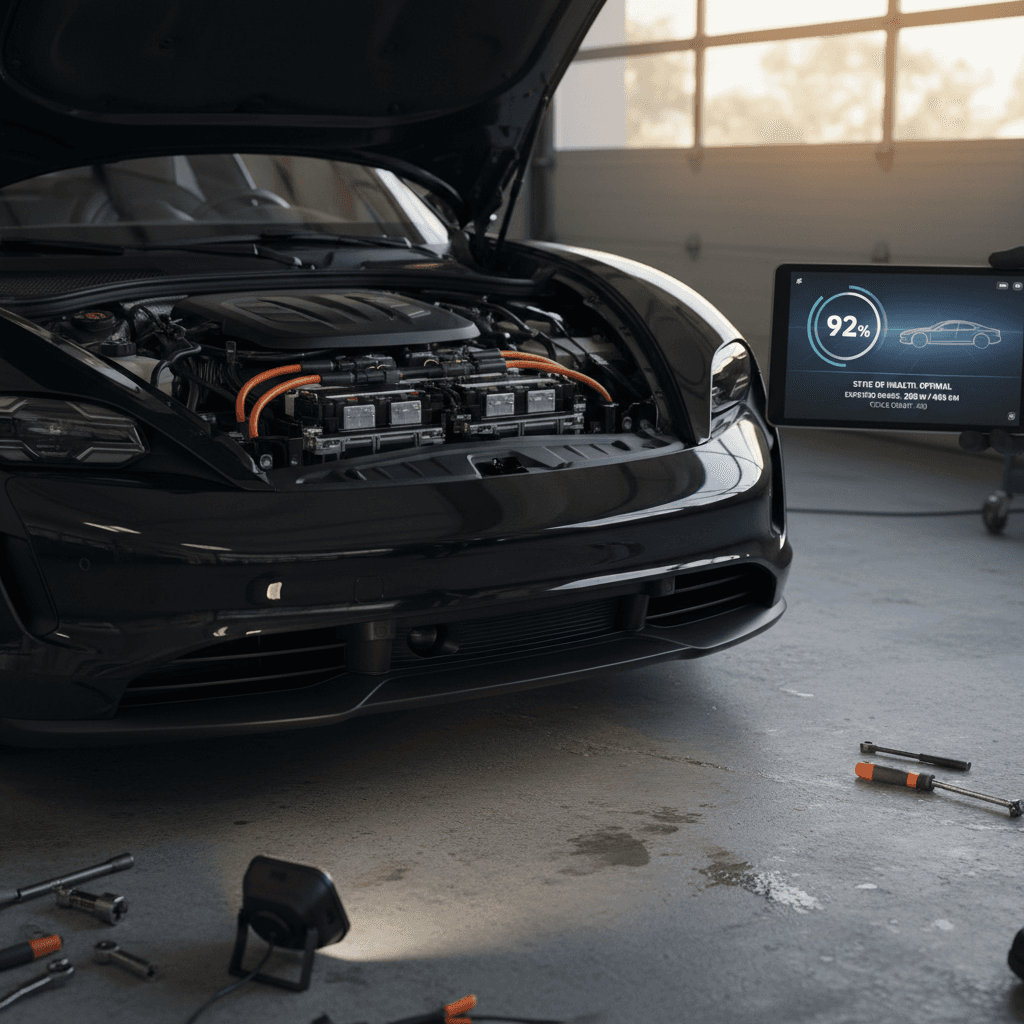
If you own a Porsche Taycan, or you’re shopping for a used one, battery health is the single biggest factor in long‑term value. A proper Porsche Taycan battery health check tells you how much capacity the pack has lost, whether it’s affected by current recalls, and if there are any red flags before your warranty runs out or before you buy.
Quick take
Why Porsche Taycan battery health matters
- Consistent real‑world range close to what the car delivered when new.
- Strong performance in Launch Control and repeated acceleration runs.
- Lower risk of expensive out‑of‑warranty repairs later.
- Higher resale value if you decide to sell or trade your Taycan.
A Taycan is not a Tesla
How long a Taycan battery should last
Taycan battery life at a glance
The key point: a few percent of loss is normal, especially in the first year or two. What you want to avoid is steep, ongoing decline or individual modules that start to misbehave, those are the issues that a thorough Taycan battery health check is designed to catch.
Factory tools vs third‑party battery health reports
1. Porsche dealer diagnostic report
Porsche dealers can connect your Taycan to factory software and pull detailed data:
- Pack state of health (SOH) and usable capacity
- Individual module voltages and temperature spread
- Fast‑charge history and error codes
- Recall status and software versions
This is the most authoritative source, and what Porsche will use for warranty decisions. You may have to be persistent, service advisors don’t always volunteer a printed report unless you ask.
2. Independent / DIY health checks
Owners increasingly supplement dealer data with:
- OBD dongle + app (for example, Car Scanner) that reads BMS data via the Taycan’s diagnostic port.
- Specialized Taycan tools such as community‑developed apps (like tCAN‑Pro) that can show detailed cell balancing data.
- Lab‑grade tests from third parties that run controlled charge/discharge cycles and estimate SOH.
These tools are powerful, but you need to understand their limitations and how Porsche interprets the data for warranty claims.
Get it in writing
Step‑by‑step: Porsche Taycan battery health check
You don’t need a lab to get a solid picture of your Taycan’s battery condition. Here’s a structured, owner‑friendly process that mirrors how professional buyers at places like Recharged approach it.
DIY Taycan battery health check in 7 steps
1. Bring software and recalls up to date
Start by verifying that <strong>all battery‑related recalls and software updates</strong> are completed. Many Taycans in the U.S. received updates that add more sophisticated battery monitoring and, in some cases, temporary charge limits. If you’ve been told to cap the battery at 80%, resolve that before drawing conclusions about range.
2. Note model year, battery, and mileage
A 2020 Taycan with 70,000 miles tells a very different story than a 2025 model with 12,000 miles. Record the <strong>model year, exact trim, battery size, and odometer</strong> so you can compare your results to realistic expectations for that age and use.
3. Perform a controlled range test
Charge to your usual daily limit (often 80–85%), reset a trip meter, and drive a full charge down to around 10–15% in <strong>mixed driving</strong>. Note miles driven and kWh used. Compare your consumption (mi/kWh) and estimated range to period road tests or EPA figures for your specific Taycan configuration.
4. Observe DC fast‑charging behavior
On a healthy Taycan, especially 2025‑onward cars with the larger pack, the car should accept high‑power DC charging when the battery is warm and at a low state of charge. If charge power falls off sharply or the station and car disagree, that can be a sign of <strong>thermal throttling or module issues</strong> worth investigating.
5. Use an OBD tool for deeper data (optional)
With a compatible OBD dongle and app, you can read the <strong>BMS‑reported state of health</strong>, module‑to‑module voltage deltas, and any stored fault codes. Don’t panic over tiny differences, what you’re hunting for are large imbalances or codes that keep recurring.
6. Request a dealer battery health printout
Ask your Porsche dealer to run a full battery diagnostic and <strong>print or email the report</strong>. Confirm: overall SOH percentage, any weak modules, and how your result compares to Porsche’s minimum warranty threshold. Keep that report with your service records.
7. Track results over time
A single snapshot is less important than the trend. Keep notes every 6–12 months, range test results, charge speeds, and any dealer reports. If you see a noticeable step‑down in performance or capacity, address it while you’re still within the high‑voltage battery warranty window.
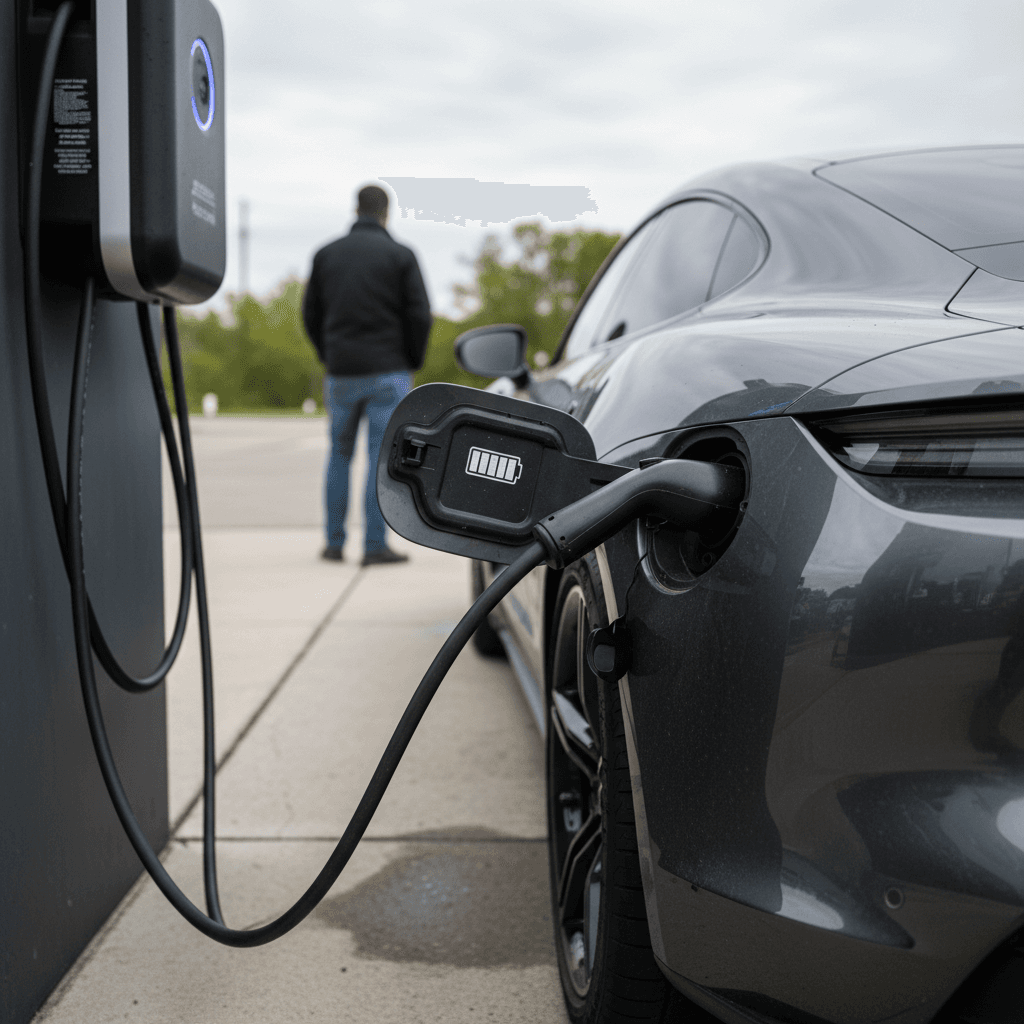
Reading the signs of Taycan battery degradation
Common signs your Taycan battery needs a closer look
Some change is normal. These patterns aren’t.
Noticeable range drop
If you’ve gone from, say, 260 miles to 215 miles of mixed‑driving range without a clear reason (weather, tires, driving style), it’s time to document and investigate.
Inconsistent charge power
High‑power DC sessions that throttle unusually early, or a car that rarely reaches its advertised peak charge rate even on warm batteries, can point to thermal or module‑level concerns.
Warnings & reduced charge limits
Messages that limit you to 80% or even 50%, especially if tied to a recall, are Porsche’s way of saying the battery needs attention. Don’t ignore them; get written documentation from your dealer.
Don’t confuse software quirks with a bad pack
Taycan battery warranty, recalls, and 80% charge limits
Before you get too worried, or too relaxed, about your Taycan’s battery, you need to understand how Porsche is standing behind it and what recent recalls actually mean for owners.
Typical Porsche Taycan battery‑related coverage (U.S.)
Always confirm exact terms with Porsche for your VIN and region.
| Coverage type | What it covers | Typical term |
|---|---|---|
| New‑vehicle warranty | Whole car (excluding wear items) | 4 years / 50,000 miles |
| High‑voltage battery warranty | Defects in materials or workmanship; significant capacity loss below Porsche’s spec | 8 years / 100,000 miles |
| Recall remedies | Specific safety‑related defects in battery modules or monitoring software | Until remedy is completed |
| Extended / CPO coverage | May extend overall and battery‑related coverage on approved used cars | Varies by program and market |
These figures are representative; consult your warranty booklet or dealer for specifics.
About 80% charge limits and periodic tests
Best practices to protect your Taycan battery
The way you use and charge your Taycan can make a meaningful difference in how the pack ages. The good news: you don’t have to baby it, but a few habits go a long way.
- For daily driving, keep the battery between roughly 20% and 80% whenever practical.
- Use AC charging at home (11 kW wallbox or similar) as your primary source; treat DC fast charging as a road‑trip tool, not a daily habit.
- Avoid leaving the car at 0% or 100% for long periods, especially in very hot or very cold weather.
- If you store the Taycan for weeks, park it with the battery around 40–60% and in a cool, shaded place if possible.
- Use the car’s built‑in timers and climate‑preconditioning to warm or cool the pack before high‑power fast charging on extreme‑temperature days.
- Keep an eye on software updates; Porsche continues to refine thermal management and fast‑charge behavior on newer model years.
Good news for high‑mileage drivers
Buying a used Taycan: battery health checklist
If you’re evaluating a used Porsche Taycan, battery health is just as important as service history or accident records. Here’s a practical, buyer‑focused checklist.
Used Taycan battery health checklist
Confirm model year, trim, and battery
Get the exact configuration (e.g., 2021 Taycan 4S Performance Battery Plus). Compare the original EPA range and battery size to what you see today. Higher‑performance variants or Cross Turismo models may have slightly different range expectations.
Check remaining battery warranty
Look up in‑service date and mileage to see <strong>how much of the 8‑year/100,000‑mile battery warranty</strong> remains. A 2020 car in 2026 might have only a couple of years left; a 2023 car will have much more cushion.
Ask for a recent dealer battery report
A serious seller should be willing to share a <strong>recent dealer battery diagnostic</strong> or third‑party lab report. Look for: SOH percentage, notes on module condition, and any open or completed battery recalls.
Review charging and usage patterns
Light road‑trip use with occasional fast charging is fine; a car that has been DC fast‑charged every day from 0–100% at high temperatures is a different story. Ask specific questions and see if the pattern matches odometer and service records.
Look for recall documentation
If the VIN fell under a battery recall, verify that the inspection or module replacement was performed and <strong>closed out in writing</strong>. Ongoing 80% charge limits without a clear plan or remedy deserve extra scrutiny.
Do a real‑world range check
On the test drive, observe projected range at a given state of charge and your consumption in mi/kWh. It doesn’t need to match EPA numbers exactly, but anything wildly lower, without a clear reason, warrants further investigation.
How Recharged evaluates Taycan battery health
Because the high‑voltage battery is so central to a Taycan’s value, Recharged builds it into every Recharged Score Report, our transparent health and value report that’s included with every vehicle we sell.
Inside a Recharged Taycan battery health check
What we look at before a Taycan ever hits our site
Digital diagnostics
We review dealer records, check for open and completed battery recalls, and scan the car’s control modules for high‑voltage fault codes or signs of module imbalance.
Range & efficiency analysis
We compare the Taycan’s real‑world consumption and projected range against what we’d expect for its year, trim, battery size, and mileage. Outliers get additional scrutiny or simply don’t make the cut.
Fair pricing for battery condition
When a Taycan shows especially strong or weaker‑than‑average battery metrics, that’s reflected in how we price and present the car. The goal is simple: no surprises for the next owner.
Ready to find your next EV?
Browse VehiclesIf you already own a Taycan and are considering selling, Recharged can also provide an instant offer or consignment option, factoring in your car’s battery health and current market demand. And if you’re buying, our EV‑specialist team can walk you through every line of the Recharged Score so you know exactly what you’re getting.
Porsche Taycan battery health check FAQ
Frequently asked questions about Taycan battery health
The bottom line on Taycan battery health checks
A Porsche Taycan is one of the most rewarding EVs you can drive, but only if the high‑voltage battery behind its performance and range is in good shape. Because the car doesn’t broadcast a simple health percentage on its own, a smart Porsche Taycan battery health check combines dealer diagnostics, reasonable real‑world testing, and, when needed, third‑party tools. If you’re buying used, that same discipline helps you separate a great Taycan from one that’s already burned through too much of its battery life.
Whether you’re looking to buy, trade in, or simply understand the health of the Taycan already in your garage, Recharged is built to make that process transparent. Every Taycan we sell comes with a Recharged Score Report covering battery health, pricing, and expert commentary, so you can focus on enjoying the car, not guessing about the pack underneath it.