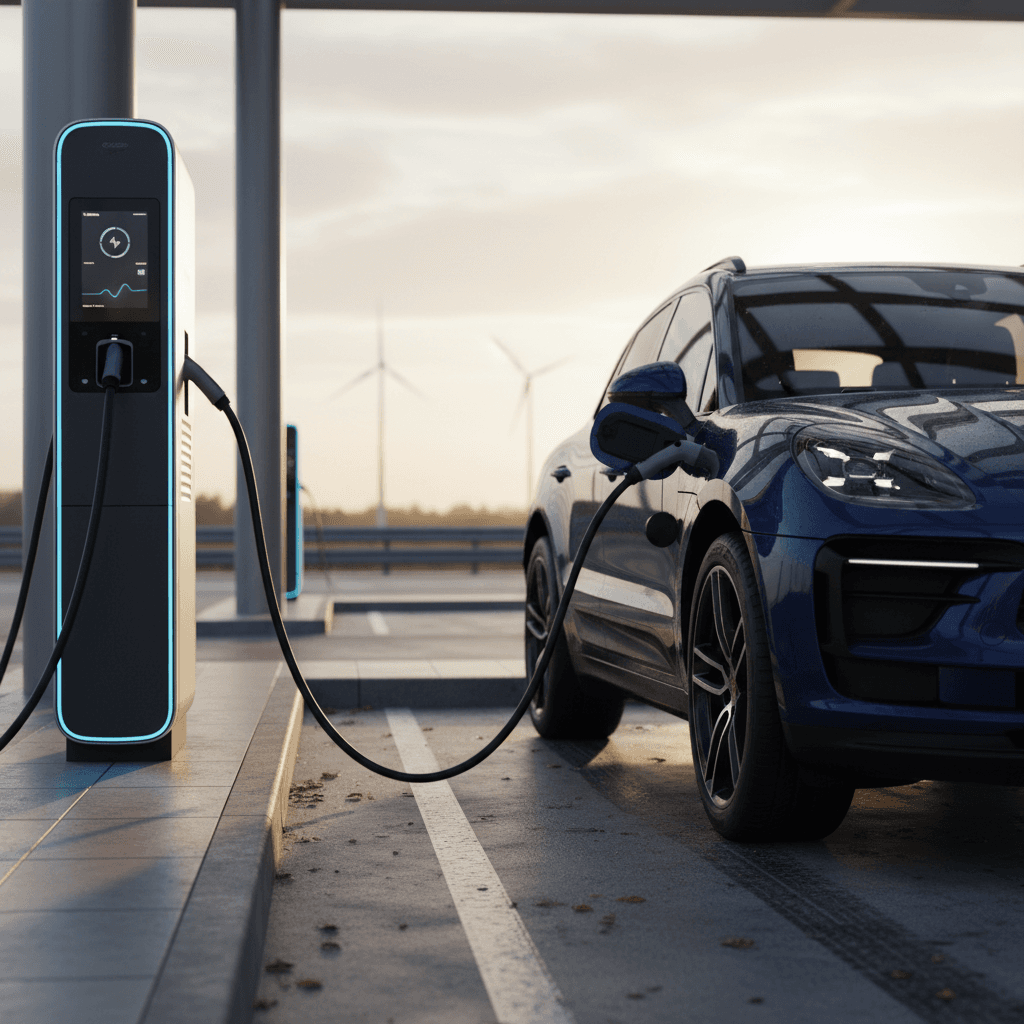
If you’re eyeing a Porsche Macan Electric, the question isn’t just how quick it is from 0–60. You also want to know: how fast can it gulp electrons on a road trip? This Porsche Macan Electric charging speed test breakdown walks through real-world 10–80% sessions, what “up to 270 kW” actually looks like on a charger, and how to get the best speeds without abusing the battery.
Key takeaway
Why Macan Electric charging speed matters
Fast charging is the Macan Electric’s party trick. Porsche built it on the 800‑volt PPE platform, the same basic electrical philosophy as Taycan, so it’s designed to spend as little time as possible tethered to a DC fast charger. If you’re cross‑shopping it with BMW iX, Mercedes EQE SUV, Model Y Performance, or an Audi Q6 e‑tron, the Macan’s real advantage is how much range it can add in 10–20 minutes rather than its headline 0–60 number.
For many buyers, especially if you’re considering a used Macan Electric, charging speed is part convenience, part future‑proofing. The faster the car can safely charge, the less painful long‑distance travel will feel five or eight years down the road, when you might be relying more on public fast chargers than warranty coverage.
Macan Electric charging in numbers
Porsche Macan Electric charging specs at a glance
Before we talk about real‑world tests, it helps to decode the Macan Electric’s spec sheet. Across trims, the charging hardware is essentially the same; what changes is power and weight, not how the car charges.
Macan Electric charging specifications
Core charging specs for the Porsche Macan Electric family (RWD, 4, 4S, Turbo).
| Charging type | Power (max) | Typical time window | Approx. time | Notes |
|---|---|---|---|---|
| DC fast, 800‑V (HPC) | up to 270 kW | 10–80% | ≈21 minutes | Requires >270 kW, >850 V CCS station and a warm battery |
| DC fast, 400‑V station | up to 135 kW | 10–80% | ≈33 minutes | Battery automatically splits into two 400‑V packs for efficient charging |
| Home / AC (Level 2) | up to 11 kW | 0–100% | ≈10–11 hours | Ideal for overnight charging on a 240 V, 48 A circuit |
| Real‑world DC fast | ≈180–200 kW avg | 10–80% | ≈23–30 minutes | What many owners will see on good, but not perfect, sessions |
Values are manufacturer or independent‑test figures under optimal conditions; real‑world times vary with temperature, state of charge, and charger capability.
Spec vs reality
Macan Electric charging speed test results
Let’s translate the brochure into something closer to what you’ll experience at a public fast charger. Independent testing plus Porsche’s own guidance gives us a good picture of how a healthy Macan Electric performs when you actually plug in.
- Battery: ~95 kWh usable on all Macan Electric trims
- Architecture: 800‑volt PPE platform with automatic 400‑V split on lower‑voltage chargers
- Peak DC rating: 270 kW on high‑power CCS (800‑V)
- Peak on 400‑V DC: up to ~135 kW without a separate booster
- Typical DC fast‑charge window: 10–80% state of charge (SoC)
Ideal case: High‑power 800‑V charger
On a best‑case high‑power charger (think 270–320 kW CCS unit on a healthy site, moderate weather, preconditioned battery), the Macan Electric can be startlingly quick:
- Starting SoC: 10%
- Ending SoC: 80%
- Claimed time: ≈21 minutes
- Observed independent tests: roughly low‑20‑minute sessions, often adding ~55–60 kWh into the pack
- Average power over the session: roughly 180–200 kW when conditions cooperate
In practice, you’ll see the power spike quickly toward the 250–270 kW region, hang above 200 kW through roughly the mid‑50% state of charge, and then taper gradually toward 80%. Porsche’s own tech literature notes that the Macan keeps a high charge rate up to about 55% SoC before it starts to roll off more noticeably.
Everyday reality: 150 kW 400‑V charger
Most U.S. fast chargers today are 400‑V systems in the 150 kW neighborhood. Instead of using a bulky DC booster, the Macan does something clever: a high‑voltage switch essentially divides the 800‑V battery into two 400‑V packs so it can still sip a healthy amount of power without over‑stressing the station.
- Starting SoC: 10%
- Ending SoC: 80%
- Claimed time: ≈33 minutes at roughly 135 kW peak
- Typical observed: high‑100‑kW peak, falling into the 80–110 kW range by the time you’re in the 60–70% band
- Practical takeaway: you’re usually in and out in half an hour, even on a common 400‑V 150 kW post
Real-world 10–90% test on a strong DC charger
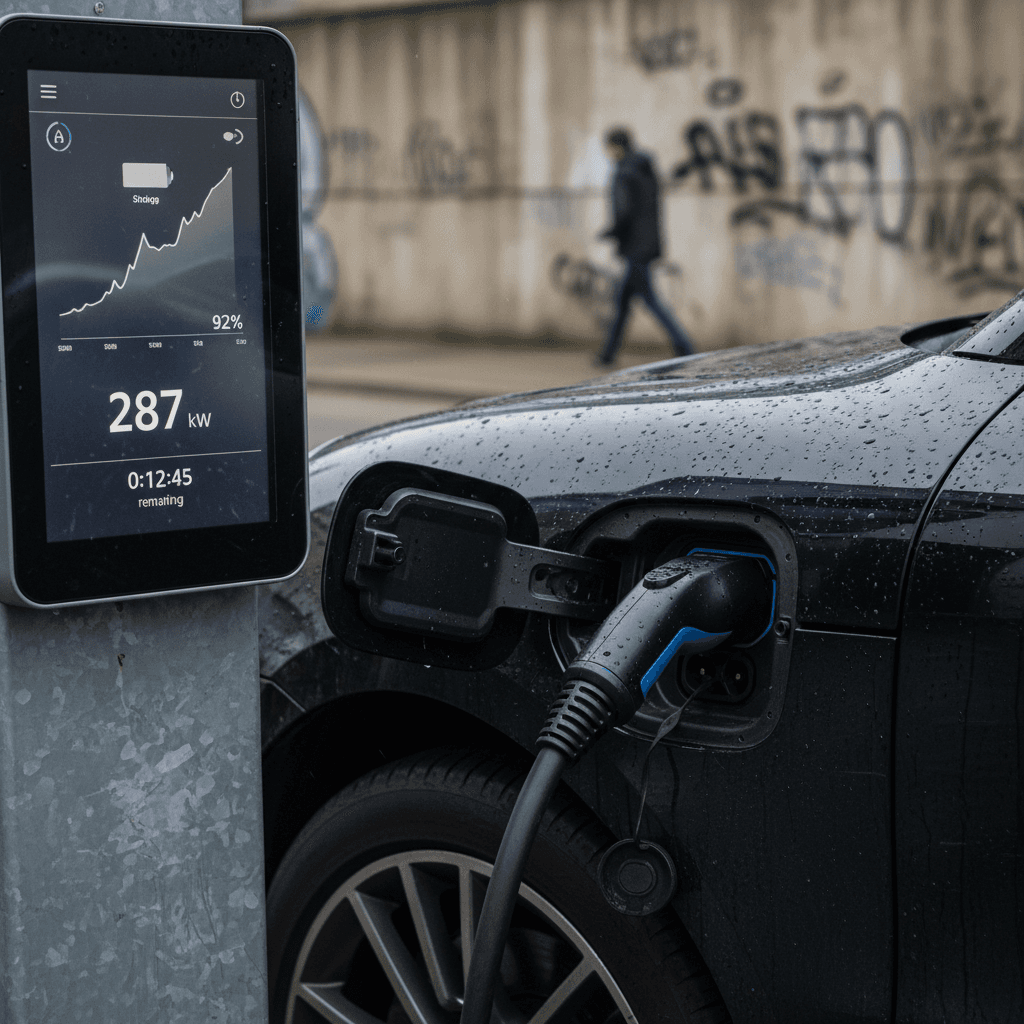
In independent instrumented testing, a Macan EV charged from 10% to 90% in roughly the low‑30‑minute range on a powerful DC fast charger, pulling enough energy to suggest an average power north of 160 kW across the full session. That’s the kind of number you feel in your day: bathroom break, coffee, email triage, and your SUV has added hundreds of miles of range.
Time vs percentage
Understanding the Macan Electric charge curve
The Macan Electric follows the same basic pattern as other modern 800‑V EVs, but it holds high power a bit longer than some competitors. If you’re trying to shave minutes off your road‑trip stops, understanding the charge curve is more important than memorizing the 270 kW headline.
How the Macan Electric charges from 10–80%
Power and time by state of charge, assuming a strong 800‑V DC fast charger and a warm battery.
10–30% SoC
Where the magic happens. The car ramps quickly toward peak power, often sitting in the 230–270 kW band.
On a near‑empty battery, the Macan can add well over 100 miles in about 10 minutes if conditions are right.
30–55% SoC
High and steady. Power gently tapers but often stays above 180–200 kW.
This is the sweet “bulk charge” window. If you’re in a hurry, aim to arrive in this band and leave before you cross the mid‑60s.
55–80% SoC
Tapering zone. Power falls into the 120–150 kW range and continues dropping as you approach 80%.
Still quick, but each minute buys you fewer miles than it did earlier in the session.
Temperature is everything
Macan EV vs rivals: fast-charging comparison
On paper, the Macan Electric sits near the front of the EV pack for DC charging. Only a handful of high‑end models, usually less practical or more expensive, beat it on peak power, and many can’t match its combination of speed and efficiency.
Fast-charging comparison: Macan Electric vs key rivals
Approximate DC fast-charging performance for popular premium EV SUVs.
| Model | Usable battery (kWh) | Peak DC power (kW) | 10–80% time | Notes |
|---|---|---|---|---|
| Porsche Macan Electric | ≈95 | 270 | ≈21 min (HPC) | 800‑V system; very strong mid‑curve power |
| Audi Q6 e‑tron | ≈94 | 270 | ≈22–25 min | Shares PPE platform; similar on paper |
| Mercedes EQE SUV | ≈90 | 170 | ≈32–35 min | Lower peak, softer taper |
| BMW iX xDrive50 | ≈105 | 195 | ≈31–35 min | Strong average, but heavier vehicle |
| Tesla Model Y Long Range | ≈75 | ≈250 | ≈25–30 min | Strong network, smaller pack |
| Hyundai Ioniq 5 | ≈77 | 232 | ≈18–20 min | Excellent speed, smaller battery |
All figures are approximate manufacturer or test numbers for 10–80% DC fast charging under good conditions.
Where Macan shines
Home and Level 2 charging: how long does it take?
Most of your charging life won’t happen at 270 kW. It’ll happen overnight at home or during long parking stretches at work. Here the Macan Electric is less dramatic but still competent.
- Onboard AC charger: up to 11 kW (240 V, 48 A circuit)
- 0–100% AC charge: roughly 10–11 hours from empty
- 20–80% AC charge: roughly 6–7 hours, typical overnight top‑up
- Approximate home charge rate: about 30–35 miles of range per hour on a full‑power Level 2 setup
Set it and forget it
How to get the fastest charging speeds in your Macan Electric
Hitting that 270 kW peak isn’t about luck; it’s about stacking the deck in your favor. Porsche bakes a lot of charging intelligence into the Macan, but you still have to play along.
6 steps to maximize Macan fast-charging speed
1. Use navigation to the charger
Always set the fast charger as your destination. This lets the Macan precondition its battery to the ideal temperature window before you arrive.
2. Arrive near 10–20% state of charge
The car charges fastest when the battery is relatively low. Rolling in with 45–50% SoC means you’ll immediately miss the most powerful part of the charge curve.
3. Prefer high-power 800‑V stations
If you can choose between a 150 kW 400‑V unit and a 300+ kW 800‑V HPC, take the latter. You’ll unlock the Macan’s full 270 kW capability and shave minutes off your stop.
4. Avoid back‑to‑back short hops
Repeated short drives with long DC sessions in between can leave the battery too cold or too hot. A good 20–30 minute highway run into the charger usually yields better speeds.
5. Unplug around 70–80% on road trips
Above ~80%, the Macan’s charge rate drops sharply. It’s usually faster for your overall trip time to stop more often for shorter, brisk sessions than to sit to 95–100%.
6. Keep software and charging networks updated
Make sure the car’s firmware and your charging apps are up to date. Networks continuously tweak their power curves and handshake protocols for newer 800‑V cars.
Charging costs and road-trip strategy
Charging a Macan Electric isn’t just about speed; it’s also about where and how you pay. At home, you’re likely buying electricity at a fraction of the per‑mile cost of premium gasoline. On road trips, high‑power DC rates can make the spreadsheet look a bit more Porsche‑like.
Home & workplace charging
- Lowest cost per mile. Many U.S. drivers pay the equivalent of $0.70–$1.20 per “gallon” when charging at home off‑peak.
- Predictable timing. A scheduled overnight 20–80% charge is painless and easy on the battery.
- Ideal for used EV owners. If you’re buying a pre‑owned Macan Electric through a marketplace like Recharged, a solid home setup minimizes your dependence on public infrastructure.
Public fast charging
- Pay for convenience. Per‑kWh or per‑minute pricing at high‑speed DC sites can rival or exceed an efficient gas crossover on long trips.
- Think in legs. Plan your route as a sequence of 10–80% hops rather than one long, slow push to 100%.
- Use apps wisely. Porsche’s built‑in planner plus third‑party apps (PlugShare, Chargeway, etc.) can help you prioritize reliable high‑power stations.
Beware slow and expensive posts
Battery health: what frequent fast charging does to a Macan
Any EV will slowly lose capacity over time, and frequent DC fast charging can accelerate that process. Porsche’s thermal management and 800‑V architecture are designed to mitigate the worst of it, but they’re not magic.
Smart charging habits for a healthier Macan battery
Simple behavior changes that preserve range and resale value, especially important if you’re buying or selling used.
Daily life
- Live between roughly 20% and 80% SoC for everyday use.
- Use DC fast charging sparingly, save it for road trips and true time pressure.
- Keep the car plugged in on Level 2 when parked for long periods; let the car manage the pack.
Road trips
- Avoid repeated 0–100% DC fast charges back‑to‑back if you can.
- Accept that a little extra degradation is the cost of using the car as designed.
- If you’re shopping used, ask for a full battery health report rather than just trusting the indicated range.
How Recharged can help with used Macan battery health
Ready to find your next EV?
Browse VehiclesIs the Porsche Macan Electric a good road-trip EV?
In a word, yes, provided you’re realistic about the charging network in the regions you drive. With roughly 95 kWh usable, an EPA range in the 280–315‑mile band depending on trim, and genuinely rapid DC charging, the Macan Electric feels more like a shrunken grand‑tourer than a family crossover when you’re ticking off states.
- Strong real‑world 10–80% times, even on 400‑V 150 kW sites
- Excellent battery preconditioning and charge‑curve management
- Comfortable highway manners and low fatigue, which matter when you’re planning multiple fast‑charge stops per day
- Downside: smallish cargo space versus some rivals, and you’re dependent on non‑Tesla CCS networks in the U.S. for now
The real measure of an EV isn’t how fast it accelerates to 60 mph; it’s how fast it recovers on the road between those sprints.
If you want an EV SUV that can sprint, carve corners, and still crush highway miles with short, decisive charging stops, the Porsche Macan Electric is near the top of the list. For shoppers looking at the used market, pairing Porsche’s hardware with a battery‑health‑verified listing from a platform like Recharged gives you the best of both worlds: a seriously fast‑charging EV and a clear picture of how that performance will age.