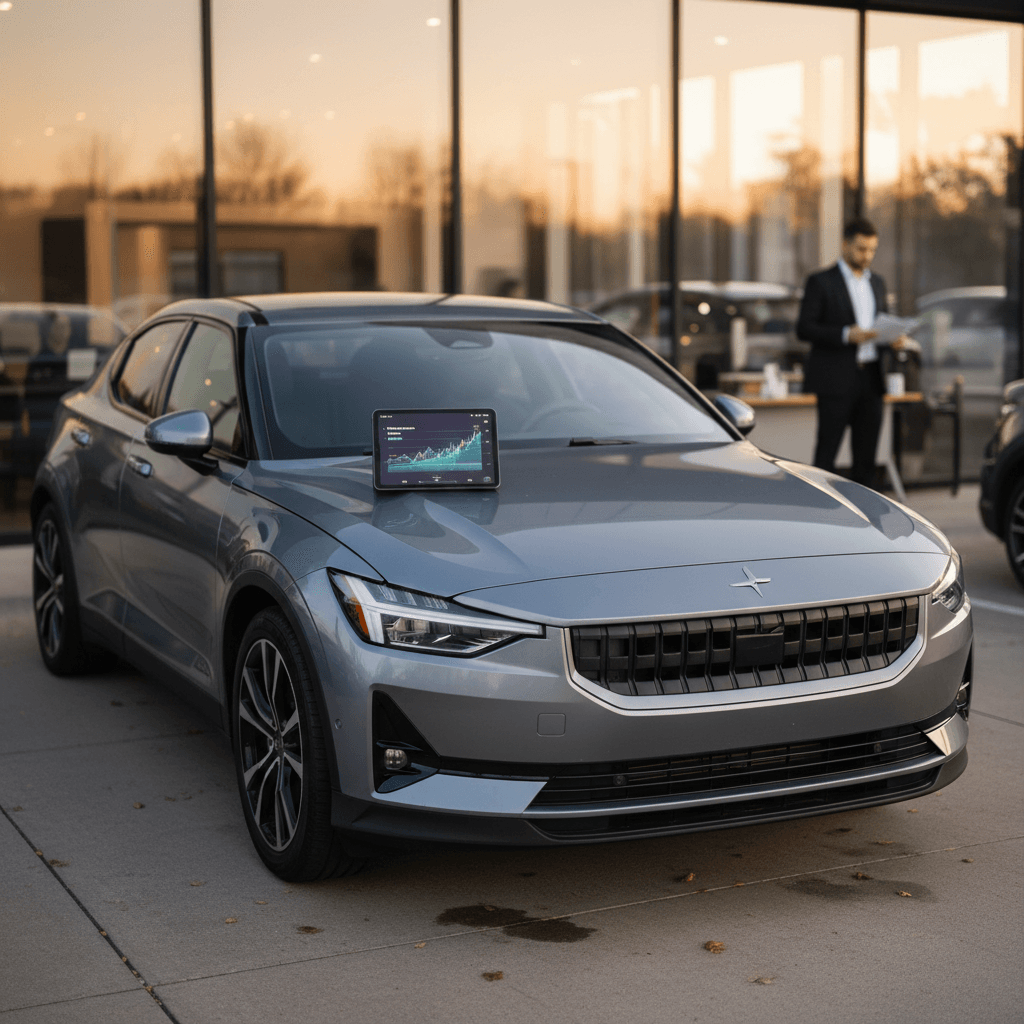
If you own a Polestar 2, you’re in a sweet spot: it’s still a relatively rare, premium EV, but the market is volatile and trade-in values can feel all over the place. Understanding your Polestar 2 trade in value, and how to influence it, can easily swing your outcome by thousands of dollars.
Quick snapshot
Why Polestar 2 trade-in values feel confusing
If you plug your VIN into three different sites, you’ll likely see three different values for your Polestar 2. That’s because EV pricing is moving faster than traditional valuation books can update, and the Polestar 2 sits in a niche between mainstream Teslas and luxury European brands. Incentives, rapid tech updates, and shifting demand for sedans versus SUVs all show up in your trade-in number.
- Polestar 2 is still relatively low-volume, so every auction result moves the averages.
- EV prices overall have cooled since their 2022 peak, especially for sedans.
- Tax credits and discounting on new EVs push used prices down, even for well-kept cars.
- Data for a Swedish-Chinese brand with limited U.S. history is just thinner than for legacy brands.
Don’t anchor on 2022 pricing
How much is my Polestar 2 worth right now?
Exact numbers depend on your car and your ZIP code, but recent market data gives us a useful ballpark. For dual‑motor Polestar 2 models in the U.S., average used prices by model year look roughly like this today:
Approximate Polestar 2 value by model year (early 2026)
These are broad market ballparks for dual‑motor Polestar 2s in good condition with typical mileage, before tax, fees, or trade‑in deductions.
| Model year | Typical used retail price* | Rough trade-in range* | Value retained vs. original MSRP |
|---|---|---|---|
| 2021 | $27,000–$30,000 | $23,000–$26,000 | ≈46% of original MSRP |
| 2022 | $28,000–$31,000 | $24,000–$27,000 | ≈57% of original MSRP |
| 2023 | $33,000–$36,000 | $29,000–$32,000 | ≈64% of original MSRP |
| 2024 | $42,000–$46,000 | $37,000–$41,000 | ≈78% of original MSRP |
| 2025 | $50,000–$55,000 | $44,000–$49,000 | Near MSRP, depending on spec |
Your actual trade-in figure will be lower than retail, since buyers factor in reconditioning, transport, and margin.
How to read these numbers
Polestar 2 depreciation snapshot
What actually drives Polestar 2 trade-in value
A trade-in offer is just a prediction: what will your Polestar 2 realistically bring at auction or retail, minus the cost and risk of getting it there. For this car in particular, a few factors matter more than owners expect.
The biggest levers on your Polestar 2’s value
Some you can’t change, others you definitely can.
Model year & trim
Newer model years and higher trims (longer range, Performance Pack, Pilot/Plus packages) support higher offers. Early 2021 Launch Edition cars have already taken their biggest hit.
Mileage & use pattern
Sub‑30,000 miles is a sweet spot. Once you’re into the 50–70k range, each 10,000 miles tends to take a clearer bite out of trade-in numbers.
Condition & history
Clean Carfax, no major body work, and a well-documented service history make your Polestar easier to retail and less risky, so buyers can bid up.
Battery health & range
With an EV, buyers care less about odometer and more about usable range. If your car still delivers range close to its original rating, that’s value.
Region & demand
EV‑friendly metros (West Coast, Northeast, tech hubs) tend to pay more than markets where charging is sparse and brand recognition is lower.
Options & equipment
Heat pump, pilot assist, upgraded audio, wheel packages, and tow bar can all nudge value up. Missing charger cables or worn tires nudge it down.
Pro tip: Think like a used‑car buyer
Polestar 2 vs. Tesla Model 3 resale value
A lot of Polestar 2 owners benchmark their car against the Tesla Model 3. Historically, the Model 3 enjoyed slightly stronger resale, but the picture has shifted. Massive price cuts on new Teslas and a flood of used inventory have pushed Tesla resale values down, narrowing the gap with brands like Polestar.
Where Polestar 2 holds its own
- Lower volume means less used supply competing with you.
- Design-forward, premium positioning appeals to shoppers cross‑shopping Volvo, Audi, and BMW, not just Teslas.
- Solid 3‑year retention in the ~60–65% range is competitive for the segment.
Where Tesla still has an edge
- More range per dollar on many trims still matters to range‑sensitive buyers.
- Brand familiarity and charging network reassure first‑time EV shoppers.
- Huge buyer pool makes it easier to move a used Model 3 quickly.
Resale reality check
How dealers and marketplaces calculate Polestar 2 offers
Whether you walk into a Volvo/Polestar dealer or submit your VIN online, most buyers price your Polestar 2 with the same basic workflow: look up recent sales, adjust for your specific car, then subtract costs and profit margin.
Inside a typical Polestar 2 trade-in appraisal
1. Start with auction and retail data
Buyers pull recent auction results and advertised prices for similar Polestar 2s, same year, trim, and mileage, to establish a realistic resale range.
2. Adjust for your VIN and options
Performance Pack, Pilot/Plus packages, wheel and upholstery choices, and software‑enabled features are layered in. Accident history and ownership count are factored here too.
3. Estimate reconditioning costs
Anything they need to fix before resale, tires, brakes, glass, detailing, paint work, software updates, comes off the top. EV‑specific checks (battery, charging hardware) are increasingly standard.
4. Price in risk and holding time
Polestar 2 is still a niche EV. If the buyer thinks it might sit on their lot, they’ll build in more margin than they would on a quick‑turn mainstream model.
5. Add margin and incentives
Finally, they add their target profit and consider any incentives or financing programs they can use to sharpen the front‑end deal while still hitting their numbers.
Beware of “too good to be true” instant offers
How to maximize your Polestar 2 trade-in value
You can’t change your model year, but you have real influence over how a buyer perceives risk and cost. That’s where meaningful dollars hide.
Six high‑impact moves before you get offers
Most of these cost little, but show up big on the appraisal sheet.
Detail it properly
A professional detail (or very thorough DIY) makes it easier for an appraiser to see a cared‑for car, not a project. Pay extra attention to wheels, seats, and the cargo area.
Fix cheap, obvious issues
Burned‑out bulbs, minor interior damage, cheap trim pieces, missing key cards, and loose charge cables: these are all things that look expensive to buyers but are often cheap for you to address.
Organize records
Gather software update receipts, tire invoices, recall work, and Polestar/Volvo service records. A neat folder or PDF bundle signals low risk and supports a stronger number.
Document real-world range
If your Polestar 2 still gets close to its EPA range on your typical routes, take photos or logs. Range proof can offset EV‑anxiety discounts in the offer.
Take honest, well-lit photos
For online quotes, good photos are your first impression. Shoot all sides, interior, wheels, tires, and any flaws. Hiding issues just guarantees a price drop later.
Shop multiple exit options
Get quotes from at least one EV‑specialist marketplace (like Recharged), one franchise dealer, and one national used‑car buyer. The spread can be thousands of dollars.
Low‑effort win
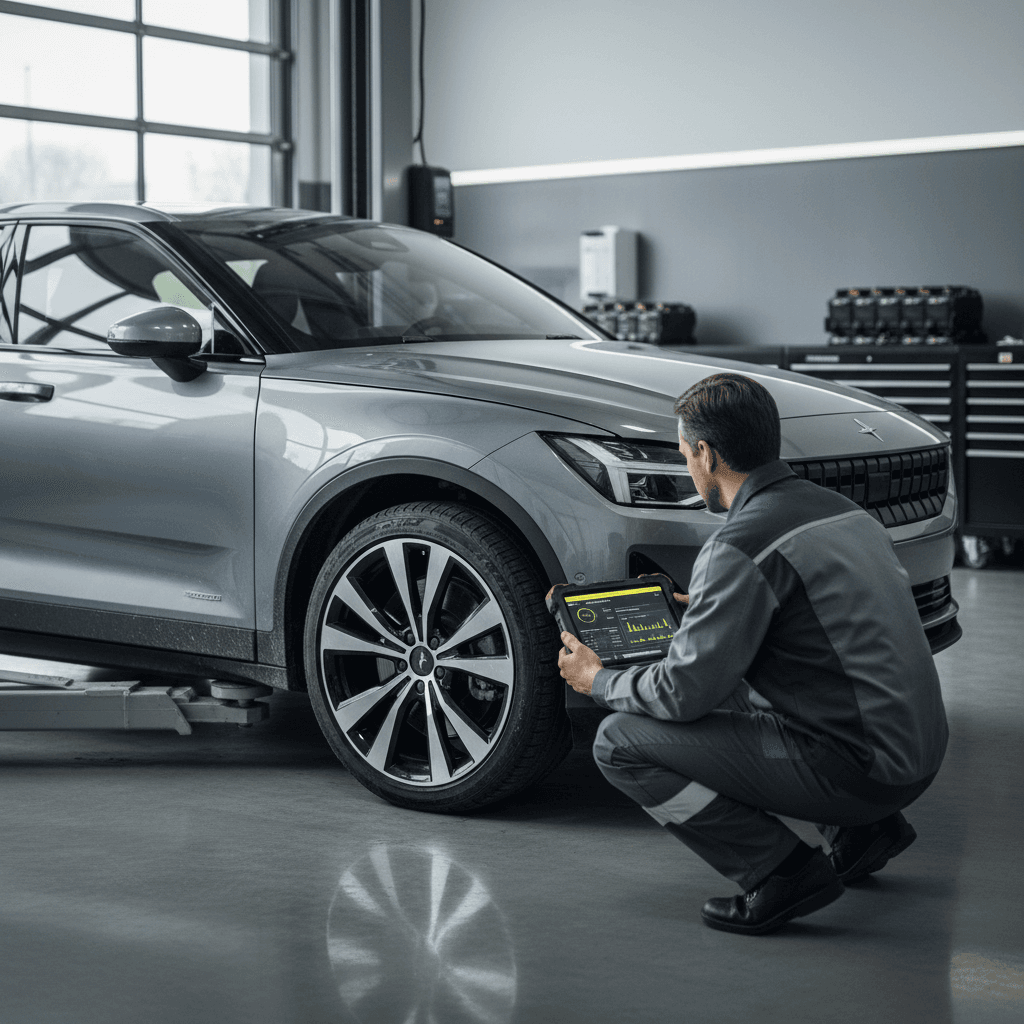
Using Recharged to sell or trade your Polestar 2
Because the Polestar 2 is still a niche model in the U.S., working with people who actually understand EVs, and this car specifically, can be the difference between feeling low‑balled and feeling fairly treated.
What Recharged does differently
- Recharged Score battery diagnostics give buyers verified data on your pack’s health and real‑world range.
- Fair market pricing tuned specifically to used EVs, not gas‑car assumptions.
- Multiple ways to sell: instant offer, trade‑in, or higher‑upside consignment model.
- Nationwide buyers instead of just whoever is local to you.
How the process works
- Share your Polestar 2’s details and photos online.
- Get a preliminary value range based on current EV market data.
- Complete a Recharged Score inspection to verify condition and battery health.
- Choose whether to take an instant offer, trade into another EV, or have Recharged list and sell it on your behalf.
Rolling equity into your next EV
Common mistakes that cost Polestar 2 owners thousands
Most under‑market trade-ins don’t happen because the car is bad; they happen because the owner walked into the first offer unprepared. Here are the pitfalls to avoid.
- Accepting the first number without checking at least two other serious buyers.
- Letting the car go to appraisal dirty, cluttered, or with warning lights illuminated.
- Ignoring curb damage, bald tires, or cracked glass that a buyer will factor in heavily.
- Trying to time the market perfectly instead of recognizing that depreciation continues while you wait.
- Underestimating how much proof of battery health and range matters to non‑EV‑native buyers.
Sedan vs. SUV effect
Polestar 2 trade-in value FAQ
Your Polestar 2 trade-in questions, answered
Bottom line: what a fair Polestar 2 trade-in looks like
A fair Polestar 2 trade in value reflects what the car is actually worth to the next owner, tempered by real‑world depreciation, local demand, and the risk a buyer takes on. Early cars have already taken their big hit; newer 2023–2025 models still command strong percentages of original MSRP when they’re clean, documented, and show healthy range.
Your job as an owner is to shrink the gap between what your car is truly worth and what buyers are comfortable paying. That means preparation, multiple offers, and objective battery‑health data. Recharged was built around exactly that idea, with EV‑specific diagnostics, transparent pricing, and flexible ways to sell or trade. If you’re thinking about your next move, getting a data‑driven value range is the smartest first step.