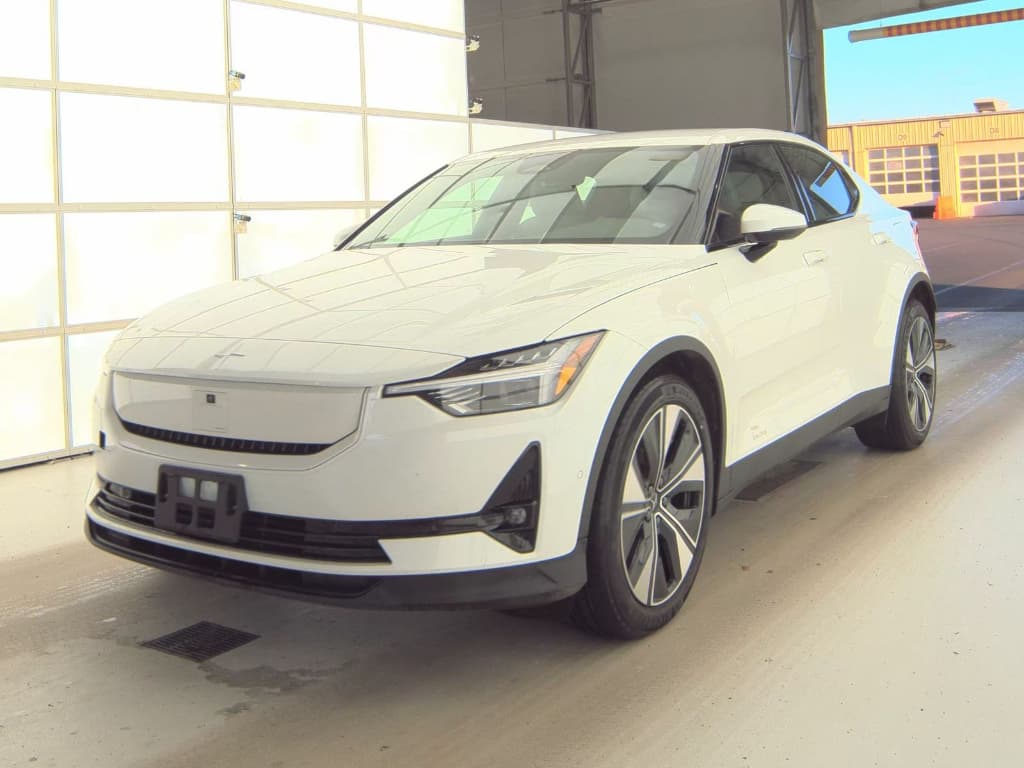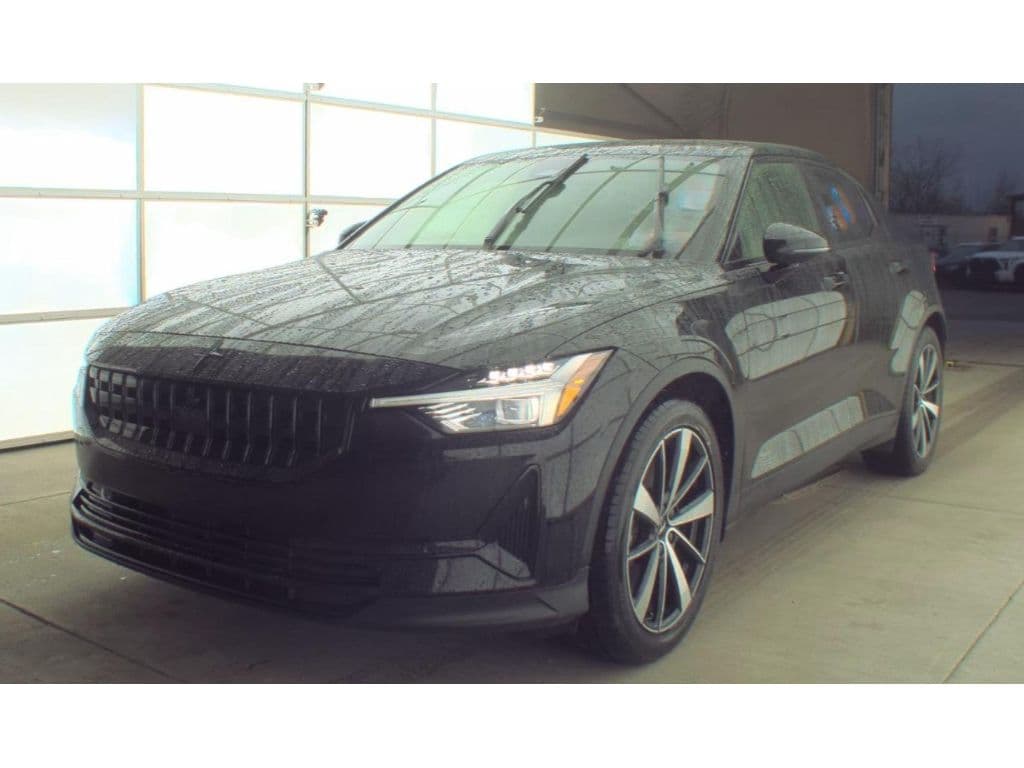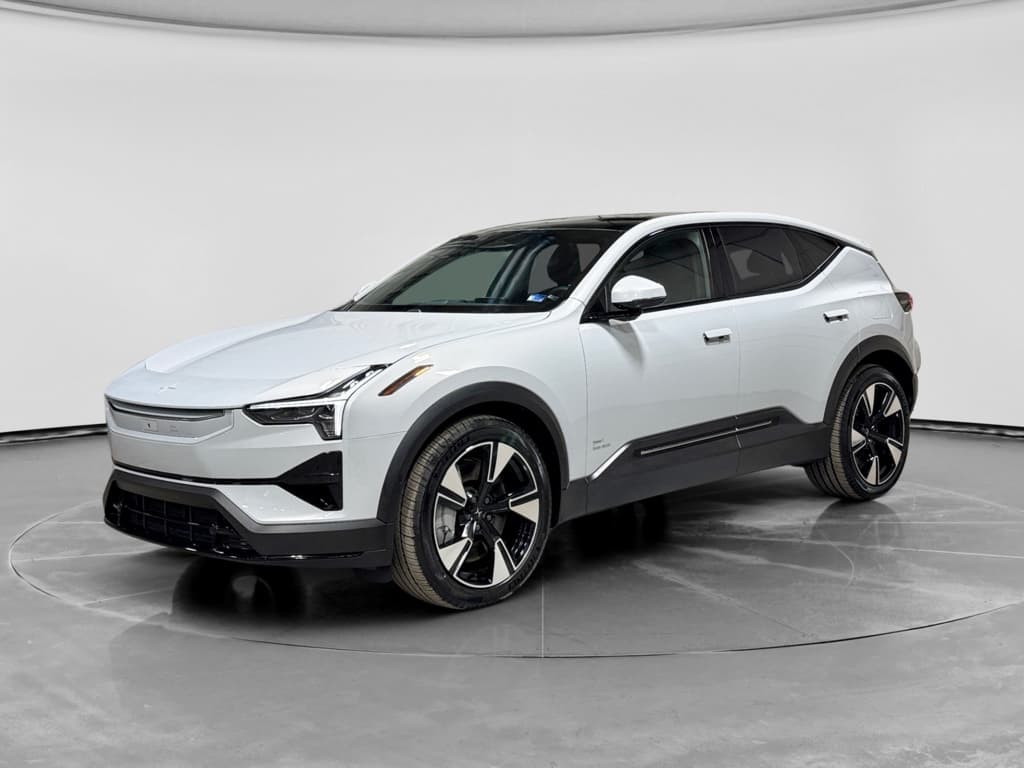
If you’re considering a Polestar 2 as a daily driver and light tow vehicle, you’re not alone. Plenty of owners want an EV that can haul a small trailer or camper without destroying usable range. In this guide, we’ll break down the Polestar 2’s towing capacity and real‑world range so you can decide whether it fits your bikes, kayaks, small campers, or your lifestyle.
Key takeaway
Polestar 2 towing capacity at a glance
Polestar engineered the 2 to tow, but it’s important to understand the differences between markets and configurations. In North America, towing was initially limited and required a factory or dealer‑installed tow package. In Europe and other regions, towing preparation has been more common and capacities are slightly higher on paper.
Polestar 2 towing numbers (typical)
Always confirm your specific car’s rating
Typical Polestar 2 towing limits by region
Approximate factory ratings for Polestar 2 models that are tow‑equipped. Your exact car may differ, so always check the manual.
| Region | Braked trailer | Unbraked trailer | Max tongue weight | Notes |
|---|---|---|---|---|
| USA / Canada | ~2,000 lbs (907 kg) | ~1,650 lbs (750 kg) | ~200 lbs (90 kg) | Requires factory/dealer tow bar. Some early cars were not tow‑rated at all. |
| EU / UK | 1,500 kg (3,307 lbs) | 750 kg (1,653 lbs) | ~90 kg (198 lbs) | Most trims rated equally, regardless of single or dual motor. |
| Australia / NZ | 1,500 kg (3,307 lbs) | 750 kg (1,653 lbs) | ~90 kg (198 lbs) | Specs broadly align with EU‑market cars. |
North American models tend to list lower official trailer weights than European and Australian models.
Polestar 2 range by battery and drive configuration
Before we talk about **range while towing**, it helps to anchor on the Polestar 2’s baseline range. Over the past few years Polestar has updated batteries, motors, and drive layouts, so the numbers differ a lot by model year and spec.
Approximate EPA & WLTP range by Polestar 2 configuration
These figures assume no trailer, mild weather, and efficient driving.
Long Range Single Motor (RWD, newer models)
Battery: ~79 kWh usable
- EPA (US): up to ~320 miles with 19" wheels
- EPA: low 300s with larger wheels
- WLTP (Europe): up to ~635–659 km depending on spec
This is the most efficient Polestar 2 and the best starting point if you plan to tow often.
Long Range Dual Motor (AWD)
Battery: ~75–79 kWh usable (depending on MY)
- EPA (US): roughly 270–276 miles for recent years
- WLTP: around 590–600 km
More traction and performance, slightly lower efficiency, especially noticeable when towing at speed.
Performance Pack (Dual Motor)
Same basic battery as other dual‑motor cars, but more power and stickier tires.
- EPA: mid‑200‑mile range, depending on wheels
- WLTP: a bit lower than standard dual‑motor
If you tow occasionally and care more about fun than maximum range, this can still work.
Standard Range Single Motor (select markets)
Battery: ~64–70 kWh usable
- WLTP: roughly 500–550 km
- EPA: typically in the 220–270 mile band, depending on wheel size and model year
Less headroom for towing days; you’ll stop more often to charge.
WLTP vs EPA vs reality
How towing really affects Polestar 2 range
Hook a trailer to any EV and you create a perfect storm for energy consumption: extra weight, more aerodynamic drag, and often higher speeds. The Polestar 2 is no exception. The key is to understand how big the impact is and plan your trips around it.
Typical range loss when towing
- Light, low trailer (bikes, small utility, 800–1,200 lbs): Expect roughly a 25–35% drop in highway range.
- Medium trailer (teardrop or compact camper, 1,200–1,800 lbs): A 35–45% cut is common, especially above 65 mph.
- Tall boxy trailer (cargo, toy hauler, near max weight): Prepare for up to a 50% reduction in range or more at interstate speeds.
The less aerodynamic the trailer, the bigger the hit, height and frontal area usually matter more than sheer weight.
Example: Long Range Single Motor day trip
Let’s say your Polestar 2 Long Range Single Motor is normally good for about 300–320 miles of highway range in mild weather.
- Solo highway cruising: 300 miles between 10–80% is realistic with careful driving.
- With a low, streamlined 1,200‑lb trailer: efficient driving might give you around 190–220 usable miles between fast‑charge stops.
- With a taller, bulkier trailer near the limit: you might only see 150–180 miles before the same state‑of‑charge window.
Plan around energy used per trip segment, not the brochure range number.
Watch out for weather and terrain
What can you safely tow with a Polestar 2?
With roughly 2,000 lbs (900 kg) of braked towing capacity and a modest tongue‑weight limit, the Polestar 2 is best suited to lighter, more compact loads. Think of it as a capable weekend‑adventure partner, not a full‑size pickup replacement.
Real‑world trailer types for a Polestar 2
Examples assume a tow‑equipped car at or near its factory rating.
Bikes & small gear
- Hitch‑mount bike rack with 2–4 bikes
- Small utility trailer with camping gear or yard waste
- Kayaks/canoes on a compact, low trailer
These loads are well within the Polestar 2’s comfort zone and have a relatively small impact on range.
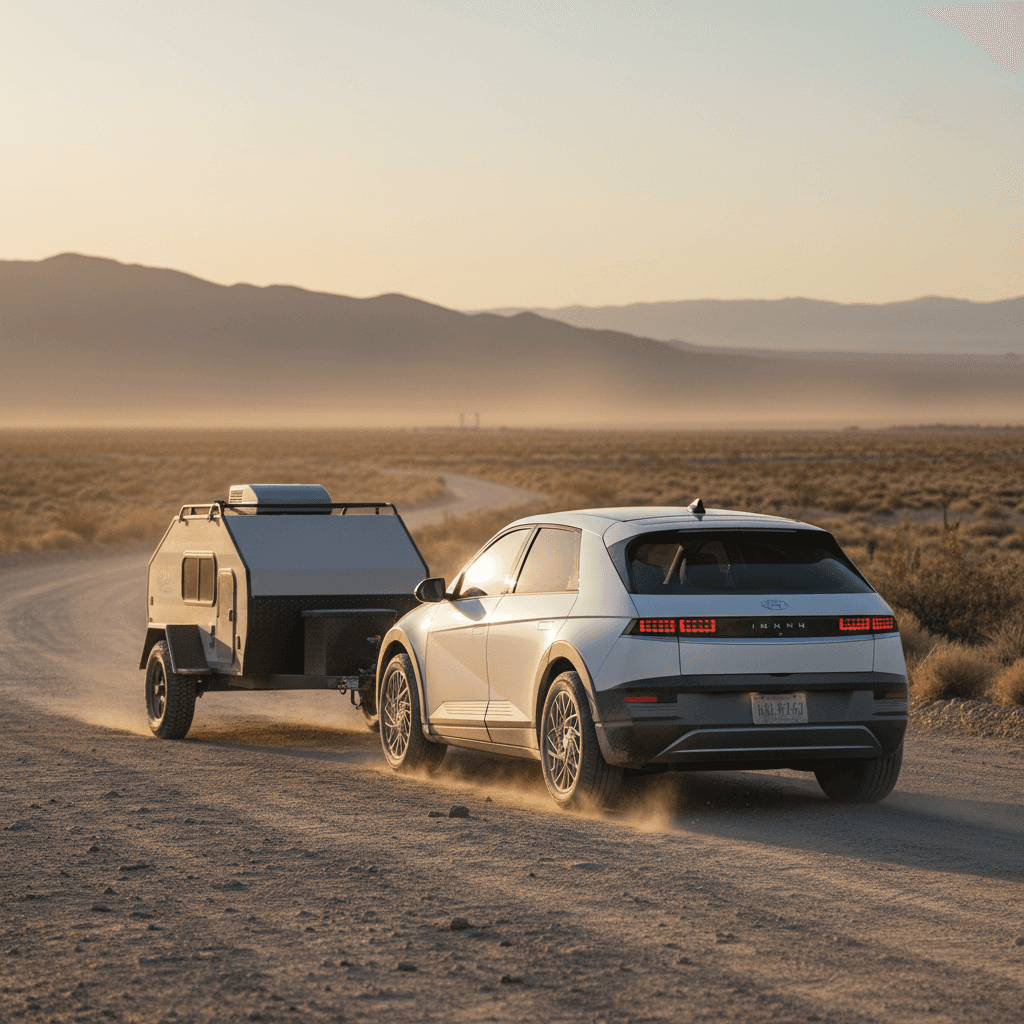
Teardrop or micro camper
- Teardrop trailers around 1,200–1,800 lbs loaded
- Low‑roof micro campers designed for EVs
These can work well if you keep speeds reasonable and plan for more frequent fast‑charge stops.
Small enclosed cargo trailer
- Single‑axle enclosed cargo trailer below ~2,000 lbs
- Motorsport or hobby gear in a lightweight box trailer
Boxy trailers hit range hard. Make sure loaded weight and tongue weight both stay inside the limits.
Think in loaded weights, not brochure weights
Charging, planning, and route strategy when towing
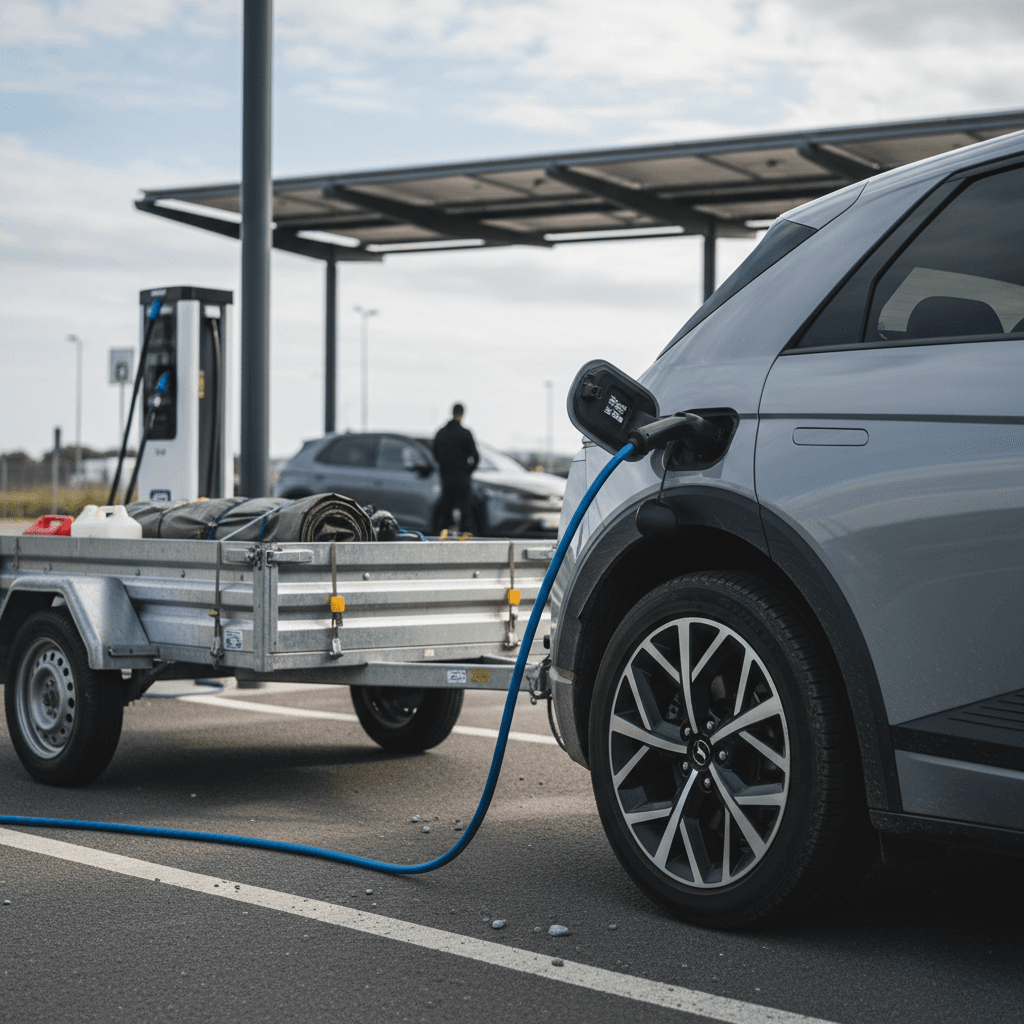
Towing in a Polestar 2 is completely workable if you treat range as a planning problem rather than a guessing game. You don’t want to discover your margin has evaporated when you’re 20 miles from the next fast charger with a full trailer behind you.
Route‑planning checklist for towing with a Polestar 2
1. Start from a conservative energy assumption
For your first towing trip, assume you’ll lose about <strong>40–50% of your normal highway range</strong>. If you beat that, great, you’ve built in a safety margin.
2. Use an EV‑aware route planner
Use tools that understand your car’s consumption and charging curve. Many Polestar owners pair the built‑in Google system with apps like A Better Routeplanner (ABRP) for extra detail.
3. Plan around 10–80% state of charge
Fast‑charging slows as you approach a full battery. On road trips, it’s often quickest to charge between roughly <strong>10–80%</strong>, then move on.
4. Prefer higher‑power DC fast chargers
The Polestar 2 can take advantage of **150 kW+ DC fast chargers** in good conditions, especially newer single‑motor models. Higher‑power stations help offset the extra stops that towing requires.
5. Leave buffer between chargers
When towing, don’t plan to reach a charger with 2–3% remaining. Aim to arrive with at least <strong>15–20% state of charge</strong> until you really understand your combo of car, trailer, and driving style.
6. Watch elevation changes
Long climbs consume huge energy; long descents give some of it back via regen. In hilly or mountainous routes, build extra margin into your plan, especially on the uphill legs.
Equipment you need: hitches, wiring, and brakes
Towing isn’t just about what the spec sheet says. The hardware on your particular Polestar 2, and how it was installed, matters just as much for safety, insurance, and warranty coverage.
- Factory or OEM‑approved tow bar: Many markets offered a retractable or fixed tow bar from Polestar. This is the cleanest solution and will clearly state its rating in the documentation.
- Trailer wiring harness: You’ll need a 7‑pin or 13‑pin connector (depending on market) to power lights and, in some cases, trailer brakes. Factory harnesses often integrate trailer stability assist and warning messages into the car.
- Trailer brakes: In most regions, trailers over a certain weight must have their own brakes. Given the Polestar 2’s modest tow rating, using a braked trailer is smart even where it’s not legally required.
- Brake controller (where applicable): Some installations require an electronic brake controller to modulate trailer brakes smoothly. Ask an EV‑experienced installer for guidance.
- Weight distribution: Always load the trailer so roughly 10% of its weight is on the hitch (within the tongue‑weight limit) and the remainder is over or slightly forward of the axle.
Use EV‑literate installers
7 tips to maximize range while towing
Range while towing isn’t fixed, it’s the result of thousands of micro‑decisions you make on the road. The good news is that a few simple habits can make a big difference in how far you go between charges.
- Slow down a little: Dropping from 75 mph to 65 mph can dramatically cut drag and recover a meaningful chunk of range.
- Choose the right trailer: Lower, narrower, and more aerodynamic trailers are your allies. A sleek teardrop will go much farther per kWh than a tall box trailer of the same weight.
- Pack smart and light: Leave the cast‑iron cookware at home. Reducing 200–300 lbs of gear adds up over long climbs and hot days.
- Run the most efficient drive mode: Use smooth, moderate acceleration and make the most of regenerative braking on descents and in traffic.
- Pay attention to tires: Proper inflation on both the Polestar 2 and your trailer cuts rolling resistance and improves stability.
- Use climate control wisely: Pre‑condition the cabin while plugged in and lean on seat and steering‑wheel heaters instead of blasting cabin heat in winter.
- Monitor consumption, not just state of charge: Watch your kWh/100 km or Wh/mi readout. If it spikes with a headwind or big hill, adjust speed or your plan accordingly.
Towing sweet spot
Buying a used Polestar 2 for towing
If you’re shopping used, the Polestar 2 can be a compelling alternative to a compact crossover, especially if you only tow occasionally and value refinement the rest of the week. But you’ll want to look past glossy listing photos and get specific about towing and battery health.
What to check on a used Polestar 2 if you plan to tow
Combine mechanical checks with EV‑specific insights.
1. Confirm tow rating & hardware
- Verify that the car is **officially tow‑rated** in your market and model year.
- Inspect the hitch: is it factory, dealer‑installed, or aftermarket?
- Check for a proper wiring harness and look for corrosion around connectors.
2. Assess battery health and range
- Ask for recent range figures at 100% charge and typical driving.
- Look for EV‑specific diagnostics like the Recharged Score battery health report, which can reveal how much usable capacity you still have.
- Cars with healthier packs give you more buffer on towing days.
3. Warranty, recalls, and service history
- Confirm remaining battery and powertrain warranty coverage.
- Review service records for electrical or charging‑system repairs.
- Ask whether the car has done frequent towing in the past; heavy use isn’t a deal‑breaker, but it’s good context.
4. Match the trim to your use case
- Long Range Single Motor: Best choice if towing and road‑trip flexibility are top priorities.
- Dual Motor / Performance: Great traction and acceleration; range hit is more noticeable when towing but still workable for moderate distances.
How Recharged can help
Polestar 2 towing capacity and range FAQ
Frequently asked questions
Is the Polestar 2 right for your towing needs?
The Polestar 2 offers a thoughtful balance: it’s a refined, efficient electric fastback that can also handle **light‑duty towing** when properly equipped. With realistic expectations and smart planning, you can pull a small camper, cargo trailer, or pair of bikes without turning every trip into a range‑anxiety exercise.
If you’re weighing a used Polestar 2 against other EVs, focus on verified battery health, tow rating, and how its real‑world range lines up with your heaviest planned trailer. Platforms like Recharged can simplify that homework by pairing detailed battery diagnostics with expert EV guidance, so you end up with a car, and a towing setup, that suits the way you actually live and travel.