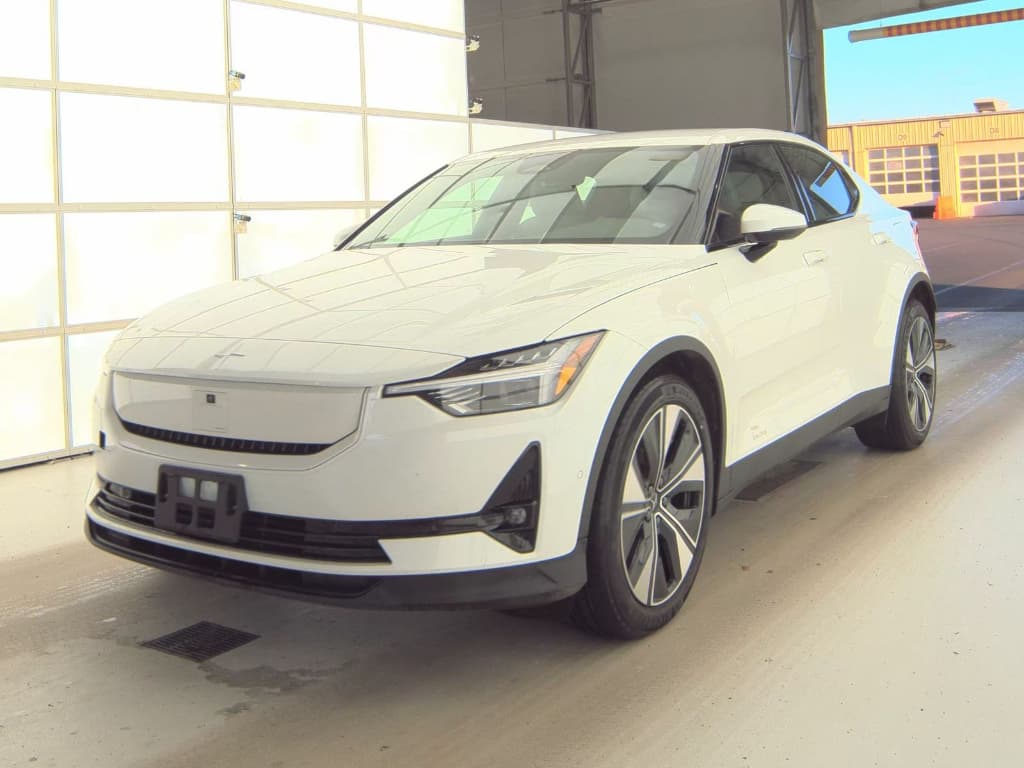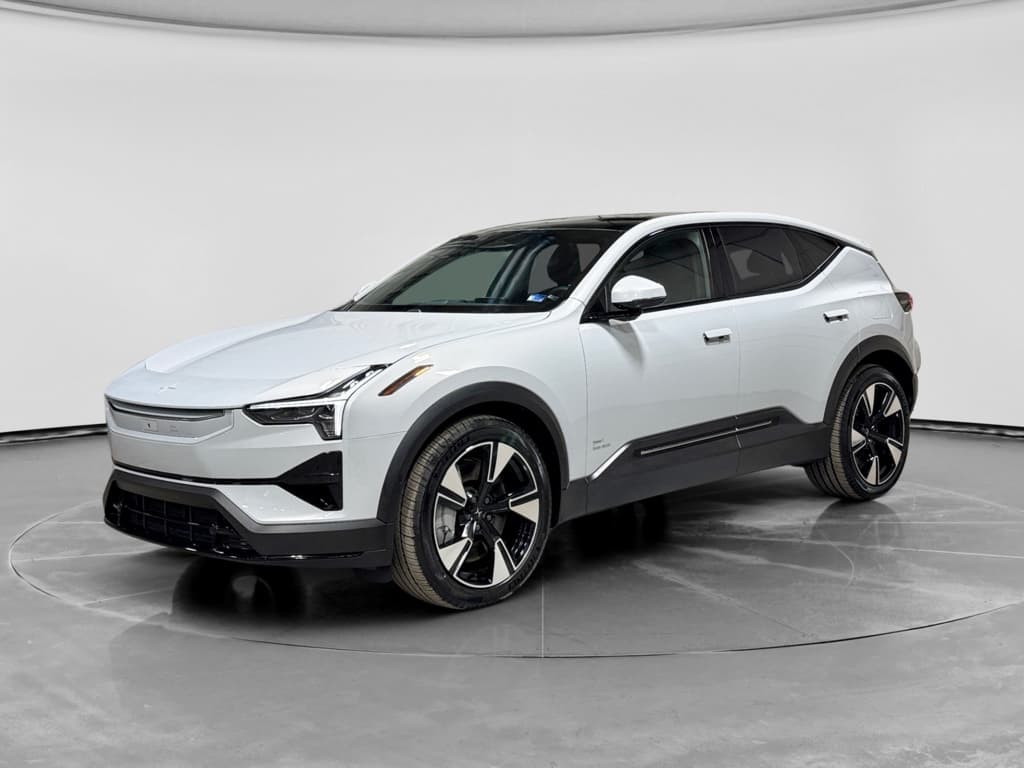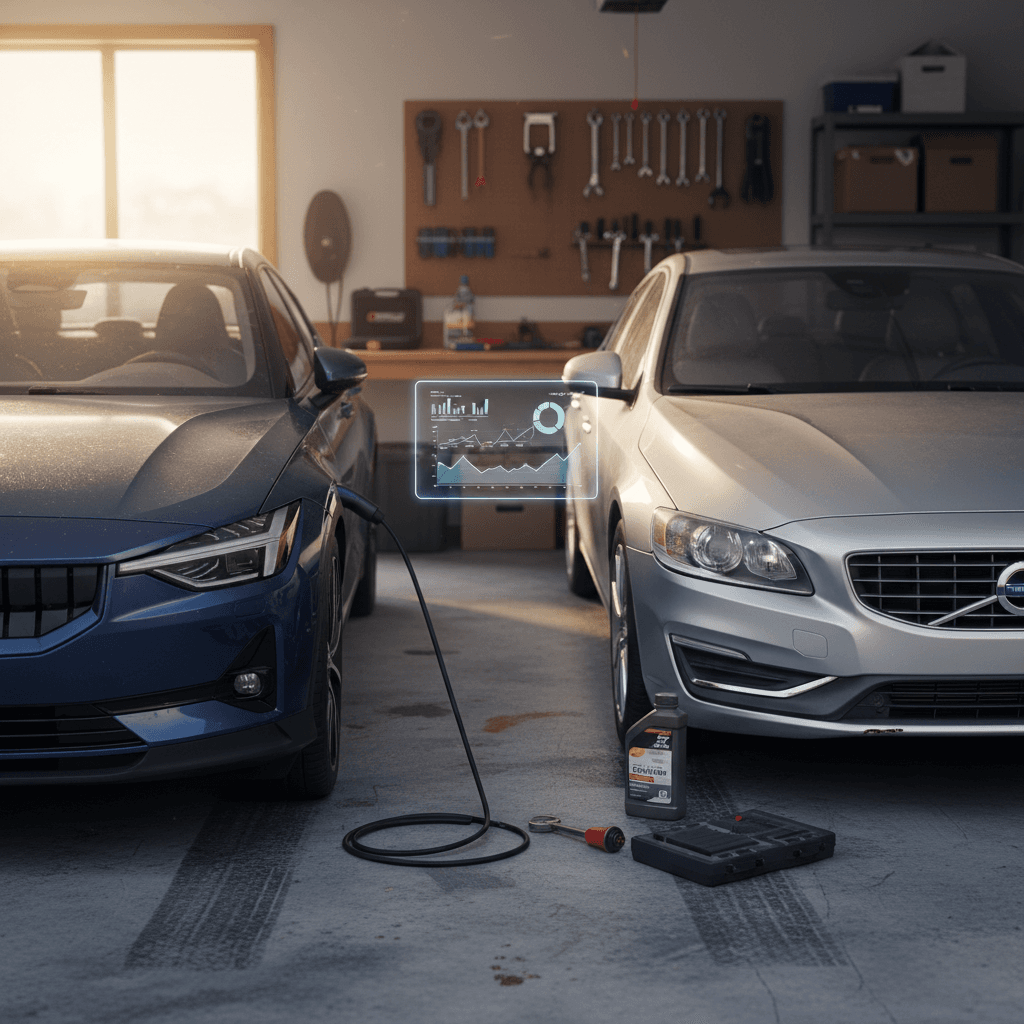
If you’re looking at a Polestar 2, you’re probably wondering how its total cost of ownership stacks up against a similar gas car. Purchase price only tells part of the story. Fuel, maintenance, depreciation, and insurance can easily flip the script over five to seven years, especially if you’re buying used.
Quick takeaway
Why Polestar 2 total cost vs gas car really matters
The Polestar 2 competes with premium compact cars like the Audi A4, BMW 3 Series, and Mercedes‑Benz GLA/GLB. On the window sticker, it might look more expensive than some gas rivals, but EVs save money in other places. To make a smart decision, you need to look at total cost of ownership (TCO): everything you’ll pay to drive the car, not just the monthly payment.
- Upfront price and financing costs
- Fuel vs electricity over the miles you actually drive
- Maintenance, repairs, and tires
- Insurance, taxes, and fees
- Depreciation and resale value when you sell or trade in
Think like a CFO
What we’re comparing: Polestar 2 vs its gas equivalents
To keep things apples‑to‑apples, let’s compare a Polestar 2 to a gas luxury compact sedan/crossover with similar size, performance, and equipment, think Audi A4, BMW 330i, or Mercedes‑Benz GLA. We’ll work with ballpark numbers you’re likely to see in the U.S. market; exact figures vary by trim, options, and local pricing.
Baseline vehicles we’ll use for cost comparisons
Real‑world pricing will vary, but these examples keep the math grounded.
Polestar 2 (single or dual motor)
- Compact premium electric fastback
- EPA range roughly in the 270–320 mile band depending on configuration
- Well equipped with driver‑assist and tech features
Gas luxury compact (BMW 3 Series/Audi A4–type)
- Similar size and performance
- Premium interior and tech packages
- EPA combined fuel economy often in the mid‑20s mpg
About the numbers in this guide
Upfront price: new vs used Polestar 2 and gas rivals
New EVs and new luxury gas cars often look similar on price once you align trims and incentives, but the used market can tilt strongly in your favor with a Polestar 2.
Typical transaction prices: Polestar 2 vs gas equivalent
Approximate U.S. market examples to illustrate relative price positions for shoppers comparing a Polestar 2 to a similar gas luxury compact.
| Vehicle | New transaction price | 3‑year‑old used price | 5‑year‑old used price |
|---|---|---|---|
| Polestar 2 | High $40Ks–$50Ks, before any incentives | Low–mid $30Ks, depending on mileage and spec | High $20Ks–low $30Ks, depending on condition |
| Gas luxury compact (BMW 3/A4 type) | Low–mid $40Ks, before options | Low–mid $30Ks, depending on trim and mileage | Mid $20Ks–high $20Ks, widely available |
These are illustrative ranges, not quotes. Always verify current pricing before you buy.
Upfront cost verdict
Fuel vs electricity: what it really costs to drive
This is where the Polestar 2 usually pulls ahead. Let’s assume a typical U.S. driver covering 12,000 miles per year.
Annual energy cost snapshot (12,000 miles/year)
Here’s the basic math behind those numbers:
- Gas car: 12,000 miles ÷ 25 mpg = 480 gallons. At $4.40/gallon, that’s about $2,112 per year.
- Polestar 2 electricity use: roughly 31 kWh per 100 miles. That’s about 3,720 kWh/year at 12,000 miles.
- If you charge mostly at home at $0.17/kWh, that’s about $632/year. Round to $660 for some charging losses and run‑time overhead.
- If half your energy comes from pricier DC fast charging at $0.30/kWh, your blended cost jumps to roughly $1,000–$1,100/year.
How to estimate your own electricity cost
Maintenance, repairs, and tires
A Polestar 2 eliminates oil changes, spark plugs, and many routine engine services. You still have tires, brake fluid, cabin filters, and alignment just like any car, but the day‑to‑day maintenance picture is simpler.
Polestar 2 typical maintenance
- No oil changes or transmission services
- Brake pads can last longer thanks to regenerative braking
- Periodic inspections, cabin air filter, brake fluid
- Tires: expect similar wear to a sporty gas car; performance EVs can eat through tires faster if driven hard
Gas luxury compact maintenance
- Regular oil and filter changes (2–3 per year for many drivers)
- More complex driveline: spark plugs, timing components, transmission service
- Additional emissions system parts that can age or fail
- Similar tire and brake expenses, sometimes higher on performance models
Where EVs tend to win
Insurance, taxes, and other ownership costs
Insurance on a Polestar 2 can be similar to or slightly higher than a comparable gas luxury compact, largely depending on your ZIP code, driving record, and how your insurer views EV repair costs. Luxury cars, gas or electric, are never the cheapest to insure, so you’ll want to quote both options.
- Some states add modest EV registration fees that partially replace lost gas‑tax revenue.
- Other states still offer incentives or reduced fees for EVs, especially if you bought new within the last few years.
- Parking, tolls, and HOV‑lane policies vary widely; in some areas, EVs enjoy discounts or access perks.
Don’t ignore insurance in your budget
Depreciation and resale value for Polestar 2
EV depreciation has been steeper than many buyers expected over the past few years, thanks to rapid technology changes, price cuts on new EVs, and evolving incentives. The Polestar 2 has followed that pattern more than some of its gas rivals, which is bad news if you bought new but good news if you’re shopping used.
- New‑car buyers: expect depreciation to be significant over the first 3–4 years, similar to or a bit steeper than a comparable gas luxury compact.
- Used‑car buyers: you can let the first owner take the big hit, then enjoy EV running‑cost savings with a much lower capital outlay.
- Resale: battery condition is a key value driver. A Polestar 2 with documented strong battery health will typically be easier to sell and command better money than one with unknown history.
Why battery health matters
Five‑year cost scenarios: Polestar 2 vs gas car
Let’s put the pieces together with two simplified examples: one where you buy used and one where you buy new. We’ll look at **five‑year ownership**, 12,000 miles per year, and approximate numbers to illustrate the relationships. These are not quotes, just frameworks you can adapt to your own situation.
Scenario 1: 3‑year‑old used Polestar 2 vs 3‑year‑old gas luxury compact
Rounded estimates for a typical U.S. owner driving 12,000 miles per year for five years after purchase.
| Cost item (5 years) | Polestar 2 (used) | Gas luxury compact (used) |
|---|---|---|
| Depreciation (purchase price minus resale) | ~$12,000 | ~$10,000 |
| Energy (fuel or electricity) | ~$3,300 (home charging) | ~$10,500 (gas at ~$4.40/gal) |
| Maintenance & repairs | ~$3,000 | ~$5,000 |
| Insurance, taxes, misc. | Similar order of magnitude, varies by state | Similar order of magnitude, varies by state |
| Approx. 5‑year total (excluding insurance/taxes) | ~$18,300 | ~$25,500 |
Assumes home charging for the Polestar 2. All figures are ballpark; use them as a starting point, not gospel.
Even if the used Polestar 2 depreciates a bit more, the combination of cheaper electricity and lower maintenance can produce a **five‑figure savings** over the same mileage compared with a similar‑age gas luxury compact.
Scenario 2: New Polestar 2 vs new gas luxury compact
Again, rounded estimates for a typical 5‑year, 12,000‑mile‑per‑year owner.
| Cost item (5 years) | Polestar 2 (new) | Gas luxury compact (new) |
|---|---|---|
| Depreciation | ~$22,000–$25,000 | ~$18,000–$22,000 |
| Energy (fuel or electricity) | ~$3,300 (home charging) | ~$10,500 (gas) |
| Maintenance & repairs | ~$2,000–$3,000 | ~$4,000–$6,000 |
| 5‑year total (excluding insurance/taxes) | High $20Ks–low $30Ks | Low–mid $30Ks |
Here the depreciation gap may narrow or widen depending on incentives and new‑car pricing, but the energy and maintenance story is similar.
What these scenarios suggest
When a used Polestar 2 becomes a bargain
The sweet spot for many buyers will be a 2‑ to 5‑year‑old Polestar 2 with solid battery health and a clean history. You let the first owner absorb the steepest depreciation, then you enjoy EV‑level running costs at a much lower capital cost.
Signs you’ve found a strong‑value used Polestar 2
Use these as a checklist while you shop.
Documented battery health
Reasonable mileage
Transparent history
How Recharged helps on the used side
How to run your own total cost math
If you want numbers tailored to your life, you only need a few inputs: purchase price, estimated resale, fuel or electricity cost, and rough maintenance estimates. A simple spreadsheet works, but you can do the first pass on the back of an envelope.
Step‑by‑step: build your Polestar 2 vs gas TCO comparison
1. Nail down realistic purchase prices
Use real listings, not MSRP, to estimate what you’ll actually pay for a Polestar 2 and for a comparable gas car of similar age, mileage, and equipment.
2. Estimate 5‑year depreciation
Look at current prices for vehicles 4–5 years older than the ones you’re considering. Subtract that projected future value from your estimated purchase price.
3. Calculate your annual miles
Use your last few years of driving history, not just a guess. Total miles driven over 12 months divided by 12 gets you a solid monthly figure.
4. Price out energy costs
For the gas car, divide your annual miles by its realistic mpg and multiply by local fuel price. For the Polestar 2, multiply your annual miles by about 0.31 kWh per mile and by your $/kWh electricity rate.
5. Add maintenance estimates
If you tend to use the dealer for service, base your estimate on their maintenance schedules; if you use independent shops, adjust down. Assume fewer routine visits for the Polestar 2.
6. Sanity‑check insurance and fees
Get real insurance quotes for both vehicles, and check your state’s registration and EV fee structure so you’re not surprised later.
Use tools and real listings
FAQ: Polestar 2 total cost vs gas car
Frequently asked questions
Bottom line: should you choose a Polestar 2 over a gas car?
When you add everything up, purchase price, depreciation, energy, and upkeep, a Polestar 2 can absolutely compete with, and often beat, the total cost of a similar gas luxury compact. The more you drive, and the more you can charge at home on reasonably priced electricity, the stronger the case becomes.
If you’re leaning toward a Polestar 2, the smartest move is to shop the used market with battery health in mind. That’s where platforms like Recharged change the game: every EV comes with a Recharged Score Report, fair‑market pricing analysis, and EV‑savvy support from first click to delivery. Put real numbers to your own situation, compare them with a gas equivalent, and you may find that choosing the Polestar 2 isn’t just better for the way you drive, it’s better for your wallet, too.