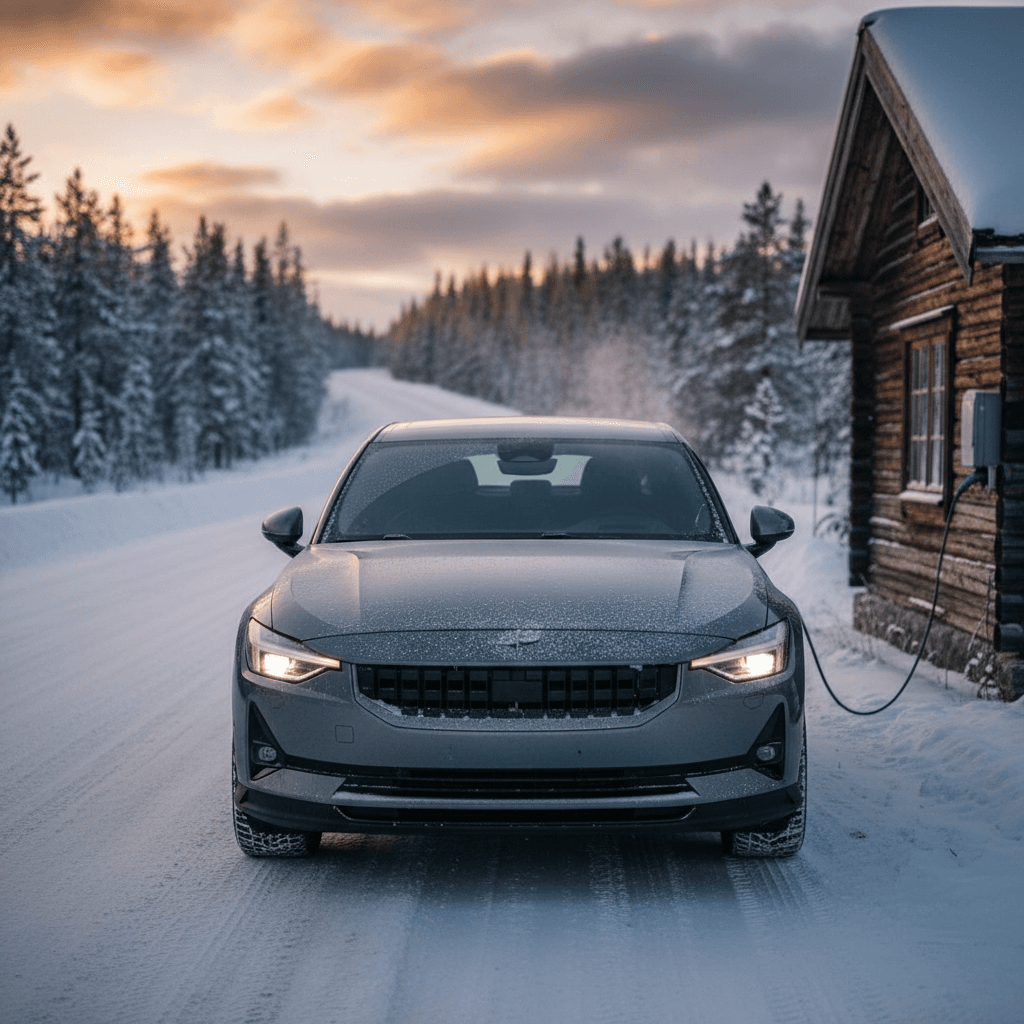
If you live somewhere that actually has winter, “Polestar 2 range in cold weather” isn’t an abstract question. It’s the difference between cruising home from the ski hill and watching the state troopers push your beautiful Swedish wedge onto a flatbed. The EPA sticker might say 270–320 miles, but January doesn’t care what the sticker says.
Quick take
Polestar 2 winter range at a glance
Typical Polestar 2 range loss in cold weather
Big picture, the Polestar 2 is one of the better‑behaved EVs in winter. Fleet‑wide data for modern EVs shows that most keep around 75–85% of their rated range in freezing weather when equipped with a heat pump, and the Polestar 2 falls comfortably in that bracket. That means your 300‑mile headline number realistically turns into something like 200–230 miles on a cold day, assuming you’re not driving like a getaway driver on studded tires.
Don’t use the EPA number as your winter plan
EPA range vs real-world Polestar 2 range in the cold
Before we talk about freezing rain and black ice, we need a baseline. The Polestar 2 has gone through several powertrain updates, but for U.S.‑spec cars, you’ll most often see EPA combined range figures in roughly the 270–320 mile band, depending on year and configuration. The later rear‑wheel‑drive long‑range models sit near the top of that band; older dual‑motor cars nearer the bottom.
Polestar 2 EPA range vs realistic winter planning targets
Approximate planning numbers for U.S.‑spec Polestar 2 trims. Exact figures vary by model year, wheel size, and options, but the pattern is consistent.
| Trim (illustrative) | EPA rating (mi, combined) | Mild winter planning (25–35°F) | Deep winter planning (0–20°F) |
|---|---|---|---|
| Long Range Single Motor (RWD) | ≈300–320 | ≈210–240 mi | ≈180–210 mi |
| Long Range Dual Motor AWD | ≈270–295 | ≈190–220 mi | ≈160–190 mi |
| Older Dual Motor (smaller pack) | ≈245–260 | ≈170–200 mi | ≈150–180 mi |
Use the “winter planning target” column for everyday expectations in freezing weather, not the EPA headline number.
Those winter planning numbers assume steady driving around the speed limit, normal use of climate control, and a driver who isn’t using every on‑ramp as a personal highlight reel. Hammer along at 80 mph into a headwind in 10°F air and you can easily flirt with that 40%‑off clearance sale on range.
How to sanity‑check the numbers
Why cold weather cuts Polestar 2 range
- Cold batteries are sluggish batteries. Lithium‑ion cells don’t like the cold. Internal resistance rises, so you lose both usable capacity and peak power until everything warms up.
- Cabin heating is brutally energy‑intensive. Unlike a gas car, there’s no “free” waste heat from an engine. The Polestar 2 has to spend precious kWh just to keep your toes attached.
- Thick air and winter tires add drag. Colder, denser air and chunkier winter rubber both raise drag, especially noticeable at highway speeds.
- Short trips are the worst case. Warming up the pack and the cabin for a 5‑mile run to daycare is shockingly inefficient compared with one long drive.
Across thousands of EVs, recent studies peg winter range loss in the roughly 20–30% range for cars with heat pumps, and closer to 30–40% for those relying on simple resistive heaters. That’s the league table the Polestar 2 is playing in, and it does better than many thanks to its optional, and later standard, heat pump and decent thermal management.
The two silent range killers
Polestar 2 heat pump: how much does it help?
Polestar sells the 2 as a kind of Scandinavian design object that just happens to be an EV, but underneath the wool‑blend seats the engineering is orthodox and smart. The optional, and on later model years, more common, heat pump is a big part of why the Polestar 2 doesn’t crater in winter the way some early EVs did.
What the Polestar 2 heat pump actually does for range
Less electricity turned directly into heat, more miles from the same kWh.
Efficient cabin heating
Warmer, happier battery
Better in mild cold than deep arctic
Rule of thumb for heat‑pump cars
Real-world Polestar 2 winter range examples
Laboratory numbers are fine, but what most owners care about is: “What will I actually see on the dash when it’s ugly outside?” Let’s run through a few grounded scenarios to show how the Polestar 2 behaves in the sort of winter conditions that make you question historic decisions, moving north of the Mason‑Dixon line, for instance.
Scenario 1: 35°F drizzle, mixed driving
You have a longer‑range rear‑drive Polestar 2, mostly stock wheels and tires. It’s hovering just above freezing, roads are wet, and you’re doing a blend of suburb and highway.
- EPA: ~300–320 miles
- Likely trip computer prediction after a few miles: 230–250 miles
- Observed consumption: perhaps 15–25% worse than a pleasant 70°F day
For day‑to‑day commuting, this feels basically like a “normal” EV, just with a slightly smaller buffer.
Scenario 2: 15°F, highway, ski‑weekend fully loaded
Dual‑motor Polestar 2, roof box, winter tires, four people, and gear. You set cruise at 72 mph and head into the mountains at 15°F.
- EPA: ~270–295 miles
- Realistic safe planning range: 160–190 miles between fast chargers
- Range loss vs sticker: very likely in the 30–40% band
This is where you learn to love pre‑conditioning and corridor charging, not YOLO‑ing it to that distant charger with 6% on the clock.
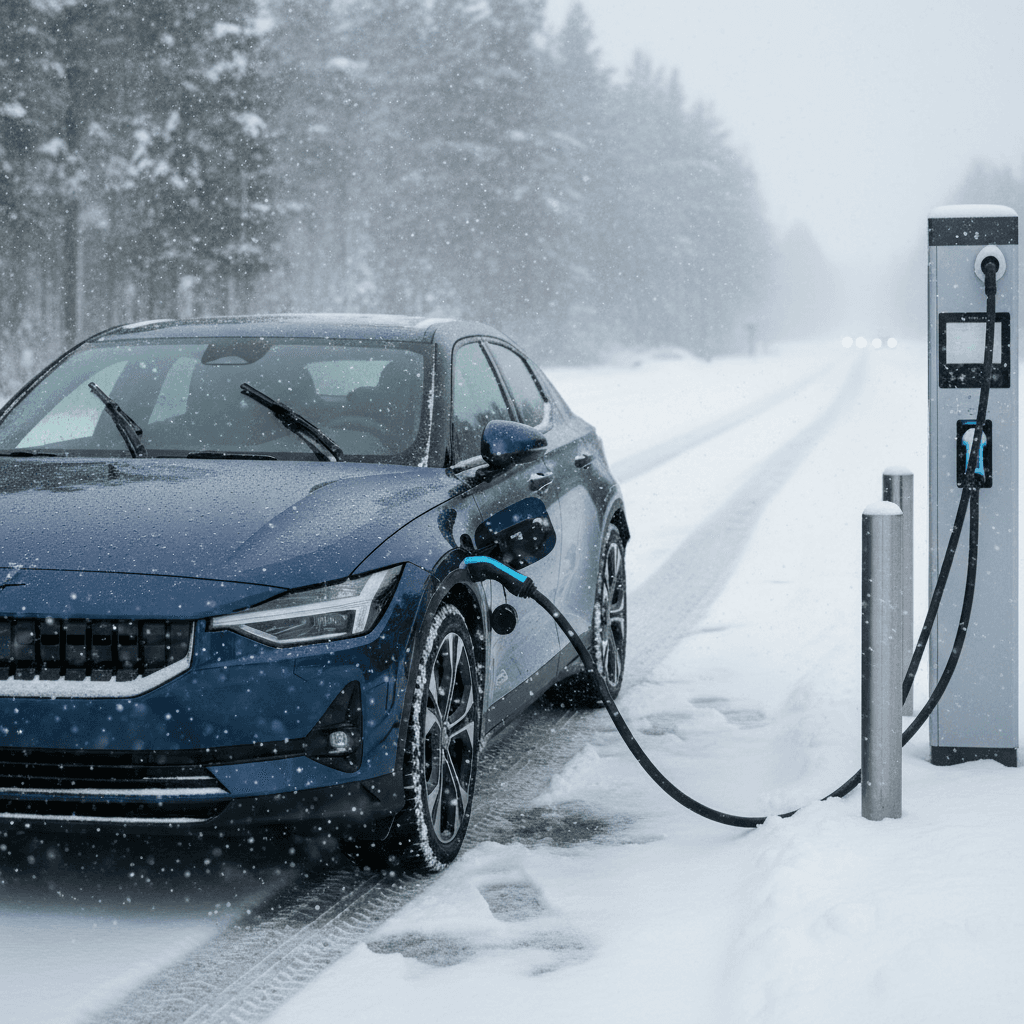
City winter vs highway winter
How to plan trips in a Polestar 2 in winter
Road‑tripping a Polestar 2 in winter is absolutely doable; it just demands a bit more chess and a bit less checkers. This is where its solid charging curve and competent software give you more headroom than the headline range loss might suggest.
Key tools for winter trip planning in a Polestar 2
Use more than one source of truth when the mercury drops.
Built‑in route planner
Third‑party route apps
Corridor charging mindset
Arrive with a bigger buffer in winter
Driving habits that make or break winter range
The Polestar 2’s hardware is fixed; your right foot is not. The difference between a careful winter driver and an impatient one can easily be 50 miles of range in the same conditions. This is where you have the most direct control.
- Use seat and wheel heaters first. They consume far less energy than blasting cabin air. You stay warm, the battery stays happier.
- Dial down highway speeds. Dropping from 78 mph to 68 mph in cold weather can easily claw back 10–15% range, sometimes more.
- Pre‑condition while plugged in. Use the app or scheduled departure to warm the cabin and battery on shore power. Leaving with a warm pack avoids the worst of cold‑soaked inefficiency.
- Avoid repeated short trips. If you can chain errands into one longer outing, you’ll see noticeably better efficiency than heating the car from stone‑cold three separate times.
- Watch elevation. Snowy mountain routes are a double whammy of cold and climbing. Give yourself extra buffer for long ascents. The regen payback on the way down never feels as generous as you hope.
Beware of “estimated remaining range” after one short drive
Used Polestar 2: what cold-weather range says about battery health
Cold weather is rough on range, but it’s also oddly useful when you’re evaluating a used Polestar 2. Winter exaggerates inefficiencies, making it easier to spot a pack that’s aging faster than it should, or one that’s still in rude health.
Signs of a healthy pack in winter
- Winter range loss in the same 20–35% band most owners report, not 50%+.
- Predictable consumption that doesn’t swing wildly on similar routes and temps.
- DC fast‑charge speeds that remain robust once the pack is warmed and pre‑conditioned.
If a 3‑ or 4‑year‑old Polestar 2 behaves broadly like the numbers in this guide, that’s a good sign the battery has aged gracefully.
Red flags to investigate
- Owner reports drastic range loss vs. peers in similar weather and driving.
- Trip computer showing unusually high kWh/100 mi in moderate cold compared with other Polestar 2s.
- Fast‑charging that stays slow even after 20–30 minutes of highway driving and pre‑conditioning.
In those cases, deeper diagnostics can tell you if it’s just harsh usage conditions or an underlying battery issue.
How Recharged de‑mystifies winter range on used EVs
Ready to find your next EV?
Browse VehiclesBecause Recharged specializes in used EVs, our team sees the full arc of how cars like the Polestar 2 age across climates. If you’re trading in or selling yours, that same data helps you get a fair market number that reflects its actual battery condition, not just a generic depreciation table.
Checklist: maximize Polestar 2 range in cold weather
Pre‑winter and day‑of steps to stretch every mile
1. Enable pre‑conditioning on shore power
Use the Polestar app or in‑car scheduling so the car warms the cabin and battery <strong>while still plugged in</strong>. This moves the biggest heating load off the pack and onto the grid.
2. Prioritize seat and wheel heaters
Set the cabin a few degrees cooler and let the <strong>seat and steering‑wheel heaters</strong> do more of the work. They sip power compared with the main HVAC system.
3. Drop 5–10 mph on the highway
In winter, aero drag and cold air multiply. Cruising even <strong>5 mph slower</strong> can add meaningful range, especially on longer stints.
4. Combine errands into one loop
Avoid multiple “cold starts.” One 40‑mile trip with a warm battery is far more efficient than four 10‑mile trips where the car reheats itself each time.
5. Check tire pressure when it gets cold
Temperatures dropping 20–30°F can knock several PSI out of your tires, increasing rolling resistance. Keep them near the recommended spec for best range and safety.
6. Plan chargers with a buffer
In winter, target <strong>15–20% arrival</strong> at your planned DC fast charger, and always have a backup charger pinned on your map in case your first choice is busy or out of service.
Polestar 2 winter range FAQ
Frequently asked questions about Polestar 2 range in cold weather
Bottom line: is the Polestar 2 good in cold weather?
For a modern EV, the Polestar 2’s range in cold weather is exactly where you want it to be: honest, predictable, and rarely the limiting factor if you plan even halfway intelligently. You’ll still see the usual winter haircut, 20–35% most of the time, more if you’re piling on speed, altitude, wind, and skis, but the car’s thermal management and available heat pump keep it from turning into a science experiment every time the forecast turns blue.
If you’re shopping used, winter is actually your friend. It exposes weak batteries and sloppy engineering. A well‑kept Polestar 2 that behaves like the numbers in this guide is a strong candidate, especially when backed by hard data on pack health. That’s exactly the gap Recharged is built to fill: combining a transparent Recharged Score Report with fair market pricing, EV‑savvy support, and nationwide delivery so your next Polestar 2 doesn’t just look good in the driveway, it still feels good on a dark, icy Tuesday in February.