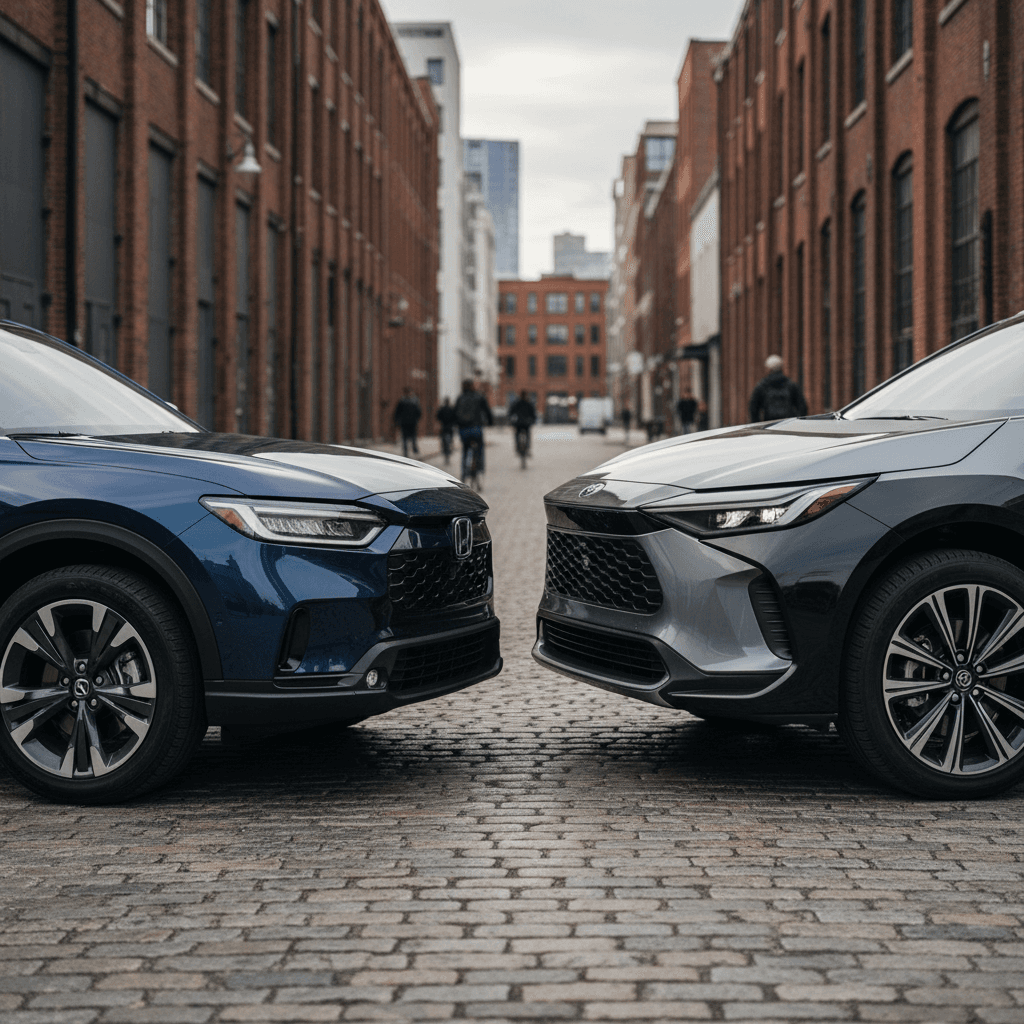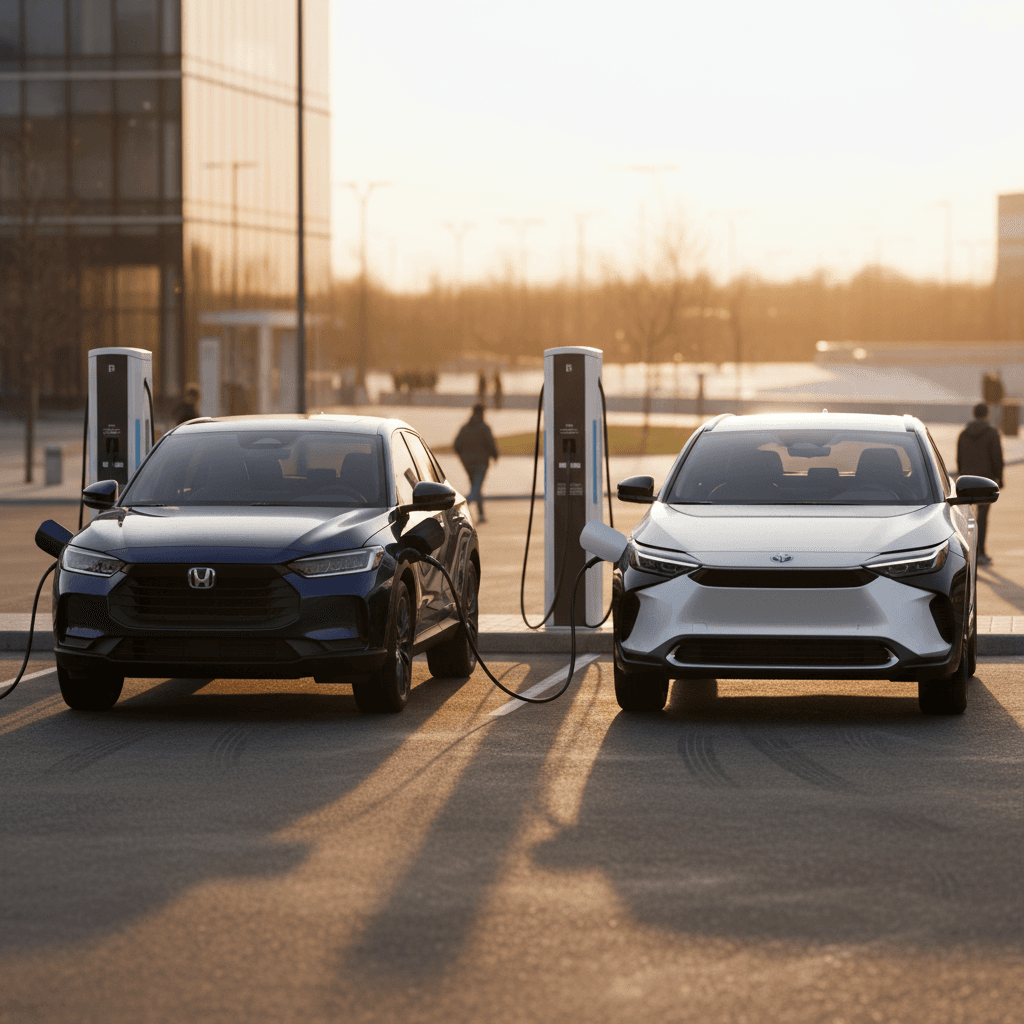
If you’re cross‑shopping the Honda Prologue vs. Toyota bZ4X and wondering which is better, you’re not alone. Both are compact electric SUVs from brands with bulletproof reputations, but they take very different approaches to range, charging, and everyday usability. In 2026, those differences are big enough that one will clearly fit your life better than the other.
Big picture
Overview: Honda Prologue vs. Toyota bZ4X
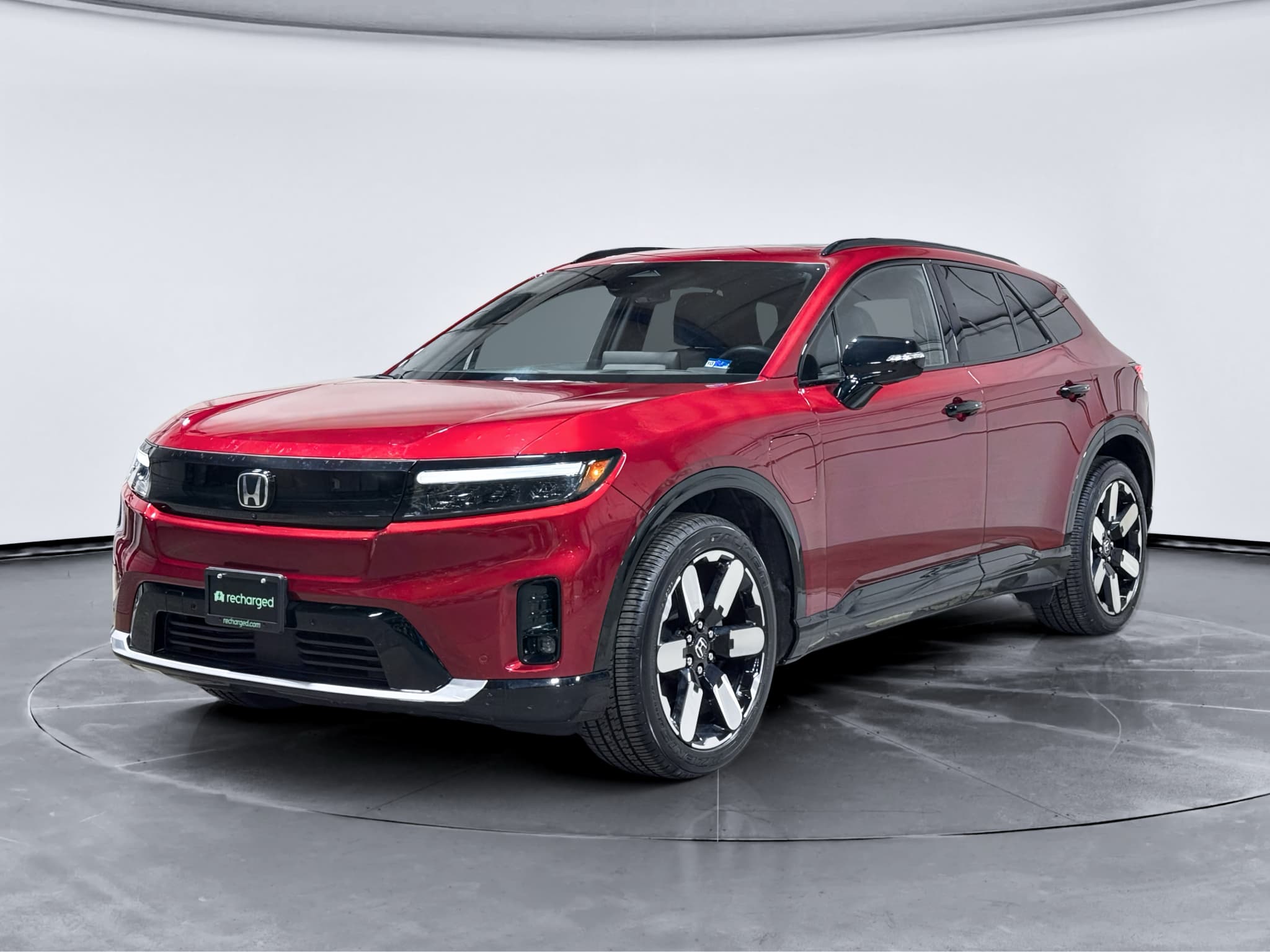
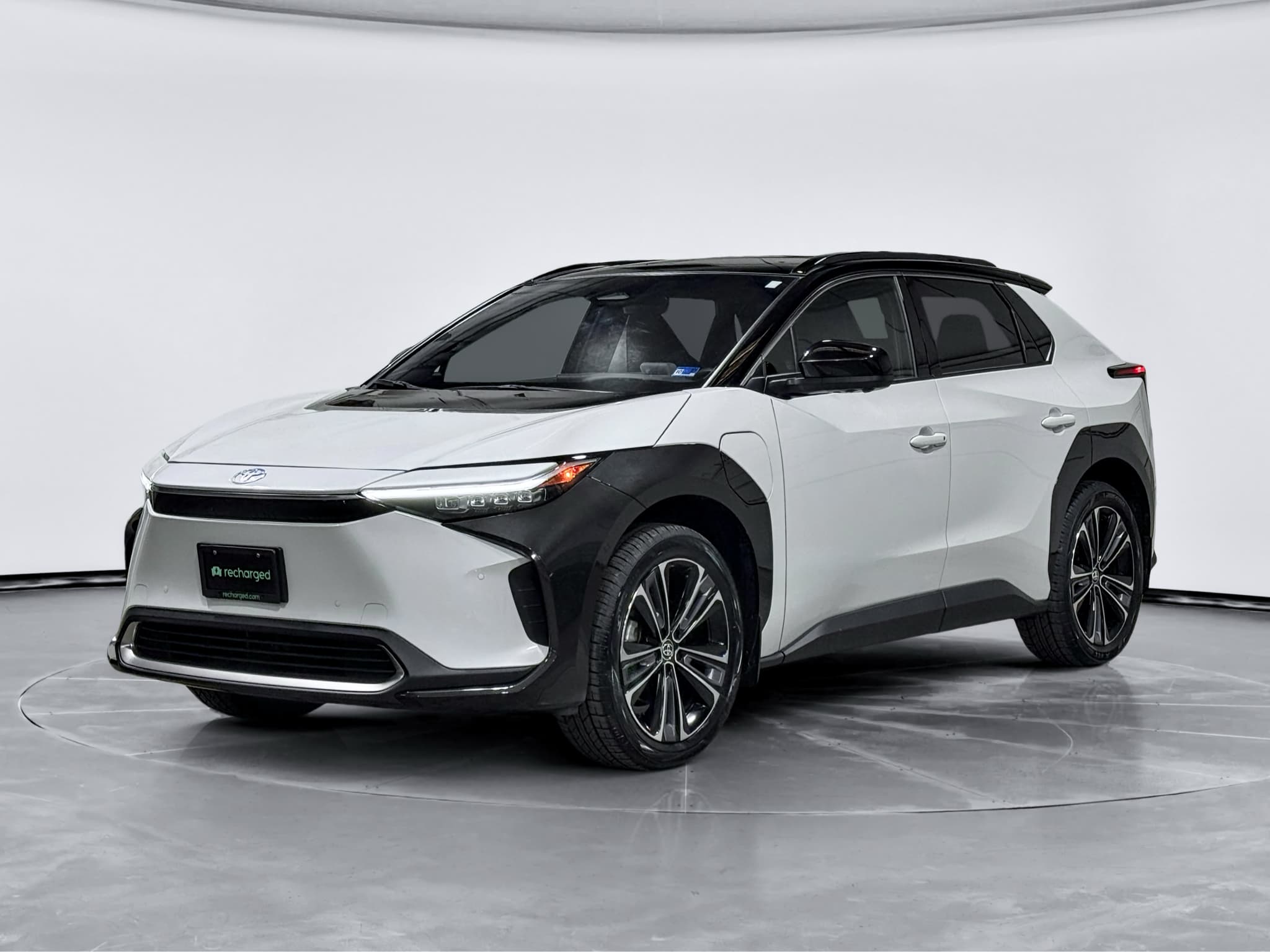
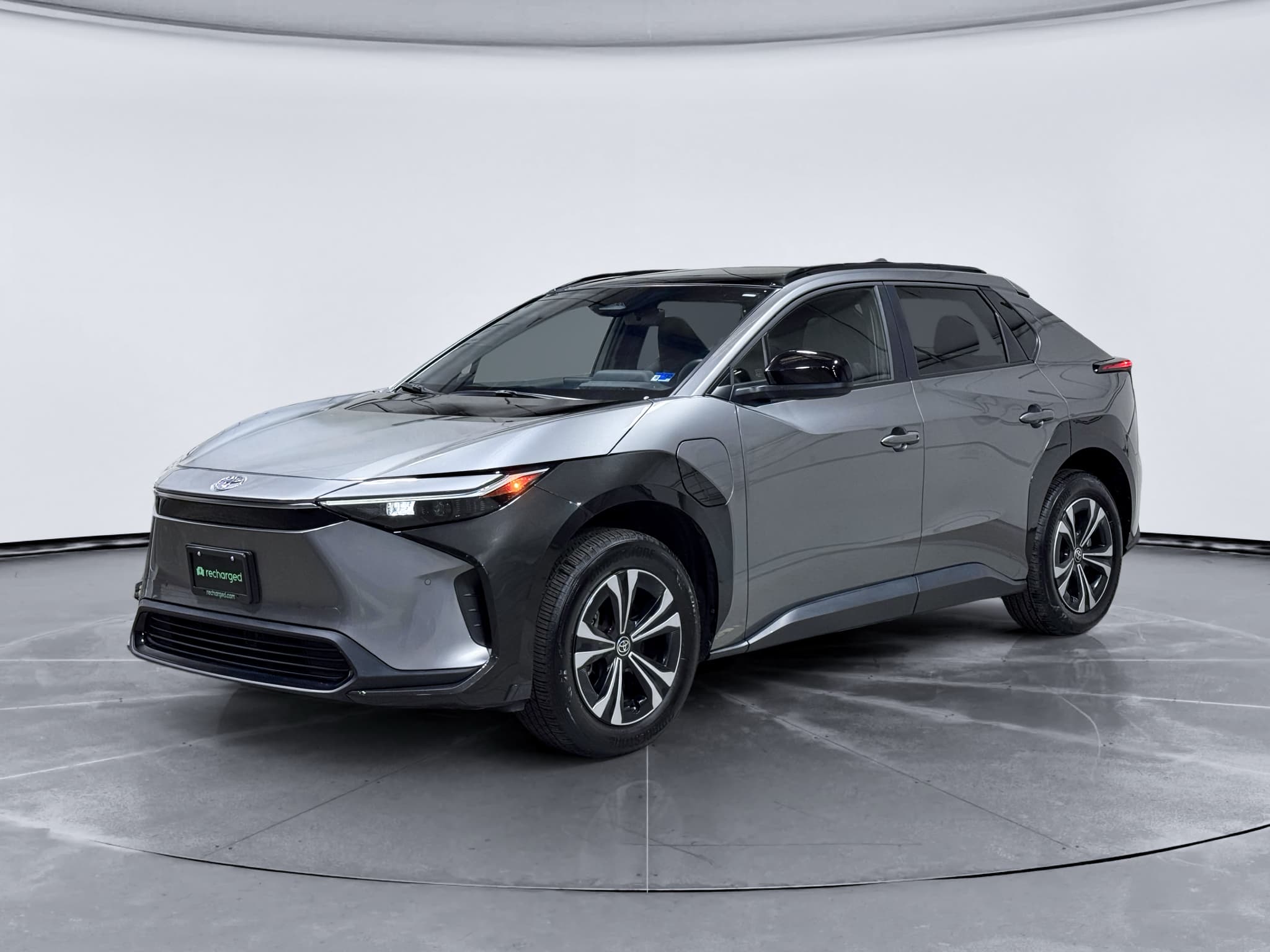
The Honda Prologue is Honda’s first mainstream long‑range EV SUV, built on GM’s Ultium platform with a large battery (around 85 kWh gross) and competitive range, roughly 296–308 miles for front‑wheel‑drive trims and just under 300 miles for all‑wheel drive, depending on model year and configuration. The Toyota bZ4X is Toyota’s first dedicated battery‑electric SUV. It uses a smaller battery pack (about 71–73 kWh) and typically delivers EPA ranges in the low‑ to mid‑200‑mile zone in the U.S., again depending on FWD vs. AWD and wheel size. It’s sized similarly to the Prologue but tuned more conservatively for charging and performance.
Quick answer: which is better for whom?
Who should pick which EV?
Use this as a shortcut before we dive into specs.
Choose the Honda Prologue if…
- You want longer range for road trips and fewer charging stops.
- You care about faster DC fast charging and stronger public‑network support.
- You want a roomier interior and more cargo flexibility.
- You’re planning to keep the vehicle long term and care about future resale in a competitive EV market.
Choose the Toyota bZ4X if…
- You prioritize brand familiarity and perceived reliability.
- You mostly drive short daily commutes and rarely fast‑charge.
- You find a good deal on a used bZ4X, especially FWD with better charging.
- You value Toyota’s conservative approach to battery longevity over outright specs.
Recharged tip
Key specs at a glance
Honda Prologue vs. Toyota bZ4X: core specs (typical U.S. trims)
Exact figures vary by trim and model year; always confirm the window sticker. These numbers reflect common 2024–2025 U.S. configurations.
| Spec | Honda Prologue (FWD) | Honda Prologue (AWD) | Toyota bZ4X (FWD) | Toyota bZ4X (AWD) |
|---|---|---|---|---|
| Battery (usable, approx.) | 83 kWh | 83 kWh | 71–72 kWh | 72–73 kWh |
| EPA range (est.) | ~296–308 mi | ~273–294 mi | ~228–252 mi | ~222–228 mi |
| Peak DC fast charge power | ≈150 kW | ≈150 kW | Up to 150 kW | ~100–150 kW (region/pack dependent) |
| Onboard AC charging | 11–11.5 kW | 11–11.5 kW | 6.6–11 kW (market dependent) | 6.6–11 kW (market dependent) |
| Drive layout | Single‑motor FWD | Dual‑motor AWD | Single‑motor FWD | Dual‑motor AWD |
| Platform | GM Ultium | GM Ultium | Toyota e‑TNGA | Toyota e‑TNGA |
The Prologue generally wins on range, charging hardware, and onboard AC charging power; the bZ4X is more conservative but efficient in the city.
Specs vs. reality
Range and efficiency comparison
Range is where the Honda Prologue separates itself most clearly. With an ~83 kWh usable battery, front‑wheel‑drive Prologues are rated around the 300‑mile mark, and even many AWD trims sit comfortably in the high‑200s. In mixed driving at U.S. highway speeds, that usually translates to realistic one‑way legs in the 220–250 mile range with a healthy buffer. The Toyota bZ4X’s battery is smaller. U.S. models typically deliver EPA ratings in the low‑ to mid‑200‑mile range: roughly 228–252 miles for FWD and closer to 222–228 miles for AWD, depending on wheels and year. On real interstate drives at 70–75 mph, that often feels like 170–200 miles before you’re looking for a charger.
Honda Prologue: range first
- Larger battery gives you extra buffer for winter, hills, and high speeds.
- Efficiency is competitive for a mid‑size SUV, typically around the mid‑3 mi/kWh range in mixed use.
- Because the pack is larger, you can run 20–80% and still have a meaningful real‑world window without constantly hitting 100%.
Toyota bZ4X: adequate but tighter
- Smaller pack means you feel every mile of cold‑weather or high‑speed penalty.
- City efficiency is good, but at U.S. freeway speeds the range advantage vs. competitors largely disappears.
- If your daily driving is 40–60 miles with home charging, range is fine; for road tripping, it’s tight compared with the Prologue.
Range verdict
Charging speed and road-trip ability
Once you leave your home charger, DC fast‑charging behavior becomes the difference between a comfortable road trip and a slog. On paper, both SUVs can hit about 150 kW in the best case. In practice, they behave very differently, especially in cold or moderate temperatures.
Charging hardware comparison
What matters isn’t just the peak number, it’s the whole curve.
Peak DC speed
Honda Prologue: Around 150 kW peak on 400‑V hardware, with a reasonably flat mid‑SOC curve by current standards.
Toyota bZ4X FWD: Can briefly reach ~150 kW in ideal conditions.
Toyota bZ4X AWD (NA): Practical peak often closer to ~100 kW or less.
Real-world charging curve
Owners and independent tests consistently report that Prologue‑class Ultium SUVs hold higher power longer in the mid‑pack (20–60%).
bZ4X, especially AWD, tends to taper sooner and is more sensitive to pack temperature, leading to longer 10–80% times in everyday conditions.
Typical 10–80% times
- Prologue: Expect roughly 25–35 minutes in good conditions, varying by charger.
- bZ4X FWD: Mid‑30s is realistic if the battery is warm and you hit a strong charger.
- bZ4X AWD: Often slower in practice; many owners report 35–50 minutes depending on weather and station.
Cold‑weather behavior matters
On the AC side, the Prologue’s 11–11.5 kW onboard charger means a 48‑amp Level 2 home unit can comfortably refill a near‑empty pack overnight. Many bZ4X trims in North America are limited to 6.6 kW AC, which lengthens full‑to‑empty home charges and can be a constraint if you regularly drive the pack down during the day.
Charging verdict
Space, comfort, and practicality
Both the Honda Prologue and Toyota bZ4X are two‑row compact crossovers on paper, but they’re packaged a bit differently. The Prologue stretches closer to mid‑size territory, while the bZ4X is more traditionally compact.
Honda Prologue: more family‑friendly
- Interior volume: Feels closer to a mid‑size SUV, with generous rear legroom.
- Cargo space: Plentiful room for strollers, sports gear, or road‑trip luggage; seats fold nearly flat.
- Ride comfort: Tuned on the comfortable side, with the added weight of the Ultium pack making it feel planted.
Toyota bZ4X: urban‑friendly footprint
- Interior space: Adequate for a family of four, but rear legroom and cargo are more in line with RAV4‑class crossovers.
- Cargo space: Fine for groceries, weekend bags, and kid gear but tighter than the Prologue on road trips.
- Ride quality: Comfortable and quiet around town; Toyota prioritized ease of use over sportiness.

Parking and maneuverability
Tech, driving experience, and safety
Both SUVs come loaded with the expected active‑safety and driver‑assist features: automatic emergency braking, lane‑keeping assistance, adaptive cruise control, and plenty of airbags. The differences are more about user interface, infotainment, and how the vehicles feel on the road.
Behind the wheel: feel and features
Driving feel
Prologue: Torquey and composed, especially in AWD form. Acceleration won’t shock a Tesla owner, but it’s brisk enough for easy passing and on‑ramps.
bZ4X: More modest performance, especially in FWD. Feels light and easy to place in town, but high‑speed punch is limited.
Infotainment & UX
Prologue: Modern, GM‑based infotainment with Google built‑in on many trims, solid EV‑specific displays, and decent route planning.
bZ4X: Toyota’s latest interface with improved graphics over older models, but EV‑specific trip planning and charging tools lag behind the best.
Safety & assists
Both come with robust safety suites (Honda Sensing and Toyota Safety Sense). Differences are in tuning and polish more than feature lists, and both are competitive with segment norms.
Tech verdict
Reliability, warranty, and battery health
Honda and Toyota both have strong reputations for longevity, but these are first‑ and second‑generation EVs for them, built on relatively new architectures. That means we lean more on design choices and early data than decades of field history.
- Both offer roughly 8‑year / 100,000‑mile high‑voltage battery warranties in the U.S., in line with industry norms.
- The Prologue’s Ultium pack is actively cooled and designed for high‑power fast charging; early data from sibling GM products suggests good thermal management when driven and charged as intended.
- Toyota has historically been extremely conservative with batteries. The bZ4X pack includes meaningful buffers (usable capacity lower than gross), and Toyota targets high retention over time, even if that means slower charging and a smaller usable window.
Early‑generation caution
From a battery‑health perspective, you can make a case either way: the bZ4X’s conservative charging limits should be kind to the pack, while the Prologue’s modern thermal management is designed for high‑power DC use without excessive degradation. The risk with any used EV is how the previous owner actually charged and stored it.
Pricing, incentives, and total cost of ownership
MSRPs move quickly, but the pattern in 2026 is clear: the Honda Prologue generally launches a bit higher in price than a comparably equipped bZ4X when new, reflecting its larger battery and more premium positioning. Toyota has often leaned on discounts and lease deals to move bZ4X inventory, especially in markets where it’s competing head‑to‑head with Korean and American EVs.
Cost factors that matter more than MSRP
Think in monthly cost, not sticker price
One more nuance: the Prologue’s larger battery and faster DC charging can reduce your reliance on the most expensive public chargers. On long trips you’ll still pay a premium versus home charging, but needing fewer and shorter stops can make the math more favorable compared with a bZ4X that must charge longer at each stop to cover the same distance.
Used market: which EV is likely to age better?
By 2026, early bZ4X models are already appearing on the used market in meaningful numbers. Prologues are just beginning to show up off lease and early financing terms. Predicting long‑term resale is always part art, part science, but some patterns are emerging across the EV market.
Resale dynamics: Prologue vs. bZ4X
Why the Prologue should hold value better
- Competitive range and charging relative to newer EVs improves its "shelf life" in the used market.
- Shared Ultium hardware with other GM products means parts and service knowledge are likely to be more available.
- Longer‑range EVs generally depreciate more slowly than short‑range counterparts, as buyer expectations rise.
Where the bZ4X still makes sense used
- Heavier earlier‑generation depreciation can create attractive upfront pricing.
- For low‑mileage, home‑charging commuters, the bZ4X’s limitations are less painful, making a discounted used example a rational choice.
- Toyota’s conservative battery strategy may ease concerns for buyers who plan to keep the car well past the warranty window.
How Recharged can help on the used side
How to choose: Honda Prologue vs. Toyota bZ4X
Step‑by‑step: decide which EV SUV fits you
1. Map your real driving patterns
Look at the last few months of driving. If you regularly exceed 150–180 miles in a day or road‑trip several times a year, the Prologue’s larger battery and stronger charging are a major advantage.
2. Be honest about fast‑charging needs
If you mostly charge overnight at home and rarely leave your metro area, the bZ4X’s slower DC performance is less of an issue. If you’ll rely on public DC fast charging, it’s a big issue.
3. Consider your climate
Colder climates penalize range and charging speed. In those regions, the Prologue’s extra buffer is valuable. A bZ4X in a warm, urban market is easier to justify than one doing winter road trips in the Rockies.
4. Decide how long you’ll keep the car
If you plan to keep the SUV 8–10 years, prioritize future‑proof range and charging. That tilts strongly toward the Prologue. If you’re buying used for a 3–5‑year window, a discounted bZ4X can pencil out.
5. Compare specific VINs, not just models
Trim, wheel size, and year all change range and charging behavior. On the used market, have the battery health checked and look for a transparent history. That’s where marketplaces like <strong>Recharged</strong> add real value.
6. Run the total‑cost numbers
Use realistic electricity prices, your own mileage, and actual asking prices. With Recharged, you can see financing options and compare different EVs on monthly cost, including trade‑in or instant‑offer value for your current vehicle.
FAQ: Honda Prologue vs. Toyota bZ4X
Frequently asked questions
Bottom line: which electric SUV is better in 2026?
If you boil it down, the Honda Prologue is the better all‑round electric SUV for most U.S. drivers in 2026. It offers more usable range, stronger DC fast‑charging behavior, quicker AC home charging, and a roomier interior, all of which matter as EV expectations move upmarket. It’s the one you choose if you want an EV that still feels competitive eight years from now.
The Toyota bZ4X is harder to recommend as a do‑everything EV SUV, but it has a clear niche: a well‑priced commuter crossover for buyers who mostly charge at home, rarely fast‑charge, and place a premium on Toyota’s conservative approach to batteries. On the used market, especially, a discounted bZ4X can be a rational choice if you know its limitations and your own driving reality.
If you’re trying to decide between specific Prologue and bZ4X listings, consider working through a marketplace that actually understands EVs. At Recharged, every used EV comes with a Recharged Score battery‑health report, transparent pricing, and EV‑specialist support from test‑drive to nationwide delivery. That way, whether you land on the Prologue or the bZ4X, you’re not guessing about the most important, and most expensive, component in the vehicle.