If you’re considering a plug-in hybrid, or already own one, you’re probably wondering how plug in hybrid maintenance really works. Do you need constant dealer visits because there’s both an engine and a battery, or do you actually end up with fewer headaches than a traditional gas car? This guide walks you through what’s unique about PHEV maintenance, what it costs in the real world, and how to keep a plug-in hybrid running smoothly for the long haul.
Quick definition
Why plug-in hybrid maintenance matters
Plug-in hybrid ownership by the numbers
Maintenance isn’t just about oil changes and tires anymore. With a plug-in hybrid, you’re maintaining two propulsion systems and the software that coordinates them. Done right, that combination can lower your running costs and emissions. Done poorly, skipping coolant services, ignoring software updates, or buying a neglected used PHEV, it can turn into expensive repairs.
Why this matters for used buyers
How plug-in hybrid maintenance differs from gas and EVs
Compared with a gas-only car
- Fewer oil changes: The engine often runs less because you’re driving on electricity in town.
- Longer brake life: Regenerative braking lets the motor slow the car, so pads and rotors last longer.
- Similar wear items: You still have spark plugs, fluids, filters, belts, and sometimes a traditional automatic or CVT.
- Extra cooling circuits: Many PHEVs add dedicated coolant loops for the battery, inverter, or onboard charger.
Compared with a full EV
- More moving parts: You still have an engine, exhaust, and sometimes a multi-speed transmission.
- More fluids: Oil, engine coolant, and possibly transmission fluid join EV-specific coolants.
- Higher complexity: The car has to juggle gas and electric power, which means more computers and software.
- Slightly higher maintenance: Full EVs sit at the bottom of the cost curve, but PHEVs still beat gas cars for many drivers.
Think in miles, not years
Real-world plug-in hybrid maintenance costs
Plug-in hybrids are often cheaper to maintain than gas-only cars, but more involved than full EVs. Government and industry data typically place average plug in hybrid maintenance at around $0.09–$0.10 per mile for gas versus about $0.09 or slightly below for PHEVs, and closer to $0.06 for full EVs. For a 10,000-mile year, that’s roughly $900 in maintenance for a gas car, about $800–$900 for a plug-in hybrid, and $600 for a comparable EV.
Typical maintenance cost per mile by vehicle type
Approximate averages over the life of the vehicle, excluding fuel and insurance.
| Vehicle type | Maintenance cost per mile* | Estimated cost over 100,000 miles |
|---|---|---|
| Gasoline | $0.10 | $10,000 |
| Hybrid (non plug-in) | $0.094 | $9,400 |
| Plug-in hybrid | ≈$0.09 | ≈$9,000 |
| Battery-electric | $0.061 | $6,100 |
Plug-in hybrids usually land between gas and full EVs for maintenance costs.
What the averages hide
Where plug-in hybrids can get expensive is at the extremes: high-mileage highway driving that rarely uses the battery, or long-term ownership beyond the battery warranty. That’s when neglected fluids, old spark plugs, or a failing high-voltage battery can show up in your repair bills.
Core maintenance items for plug-in hybrids
Under the skin, a plug-in hybrid still needs traditional car care, just on a slightly different cadence. Here are the key items most owners will deal with over time.
Key plug-in hybrid maintenance tasks
What needs service, and roughly how often
Engine oil & filter
Typical interval: 7,500–10,000 engine miles or 12 months, whichever comes first.
Because the engine doesn’t always run, some manufacturers base oil changes on time and engine run-time rather than odometer miles. Many PHEVs can safely go longer between oil changes than their gas-only twins, but you still need to respect the time limit.
12V battery & accessories
PHEVs still use a conventional 12V battery for accessories, computers, and safety systems. Expect replacement every 4–6 years, just like a regular car, especially in hot or very cold climates.
High-voltage components
The electric motor and inverter are largely maintenance-free, but they often share coolant with the battery and charger. Keeping those circuits serviced is critical to long-term reliability.
Cooling system(s)
Typical interval: 8–10 years or 100,000+ miles for hybrid/EV coolant, shorter for engine coolant on some models.
Many plug-in hybrids have one coolant loop for the engine and one or more for the battery and power electronics.
Brakes & tires
Regenerative braking dramatically extends pad and rotor life, 100,000 miles isn’t unusual, but tires can wear faster thanks to extra weight and instant torque. Regular rotation and alignment are cheap insurance.
Transmission & driveline
Some PHEVs use an eCVT with minimal service needs, while others pair an electric motor with a conventional automatic. Check your owner’s manual: some units are “lifetime fill” while others call for fluid changes around 60,000–100,000 miles.
Don’t ignore the maintenance minder
Battery and cooling system care
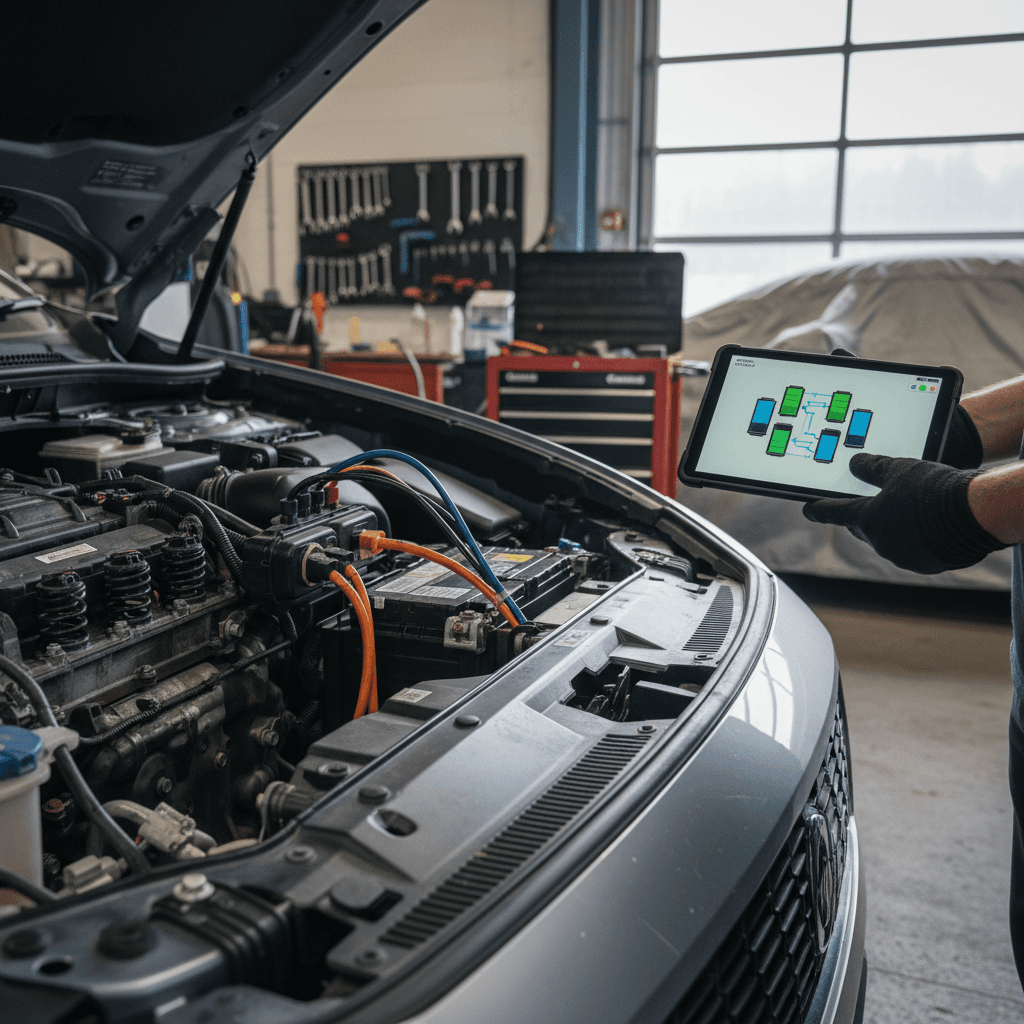
For plug-in hybrids, the high-voltage battery is both the biggest maintenance wildcard and the component that scares used buyers the most. The good news: most packs last well beyond the 8–10-year warranty if they’re kept cool and properly managed. The bad news: replacement can cost $2,000–$8,000 or more, depending on size and model.
- Avoid parking for days in direct summer sun if you can; heat is harder on batteries than cold.
- Use scheduled charging so the pack isn’t sitting at 100% all night, if your car supports it.
- Don’t worry about occasionally using fast charging, but try not to rely on it every single day.
- Have the battery and cooling system inspected if you notice sudden range loss, frequent fan noise, or warning lights.
- Keep cabin and battery air filters (if equipped) clean so cooling airflow isn’t restricted.
Use your electric miles
Software, recalls, and reliability trends
Plug-in hybrids aren’t just mechanical systems; they’re software platforms on wheels. Battery management, engine start/stop logic, and even climate control are governed by code. Over-the-air updates and dealer flashes increasingly tweak how these systems behave, sometimes to improve reliability or reduce wear.
Why updates matter
Reliability data over the last few years paints a mixed picture. Plug-in hybrids are maturing, but they still tend to report more problems than simpler hybrids or gas cars. The most common trouble spots include charging-system glitches, infotainment bugs, and occasional issues with battery or engine cooling components. That makes attentive maintenance, and good diagnostic tools, especially valuable.
“Mechanically, modern plug-in hybrids are less fragile than their reputation suggests. The real risk lives in software, cooling, and whether early owners actually followed the service schedule.”
DIY vs dealer service for plug-in hybrids
What you can DIY safely
- Tires and brakes: Rotations, pad inspections, and even pad replacements are similar to any modern car.
- Cabin air filters: Many are accessible behind the glove box and can be changed in minutes.
- Washer fluid & wipers: Easy, no high voltage involved.
- Basic 12V checks: Battery terminals, fuses, and accessory troubleshooting.
If you’re comfortable working on a late-model gas car, you can safely handle these items on a PHEV.
What to leave to professionals
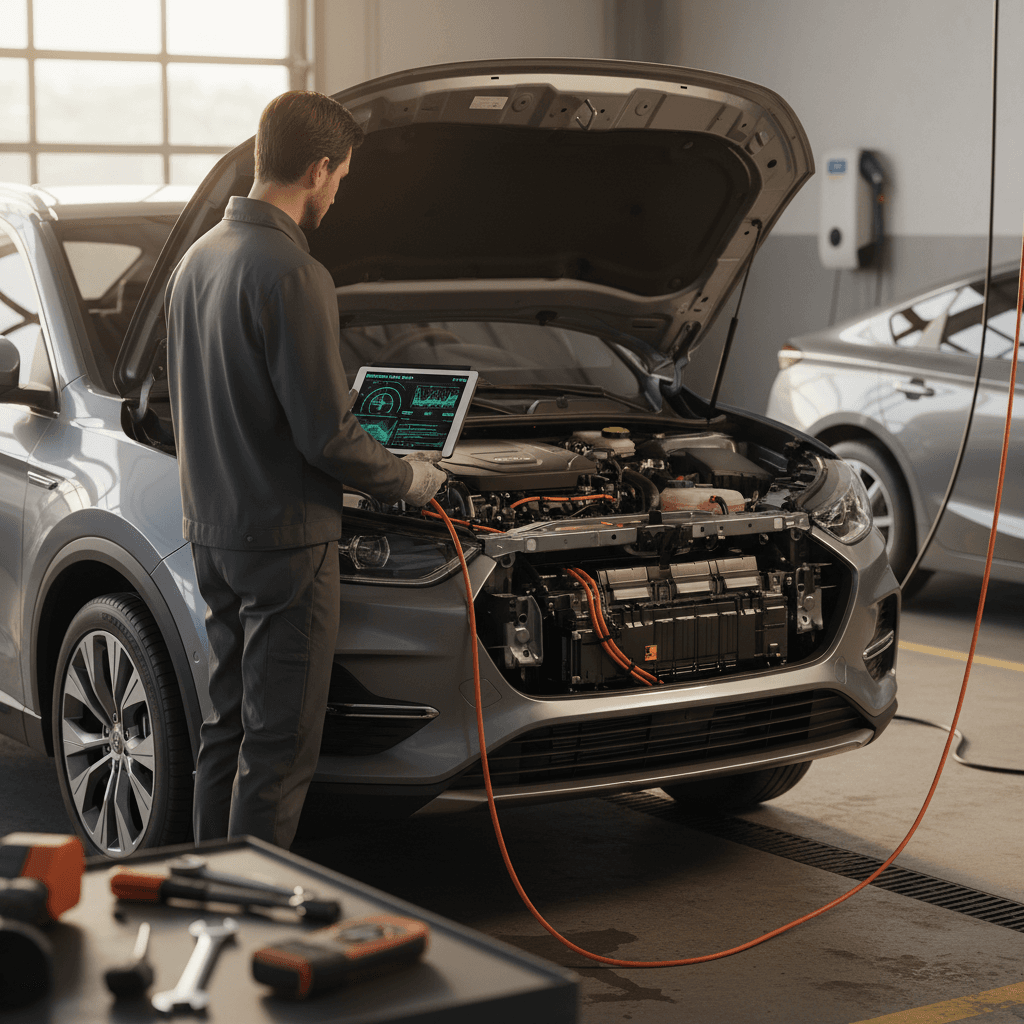
- High-voltage work: Anything involving the main battery, orange cables, or inverter requires special training and PPE.
- Hybrid coolant circuits: Air pockets or contamination can damage expensive components.
- Software and control modules: Mis-coding a control unit can brick a car or disable safety systems.
- Complex driveline repairs: Transaxles that blend engine and motor require brand-specific knowledge.
For these jobs, a dealer or independent shop with hybrid experience is worth the premium.
High-voltage safety first
Buying a used plug-in hybrid: maintenance checklist
Used plug-in hybrids can be terrific values: lower fuel and maintenance costs, with prices now competing directly with conventional used cars. But you’re inheriting the previous owner’s maintenance decisions, so you want as much transparency as possible.
Used plug-in hybrid maintenance checklist
1. Confirm battery warranty coverage
Check the in-service date and mileage to see how much of the 8–10-year hybrid battery warranty remains. In some states, coverage can extend to 10 years/150,000 miles for emissions-related components.
2. Review maintenance records
Look for regular oil changes, coolant services, and any hybrid system inspections. Gaps in the service history, especially in the first 5 years, are yellow flags.
3. Test electric range and charging
Charge the car fully and compare real-world electric range to original EPA estimates. A modest drop is normal; a drastic reduction may signal battery issues.
4. Check for warning lights and recalls
Before buying, scan for codes and ensure all open recalls, particularly hybrid or battery-related campaigns, have been completed.
5. Inspect tires and brakes
Uneven tire wear can indicate alignment issues from the extra weight. Very thin brake pads on a low-mile PHEV may suggest hard driving or sticky calipers.
6. Get a hybrid-focused inspection
Traditional pre-purchase inspections may ignore battery health and cooling systems. At Recharged, every vehicle gets a <strong>Recharged Score Report</strong> with verified battery diagnostics and a transparent condition summary.
How Recharged can help
Ready to find your next EV?
Browse VehiclesCommon plug-in hybrid maintenance myths
Plug-in hybrid maintenance myths vs reality
Separating marketing talk from real-world ownership
Myth 1: “PHEVs are maintenance nightmares.”
Reality: You are maintaining more systems than on a gas car or full EV, but the core hardware, engines, motors, and batteries, has matured significantly. For many owners, routine maintenance is predictable and affordable, especially when the car is charged regularly.
Myth 2: “The battery will definitely fail around year 8.”
Reality: Warranty terms are conservative and many batteries keep delivering usable range well beyond them. Heat, fast charging habits, and cooling-system health matter more than a magic birthday on the calendar.
Myth 3: “Oil changes are unnecessary if I always drive electric.”
Reality: Even if the engine rarely runs, oil ages with time and short warm-up cycles. Skipping oil changes because the odometer shows few miles is an easy way to shorten engine life.
Myth 4: “Any mechanic can service a plug-in hybrid.”
Reality: Basic items are the same, but high-voltage and hybrid cooling work require training and equipment. A shop that treats a PHEV like any other car can do real damage.
Plug-in hybrid maintenance FAQ
Frequently asked questions about plug-in hybrid maintenance
Bottom line: When a plug-in hybrid makes sense
Plug-in hybrids sit in a middle lane between gas cars and full EVs. On the maintenance side, they’re not the nightmare some fear, nor are they completely hands-off. If you charge regularly, respect the service schedule, and pay attention to battery and cooling health, plug in hybrid maintenance can be predictable and surprisingly affordable, often cheaper than a comparable gas car, though still a bit higher than a pure EV.
If you’re weighing a plug-in hybrid against a used EV or traditional hybrid, think about how you really drive and where you’ll charge. Then, focus on transparency: documented service history, battery health information, and a clear picture of long-term costs. That’s exactly what Recharged was built for, helping you compare options, understand trade-offs, and choose a vehicle that fits your budget, your driving, and your appetite for maintenance.