If you’re shopping for an electric vehicle in 2026, you’re almost guaranteed to hit the same crossroads: PHEV vs BEV – which is better for you? Plug‑in hybrids promise gas‑backup security, while battery electrics offer simpler tech and zero tailpipe emissions. The right answer depends less on ideology and more on how you actually drive, where you can charge, and how long you plan to keep the car.
Where the market sits in 2026
PHEV vs BEV in 2026: Quick overview
Snapshot: PHEVs and BEVs in 2026
From a policy and automaker perspective, BEVs are the endgame. Most zero‑emission targets for 2035 and beyond are written around battery electric sales. But for individual households in 2026, PHEVs can still make more sense in specific use cases – especially where home charging is tricky or long‑distance driving dominates. The rest of this guide walks through the trade‑offs so you can make a decision that holds up over a full ownership cycle, not just a test drive.
How PHEVs and BEVs actually work
What is a PHEV?
A plug‑in hybrid electric vehicle pairs a battery and electric motor with a gasoline engine and fuel tank. You charge it like an EV, usually overnight at home, and drive on electricity until the battery is depleted. After that, it behaves like a conventional hybrid, automatically blending engine and motor power.
- Battery: typically 10–25 kWh
- Electric range: about 25–60 miles in real‑world use
- Fueling: plug in for daily driving, use gas on longer trips
What is a BEV?
A battery electric vehicle has no gasoline engine at all. It’s powered solely by a large traction battery and one or more electric motors. When the battery is empty, you must plug in – there’s no backup.
- Battery: typically 50–100 kWh today
- Range: roughly 200–350 miles EPA‑rated, depending on model
- Fueling: home charging + public Level 2 and DC fast charging
Think in systems, not labels
Key PHEV vs BEV differences that matter in 2026
Core trade‑offs: PHEV vs BEV
What you actually feel in real‑world ownership
Upfront price
PHEVs often start cheaper than comparable BEVs, especially new, because they use smaller batteries. But aggressive BEV discounting and incentives in 2025–2026 have narrowed the gap on many models.
Electric miles vs gas
BEVs live on electrons 100% of the time. PHEVs deliver big savings only if you plug in consistently and stay within their electric range most days.
Complexity
PHEVs carry both an engine and an EV drivetrain. BEVs delete hundreds of moving parts – no oil changes, exhaust, or multi‑gear transmissions.
More 2026 considerations
What’s changed compared with early‑EV days
Charging network
Public fast charging has expanded dramatically since 2020, but coverage is still patchy away from major corridors. PHEVs smooth over those gaps; BEVs demand a bit more planning.
Regulations & access
Cities and states are increasingly favoring zero‑emission vehicles with perks like HOV access or future ICE restrictions. BEVs are fully aligned; PHEVs may see benefits shrink over time.
Future‑proofing
Automakers are redirecting R&D toward BEVs. In 2026, you already see more new BEV nameplates than new PHEVs, which matters for long‑term parts, software support, and resale.

Cost of ownership: PHEV vs BEV
By 2025, data from multiple analysts showed that the average new BEV transaction price in the U.S. had fallen roughly in line with comparable gas vehicles, thanks to price cuts and incentives. PHEVs usually slot in between the two: more expensive than a pure ICE car, but often slightly cheaper than a long‑range BEV on the same platform. That’s the sticker price story. Total cost of ownership over 5–8 years can look very different.
Typical 5‑year ownership costs (high‑level)
Illustrative comparison for a compact SUV class in the U.S., assuming ~12,000 miles/year and average 2025–2026 energy prices.
| Category | Modern ICE SUV | PHEV SUV | BEV SUV |
|---|---|---|---|
| Purchase price | $0 baseline | +$3k–$6k | +$4k–$8k |
| Fuel/energy cost | 100% gas | 40–70% lower if you plug in | 60–80% lower vs gas |
| Maintenance | Baseline | Slightly higher than ICE (two systems) | Lower (no engine/exhaust) |
| Incentives (US) | Limited | Often eligible, varies | Often strongest incentives |
| Depreciation risk | Tied to gas prices | Tied to gas + EV demand | Tied mainly to EV demand/battery health |
Numbers are directional, not specific to any one model; always compare real quotes and local utility rates.
The fine print on PHEV fuel savings
BEVs tend to win the long‑term cost race if you: (1) drive a typical or high annual mileage, and (2) have access to reasonably priced home or workplace charging. PHEVs shine in edge cases: low annual mileage, unreliable charging access, or scenarios where gas backup prevents you from spending heavily on public fast charging.
Range, charging and road‑trip convenience
For many U.S. households, the average workday looks like 30–40 miles of driving – well inside the electric range of a typical PHEV and trivial for any BEV. The anxiety shows up at the edges: winter cold snaps, late‑night errands when the battery is low, or multi‑state road trips where public charging quality varies wildly.
Living with a PHEV
- Daily driving: If you plug in at home, most commutes and errands can be covered on electricity alone.
- Road trips: You simply treat it like a gas car – stop at any gas station, ignore charging maps if you want.
- Downside: You still have oil changes, engine warm‑up in cold weather, and the occasional jolt when the engine kicks in on the highway.
Living with a BEV
- Daily driving: Plug in overnight; you leave each morning with a “full tank” for normal use.
- Road trips: You plan around DC fast chargers. In 2026, coverage along major interstates is good, but rural gaps remain.
- Downside: You must think about charging stops, weather impacts on range, and peak‑time congestion at some sites.
Charging network reality check
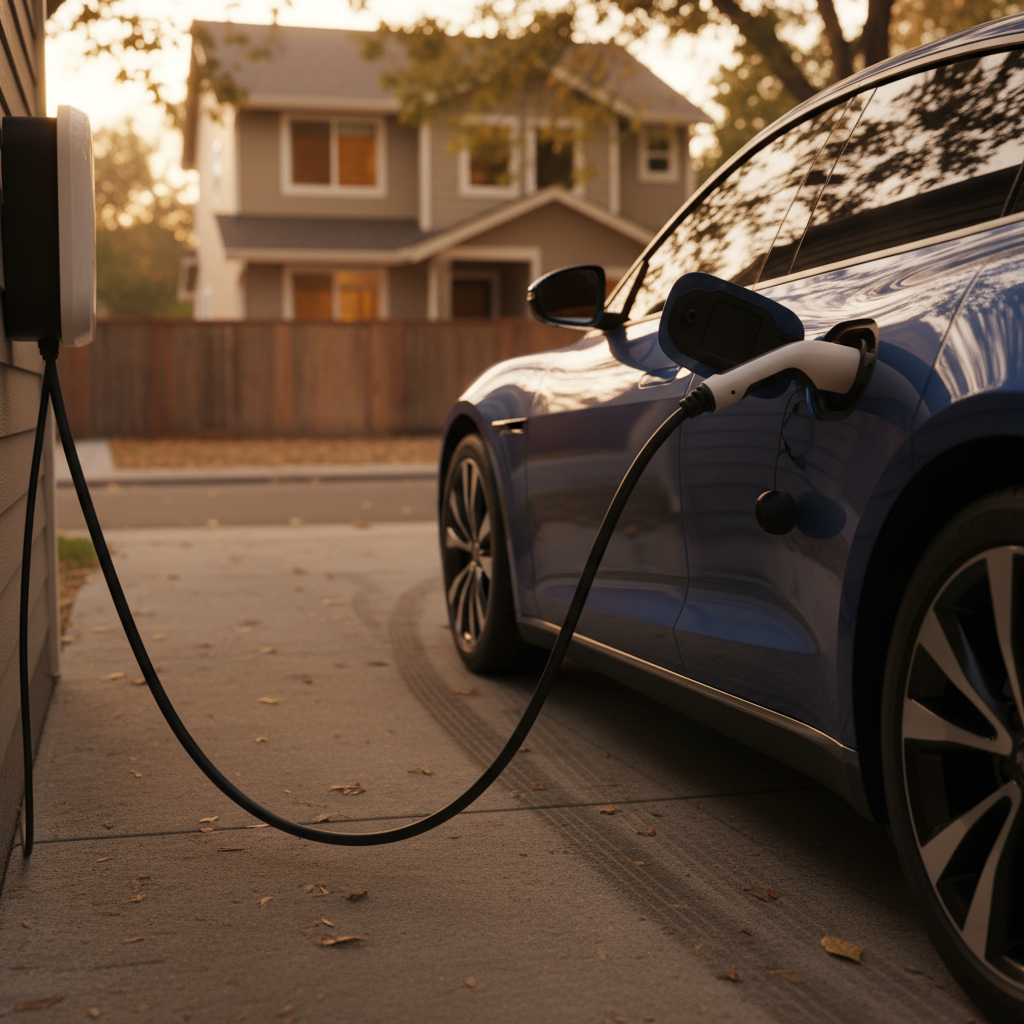
- If you live in a single‑family home with off‑street parking and can install Level 2 charging, a BEV becomes dramatically easier to live with.
- If you rent, rely on street parking, or move frequently, a PHEV shields you from unreliable or nonexistent home charging.
- If your regular trips mix a short commute with occasional 500‑mile days, either a long‑range BEV or a well‑specced PHEV can work – the trade‑off is planning vs complexity.
Emissions, regulations and future policy risk
On paper, PHEVs can deliver near‑BEV lifecycle emissions when they’re driven mostly on electricity. In practice, usage matters more than the badge. A PHEV that rarely gets plugged in can emit almost as much CO₂ as a regular hybrid. A BEV charged on a relatively clean grid will usually undercut both over the life of the vehicle.
Policy trends that favor BEVs
Why long‑term rules tilt away from combustion
2035 and beyond
Many jurisdictions, including California and several other states, have rules on the books that phase out most new internal‑combustion sales around 2035. PHEVs may qualify in early years but are unlikely to be treated as true zero‑emission long‑term.
Urban access & fees
Globally we’re seeing more low‑emission or zero‑emission zones in dense city centers. BEVs fit cleanly into that future; PHEVs may face restrictions if local rules focus on tailpipe emissions, not rated efficiency.
Company‑car and fleet lessons
Reliability, maintenance and battery health
Reliability is where the elegance of BEVs really shows. Dropping the engine, exhaust, and multi‑gear transmission simplifies the car dramatically. But battery health and charging behavior introduce new variables, especially if you’re shopping used.
Mechanical complexity and upkeep
High‑level comparison of typical maintenance and failure points.
| Area | PHEV | BEV |
|---|---|---|
| Powertrain hardware | Engine + motor + transmission + battery | Motor(s) + battery, no engine/exhaust |
| Routine service | Oil changes, filters, spark plugs, coolant + EV‑side checks | Tire rotations, cabin filter, brake fluid, coolant for battery/drive unit |
| Failure modes | Everything that can fail on an ICE + EV components | Inverters, battery modules, onboard charger, cooling system |
| Battery stress | Often cycled shallowly if mostly used as hybrid | Larger pack, but deeper cycling in daily use |
Individual models vary; always check service campaigns and recall history for the specific vehicle you’re considering.
Used buyers: insist on real battery data
In 2026, most mainstream BEVs have enough real‑world track record to show that degradation is usually gradual when owners avoid chronic fast‑charging and high states of charge. PHEV batteries tend to be smaller and cycled less deeply, which can help longevity, but they also receive less aftermarket attention – making independent health checks more important on the used market.
Used‑market realities and resale value
The last two years have been a reset for EV residual values. Rapid new‑car price cuts, richer incentives, and steadily improving tech (range, charging speed, driver‑assistance) have pulled used prices down across the board – especially for early BEVs with short range. PHEVs, which appeal to a more cautious mainstream buyer, sometimes hold value better, but they’re also vulnerable to tightening emissions rules and fuel‑economy standards.
How PHEVs and BEVs behave on the used market
What we’re seeing as of 2026
BEVs
Best resale: newer, long‑range models with DC fast charging and strong charging‑network access. Biggest discounts: short‑range early BEVs and models hit hard by new‑car price cuts.
PHEVs
Hold value well where charging is scarce or gas prices are high. At risk in cities or regions signaling tighter ICE restrictions where buyers expect to shift fully to BEVs.
Why diagnostics matter
On any used plug‑in, a clean history, verifiable battery health, and transparent pricing are more important than the label. This is exactly what the Recharged Score Report is designed to surface for buyers.
PHEV vs BEV: Who should choose which?
Different drivers, different answers
Choose a BEV if…
You can install (or already have) home Level 2 charging in a garage or driveway.
Your typical weekday driving is under ~150 miles, with only occasional long trips.
You prioritize lower long‑term running costs and simpler maintenance over having a gas backup.
You live in or near a metro area with growing DC fast‑charging coverage, including multi‑network options.
You care about long‑term policy alignment – access to future zero‑emission zones, HOV perks, and potential congestion pricing carve‑outs.
Choose a PHEV if…
You can’t count on home charging – for example, you park on‑street or move frequently.
Your household regularly does very long highway days where charging stops would add too much time or stress.
You’re not ready to bet your road‑trip sanity on public charging reliability in your region yet.
You want to cut fuel use sharply on short trips but aren’t chasing perfect zero‑emission driving.
You’re looking at a specific PHEV model with a strong track record and enough electric range to cover your daily routine.
One underrated option: two‑car households
Decision checklist: Narrow it down in 10 minutes
10‑minute PHEV vs BEV decision checklist
1. Map your real mileage
Look at your last month of driving – odometer readings, smartphone location history, or your car’s app. How many miles is a typical weekday? How often do you exceed 150–200 miles in a day?
2. Audit your charging reality
Be honest: Can you reliably plug in at home overnight? If not, is workplace charging or a nearby, consistently available public charger realistic for daily use?
3. Stress‑test your edge cases
List your 3–5 longest regular trips per year. Could you reasonably cover them in a modern BEV with a couple of fast‑charge stops, or would that feel like a deal‑breaker?
4. Decide your ownership horizon
If you tend to keep cars 8–10 years, leaning toward BEVs aligns better with policy and technology trends. Shorter ownership windows can make a well‑chosen PHEV more reasonable.
5. Run a hard‑number TCO comparison
Compare at least one PHEV and one BEV using real local electricity and gas prices, insurance quotes, and expected incentives. Tools from utilities or independent calculators can help, but don’t forget maintenance line items.
6. Plan your buying channel
If you’re considering used, look for marketplaces that specialize in EVs and provide <strong>independent battery‑health reporting</strong>, like the Recharged Score. That’s more important to long‑term cost than whether you choose PHEV or BEV.
FAQ: PHEV vs BEV in 2026
Frequently asked questions
Bottom line: PHEV vs BEV in 2026
In 2026, the honest answer to “PHEV vs BEV, which is better?” is: neither, in the abstract. BEVs line up better with where policy, technology, and economics are headed – especially if you can charge at home and keep your daily mileage modest. PHEVs remain a rational compromise for drivers who can’t count on home charging or who routinely push beyond today’s DC fast‑charging network.
If you’re leaning toward a used plug‑in, the real leverage is in buying the right individual vehicle: verified battery health, clear pricing relative to the market, and guidance that matches the car to your actual use case. That’s exactly the problem Recharged was built to solve – from the Recharged Score battery report to EV‑specialist support and nationwide delivery. Once you’ve clarified your own driving reality, choosing between PHEV and BEV stops being an abstract debate and becomes a straightforward, data‑driven decision.