If you live in Pennsylvania and you’re thinking about going electric in 2026, the Pennsylvania electric car rebate can still take a real bite out of your out‑the‑door price, especially if you’re eyeing a used EV. The details have changed over the last couple of years, and some federal perks have disappeared, so it’s worth getting clear on what’s actually on the table before you shop.
Quick snapshot for 2026
Overview: Pennsylvania EV rebates in 2026
Pennsylvania does not offer a separate "EV tax credit" the way the federal government used to. Instead, the state runs a mail‑in cash rebate program administered by the Department of Environmental Protection (DEP) under the Alternative Fuels Incentive Grant umbrella. For 2026, the consumer‑facing piece is the Alternative Fuel Vehicle Rebate Program.
Pennsylvania EV rebate 2025–2026 at a glance
Exact rebate amounts and income thresholds vary by vehicle type, purchase price, and buyer income, and the program guidelines are updated periodically. The numbers in this guide reflect 2025–2026 program structures and widely reported ranges; always confirm the latest details on the DEP’s AFV Rebate page right before you sign paperwork.
Why this matters now
How the PA Alternative Fuel Vehicle Rebate works in 2026
The AFV Rebate is a post‑purchase cash rebate. You buy or lease an eligible vehicle, register it in Pennsylvania, then submit an online application with supporting documents. If you’re approved and funding is still available for the program year, DEP sends you a rebate check.
- Program year runs roughly from July 1, 2025 through June 30, 2026, or until funds run out.
- Applies to new and one‑time pre‑owned battery electric vehicles (BEVs), plug‑in hybrids (PHEVs), and some other alternative‑fuel vehicles.
- Vehicle must be titled and registered in Pennsylvania and purchased/leased from a dealer (not a private seller in most cases).
- You must apply within a set window after purchase, typically within 6 months.
- Rebate amounts are higher for BEVs than PHEVs and usually higher for lower‑income buyers.
Rebate vs. tax credit
2026 rebate amounts for new vs. used electric cars
Official program guidelines are the final word on rebate amounts, but recent program years give us a solid picture of how much you can expect. Here’s a simplified view of typical ranges buyers have seen under the retooled program leading into the 2025–2026 year:
Typical Pennsylvania AFV rebate ranges (2025–2026 style tiers)
Illustrative ranges based on recent PA program structures. Always confirm current amounts on the DEP website before you buy.
| Vehicle type | New or used? | Approx. base rebate | Potential low‑income bonus | Notes |
|---|---|---|---|---|
| Battery electric vehicle (BEV) | New | $1,500–$2,000 | + up to $1,000 | Higher rebate for lower purchase price and lower household income |
| Battery electric vehicle (BEV) | One‑time used | $1,000–$1,500 | + up to $1,000 | Used EVs often get slightly lower base rebate but still meaningful |
| Plug‑in hybrid (PHEV) | New | Around $1,000–$1,500 | + up to $1,000 | Rebate may scale with electric range and price cap |
| Plug‑in hybrid (PHEV) | One‑time used | Around $750–$1,000 | + up to $1,000 | Check battery size and electric range in program rules |
| Electric motorcycle | New or one‑time used | Around $500 | May offer low‑income bonus | Smaller amounts but still offsets purchase price |
Higher rebates generally go to full battery EVs and income‑qualified buyers, with smaller amounts for PHEVs and motorcycles.
Treat these as estimates, not guarantees
Income limits and vehicle price caps
Pennsylvania’s AFV Rebate is designed to favor working‑ and middle‑income buyers choosing reasonably priced vehicles. That shows up in two ways: income limits and vehicle price caps.
How income and price affect your 2026 Pennsylvania EV rebate
Why the same car can earn one buyer more than another
Income tiers
Rebate tables use household income bands. Lower‑income households may qualify for:
- Higher base rebate amounts, and/or
- An extra $1,000 low‑income bonus.
Income is typically based on your latest federal tax return, so have that handy when you apply.
Vehicle price caps
Vehicles over a certain purchase price don’t qualify. Recent guidance has pointed to caps in the ballpark of the mid‑$40,000s for cars, with lower caps for used EVs.
That means a lightly used compact EV may qualify while a luxury performance model won’t.
Practical shopping tip
Who qualifies? Eligibility rules in plain English
The official guideline PDF runs several pages, but most individual buyers can think in terms of a few core tests. You’re likely in good shape if you can answer “yes” to all of these.
Pennsylvania AFV rebate checklist for 2026
You’re a Pennsylvania resident
You have a valid PA address, register and insure the vehicle in Pennsylvania, and you’re the first Pennsylvania owner if it’s used.
Your vehicle is on the eligible list
It’s a battery electric or plug‑in hybrid vehicle (or qualifying alternative‑fuel vehicle) that meets the program’s minimum electric range and technical requirements.
You bought or leased from a dealer
The vehicle was purchased or leased from a licensed dealer, often with an itemized bill of sale. Private‑party purchases typically don’t qualify unless specifically allowed.
You meet income guidelines
Your household income for the relevant tax year falls within the rebate program’s income limits for at least the base rebate (and potentially the low‑income bonus).
You’re under the price cap
The vehicle’s purchase price (before taxes and fees) is below the program’s cap for its category and whether it’s new or one‑time used.
You apply on time with full paperwork
You submit a complete application within the required window, usually six months from purchase, with all supporting documents uploaded clearly.
Easy ways to lose eligibility
Step-by-step: How to claim the Pennsylvania EV rebate
Once you’ve picked an eligible EV, the rebate process is straightforward but detail‑sensitive. Here’s how to move from test drive to check in the mail.
Your application game plan
1. Confirm eligibility before you buy
Before you sign, cross‑check the VIN or at least the exact make, model, year, trim, and battery size against the latest AFV Rebate vehicle list and guidelines. Ask the dealer to confirm they’ve sold cars into the program before.
2. Keep every piece of paperwork
Save the purchase or lease agreement, itemized bill of sale, registration, proof of PA address, and any financing documents. You’ll need clean PDF scans or photos for the online application.
3. Register and insure the car in PA
Make sure your title, registration, and insurance all show Pennsylvania as the garaging state. DEP uses this to verify that the vehicle is actually in use here.
4. Apply online through DEP
Visit the AFV Rebate portal, create or log into your account, and complete the application form. Double‑check VIN, odometer, and purchase date entries; typos are a common reason for delays.
5. Upload clear, legible documents
Blurry phone pics can cause headaches. Combine multi‑page documents into single PDFs where possible, and label files clearly (e.g., "Purchase_Agreement" vs. "scan001").
6. Track status and respond quickly
DEP may request clarification or additional documentation. Respond promptly to keep your application moving and avoid falling past the program year’s funding cutoff.
How long until you get the check?

Stacking savings: State rebates vs. other EV incentives
In 2026, the incentive landscape is more complicated than it was a few years ago. The big federal clean vehicle tax credits for most new and used EV purchases ended for deliveries after September 30, 2025, but there are still a few levers you can pull to reduce your total cost of ownership.
What’s largely gone in 2026
- Federal clean vehicle tax credit for most new/used EV purchases after late 2025.
- Some home electrical upgrade credits that previously offset panel work for chargers.
- Many one‑off automaker incentives tied to passing the federal credit through at the point of sale.
What you can still stack with PA’s rebate
- Manufacturer rebates or APR deals on specific EV models.
- Utility‑bill savings from charging off‑peak or on special EV time‑of‑use rates.
- Occasional home charger rebates or bill credits from utilities or local programs.
- Insurance and maintenance savings versus a comparable gasoline car over several years.
Think in terms of total cost, not just the sticker
Hidden costs: Road User Charge and other fees
Starting April 1, 2025, Pennsylvania added a Road User Charge (RUC) for EV owners to help fund road and bridge work, replacing the gas tax you’re no longer paying at the pump. If you’re buying an EV in 2026, you need to factor that line item into your budget.
- The RUC is a yearly charge specifically for EV owners, administered through PennDOT.
- Details can change, but conceptually it’s designed to approximate what the average driver contributes through gas taxes.
- You’ll see it when you register or renew registration on an EV registered in Pennsylvania.
- It doesn’t cancel out the AFV Rebate, but it does slightly reduce your net annual savings compared to a gasoline car.
Rebate vs. Road User Charge
Smart strategies for used EV buyers in Pennsylvania
Pennsylvania is one of the better states for used EV shoppers because its AFV program doesn’t ignore pre‑owned cars. The key is to pick the right vehicle and document its history so you clear both the rebate rules and your own peace‑of‑mind test.
Used EV playbook for maximizing your 2026 rebate
How to stretch every dollar without inheriting someone else’s headache
Prioritize battery health
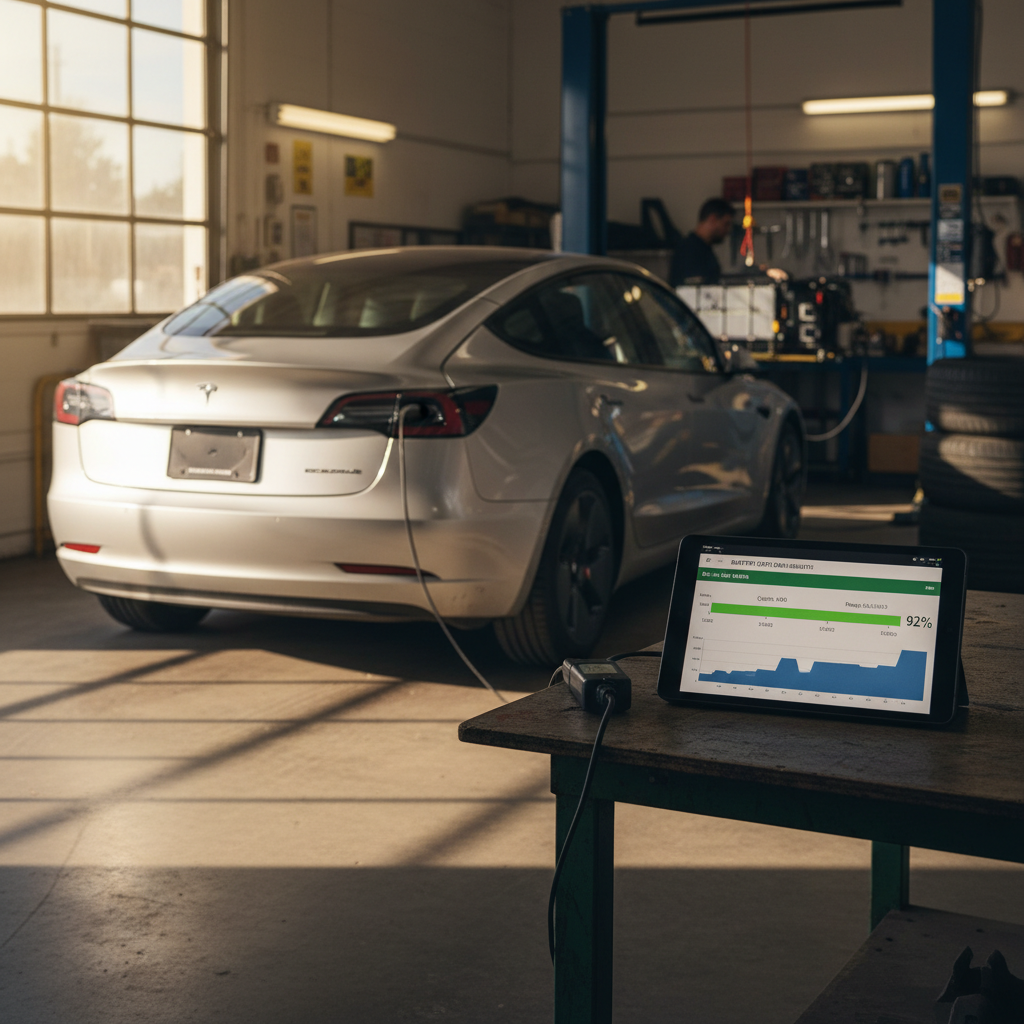
On a used EV, battery condition is everything. Look for third‑party testing or a detailed battery health report (like the Recharged Score) so you know how much range you’re really getting.
Confirm one‑time used eligibility
Pennsylvania typically limits used‑vehicle rebates to the first time the car is titled in PA under the program. Ask the seller if the VIN has already been used to claim an AFV rebate.
Target qualifying price bands
Used EVs in the $15,000–$35,000 range often hit the sweet spot: under price caps, still within battery warranty on many models, and eligible for meaningful rebates.
Don’t skip the fine print on used cars
How Recharged helps you use the PA rebate on a used EV
If you’re shopping used instead of new, the process can feel murkier, especially when you’re trying to line up a specific VIN with Pennsylvania’s AFV Rebate rules. That’s where a specialist marketplace like Recharged comes in.
Buying a used EV with Recharged, built for Pennsylvania shoppers
More than a listing site, tools and people to get you through the rebate process
Battery‑first vehicle reports
Every vehicle listed through Recharged includes a Recharged Score Report with verified battery health and fair‑market pricing. That helps you avoid cars with hidden degradation that could undermine your long‑term savings, rebate or not.
Hands‑on guidance through the process
Recharged’s EV specialists can help you:
- Confirm whether a given VIN is likely AFV‑eligible,
- Understand how the PA price cap applies to a specific vehicle, and
- Organize the documents you’ll need for the DEP application.
You can shop fully online or visit the Recharged Experience Center in Richmond, VA and arrange nationwide delivery, including Pennsylvania.
Ready to find your next EV?
Browse VehiclesFinancing that plays nice with rebates
Pennsylvania EV rebate 2026: FAQ
Frequently asked questions about Pennsylvania’s 2026 electric car rebate
Bottom line: Should you buy an EV in Pennsylvania in 2026?
Even with federal incentives pared back, the Pennsylvania electric car rebate in 2026 keeps EVs firmly in the conversation for a lot of households, particularly those shopping used or staying under luxury price points. If you line up an eligible car, stay under the price cap, and get your AFV application in early, you can still shave thousands off the effective cost of going electric.
For used‑EV shoppers, the combination of lower depreciation, the state rebate, and tools like the Recharged Score Report can deliver strong value without sacrificing confidence in the battery. Take the time to understand the rules, build the rebate into your shopping budget, and lean on EV‑savvy partners who live in this world every day. Do that, and 2026 can still be a very good year to plug in rather than fill up in Pennsylvania.