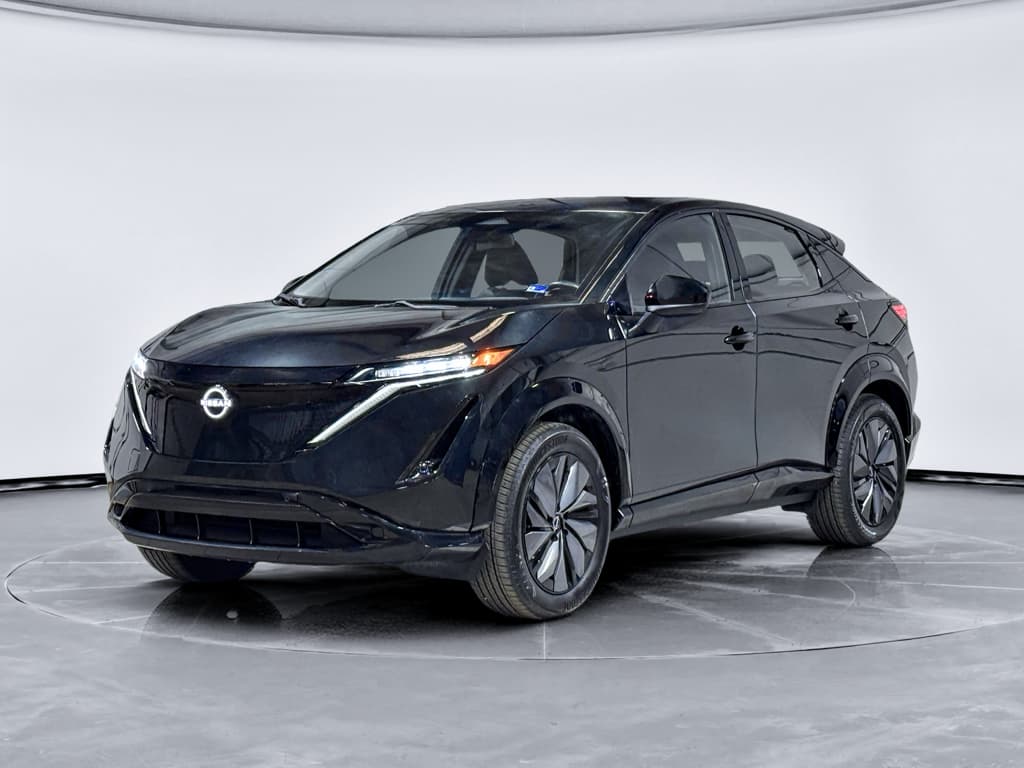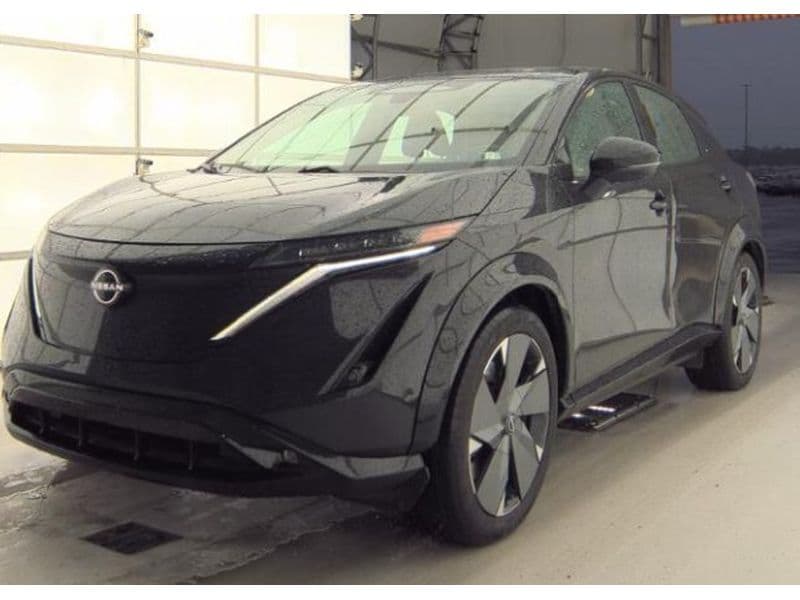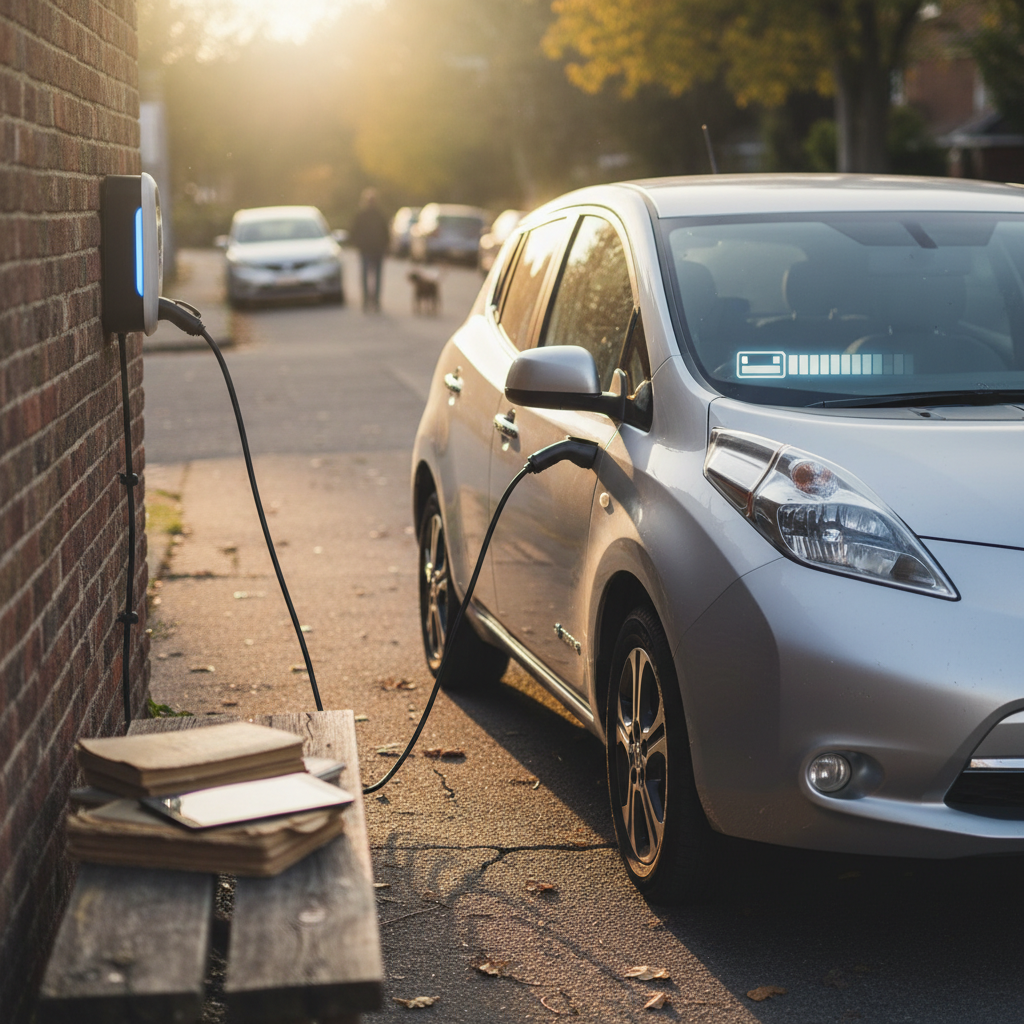
You’re cross-shopping a familiar gas crossover, the Nissan Rogue, against Nissan’s all-electric Ariya, and the question gnawing at you isn’t 0–60. It’s money. Over five to ten years, which one is actually cheaper to live with? This guide breaks down total cost of ownership (TCO) for Nissan Rogue vs Nissan Ariya so you can decide with your wallet, not just your gut.
What "total cost of ownership" really means
Why compare the Nissan Rogue vs. Nissan Ariya on cost?
In the real world, a lot of shoppers aren’t choosing between a Tesla and a Taycan. They’re choosing between a compact family crossover with a gas tank and one with a plug. The Rogue and Ariya occupy roughly the same footprint, both comfortably seat five, and both wear the corporate V-Motion mug. Yet under the skin they represent two different futures: one clings to the pump, the other to the grid.
The Rogue is the classic choice: strong resale, easy to service anywhere, no charging homework. The Ariya is the newcomer: quiet, quick and far cheaper to "fuel," but with higher upfront price and EV-specific unknowns like battery degradation. Looking at total cost of ownership over five years, and, if you’re honest with yourself, closer to ten, helps you cut through the brochure gloss.
Quick take: which one is cheaper to own?
Nissan Rogue vs. Ariya: cost snapshot for a typical U.S. driver
30-second verdict
Purchase price, incentives and financing
Start with the sticker, because that’s the number that hits you in the chest at the dealership. A new Rogue in the U.S. typically stickers in the high $20,000s to mid-$30,000s, depending on trim and options. The Ariya, as a larger, heavier EV with a big battery and more complex electronics, generally lands higher, think high $30,000s into the $50,000s when new.
Upfront price dynamics
- Rogue: Lower base MSRP, aggressive discounts and dealer inventory make it relatively easy to get a deal.
- Ariya: Higher MSRP, but transaction prices have been softening as Nissan chases volume and EV demand normalizes.
Compare real-world prices rather than MSRP, especially on remaining prior-model-year inventory.
Incentives and financing
- Tax credits: Depending on configuration and where you buy, some Ariya models may qualify for used EV federal credits when purchased pre-owned, while new ones are more complicated. Rogues rarely see anything beyond standard rebates.
- Financing: Mainstream gas SUVs like Rogue often get lower APR promos. EVs sometimes trade rate for cash rebates.
At Recharged, we can help you compare EV financing options on used Ariyas so you see the full picture, not just the monthly payment.
Don’t stop at MSRP
Fuel vs. electricity: what you’ll actually spend to drive
Fuel vs. electricity is where Rogue and Ariya live on different planets. The Rogue’s turbocharged gas engine returns roughly 28–30 mpg city and 34–35 mpg highway in recent model years. The Ariya, depending on battery and drivetrain, typically averages around 3.0–3.5 miles per kWh in mixed driving.
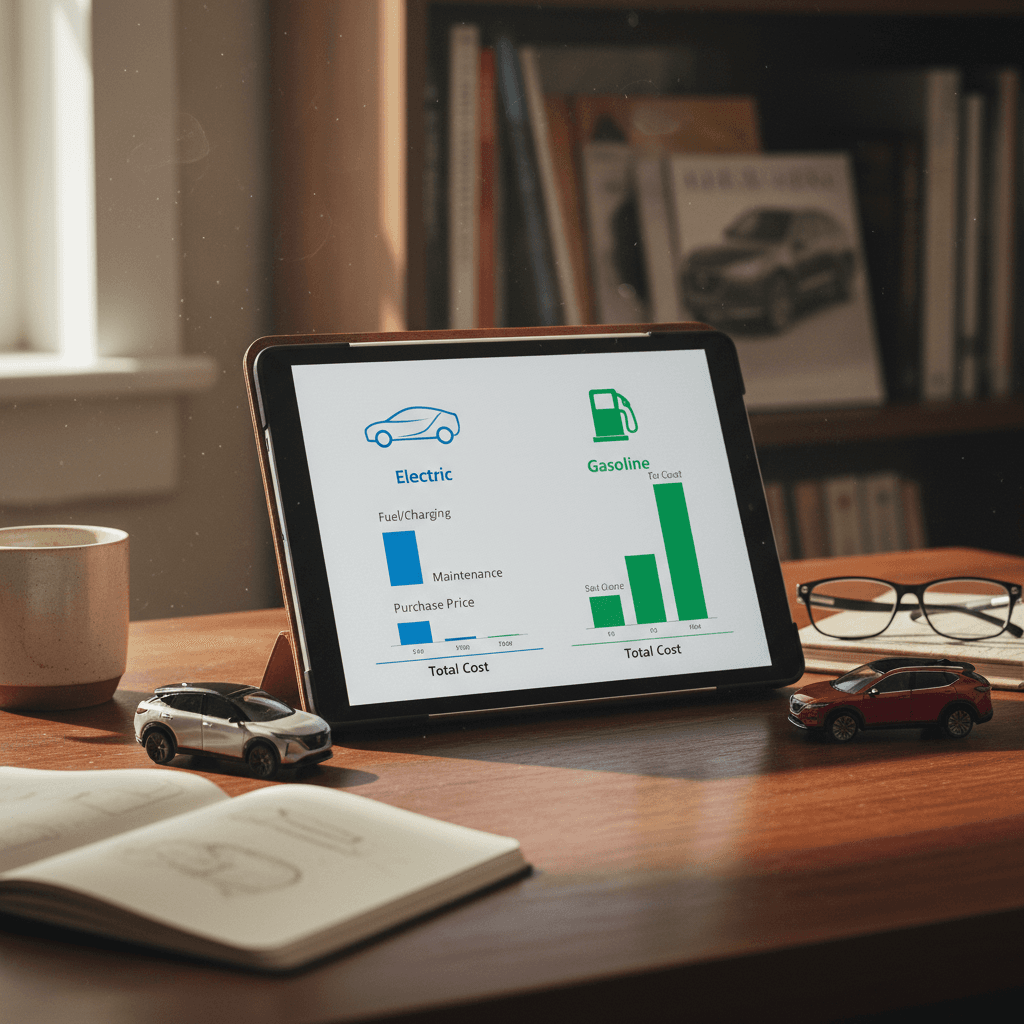
Estimated annual energy cost: Nissan Rogue vs. Nissan Ariya
Illustrative example for a U.S. driver at 15,000 miles per year. Adjust for your local gas and electricity rates.
| Vehicle | Efficiency assumption | Energy price assumption | Annual miles | Estimated annual energy cost |
|---|---|---|---|---|
| Nissan Rogue | 32 mpg combined | $3.50 per gallon gas | 15,000 | ≈$1,640 |
| Nissan Ariya | 3.1 mi/kWh combined | $0.14 per kWh electricity | 15,000 | ≈$680 |
| Savings with Ariya vs. Rogue | , | , | 15,000 | ≈$960/year less on energy |
Assumes $3.50/gallon gasoline, $0.14/kWh average electricity, and mostly home charging with occasional public fast charging.
Public fast charging can change the math
For a typical suburban owner who plugs in at home, you’re plausibly looking at $800–$1,200 in annual fuel savings with an Ariya vs. Rogue at today’s U.S. prices. Over five years, that’s $4,000–$6,000 that never disappears through a gas nozzle.
Maintenance and repairs: gas complexity vs. EV simplicity
The Rogue is a known quantity: oil changes every few thousand miles, transmission service, spark plugs, exhaust, emissions hardware, all the usual cast of characters in a modern ICE crossover. Those are predictable but not free. Industry averages for compact gas SUVs put maintenance and repairs around 9–11 cents per mile over a typical ownership span.
The Ariya deletes a lot of that script. No oil changes, no spark plugs, no timing belt, no exhaust or oxygen sensors, far fewer moving parts in the drivetrain. You’re still servicing tires, cabin filters, brake fluid, coolant, wipers and the occasional suspension bit, but day-to-day maintenance is lighter. Realistic estimates from early Ariya ownership data put routine service in the $200–$500 per year range for most drivers, excluding tires.
Where the Ariya saves you money on maintenance
Simpler drivetrain, fewer consumables
No oil changes
No complex transmission
Regenerative braking
The big wildcard: EV battery and electronics
Over a five-year horizon, though, most owners will spend far more on routine maintenance in a Rogue than in an Ariya. Spread over a decade, the Ariya’s simplicity becomes a quiet force multiplier for your budget, as long as you stay inside that battery warranty window or buy a car with verified pack health.
Insurance, taxes and fees
Insurance is where the Ariya occasionally sneaks in some unwanted drama. Insurers still treat many EVs as expensive to repair, battery packs, aluminum bodywork, specialty electronics, so premiums can run higher than for a comparable Rogue, especially when new. The Rogue benefits from a vast repair ecosystem, cheap used parts and a long actuarial history.
Insurance factors that favor Rogue
- Lower MSRP and simpler construction.
- More shops qualified to repair collision damage.
- Insurers have deep data on compact gas SUVs.
Insurance factors that can hurt Ariya
- Higher parts and labor costs for EV-specific components.
- Potentially higher total-loss rates if battery pack is involved.
- Some carriers still price EVs conservatively until more data comes in.
Actual quotes vary a lot by state, driving record and insurer. Always compare both vehicles side by side before you decide.
Ask your insurer the EV question up front
As for taxes and registration, some states still offer EV rebates or reduced registration fees, while others add EV-specific road-use charges. Gas crossovers like the Rogue are the baseline the tax code was written for. Check your state’s latest rules; over five years, these differences are usually hundreds, not thousands, of dollars either way.
Depreciation and resale value
Depreciation is the least sexy cost and the most important. It’s the quiet number describing how much of your money evaporates when you sell or trade the car. Here the Rogue plays the reliable supporting actor: compact crossovers with good MPG and mainstream badges tend to hold value reasonably well, with predictable curves once incentives and fleet sales settle out.
The Ariya, like many newer EVs, has seen steeper early depreciation. Generous lease deals, rapid improvements in EV tech, fluctuating federal incentives and buyer anxiety about range and battery longevity all push used prices down faster than the gasoline norm. That’s bad news if you buy one new and trade in three years, and fantastic news if you’re shopping used.
The EV depreciation double-edged sword
Five-year Nissan Rogue vs. Ariya cost comparison
Let’s stitch this together into a simplified five-year picture for a U.S. driver covering 15,000 miles a year. These aren’t precise forecasts, they’re directional, using reasonable averages to show how the pieces fit. Assume similar purchase price after discounts and financing when new, and typical ownership behavior (mostly home charging for Ariya, regular pump visits for Rogue).
Illustrative 5-year total cost of ownership: Rogue vs. Ariya (new)
Approximate comparison for new vehicles over 5 years/75,000 miles. Real numbers vary by trim, location, incentives and driving habits.
| Cost bucket (5 years) | Nissan Rogue (gas) | Nissan Ariya (EV) | Who has the edge? |
|---|---|---|---|
| Fuel / electricity | ≈$8,000–$9,000 | ≈$3,500–$4,500 | Ariya, often by ~$4,000–$5,000 |
| Routine maintenance & minor repairs | ≈$4,000–$5,000 | ≈$1,000–$2,500 | Ariya by ~$2,000–$3,000 |
| Insurance | Baseline | +≈$500–$1,500 vs. Rogue | Slight Rogue advantage |
| Taxes & fees (incl. EV fees/credits) | Baseline | ±few hundred vs. Rogue | Roughly a wash |
| Depreciation | Moderate, predictable | Steeper early drop | Rogue better if buying new, Ariya better if buying used |
This table focuses on running costs. Purchase price and financing are assumed similar after discounts and incentives; your actual numbers may differ.
So who wins on 5-year cost?
How a used Nissan Ariya changes the math
Here’s where it gets interesting for value hunters. Because the Ariya depreciates faster up front, a 2–3-year-old Ariya with reasonable mileage often costs roughly the same as, or not much more than, a brand-new mid-trim Rogue. At that point, the EV’s running-cost advantage starts from day one, while much of the initial depreciation hit has already been absorbed by the first owner.
Why a used Ariya can undercut a new Rogue on total cost
1. Lower purchase price, higher remaining warranty
You’re buying after the sharpest depreciation years, but many used Ariyas still have <strong>years left</strong> on their 8-year/100,000-mile battery warranty.
2. Fuel savings start immediately
With a used Ariya and home charging, you can start saving roughly <strong>$80–$120 per month</strong> on energy vs. a new Rogue, even after accounting for some public charging.
3. Simpler maintenance profile
You sidestep the early-life depreciation hit and enjoy <strong>EV-level maintenance costs</strong>, which are typically lower than a new gas crossover’s.
4. Better equipment for the money
Many used Ariyas were optioned up when new. For Rogue money, you may be stepping into a quieter, more luxurious cabin with more tech.
Why battery health matters on a used Ariya
Charging, lifestyle and non-financial factors
Total cost of ownership lives on a spreadsheet; your life does not. The Rogue’s big advantage is frictionless fueling: gas is everywhere, refills take minutes, and you never think about kilowatts or connector types. If you live in an apartment with no reliable access to charging, that convenience may outweigh the Ariya’s lower per-mile cost.
Beyond dollars: living with Rogue vs. Ariya
Practical questions to ask yourself before you buy
Do you have reliable home charging?
How and where do you drive?
How much do you value refinement and emissions?
How comfortable are you with new tech?
How Recharged can help you run the numbers
If you’re EV-curious but spreadsheet-averse, you don’t have to do this alone. At Recharged, every used Ariya we list comes with a Recharged Score Report: verified battery health, range estimates, price fairness and ownership insights laid out in plain language. Our EV specialists can help you compare a specific Ariya against the Rogue in your driveway, including energy costs in your ZIP code, realistic maintenance expectations and likely depreciation.
We also offer financing, trade-in options, instant offers or consignment, plus nationwide delivery and an in-person Experience Center in Richmond, VA if you prefer to kick the tires first. The goal is simple: make your decision about what actually works for your life and budget, not about who guesses better in an online forum.
FAQ: Nissan Rogue vs. Nissan Ariya ownership costs
Frequently asked questions
Bottom line: who should pick Rogue, who should pick Ariya?
If you measure life strictly in spreadsheets, the Nissan Ariya is built to win the total-cost game, provided you drive enough miles and have somewhere sensible to plug in. Over five to ten years, its lower "fuel" cost and simpler maintenance can claw back thousands of dollars the Rogue burns at the pump and the service bay.
The Rogue, for its part, trades some long-term efficiency for frictionless ownership: universal fueling, familiar tech and slower, steadier depreciation. It makes sense if you’re a low-mileage driver, hate change or simply can’t make home charging work.
Where things get truly compelling is a used Ariya at a good price. With the steepest depreciation already in the rearview and plenty of battery warranty ahead, a pre-owned Ariya can undercut a brand-new Rogue on real-world cost of ownership while delivering a quieter, smoother commute.
If you’re ready to see how the numbers look for you, not for some hypothetical average driver, start by browsing used Ariyas on Recharged. Every listing includes a Recharged Score Report with battery health, pricing transparency and expert support, so your decision between Rogue and Ariya isn’t a leap of faith. It’s a calculated move.