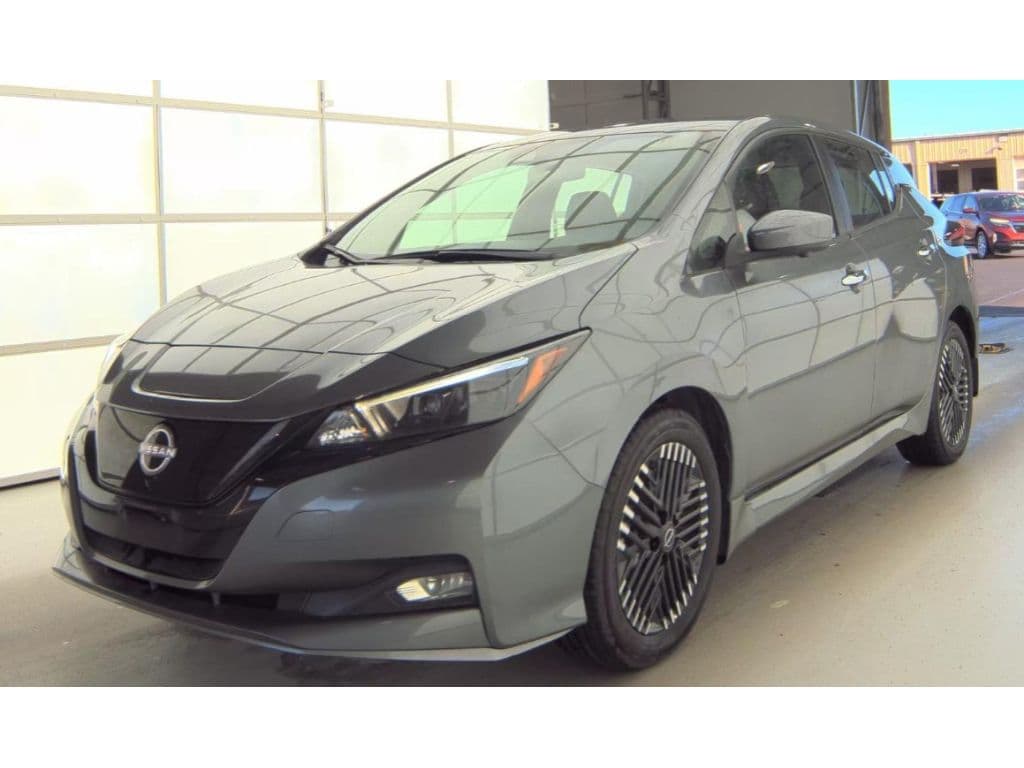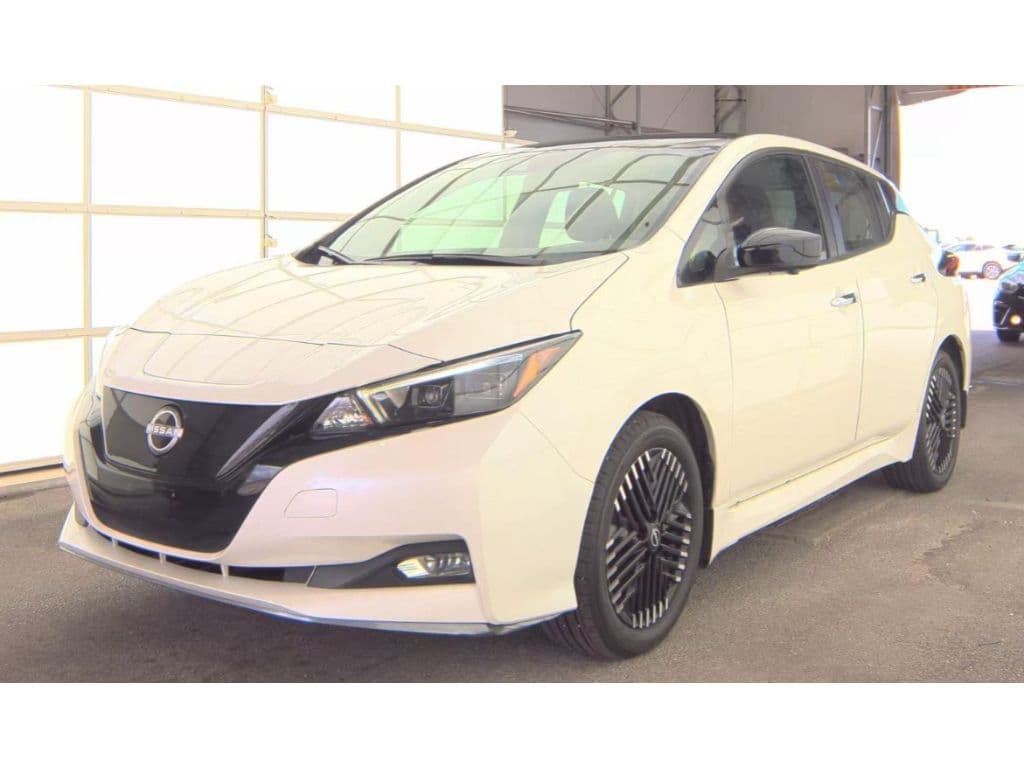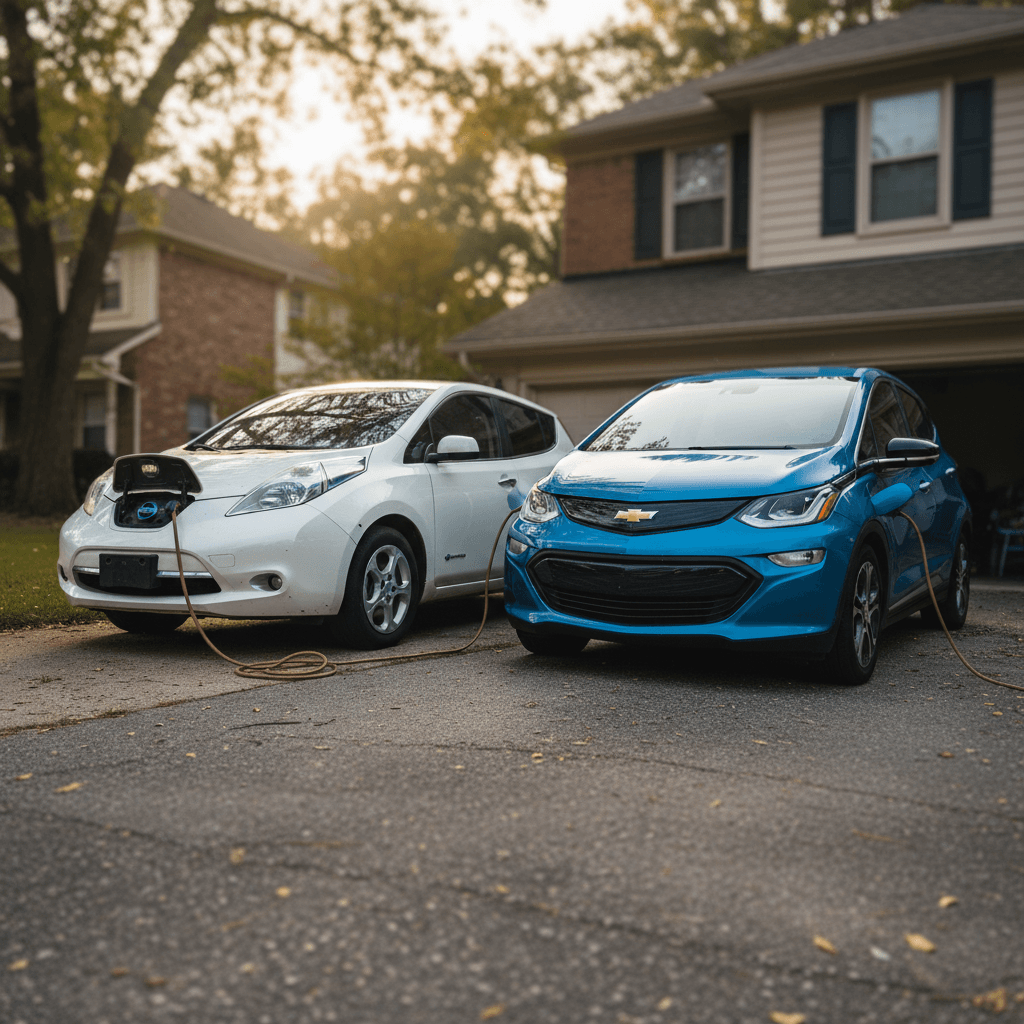
If you’re shopping for an affordable used electric car, the Nissan Leaf vs. Chevy Bolt EV decision is probably at the top of your list. Both are compact hatchbacks with low running costs, but they take very different approaches to range, charging, and long‑term ownership. Choosing the right one comes down to how you drive, where you charge, and how long you plan to keep the car.
At a glance
Nissan Leaf vs. Chevy Bolt EV: Quick Overview
How the Leaf and Bolt EV differ in character
Same idea, small electric hatchback, but tuned for different priorities
Nissan Leaf: Friendly city commuter
- Strengths: Simple to drive, roomy hatch, often cheaper on the used market.
- Weak spots: Shorter range, CHAdeMO fast‑charging (shrinking network), more battery degradation in hot climates.
- Best for: Local driving, second car, buyers who rarely take long trips.
Chevy Bolt EV: Long‑range budget warrior
- Strengths: Excellent range for the money, efficient, modern DC fast‑charging, good performance.
- Weak spots: Smaller cargo area than Leaf, earlier years affected by well‑publicized battery recall (fixed under warranty).
- Best for: One‑car households, commuters with mixed city/highway driving, budget road‑trippers.
Headline numbers for typical used models
Key Specs: Leaf vs. Bolt at a Glance
Nissan Leaf vs. Chevy Bolt EV core specs
Representative specs for common later‑generation models you’ll see on the used market.
| Spec | Nissan Leaf (40 kWh) | Nissan Leaf SV Plus (60 kWh) | Chevy Bolt EV (65 kWh) |
|---|---|---|---|
| Approx. model years | 2018–2024 | 2019–2024 | 2017–2023 |
| EPA range | 149 mi | 212 mi | 259 mi |
| Battery capacity | 40 kWh | 60 kWh | 65 kWh |
| Drive wheels | FWD | FWD | FWD |
| Horsepower | 147 hp | 214 hp | 200 hp |
| Fast‑charge connector | CHAdeMO | CHAdeMO | CCS |
| Onboard AC charger | 6.6 kW | 6.6 kW | up to 11.5 kW |
| Cargo behind rear seats | 23.6 cu ft | 23.6 cu ft | 16.6 cu ft |
Specs vary slightly by model year and trim, but this gives you the big picture.
Model years that hit the sweet spot
Range, Battery Size, and Real‑World Efficiency
Range is the number‑one reason many shoppers lean toward the Chevy Bolt EV. A typical Bolt EV with the 65‑kWh battery is rated around 259 miles of EPA range, while a standard‑battery Nissan Leaf sits at about 149 miles. Even the larger‑battery Leaf SV Plus tops out at roughly 212 miles, still well short of the Bolt.
- If you routinely drive more than 80–100 miles a day or can’t charge at work, the Bolt’s extra buffer is extremely helpful.
- For local use, school runs, errands, commuting under 40–50 miles a day, a 40‑kWh Leaf can feel completely adequate.
- The Leaf’s less efficient high‑speed performance means you lose range more quickly on the highway than in the Bolt.
How the Nissan Leaf’s battery behaves
- 40‑kWh and 60‑kWh packs without active liquid cooling.
- Historically more prone to capacity loss in very hot climates or with repeated fast‑charging.
- Plenty of Leafs still perform well, but checking battery health is crucial on a used car.
How the Chevy Bolt EV’s battery behaves
- 65‑kWh pack with active thermal management, which generally helps long‑term durability.
- All Bolts went through a major battery recall and replacement or software update, a plus if the work is documented.
- Real‑world range is often close to EPA numbers if you drive reasonably.
Don’t assume the EPA range is what you’ll actually see
Charging, Connectors, and Road‑Trip Capability
On home Level 2 charging, both cars work well. The bigger difference is how they fast‑charge on the road and what connector they use, something that’s getting more important as the U.S. network evolves.
Leaf vs. Bolt EV charging and connector differences
Fast‑charging isn’t just about speed; connector type and network coverage matter for used buyers.
| Charging aspect | Nissan Leaf | Chevy Bolt EV |
|---|---|---|
| DC fast‑charge connector | CHAdeMO | CCS (Combined Charging System) |
| Typical max DC fast‑charge rate | ~46–100 kW depending on pack | Up to ~55–100 kW depending on year |
| Home AC charging | 6.6 kW onboard charger | Up to 11.5 kW, often faster at home |
| Road‑trip friendliness | Limited by range and shrinking CHAdeMO network | Much better coverage with CCS fast‑chargers |
Always verify connector type (CHAdeMO vs CCS) and maximum DC rate on the specific car you’re considering.
Connector warning for Leaf shoppers
Interior Space, Comfort, and Tech Features
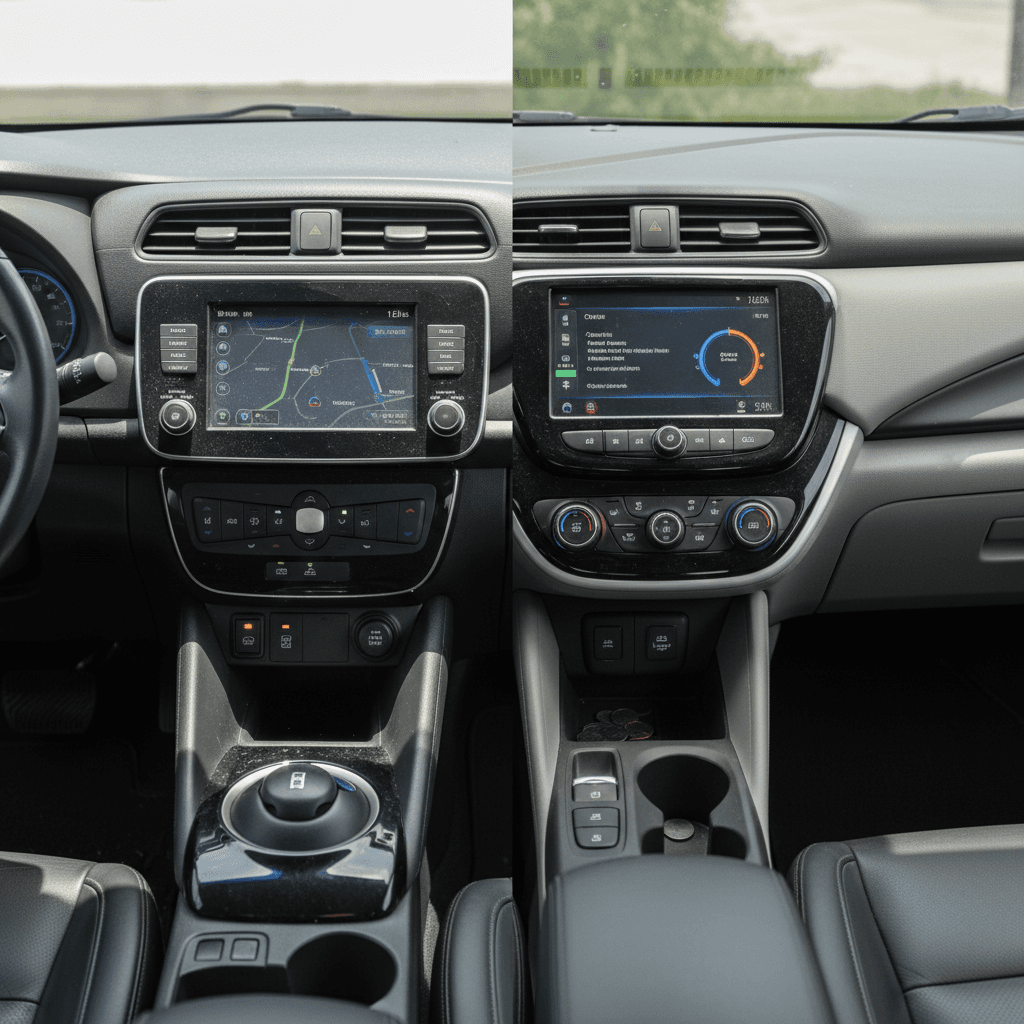
Both the Leaf and Bolt EV are compact hatchbacks with seating for five, but they package space differently. The Leaf feels more like a traditional compact car with a higher roof and big cargo hold, while the Bolt feels like a tall subcompact with a surprisingly airy front row but less trunk volume.
Space and comfort comparison
Numbers are representative and can vary slightly by year, but they show the character of each car.
| Dimension | Nissan Leaf | Chevy Bolt EV |
|---|---|---|
| Front headroom | ≈41.2 in | ≈40.1 in |
| Rear legroom | ≈33.5 in | ≈36.0 in |
| Cargo behind rear seats | 23.6 cu ft | 16.6 cu ft |
| Seating position | More traditional compact car | Tall, upright, almost crossover‑like |
Leaf wins on cargo, Bolt wins on rear legroom; both are comfortable for daily use.
Technology and daily‑use impressions
What it’s like to live with each car
Nissan Leaf cabin feel
- Simple, straightforward controls, easy if you’re new to EVs.
- Physical buttons for climate and audio in most trims.
- Driver‑assist features like ProPILOT Assist on upper trims for highway cruising.
Chevy Bolt EV cabin feel
- More modern infotainment and digital displays, especially in later years.
- One‑pedal driving mode with strong regenerative braking.
- Compact exterior but surprisingly roomy front seating.
If cargo space matters…
Reliability and Battery Health on Used Leafs and Bolts
Mechanically, both cars are relatively simple EVs with far fewer wear items than a gas car. The bigger questions on the used market are battery health, prior fast‑charging habits, and, on the Bolt, whether recall work was properly done.
Checklist: What to check before buying a used Leaf or Bolt
1. Battery state of health
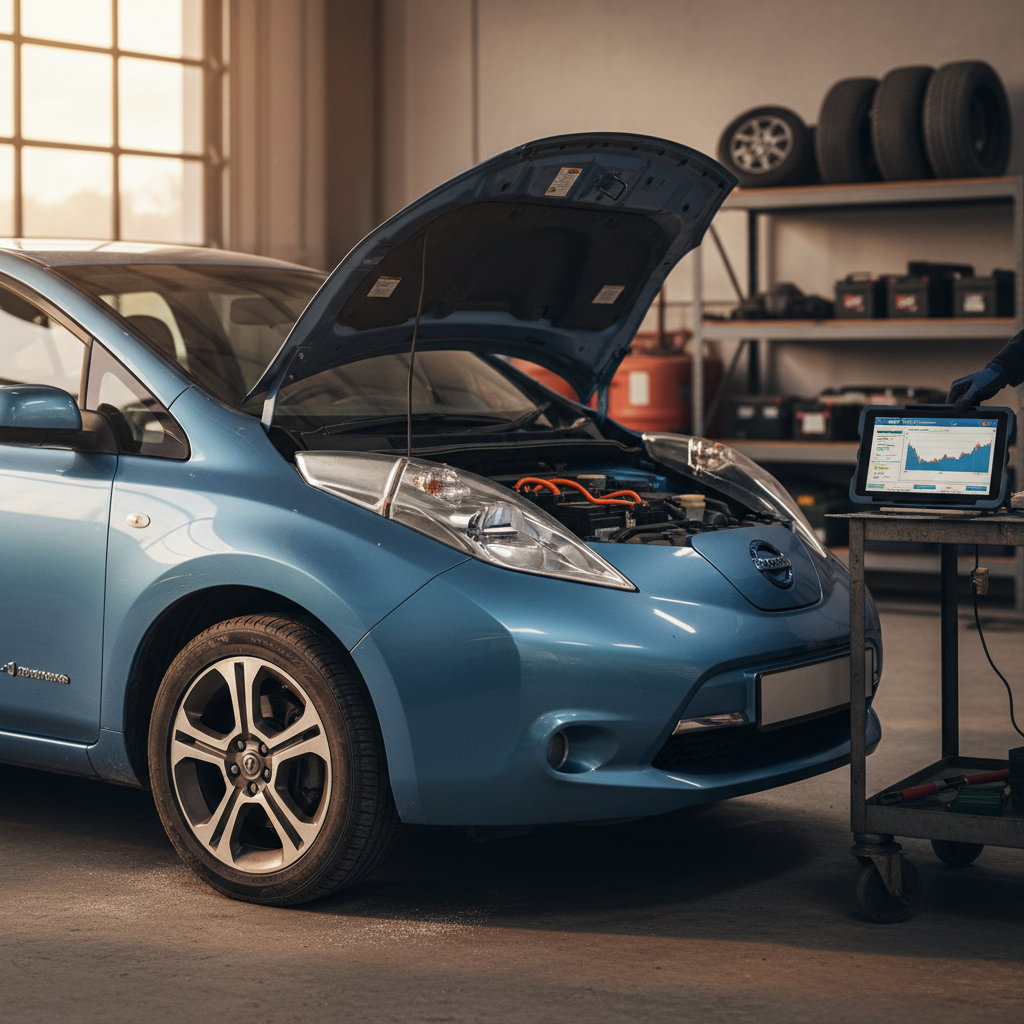
Use a professional battery diagnostic (like the Recharged Score) rather than guessing from the dashboard range estimate. You want to know how much usable capacity remains, not just what the guess‑o‑meter says today.
2. Fast‑charge history
Frequent DC fast‑charging can accelerate degradation, especially on liquid‑cooled packs that are worked hard and on air‑cooled packs like the Leaf’s. Ask for service records and check charging behavior where possible.
3. Climate and storage
EV batteries age faster in very hot climates and when stored fully charged for long periods. A Leaf that lived in coastal Oregon is a safer bet than a similarly aged Leaf that baked in Phoenix parking lots.
4. Recall and warranty status
For the Bolt EV, confirm that all battery recall campaigns have been completed at a GM dealer. For both cars, check how many years and miles remain on the 8‑year/100,000‑mile battery warranty.
5. Charging hardware condition
Inspect the charge port, cables, and inlet for damage or corrosion. Replacement or repair isn’t cheap, and abused hardware can hint at rough prior ownership.
Let the data, not the odometer, guide you
Ownership Costs, Incentives, and Resale Value
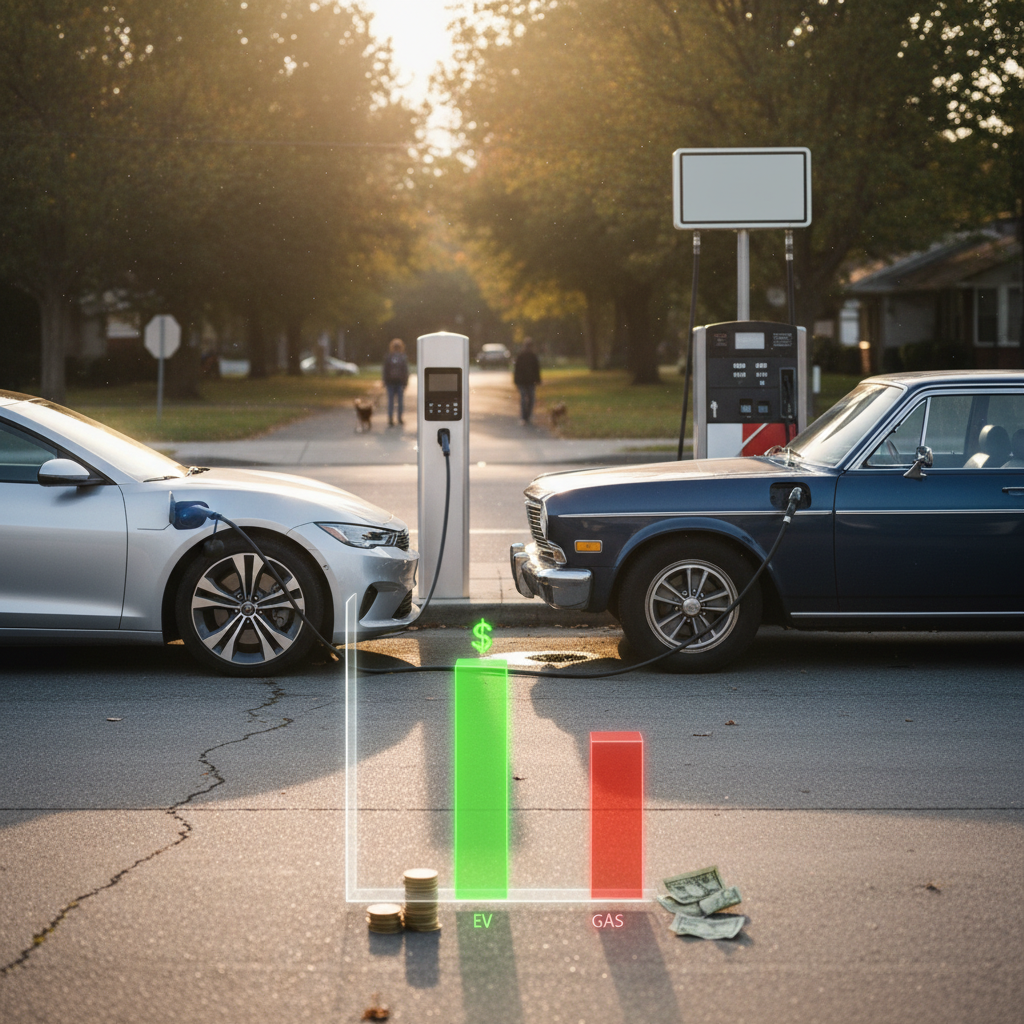
Both the Leaf and Bolt EV are among the cheapest EVs to run. Electricity costs less per mile than gasoline in most of the U.S., and there’s no oil to change. But there are a few ownership‑cost differences that can tilt the decision one way or the other.
- Insurance costs are usually similar and depend more on your location and driving record than on Leaf vs. Bolt.
- Maintenance is low on both: tire rotations, cabin air filters, brake fluid, and the occasional set of tires are the big line items.
- Because the Bolt offers more range and a more future‑proof charging standard, it generally holds value a bit better in markets where fast‑charging and road‑tripping matter.
Tax credits and incentives
Used EV incentives change over time, but both the Leaf and Bolt EV have often qualified for various federal and state used‑EV programs. The details depend on model year, price cap, and your income.
When you’re cross‑shopping specific cars, factor in any tax credits or rebates you might qualify for, they can make a newer, longer‑range Bolt cost about the same out of pocket as an older Leaf without incentives.
Depreciation and future value
- Older Leafs with CHAdeMO and shorter range are already very cheap, and they may continue to depreciate as networks prioritize CCS and NACS.
- Bolts with replaced or warrantied batteries and CCS fast‑charging are likely to stay in demand as budget long‑range EVs.
- Buying a car that will still feel usable in 5–7 years, especially in range and charging, is a big plus for overall value.
Which EV Fits You Best? Scenario‑Based Advice
Leaf vs. Bolt EV: What’s the right choice for your life?
Match your driving pattern to the right used EV
Mostly city driving, short trips
Long commute or mixed driving
Occasional or frequent road‑trips
Where you live matters
How Recharged Helps You Buy the Right Leaf or Bolt
Used EVs live and die by their batteries, and that’s where a transparent, data‑driven process matters more than ever. At Recharged, every Nissan Leaf and Chevy Bolt EV we sell comes with a Recharged Score Report that shows verified battery health, pricing against the current market, and a clear history of the vehicle’s charging and service where available.
- Expert EV specialists who can walk you through Leaf vs. Bolt trade‑offs based on your actual commute and charging situation.
- Financing options tailored to used EVs, plus support with trade‑ins or instant offers on your existing vehicle.
- Nationwide delivery from a fully digital buying experience, or an in‑person visit to our Experience Center in Richmond, VA if you’d rather see and drive the car first.
Buy with confidence, not guesswork
Nissan Leaf vs. Chevy Bolt EV: FAQ
Frequently asked questions about Leaf vs. Bolt
Both the Nissan Leaf and Chevy Bolt EV helped make electric cars attainable for everyday buyers, and on the used market, they’re still two of the best entry points into EV ownership. The Leaf shines as an inexpensive, straightforward city and suburb commuter. The Bolt steps up with longer range, stronger road‑trip capability, and a charging standard that’s better aligned with where public infrastructure is heading. If you’re unsure which one fits your life, start with your daily miles and where you’ll charge, then let battery health and charging access guide your final decision. With transparent data and EV‑savvy support, finding the right used Leaf or Bolt becomes a lot easier.