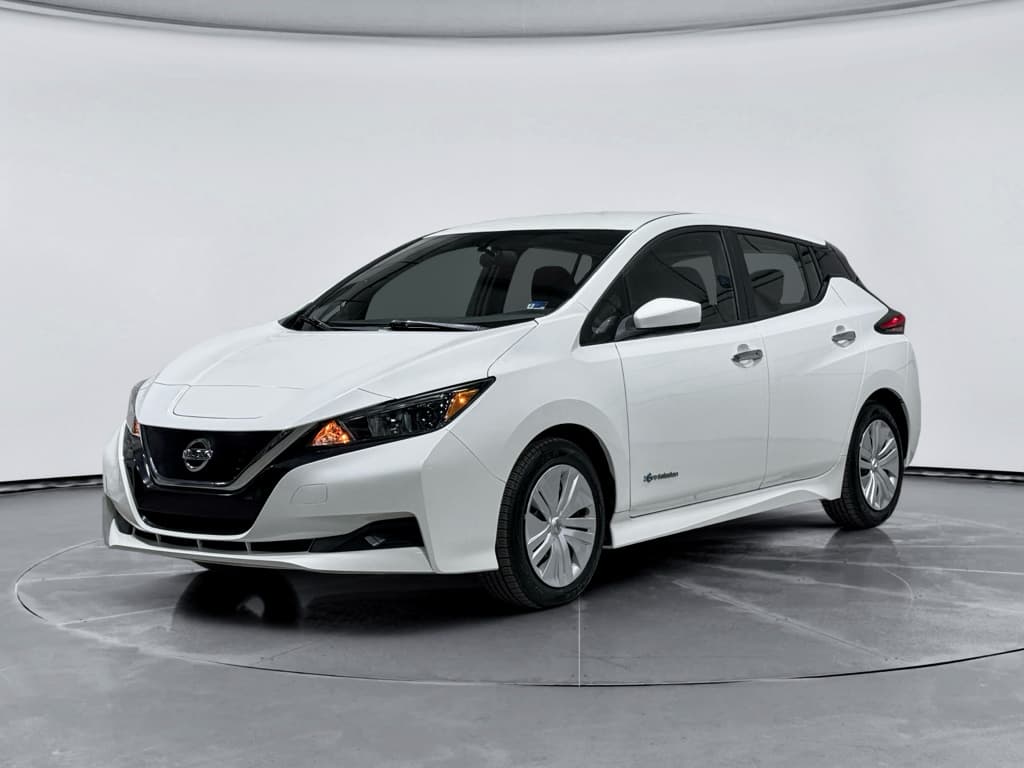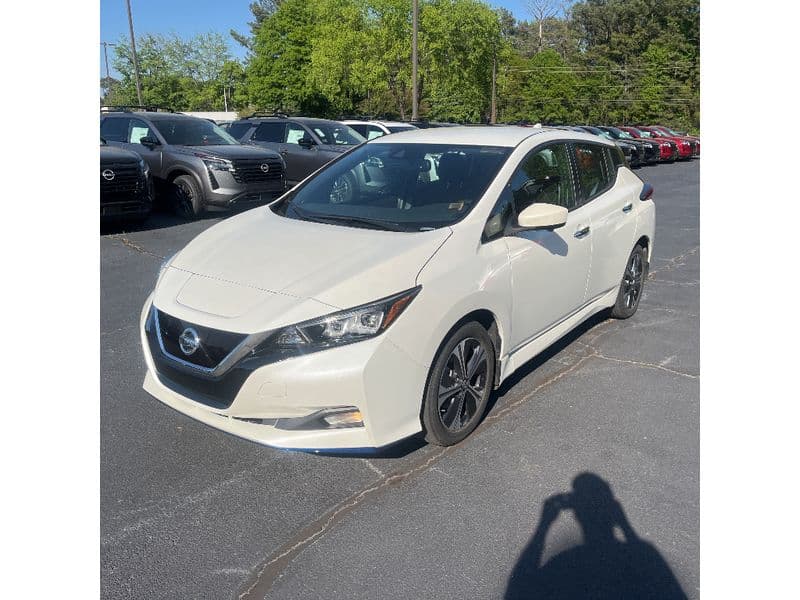
If you own a Nissan Leaf, you already know it doesn’t behave like a typical gas hatchback, and neither does its trade-in value. EVs live and die by battery health, range, and charging tech, so understanding your Nissan Leaf trade-in value in 2025 means looking well beyond a simple price book number.
Quick take
Why Nissan Leaf trade-in value is different from gas cars
Traditional used-car pricing leans heavily on age, mileage, and trim. With a Nissan Leaf, dealers and buyers are really buying two things: the body and the battery. Early Leafs used a passively cooled pack and shorter range, which is why they’re among the EVs that lose more than half their value within five years, with average depreciation north of 60%. Newer Leafs with 40 kWh and 62 kWh packs hold value better, but they still drop faster than many comparable gas cars.
- Battery capacity and health matter more than paint color or options.
- Shorter-range EVs (under ~200 miles) see steeper depreciation as newer long-range EVs crowd the market.
- Fast-charging standard (CHAdeMO for the Leaf) affects desirability versus newer CCS/NACS-equipped models.
- Local incentives, HOV access, and charging infrastructure can raise or lower local prices.
Why early Leafs are so cheap
What is my Nissan Leaf worth today? Real 2025 price ranges
Let’s start with rough 2025 U.S. market ranges for Leafs in average condition with typical mileage and no major accident history. These are ballpark numbers to frame expectations, not offers, and your actual Leaf could land higher or lower based on condition and battery health.
Typical 2025 Nissan Leaf value ranges by model year
Approximate nationwide price ranges for Leafs in average condition. Trade-in offers tend to sit toward the lower end of each band, while retail asking prices sit at the higher end.
| Model years | Typical battery sizes | Approx. trade-in range* | Approx. retail / asking range* |
|---|---|---|---|
| 2011–2013 (Gen 1) | 24 kWh | $2,000–$4,000 | $3,000–$6,000 |
| 2014–2016 (Gen 1) | 24–30 kWh | $3,000–$5,000 | $4,000–$7,000 |
| 2017 (late Gen 1) | 30 kWh | $3,500–$6,000 | $5,000–$8,000 |
| 2018–2020 (Gen 2) | 40 kWh | $5,000–$8,500 | $7,500–$11,000 |
| 2019–2021 Leaf Plus | 62 kWh | $7,500–$12,000 | $10,000–$16,000 |
| 2022–2023 (40 & 62 kWh) | 40 / 62 kWh | $9,000–$15,000 | $12,000–$18,000 |
| 2024–2025 | 40 / 62 kWh | $13,000–$20,000+ | $16,000–$25,000+ |
Use this as a starting point before getting VIN-specific quotes.
About these numbers
Nissan Leaf value snapshot in 2025
How the Nissan Leaf depreciates over time
You’ll often hear that EVs depreciate faster than gas cars. The Leaf is a textbook case. Data from multiple depreciation trackers shows early Leafs sometimes retaining under 10% of their original MSRP by the time they’re 10–14 years old, while newer models hold on to more value but still shed a big chunk in the first few years.
Typical Nissan Leaf depreciation pattern
Approximate retention of original MSRP for a Leaf in average condition.
| Vehicle age | Approx. value vs. original MSRP | What it means |
|---|---|---|
| 1 year | ~90% | Nearly new; shallow drop if demand is strong. |
| 3 years | ~50% | Many Leafs lose about half their value in the first 3 years. |
| 5 years | ~30–35% | Depreciation slows; tech still current but warranty years are dropping off. |
| 8 years | ~15–25% | Battery warranty end is near or passed; range and health dominate pricing. |
| 10–14 years | ~8–15% | Older Gen 1 cars often worth only a few thousand dollars. |
Actual numbers vary by model year and battery size, but the curve is similar.
Why depreciation slows down
8 factors that move your Leaf trade-in value up or down
The biggest drivers of Nissan Leaf trade-in value
Model year and mileage are just the beginning.
1. Model year & generation
Buyers pay more for second-gen Leafs (2018+) with better interiors, tech, and safety features. First-gen 2011–2017 cars suffer from shorter range and more severe early battery degradation, which pulls trade-in value down.
2. Battery size (kWh)
The jump from a 24 kWh to a 40 kWh pack, and then to 62 kWh, dramatically changes how usable the car feels. Longer-range Leaf Plus models regularly command several thousand dollars more than same-year 40 kWh cars.
3. Mileage
Like any car, higher odometer readings cut into value. But with a Leaf, mileage also hints at likely battery wear. A 60,000‑mile Leaf will almost always be easier to appraise than a 140,000‑mile example, even if both drive fine.
4. Charging & connector reality
The Leaf uses the CHAdeMO fast‑charging standard just as most new DC fast‑chargers are moving to CCS or NACS. In regions where CHAdeMO stations are thin on the ground, demand, and trade-in value, can be softer.
5. Accident & title history
Salvage or rebuilt titles, airbag deployments, or frame damage will hammer trade‑in value, often by thousands. Even small incidents matter more on EVs because hidden battery damage is expensive to resolve.
6. Region & climate
Leafs from very hot climates tend to show faster battery degradation. At the same time, EV‑friendly markets with lots of home charging and incentives may support higher prices than regions where EVs are still rare.
7. Trim & options
SL and SV Plus trims with ProPILOT Assist, heated seats, and premium audio can fetch more than a base S, but trim typically moves the needle less than battery size and health.
8. Presentation & maintenance
Fresh tires, documented service, and a clean, odor‑free interior won’t turn a 2013 Leaf into a gold mine, but they can easily be the difference between a lowball offer and a fair one.
Battery health: how much it really matters for Leaf value
If you only remember one thing about Nissan Leaf trade-in value, make it this: the battery is the ballgame. For used EVs generally, cars showing 90–95% state of health can command a clear premium, while packs below 80% often take a noticeable haircut. On early Leafs, where degradation can be more pronounced, the difference between a strong pack and a tired one is the difference between “great cheap EV” and “only if it’s very, very cheap.”
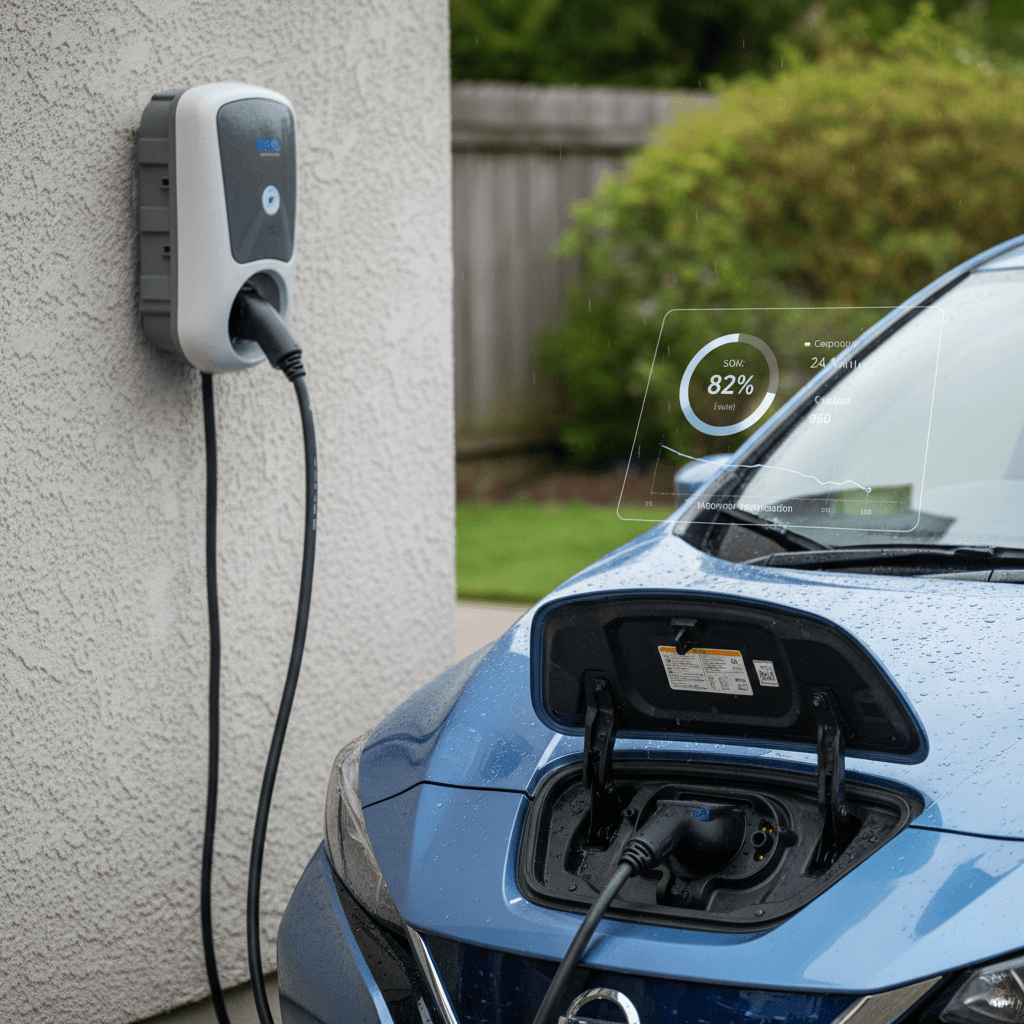
Healthy pack (roughly 90%+ SOH)
- Range is close to original EPA estimates, so the car still fits more lifestyles.
- Buyers worry less about near‑term replacement costs.
- Dealers feel more comfortable standing behind the car, so they bid stronger.
Heavily degraded pack (around 75–80% or less)
- Real‑world range can fall well below 80–90 miles on older 24 kWh Leafs.
- Many buyers see the car as a second or commuter‑only vehicle.
- Trade‑in offers may drop by thousands compared with a similar Leaf with a healthier pack.
Where Recharged fits in
Ready to find your next EV?
Browse VehiclesHow to estimate your Nissan Leaf trade-in value in 15 minutes
You don’t need to be an appraiser to ballpark your Nissan Leaf trade-in value. Here’s a simple, realistic way to get in the right zip code before you start getting quotes.
Step-by-step: sizing up your Leaf’s trade-in value
1. Decode your exact Leaf
Write down your <strong>model year, trim, and battery size</strong> (24, 30, 40, or 62 kWh). If you’re not sure, check the window sticker (if you kept it), charge port label, or your owner’s portal.
2. Check your battery health
Count the capacity bars on the right side of the Leaf’s dash display, or use an OBD‑II dongle and app (like LeafSpy) to read state of health (SOH). Note both the bar count and the percentage if available.
3. Look up real-world asking prices
Search major used‑car sites for Leafs matching your year, battery size, and rough mileage. Focus on listings in your region. Ignore outliers at the very top and bottom and note a realistic middle range.
4. Back into a trade-in number
Dealers typically need a <strong>margin between what they pay and what they list the car for</strong>. As a quick rule of thumb, subtract 10–20% from a realistic retail asking price band to estimate potential trade‑in offers.
5. Adjust for condition and history
If your Leaf has fresh tires, no accidents, and a very clean interior, you’re toward the top of the range. Major dings, curb‑rashed wheels, worn brakes, or an accident history push you lower.
6. Reality-check with digital offers
Use a couple of online trade‑in tools or instant‑offer sites to see where they land. They’re not the final word, but if three tools are all within a $1,500 band, you’ve probably found your Leaf’s real-world range.
Use ranges, not single numbers
Should I trade in or sell my Leaf privately?
Once you have a feel for your Nissan Leaf trade-in value, the next question is whether to take that number or put in the extra work to sell it yourself. With Leafs, the answer often depends on how healthy your battery is and how comfortable you are educating buyers about EVs.
Trade-in vs. private sale for a Nissan Leaf
What you gain, and give up, with each path.
Trading in your Leaf
- Pros: Fast, simple, and you only negotiate once, on the difference between your Leaf and the next car. Sales tax savings in many states when you trade instead of sell outright.
- Cons: Offers tend to be lower than a successful private sale, sometimes by $500–$2,000 depending on price bracket.
- Best for: Older or heavily degraded Leafs where squeezing every last dollar out isn’t worth the hassle.
Selling your Leaf privately
- Pros: Usually produces the highest price if you’re patient and present strong battery info and records.
- Cons: You’re managing listings, test drives, and EV‑curious shoppers who may not understand range and charging.
- Best for: Newer, long‑range Leafs or cars with documented, above‑average battery health.
Watch out for invisible lowballs
Getting top dollar for your Leaf with Recharged
Recharged was built specifically around used EVs, which makes a Nissan Leaf right at home. Instead of treating your Leaf like an oddball compact, we lean into what actually drives its value: verified battery health, realistic pricing, and clear expectations around range and charging.
- Instant offers or consignment: Get a quick number for your Leaf, or have Recharged list and sell it on your behalf to EV‑interested buyers.
- Recharged Score battery diagnostics: Our battery health testing translates your pack’s condition into an easy‑to‑understand report that helps justify your price.
- EV‑specialist support: Talk with people who live and breathe EVs, not just whoever’s free on the showroom floor.
- Nationwide reach: Because Recharged works digitally across the U.S., your Leaf isn’t limited to whoever wanders past a local lot.
Turn your Leaf into your next EV
Nissan Leaf trade-in value: FAQ
Frequently asked questions about Nissan Leaf trade-in value
The Nissan Leaf helped prove that electric commuting could be quiet, simple, and affordable. Its trade-in value story is more complicated: early cars can be astonishingly cheap, while newer, long‑range examples still command serious money if they’re cared for. Take the time to understand your Leaf’s battery health, real‑world range, and place in the market, then gather a few solid offers. Whether you trade in through a local dealer or work with an EV‑focused marketplace like Recharged, going in informed is the surest way to turn your Leaf into maximum value for your next electric drive.