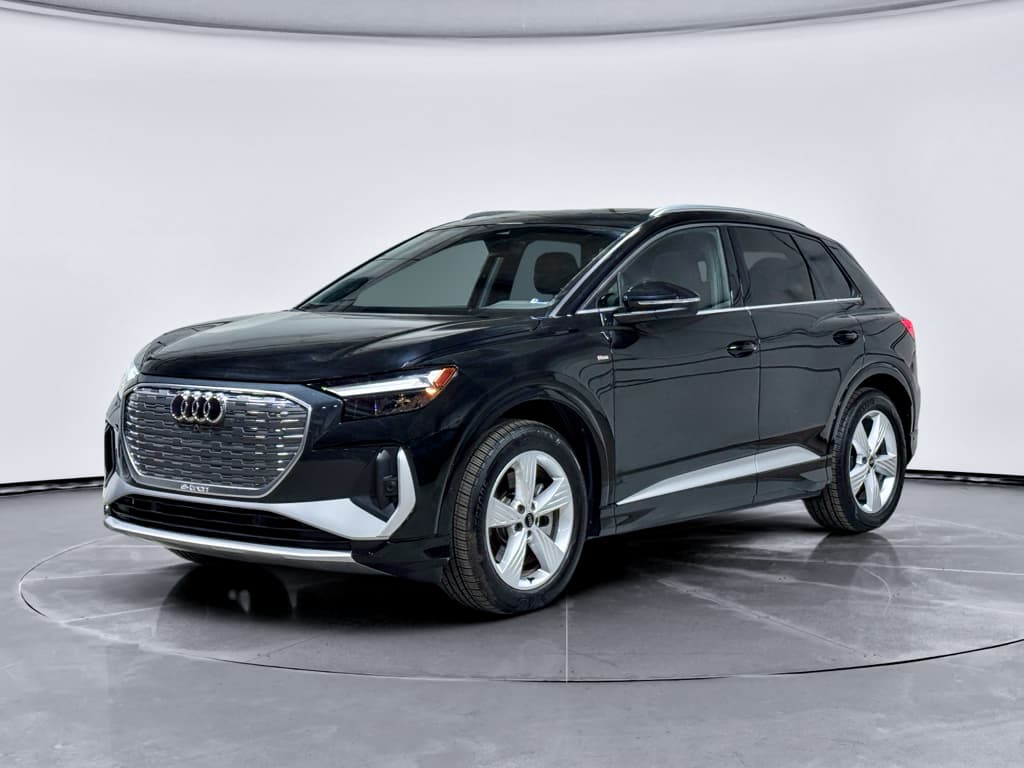
If you like the idea of a quiet, luxurious highway cruiser with Audi build quality, the Audi Q8 e-tron (and earlier e-tron SUV/Sportback) is one of the most interesting used EVs on the market. But it’s also a complex vehicle, which makes a clear Audi Q8 e-tron buying checklist essential before you sign anything.
Quick context
Why the Audi Q8 e-tron is unique on the used market
Luxury-first electric SUV
The Q8 e-tron was engineered first and foremost as a comfortable luxury SUV. Air suspension, a quiet cabin, and Audi’s familiar interior design make it feel like a traditional high-end Q8 that just happens to be electric.
If you’re coming from a German luxury crossover rather than a tech-centric brand, that familiarity is a feature, not a bug.
Conservative but improving range
Early e-tron models were criticized for modest range compared with the competition, but Audi leaned into thermal management and battery longevity. The 2024+ Q8 e-tron ups usable battery capacity to about 106 kWh, with EPA range up to roughly 285 miles for the SUV and about 300 miles for the most efficient Sportback Ultra package.
On the used market, that means plenty of comfort and tech, but you need to be clear about which battery and range you’re actually getting.
Audi Q8 e-tron at a glance (US-spec, 2024+)
Quick Audi Q8 e-tron buying checklist
10-point Audi Q8 e-tron purchase checklist
1. Confirm model year and generation
Clarify whether you’re looking at a 2019–2023 e-tron or a 2024–2025 Q8 e-tron refresh. The newer Q8 e-tron has a larger usable battery, more range, and some aero and interior tweaks.
2. Identify body style and trim
Decide between SUV vs Sportback, and trims like Premium, Premium Plus, Prestige, or SQ8 e-tron. Equipment packages heavily influence value, matrix headlights, air suspension modes, driver-assist suites, and upgraded audio all matter on resale.
3. Understand the battery pack
Ask which battery the car has (early 71–86.5 kWh usable vs later ~95 or 106 kWh usable). Battery size and chemistry affect range, charging behavior, and long-term value.
4. Review battery health data
Request <strong>state-of-health (SoH)</strong> information from a professional scan or a third-party report like the Recharged Score. Avoid buying blind on battery condition, it’s the most expensive component in the car.
5. Match range to your daily use
Compare EPA range to your real-world driving: climate, highway speeds, and roof racks all cut into range. Make sure the car can handle your worst-case days with a comfortable buffer.
6. Verify charging hardware
Confirm onboard AC charger capacity (standard ~9.6 kW vs optional ~19.2 kW dual-port on some Q8 e-tron trims), charging port condition, and that DC fast charging works as expected.
7. Inspect common wear items
Check brake wear (regen doesn’t eliminate maintenance), tires (heavy EVs eat tires), suspension noises, and any signs of interior water leaks or electronics glitches.
8. Check software and service history
Ask for records of software updates, recall work, and high-voltage system inspections. Up-to-date software can improve efficiency, charging curves, and driver-assist performance.
9. Evaluate warranty coverage
Understand what’s left of Audi’s 8-year/100,000-mile high-voltage battery warranty and any Certified Pre-Owned coverage. Clarify what’s excluded before you rely on it.
10. Compare CPO vs independent used
Weigh Audi CPO’s warranty and inspection against the pricing and transparency you can get from a specialist used-EV retailer like <strong>Recharged</strong>, which includes a detailed battery health report and nationwide delivery.
How to use this guide
Model years, trims, and battery pack basics
From a buyer’s perspective, the Audi Q8 e-tron family breaks into two eras: the original 2019–2023 e-tron and the refreshed 2024–2025 Q8 e-tron Use this to quickly understand what you’re looking at on a listing. Specs shown are typical US-market figures. Always verify exact configuration from the window sticker or VIN decode. Trims ladder from Premium to Premium Plus to Prestige, with the SQ8 e-tron adding a third motor and much more power. On the used market, SQ8s command a sizable premium in price, insurance, and tire wear. Unless you care deeply about performance, a Q8 55 e-tron in Premium Plus or Prestige spec is the most rational sweet spot. Use this to quickly triage whether a specific Q8 e-tron deserves a closer look. If you see any of these, budget time for a professional EV-specific inspection before proceeding. These signs suggest the car has been driven and charged reasonably, which is exactly what you want. The Q8 e-tron is easy to live with if you match its charging capabilities to your home setup and travel patterns. On AC, US cars typically charge at around 9.6 kW (about 40 amps on a 240 V circuit), with an optional 19.2 kW onboard charger and second AC port on some Q8 e-tron trims. On DC fast charging, later models can accept up to about 170 kW, taking the battery from roughly 10% to 80% in around half an hour under ideal conditions. Typical charging times for US-spec vehicles in good conditions. Real-world times vary with temperature, station quality, and how full the battery already is. The Q8 e-tron’s lack of an engine doesn’t mean you can skip a thorough mechanical inspection. In some ways, heavy, torque-rich EVs are harder on suspension and tires than comparable gas SUVs. Inspect for collision repairs, panel gaps, and paint mismatches. Get the car on a lift if possible to check underbody panels, battery shielding, and the rear motor area for impact damage. Listen for clunks over bumps and feel for looseness in the steering. The air suspension should raise and lower smoothly through all modes without error messages. Don’t assume regenerative braking spares the friction brakes. Check rotor condition, pad thickness, and look for uneven tire wear that might point to alignment or suspension issues. Heavy EVs can wear inner shoulders quickly. Test both center screens, the virtual cockpit, head-up display (if equipped), cameras, parking sensors, and driver-assist systems. Make sure the climate control heats and cools quickly, heat-pump issues can be expensive. Check carpets, trunk well, and underfloor storage for moisture. On the test drive, pay attention to wind noise around mirrors and doors; misalignment from prior repairs is common on any luxury SUV. Ensure you receive all keys and that you can set up connected services where available. Ask when the last software update was applied and whether any open recalls remain. Make no mistake: the Q8 e-tron is a mid-size luxury SUV. Even without oil changes, you’re still signing up for premium-tire prices, complex chassis hardware, and sophisticated electronics. The good news is that routine running costs, especially energy, are typically lower than a comparable gas Q8, especially if you can charge at home off-peak. For any candidate vehicle, ask for the original in-service date, current mileage, and written confirmation of what remains of the battery and CPO coverage. Factor these into your budget alongside insurance and taxes; they’re part of the real cost of owning any large luxury EV. On the road, the Q8 e-tron should feel calm, solid, and unbothered by rough pavement. Think of it as a quiet, electric A6 on stilts rather than a sport SUV, unless you’re in an SQ8, where the extra motor brings real urgency. The dual-motor system should deliver strong but predictable torque. No surging, hesitation, or shuddering when you floor it, and no whining from the motors beyond a faint futuristic hum. Cycle through regen modes with the paddles. Deceleration should feel smooth and consistent, without grabbing or odd transitions between regen and friction braking. In Comfort mode, the air suspension should soak up bumps without harshness or float. In Dynamic mode, the body should feel more tied down but still composed, not crashy. Listen for squeaks or rattles over expansion joints. Luxury EVs are so quiet that quality issues stand out. A few creaks on a rough road are one thing; a chorus of rattles is another. Test adaptive cruise, lane-keeping assist, camera views, and parking aids. These should reduce workload, not create new anxieties with ping-ponging or false alerts. If you can, note consumption on a mixed route. Numbers far worse than expected for conditions may indicate alignment issues, bad tires, or software problems affecting efficiency. Buying a used EV shouldn’t require a degree in high-voltage engineering. That’s why Recharged was built specifically around the pain points of modern electric vehicles like the Audi Q8 e-tron. Designed from the ground up for transparent, data-driven EV buying. Ready to find your next EV? The Audi Q8 e-tron is not the range king of the EV world, and it doesn’t try to be. Instead, it’s a deeply comfortable, quietly competent electric SUV that feels immediately familiar to anyone who has lived with an Audi before. That makes it a compelling used buy, as long as you approach it with a clear checklist and realistic expectations about range and charging. If you can charge at home, drive within its range envelope, and secure a car with verified battery health, the Q8 e-tron can deliver years of low-drama electric luxury. Whether you end up buying from a franchise dealer, a private seller, or a specialist marketplace like Recharged, use this Audi Q8 e-tron buying checklist as your preflight ritual. Tick every box, and you’ll know you’re not just buying an EV, you’re buying the right EV for how you actually live.Audi e-tron / Q8 e-tron generations at a glance
Model years (US) Badge on tailgate Typical usable battery Approx. EPA range (SUV) Approx. EPA range (Sportback) Notes 2019–2020 e-tron ~83–86.5 kWh ~200–218 mi ~204–226 mi First wave. Excellent comfort, relatively short range by today’s standards. 2021–2023 e-tron / e-tron Sportback ~86.5–89 kWh (varies by trim) Low–mid 200s mi Low–mid 200s mi Incremental efficiency tweaks and minor software updates. 2024–2025 Q8 e-tron / Q8 e-tron Sportback ~106 kWh usable (114 kWh gross) ~285 mi ~296–300 mi (Ultra pack) New Q8 e-tron name, aero tweaks, cell stacking for more energy density. Don’t ignore early e-tron deals
Battery health and range: what to check
What’s "normal" degradation?
Battery health red flags vs green flags
Potential red flags
Reassuring green flags
Leverage third-party battery diagnostics
Charging speeds, home setup, and connectors
Audi Q8 e-tron charging overview
Charging type Approx. power Typical location Q8 e-tron example time Level 1 (120 V wall outlet) 1–1.5 kW Standard household outlet Not practical for full charges; useful only for a few miles overnight. Level 2 (240 V, 40 A) ~9.6 kW Home wallbox or many public chargers ~12–13 hours from low to full. Level 2 (240 V, 80 A, optional) Up to ~19.2 kW High-capacity home or commercial ~6.5 hours from low to full (requires proper electrical service). DC fast charging Up to ~170 kW Highway corridor stations ~31 minutes from 10–80% under ideal conditions. Plan your home charging before you buy
Inspection checklist beyond the battery
Physical inspection checklist for a used Audi Q8 e-tron
Bodywork and underbody
Suspension and steering
Brakes and tires
Interior electronics
Water leaks and noise
Keys, app access, and updates
Walk-away conditions
Ownership costs, warranty, and CPO vs used
Warranty basics
Running-cost snapshot
CPO vs independent used vs Recharged
Test-drive checklist: how the Q8 e-tron should feel
On-road test-drive checklist
Smooth, quiet acceleration
Predictable regenerative braking
Refined ride quality
Tight, rattle-free cabin
Driver-assist confidence
Realistic energy use
How Recharged simplifies buying a used Q8 e-tron
Why consider Recharged for your Q8 e-tron
Battery health, verified
Fully digital experience
Nationwide delivery
Financing and trade-in made EV-friendly
FAQ: Audi Q8 e-tron buying questions
Common questions about buying an Audi Q8 e-tron
Bottom line: is an Audi Q8 e-tron right for you?