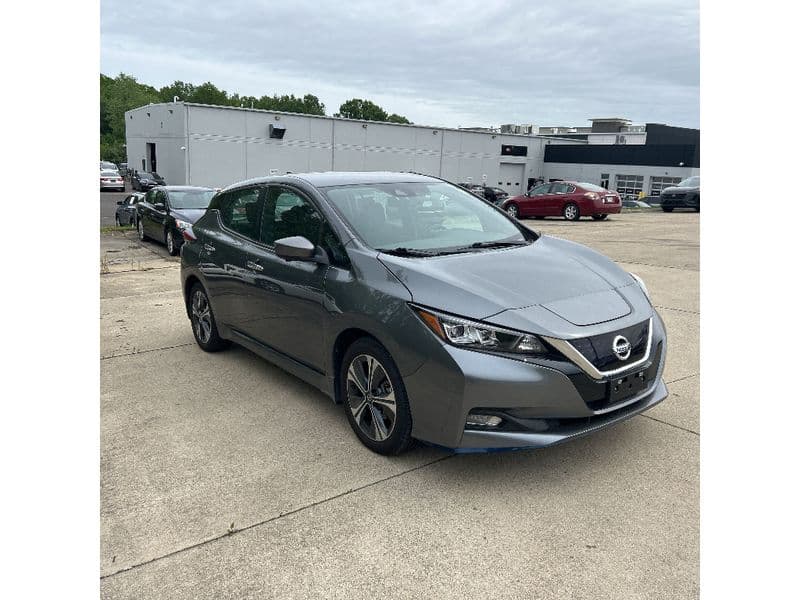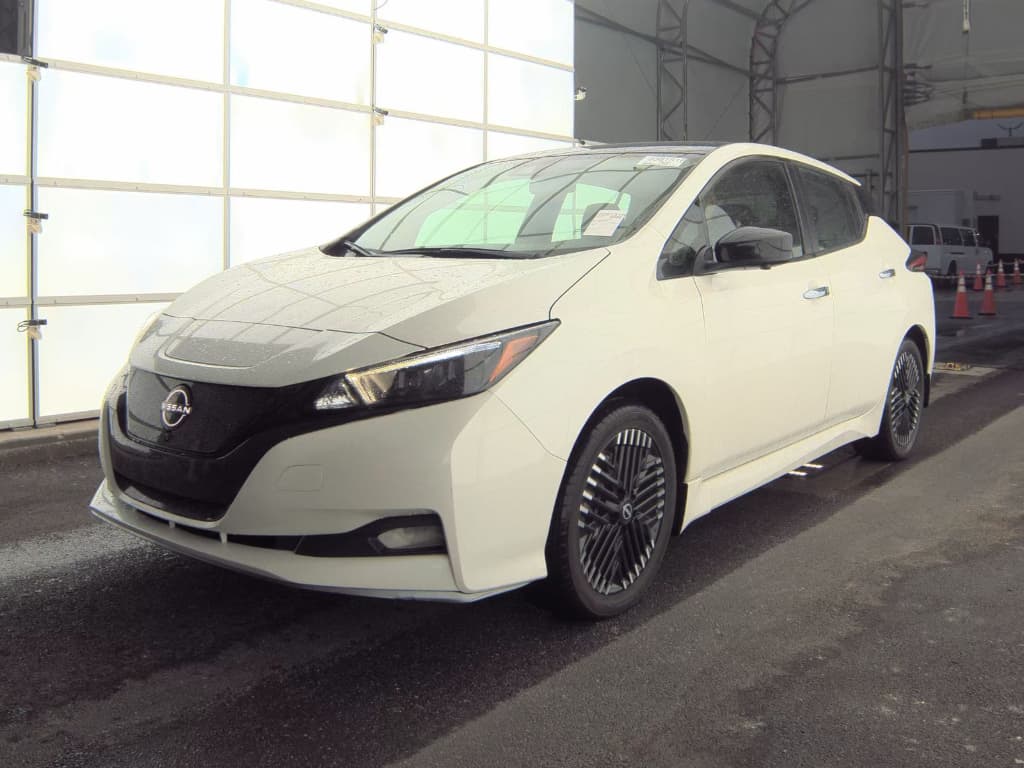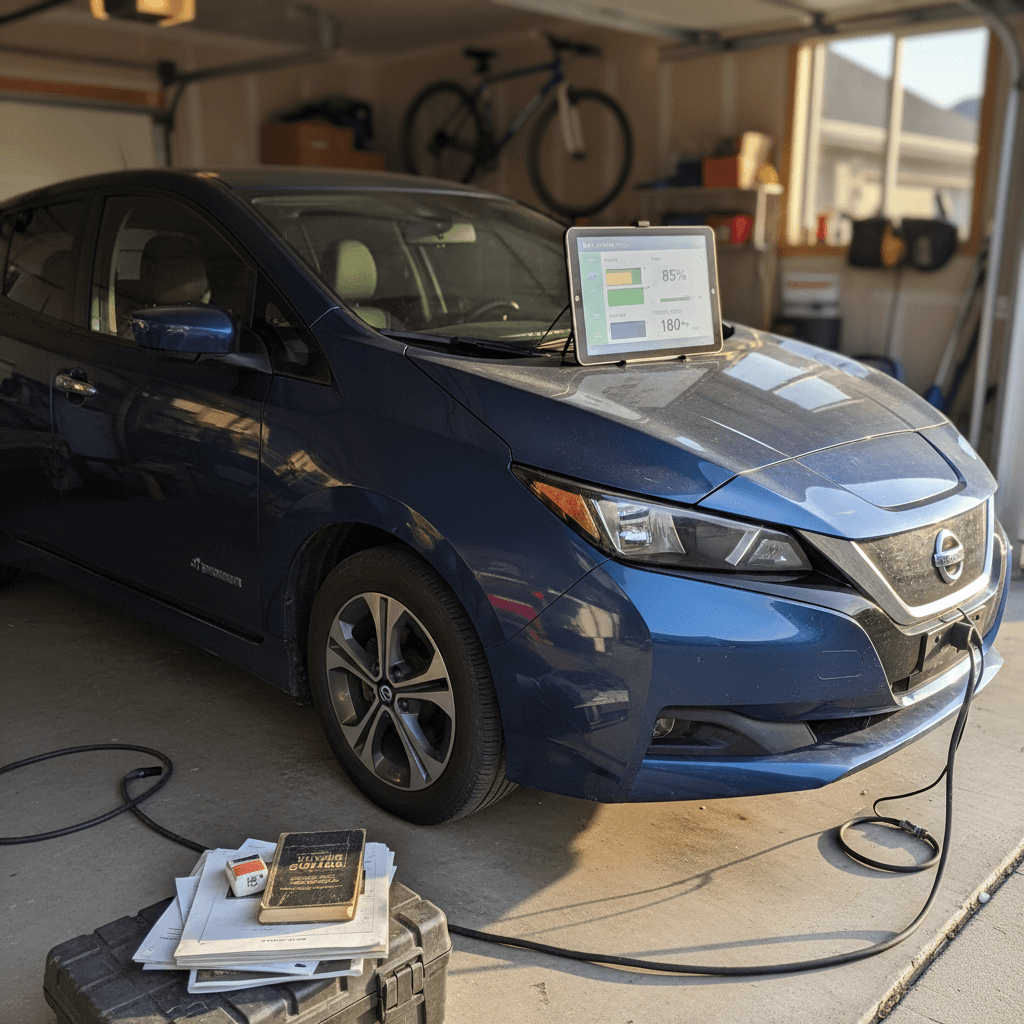
If you’re searching for a Nissan Leaf second hand for sale, you’re looking at one of the most affordable ways to get into an electric vehicle in 2025. The Leaf has been on sale since 2011, which means a deep used market, big depreciation, and plenty of choices, but also some critical differences in range, battery health, and features that you need to understand before you buy.
At a glance
Why consider a Nissan Leaf second hand?
The Nissan Leaf was the first mass-market EV, and that long production run is exactly why it’s such a strong candidate on the used market. There are thousands of Nissan Leafs second hand for sale nationwide, which means you can be picky about year, battery size, trim level, and price.
Key benefits of a used Nissan Leaf
Why it’s still one of the best budget EVs in 2025
Low purchase price
Simple, proven EV tech
Great city commuter
Who the Leaf suits best
Used Nissan Leaf prices in 2025
To get a realistic picture before you start clicking on every Nissan Leaf second hand for sale, it helps to know current market numbers. As of late 2025, major listing sites report an average used Leaf price around the low-$12,000s, with active listings ranging from under $4,000 for older high-mileage cars up to roughly $18,000 for late-model Leaf Plus examples.
Used Nissan Leaf market snapshot (U.S., late 2025)
Typical dealer asking prices by model year
Approximate U.S. asking prices at franchised and independent dealers in late 2025. Actual pricing varies by mileage, battery health, region, and equipment.
| Model year | Battery options | Typical price range (USD) | Who it suits best |
|---|---|---|---|
| 2013–2015 | 24 kWh | $4,000–$8,000 | Ultra-budget commuters with short daily trips and home charging. |
| 2016–2017 | 24 / 30 kWh | $6,000–$10,000 | Budget buyers wanting slightly newer safety tech and options. |
| 2018–2019 | 40 kWh | $8,000–$13,000 | Best value for many shoppers: modern styling and usable range. |
| 2020–2021 | 40 / 62 kWh (Plus) | $11,000–$15,000 | Drivers wanting more range and features but still under $20k. |
| 2022–2025 | 40 / 62 kWh (Plus) | $13,000–$18,000+ | Shoppers prioritizing latest tech, low mileage, and warranty coverage. |
Use this as a starting point; always compare against local listings and battery condition.
Don’t shop on price alone
Real-world range by model year and battery size
Range is where used Leafs differ the most. Nissan has used several battery sizes over the years, 24 kWh, 30 kWh, 40 kWh, and 62 kWh, with official EPA estimates that already sit below newer EVs, and real-world range that declines as the pack ages.
Common Leaf battery sizes
- 24 kWh (early Leafs): EPA range roughly 73–84 miles when new.
- 30 kWh (select 2016–2017): Around 100–110 miles when new.
- 40 kWh (2018+ base): About 149 miles EPA when new.
- 62 kWh (Leaf Plus): Up to roughly 215–226 miles EPA when new.
Degradation, climate, and usage patterns can cut these numbers significantly, especially on older packs without active cooling.
Realistic used range expectations
- Older 24 kWh cars: Often 50–70 miles usable range today.
- 30 kWh cars: Frequently 70–90 miles, depending on history and software updates.
- 40 kWh cars: Many still deliver 110–130 miles in mixed driving.
- 62 kWh Plus: Commonly 170–200+ miles if the battery is healthy.
These are ballpark figures. A verified battery health report, like the Recharged Score, gives you a much clearer picture for a specific car.
Match range to your real needs
Battery health: the make-or-break factor
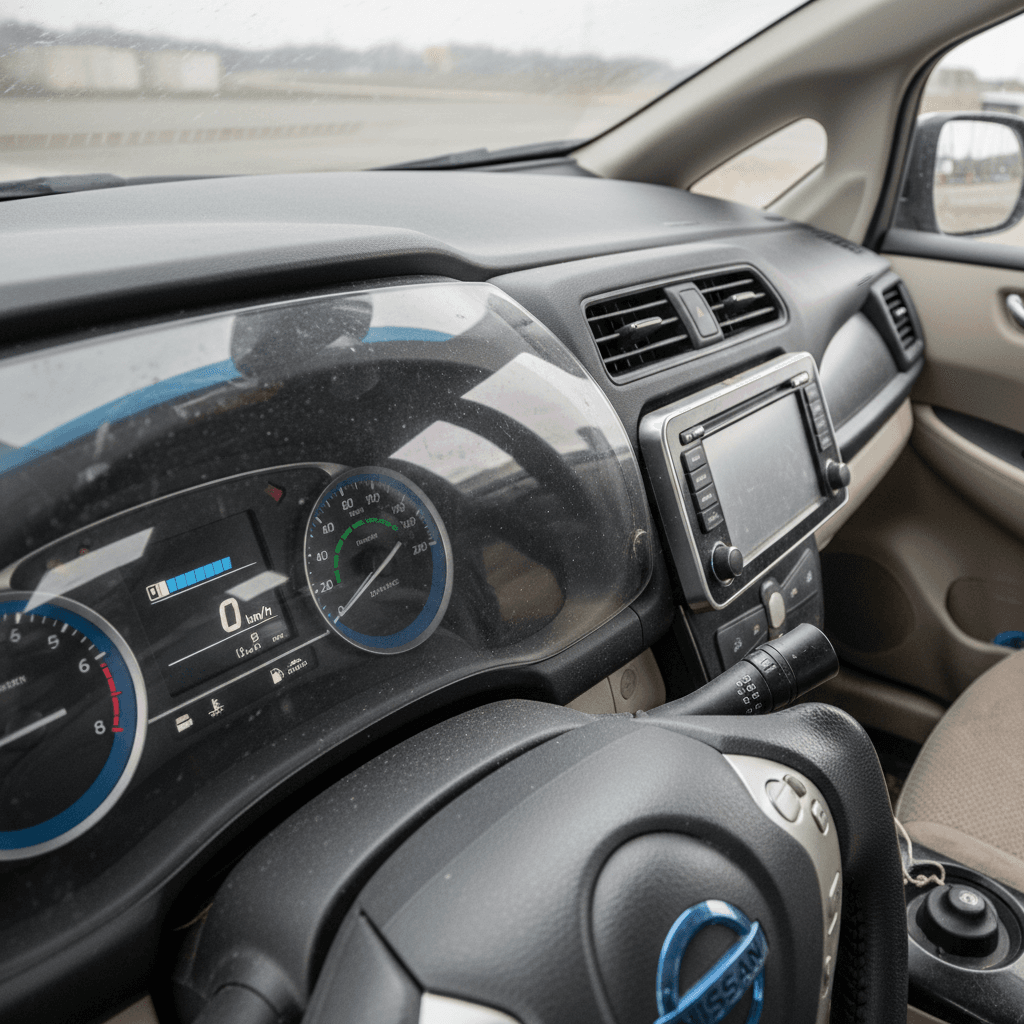
Unlike a gas car, a used EV’s value is dominated by the health of its high-voltage battery. The Leaf displays capacity with 12 small bars on the dash, but that visual alone doesn’t tell the whole story. Age, heat, fast-charging habits, and software updates can all change what those bars actually mean.
What affects a used Leaf’s battery health?
Pay attention to these before you make an offer
Climate
Fast-charging history
Age & storage habits
How Recharged evaluates Leaf batteries
Battery checks before you buy a used Leaf
1. Confirm capacity bars and SOH
Check the dash for remaining capacity bars and, where possible, pull a state-of-health (SOH) reading with a scan tool or battery report. A healthy modern Leaf should be near 90–100% SOH; older cars will be lower, but big drops are a red flag.
2. Test a full-to-empty drive
If you can, drive the car from a high state of charge down to around 20% on a familiar route. Compare miles driven to the percentage used to get a sense of real range.
3. Ask about climate history
Ask where the car spent most of its life. A low-mileage Leaf from a hot region may have a worse battery than a higher-mile Leaf from a cooler area.
4. Review charging habits
Look for clues in the seller’s story: Was the car mostly Level 2 charged at home? Rarely fast-charged? Those are positives. Daily DC fast charging is more concerning.
5. Look for battery warranty coverage
Some Leafs, especially newer ones, may still carry factory battery capacity coverage. Knowing how many bars remain and the in-service date helps you understand your protection.
Warranty, recalls, and safety checks
Warranty and recall status matter more on an EV than on most used gas cars, because battery and charging issues can be expensive. The good news: Nissan has offered generous battery warranties on many Leaf model years, and recall repairs are performed free at dealers.
- Most U.S. Leafs carry an 8-year / 100,000-mile battery warranty against excessive capacity loss on newer packs, and shorter coverage on early 24 kWh packs. Always verify terms by VIN with a Nissan dealer.
- There have been several battery-related recalls on recent Leafs, including software updates and, for certain 2019–2022 models, advisories about Level 3 DC fast charging due to potential overheating risks.
- Standard safety recalls (airbags, brake systems, etc.) also apply. All recall work should be done before you take ownership, especially if you plan to fast charge often.
Important note on recent recalls
How Recharged handles recalls and safety
Ready to find your next EV?
Browse VehiclesBest model years and trims to target
With more than a decade of Leafs on the road, not every Nissan Leaf second hand for sale is equally desirable. Here’s how to think about model years and trims from a value and usability standpoint.
Model-year short list for most shoppers
Balancing price, range, and features
2018–2019 (40 kWh)
2020–2022 Leaf Plus (62 kWh)
2023–2025
What about 2011–2015 Leafs?
- S: Base trim with fewer features but lower cost; often fine for commuters who just need basic transport.
- SV: Mid-trim with more comfort and tech; a common sweet spot in the used market.
- SL: Top trim with leather and more features; best for buyers who care about amenities, not just price.
Where to find a Nissan Leaf second hand for sale
You’ve got three main avenues when you’re scanning for a Nissan Leaf second hand for sale: private-party sellers, traditional dealers, and EV-focused marketplaces like Recharged. Each has trade-offs in pricing transparency, inspection quality, and convenience.
Private sellers & local dealers
- Private-party deals can be cheaper but often come with limited documentation and no battery diagnostics.
- Non-EV dealers may not have deep Leaf expertise; you’ll sometimes see vague descriptions of battery health.
- Buying locally makes it easy to test drive but can limit your choices depending on where you live.
EV-focused platforms like Recharged
- Curated inventory of used EVs, including Leafs, with Recharged Score Reports that verify battery health.
- Transparent, fair-market pricing and the option to finance, trade in, or sell your existing car.
- Nationwide digital buying experience plus an in-person Experience Center in Richmond, VA if you prefer to see vehicles on site.
If you’re new to EVs, having an EV specialist walk you through battery reports and real-world range can be more valuable than squeezing out the last few hundred dollars on price.
Leverage financing and trade-in
Used Nissan Leaf inspection checklist
Before you sign anything, whether you’re buying from a neighbor or an online retailer, run through a Leaf-specific inspection. Traditional pre-purchase inspections often focus on engines and transmissions, which the Leaf doesn’t have. You need an EV-focused lens.
On-the-ground inspection steps
1. Inspect the charging port and cables
Open the charge door and check for corrosion, damage, or loose pins. Make sure the included Level 1 or Level 2 cable is in good condition and present in the trunk if advertised.
2. Check tires and brakes for uneven wear
Uneven tire wear can be a sign of alignment or suspension issues. Brakes on EVs can last a long time thanks to regen, but seized calipers or rusted rotors can still happen.
3. Confirm all driver-assistance features
Test cruise control, lane-keeping, parking brake, backup camera, and any ProPILOT Assist features if equipped. These systems are valuable and should work as advertised.
4. Scan for warning lights and error messages
Turn the car on and look for any EV system warnings. Ask for documentation if the car has had repeated battery or charging faults.
5. Plug in and start a charge session
If possible, plug into a Level 2 charger and confirm that charging starts quickly and without errors. Listen for unusual sounds from the onboard charger or cooling fans.
6. Review history reports and service records
Combine a traditional vehicle history report with EV-specific documentation, like battery checks or recall work orders. More paperwork usually means fewer surprises.
Ownership costs: charging, maintenance, and resale
One reason shoppers hunt for a Nissan Leaf second hand for sale is to drive their total cost of ownership down. Even though EVs can be more expensive new, a used Leaf often undercuts comparable gas hatchbacks once you factor in fuel and maintenance.
What you’ll spend (and save) with a used Leaf
Costs to plan for after you buy
Electricity vs. gas
Maintenance
Future resale value
Look for used-EV incentives
Frequently asked questions about used Nissan Leafs
Used Nissan Leaf FAQ
If you approach the market with clear expectations and the right data, a Nissan Leaf second hand for sale can be one of the smartest EV buys available today. Prioritize battery health, range that comfortably covers your real driving, and verified recall and warranty status. And if you’d rather not decode all of that on your own, Recharged’s battery diagnostics, fair-market pricing, financing, and EV-specialist support are designed to help you get into the right Leaf, with far fewer surprises after you plug in.