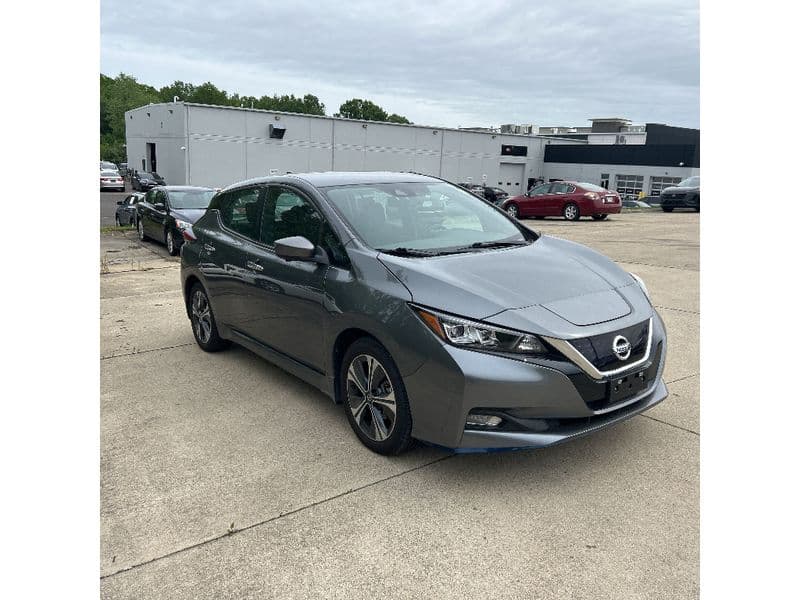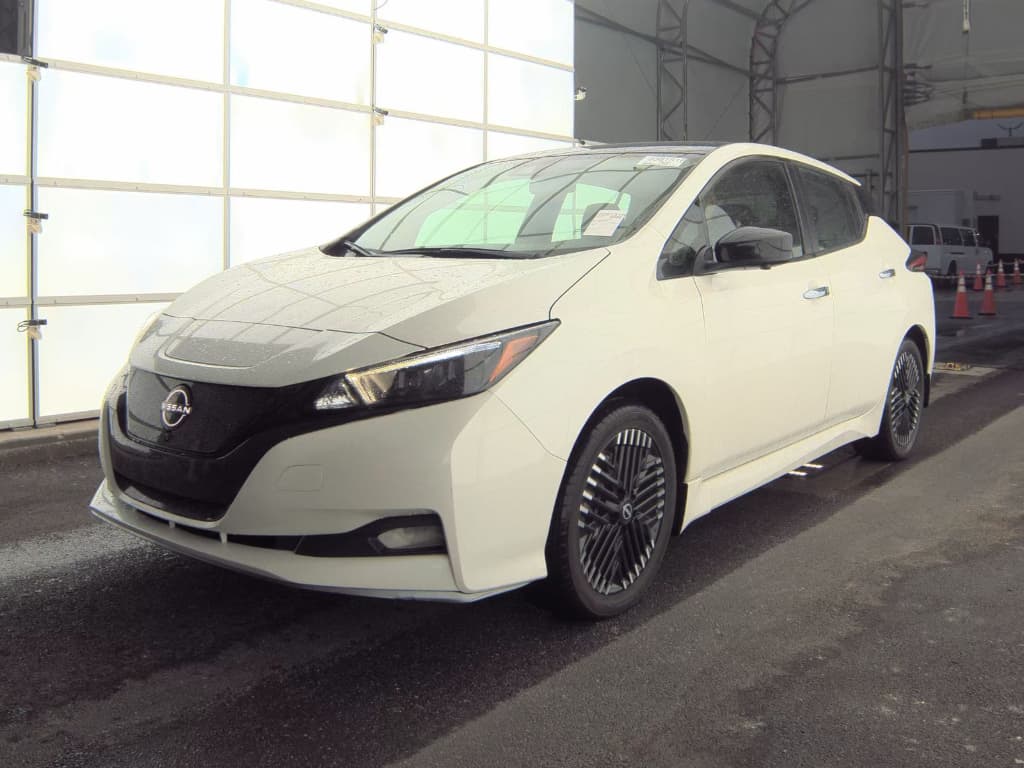
If you grew up on oil changes and timing belts, Nissan Leaf maintenance feels almost suspiciously light. No engine oil, no spark plugs, no exhaust, no timing chain. Yet the Leaf is still a car: it has brakes, tires, coolant loops and a $10,000–$15,000 battery pack you really don’t want to mistreat, especially if you’re shopping used.
Key idea
Why Nissan Leaf maintenance feels weirdly easy
The Leaf is a pure battery electric vehicle. That means there’s no engine oil, no fuel system, almost no transmission to service, and far fewer moving parts than a gas hatchback. Most owners discover their "service visits" quickly devolve into tire rotations, cabin filters and the odd brake fluid flush.
What your Leaf does <em>not</em> need
Compared with a similar gas compact, here’s what disappears from the schedule.
No engine service
No oil changes, no spark plugs, no timing belts, no fuel filters. The entire combustion side of ownership just… vanishes.
No complex gearbox
The Leaf uses a simple single‑speed reduction gear, not a multi‑gear automatic or CVT. Less heat, less wear, fewer moving parts.
No exhaust system
No catalytic converters, mufflers or oxygen sensors to replace. One less rust‑prone system to worry about as the car ages.
That’s the good news. The trap is assuming you can ignore everything else. The Leaf still relies on friction brakes for hard stops, coolant to manage the battery and inverter on most model years, and a conventional 12‑volt battery to wake the whole show up in the morning.
What does Nissan Leaf maintenance actually cost?
Nissan Leaf ownership by the numbers
A lot of first‑time EV buyers ask, "So is maintenance basically zero?" Not quite. You’ll still budget for tires, brake fluid, cabin filters, coolant and the 12‑volt battery. But if you keep your Leaf long enough, the savings versus a gas car are real, especially if you avoid dealership upsells for services the car doesn’t need.
Used Leaf shopping tip
Core Nissan Leaf maintenance schedule
Nissan has updated the Leaf’s service schedule over the years and it varies slightly by market, but the broad strokes are remarkably consistent. Here’s a simplified, owner‑friendly schedule that works for U.S. Leafs up through the current generation. Always cross‑check with your specific model year’s maintenance guide.
Simplified Nissan Leaf maintenance schedule (most model years)
Approximate intervals for typical U.S. driving. Follow time or miles, whichever comes first.
| Interval | What to do | Notes |
|---|---|---|
| Every 6 months or 5,000–7,500 miles | Rotate tires; multi‑point inspection | Many owners sync this with tire rotations. EVs eat front tires quickly if not rotated. |
| Every 12 months or ~15,000 miles | Inspect brakes, suspension, steering, wipers, cabin filter | Cabin (pollen) filter often needs replacing every 1–2 years. |
| Every 2 years | Brake fluid change (recommended) | Nissan often specifies ~24 months. Regenerative braking means low pad wear, but the fluid still ages. |
| At 5–7 years | 12‑volt battery replacement | Some die sooner, some later. A weak 12‑volt can strand the car even if the main pack is full. |
| At 10–15 years or 125,000 miles (factory fill) | Coolant replacement | The Leaf’s long‑life blue coolant typically isn’t due until very high mileage or age. |
| Around 90,000–100,000 miles (when specified) | Reduction gear oil change | Some schedules only call for inspection; many owners proactively change it once for peace of mind. |
Intervals may vary slightly by year and driving conditions. Check your owner’s manual for the official schedule for your VIN.
Avoid “EV oil changes”
Battery health, care and long-term life
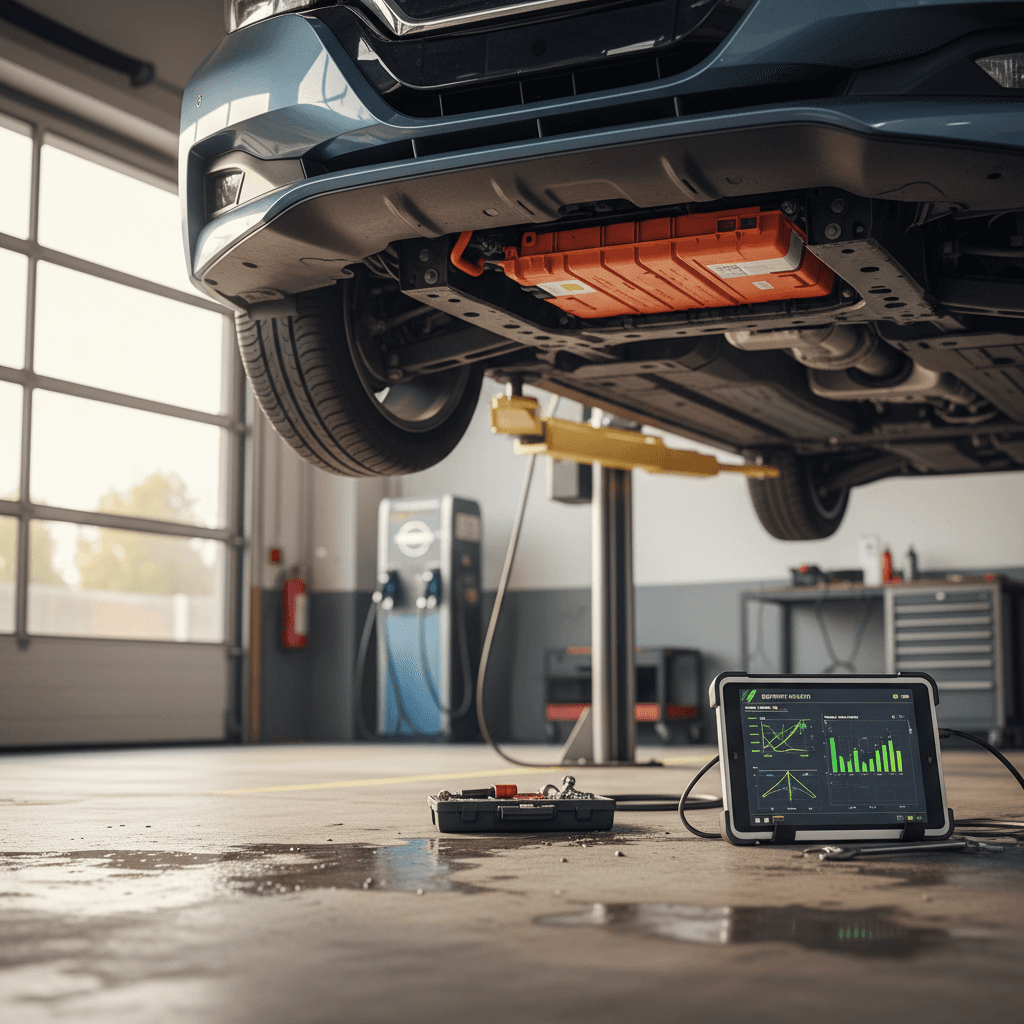
The traction battery is the Leaf’s beating heart and the single biggest "maintenance item" in the long run. You don’t change it like oil, but your habits absolutely shape how quickly it degrades. Nissan has published simple guidance over the years that boils down to: avoid extremes.
- Keep daily charge level in the middle: Parking at 40–80% for days at a time is easier on the pack than living at 100% or near zero.
- Avoid full charges when you don’t need them: Topping to 100% right before a road trip is fine; leaving it at 100% all weekend in July is not ideal.
- Don’t routinely run it to "turtle": Deep discharges (running it until the car slows and begs for mercy) add stress. Try to recharge with 10–20% remaining.
- Respect heat: On older air‑cooled Leafs, heat is the enemy. Avoid repeated DC fast charges on hot days and try to park in shade. Newer liquid‑cooled packs cope better but still prefer moderate temps.
- Let it cool before charging hard: If you just finished a long highway run, give the car a few minutes before starting a fast charge, especially in summer.
About recent Leaf battery recalls
If you’re buying used, you care less about lab theory and more about the pack in the car in front of you. That’s where objective battery testing becomes crucial. Leaf owners love to quote the dash "bars" or third‑party apps, but those are still estimates.
How Recharged handles Leaf batteries
Ready to find your next EV?
Browse VehiclesBrakes, tires and fluids on a Leaf
With regen doing most of the slowing, you might go 70,000–100,000 miles on original pads and rotors. That’s the upside. The subtle downside is that brake components can age from lack of use, slides seize, fluid absorbs moisture, even if pads aren’t worn.
What actually wears out on a Leaf
Think of your Leaf in three buckets: rubber, hydraulics and cooling.
Tires
EV torque is rough on tires. Expect to replace a set roughly every 25,000–40,000 miles depending on driving style and alignment. Keep them rotated every 5,000–7,500 miles.
Brake fluid
Even if pads last forever, brake fluid absorbs moisture over time. A 2‑year interval is conservative but sensible, especially in humid climates or for older cars.
Coolant loop
Most Leafs use long‑life blue coolant for the inverter and (on newer cars) the battery. Factory fill is often rated for ~125,000 miles or 15 years before the first change.
The other underestimated wear item is the humble 12‑volt auxiliary battery. When it gets weak, the Leaf can throw bizarre error messages or refuse to "start" even with a healthy main pack. If you’re anywhere past year five and seeing random warnings, test the 12‑volt first.
Quick 12‑volt sanity check
DIY vs dealer: where to service a Leaf
What’s easy to DIY
- Cabin air filter – slightly fiddly the first time, cheap thereafter.
- Wiper blades – same as any other car.
- Tire rotations – if you have a jack, stands and torque wrench.
- 12‑volt battery swap – straightforward under‑hood job for most owners.
Plenty of Leaf‑specific walkthroughs live on YouTube if you’re comfortable with tools.
When a shop makes sense
- Brake fluid flushes – not expensive, but you want someone who understands EV brake systems.
- Coolant changes – best left to shops familiar with high‑voltage safety.
- High‑voltage diagnostics – anything involving orange cables, contactors or the pack.
- Software updates & recalls – dealer or EV‑savvy independent shop territory.
If a shop treats your Leaf like a Sentra with the spark plugs missing, find another shop.
For basic maintenance, a good independent shop that understands EVs is often cheaper and more transparent than a dealership. The non‑negotiable rule: no one disables safety systems, no one pokes the high‑voltage hardware without training. That’s where a specialist, or a retailer like Recharged that lives in the EV world every day, earns their keep.
Maintenance differences by Leaf model year
Not all Leafs are created equal. From a maintenance perspective there are three broad eras that matter for you as an owner or buyer.
- 2011–2016 (early, 24 kWh air‑cooled packs): The original hatch. Mechanically simple, but the early batteries in hot climates are notorious for faster degradation. Maintenance is otherwise very light; battery health is the big variable.
- 2017–2024 (30–62 kWh, improved chemistry; some air‑cooled, some better‑managed): Longer range, stronger motors, more weight. Expect slightly faster tire wear. Nissan’s schedule introduces more attention to coolant and brake fluid but still no engine work, obviously.
- 2026+ redesigned Leaf crossover (liquid‑cooled packs, CCS & NACS): The upcoming generation adds modern thermal management and dual fast‑charge standards. That’s good for battery health, but you now have a more complex cooling system and more weight, again, budget accordingly for tires and alignment.
Model-year nuance
How maintenance impacts used Leaf value
Unlike a gas car, a used Leaf’s value is dominated by remaining battery capacity plus the usual cosmetic and accident history. But maintenance still plays a supporting role, especially on older cars.
Maintenance that helps value
- Documented brake fluid changes every few years.
- Proof of coolant service around the 10–15‑year mark.
- Regular tire rotations and alignments to prevent weird wear.
- Recent 12‑volt battery replacement.
These send the signal that the owner understood EVs and wasn’t just driving it into the ground.
Red flags for buyers
- Obvious range loss with no explanations or test results.
- Skipped brake fluid service on a decade‑old car.
- Uneven tire wear hinting at ignored alignment issues.
- Open recalls for battery or charging issues.
On Recharged, you’ll see range estimates, battery health and pricing lined up against the wider used‑EV market so you know what you’re paying for.
Nissan Leaf maintenance checklist
Owner-friendly Nissan Leaf maintenance checklist
1. Set a tire rotation reminder
Use the car’s maintenance menu or your phone to remind yourself every 5,000–7,500 miles. Even wear preserves range, handling and ride comfort.
2. Plan for brake fluid every 2 years
Put a note in your calendar. It’s a modest bill but a big deal for long‑term brake performance, especially in humid regions.
3. Check cabin filter annually
If your HVAC is noisy or airflow is weak, the cabin filter is a prime suspect. Many owners change it themselves in 20–30 minutes.
4. Test the 12‑volt battery after year five
A quick load test at a shop or parts store can warn you before it fails. Don’t wait for mysterious warning lights.
5. Review coolant age on older Leafs
If your car is creeping toward 10–15 years on the original coolant, talk with an EV‑savvy shop about service. Don’t mix random coolants; Nissan’s blue long‑life formula is the baseline.
6. Audit your charging habits
Are you living at 100% every day, or fast‑charging to the moon on hot afternoons? Small tweaks, like charging to 80% for daily use, can add years of useful life to the pack.
FAQ: Nissan Leaf maintenance
Frequently asked questions about Nissan Leaf maintenance
The big picture: owning a Leaf long-term
A Nissan Leaf asks less of you than a gas hatchback, but it does ask for something: a little structure, a little restraint with fast charging, and the occasional brake fluid and coolant service. Treat it that way and you’re rewarded with quiet, low‑drama miles and running costs that stay pleasantly boring.
If you’re already a Leaf owner, use the checklist above to build a simple maintenance plan and stick it in your glovebox or notes app. If you’re shopping for one, don’t just kick tires, ask about brake fluid, coolant age and, above all, battery health. On Recharged, those questions are already answered for you in the Recharged Score Report, so you can focus on whether the car fits your life, not whether someone skipped the basics.