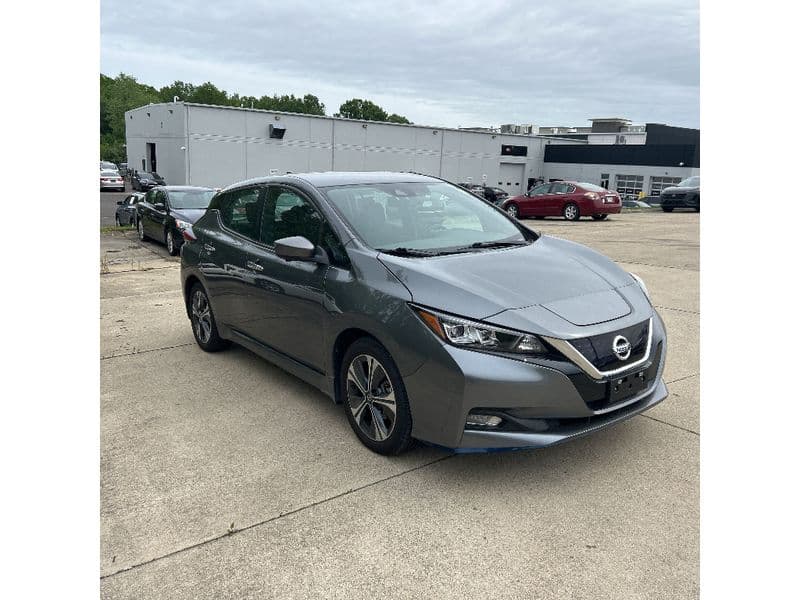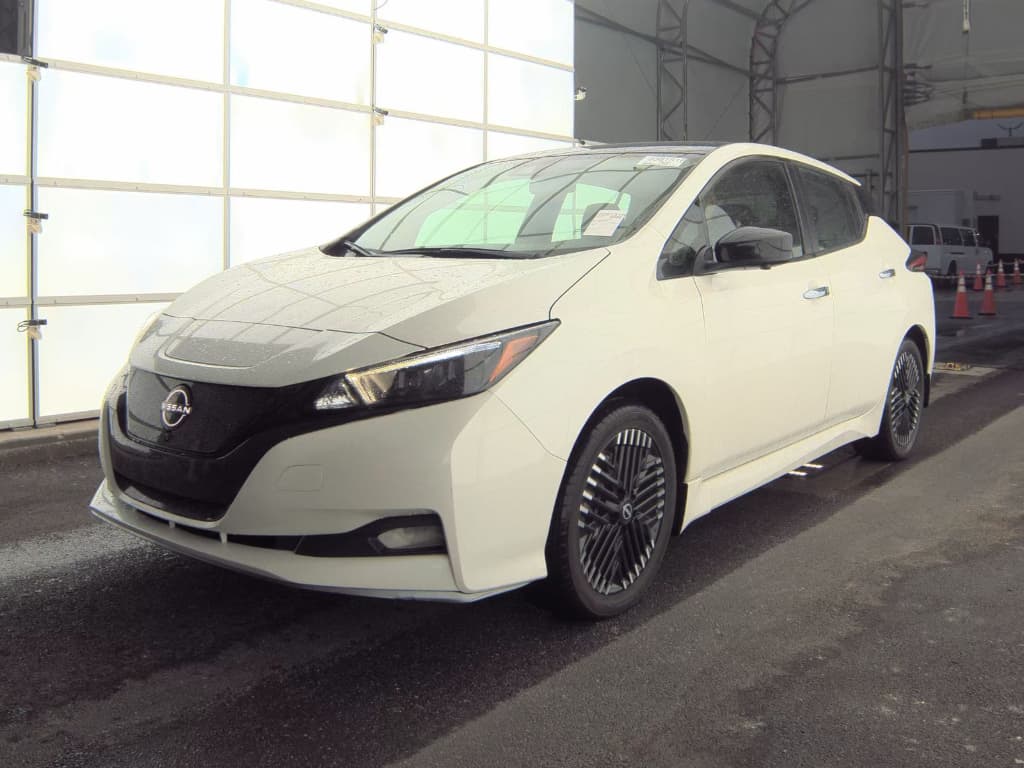
You hear it all the time: “An EV is pennies per mile.” But what does that actually look like for a Nissan Leaf cost per mile to drive in the real world, with today’s electricity prices? If you’re cross‑shopping a used Leaf against a gas hatchback, or just trying to sanity‑check your power bill, the numbers matter more than the hype.
Key takeaway up front
How much does a Nissan Leaf cost per mile to drive?
Let’s start with the simple, averaged answer and then show you how to adjust it for your situation.
Typical Nissan Leaf electricity cost per mile (U.S.)
Those numbers are built from two ingredients you can plug into your own calculator: how efficient the Leaf is and what your utility charges per kilowatt‑hour (kWh). Once you know those, the math is dead simple: cost per mile = (kWh per 100 miles ÷ 100) × electricity rate.
Leaf efficiency: kWh per 100 miles and mi/kWh explained
Nissan has steadily tweaked the Leaf over the years, but across generations it’s always been reasonably efficient. The EPA and owner data give us a good bracket to work with.
EPA and real‑world efficiency for Nissan Leaf
Use these numbers as a starting point; your actual efficiency will depend on speed, weather, terrain, and HVAC use.
| Leaf version | EPA kWh/100 miles | EPA mi/kWh (approx.) | Common real‑world mi/kWh |
|---|---|---|---|
| Early Leaf (2011–2016, 24 kWh) | ~34 | ~2.9 | 3.0–3.5 |
| 2nd‑gen 40 kWh (2018+, S/standard) | ~30–31 | ~3.3 | 3.3–3.8 |
| 62 kWh / Plus models | ~31 | ~3.2 | 3.2–3.6 |
| Latest 2025+ Leaf refresh | ~30 | ~3.3 | 3.4–3.8 |
EPA figures are rounded; real‑world averages come from owner reports and road tests.
Quick way to get YOUR number
In most normal driving, mixed city/highway, no extreme cold, you’ll probably settle somewhere between 3.3 and 3.8 mi/kWh. Highway‑heavy commutes, high speeds, and cold winters can drag that toward 2.5–3.0 mi/kWh; gentle suburban use in mild weather can push it over 4.0.
Electricity cost examples by kWh rate
Electricity prices have climbed over the past couple of years. Nationwide, recent federal data pegs the average residential rate around the upper‑teens cents per kWh, but it’s wildly different from state to state and even neighborhood to neighborhood.
What a Nissan Leaf costs per mile at different power prices
Assuming 31 kWh/100 miles (≈3.2 mi/kWh), a realistic mixed‑driving efficiency
Low‑cost power
$0.12/kWh (some Midwest/South co‑ops):
- 31 kWh × $0.12 = $3.72 per 100 miles
- ≈ $0.037 per mile
Average‑ish power
$0.18/kWh (close to U.S. recent averages):
- 31 kWh × $0.18 = $5.58 per 100 miles
- ≈ $0.056 per mile
High‑cost power
$0.30/kWh (think California coastal or pricey IOUs):
- 31 kWh × $0.30 = $9.30 per 100 miles
- ≈ $0.093 per mile
Watch for tiered and time‑of‑use rates
Do the same math with your own bill. Grab the total kWh charge divided by total kWh used on your statement (ignore taxes and fees for a simple estimate), then plug that rate into the formula. Over a year, even a few cents per kWh is the difference between a Leaf that feels dirt cheap and one that’s merely good.
Nissan Leaf vs gas car: cost per mile comparison
Numbers are nice, but what you really want to know is how a Leaf stacks up against a regular compact gas car you might otherwise drive.
Electricity vs gasoline: simple cost‑per‑mile comparison
Assumes $0.18/kWh electricity and $3.75/gallon gasoline, typical of many U.S. markets in 2025–2026.
| Vehicle | Energy use | Energy price | Cost per 100 miles | Cost per mile |
|---|---|---|---|---|
| Nissan Leaf (recent model) | 31 kWh/100 mi | $0.18/kWh | $5.58 | $0.056 |
| Efficient gas compact (35 mpg) | 2.86 gal/100 mi | $3.75/gal | $10.73 | $0.11 |
| Typical crossover (28 mpg) | 3.57 gal/100 mi | $3.75/gal | $13.39 | $0.13 |
| Thirsty SUV (20 mpg) | 5.0 gal/100 mi | $3.75/gal | $18.75 | $0.19 |
Your local fuel and electricity prices will change the exact spread, but the pattern stays similar.
Fuel savings in one line
Stretch that out: at 12,000 miles per year, the Leaf in our example burns about $670 in electricity; the 35‑mpg gas car drinks roughly $1,290 in fuel. That’s a $600+ annual difference, and in high‑gas‑price regions the gap only widens.
Real‑world Leaf owners: what they actually pay
If you hang out in Leaf forums for more than five minutes, you’ll see a consistent story: most owners land in the $0.03–$0.06 per mile band for home charging. The wide spread comes from wildly different power prices and driving styles.
- Owners in cheap‑power states report full months of commuting for $20–$30 in extra electricity, translating to around $0.03–$0.04 per mile.
- In high‑rate coastal cities, drivers sometimes see $0.07–$0.09 per mile at base rates, but many cut that in half by shifting to off‑peak EV plans or using workplace charging.
- Several long‑term owners who carefully log kWh from their wall (not just the car display) end up right in line with EPA energy consumption once you average summer and winter.
Check your own cost in three drives
Maintenance, tires, and other running costs
Fuel is only part of the story. When you compare a Leaf to a gas car, maintenance is where things quietly tilt in the EV’s favor over time.
Typical Leaf maintenance
- No oil changes, spark plugs, or timing belts
- Brake pads often last 80,000+ miles thanks to regen braking
- Cabin air filter and brake fluid every few years
- Tires every 30,000–50,000 miles depending on brand and driving
What that means per mile
- Many owners see maintenance averaging 2–4 cents per mile over several years.
- Independent studies of EV ownership often show thousands less in maintenance over 100,000 miles versus a comparable gas car.
- Even when you add tires, total Leaf running costs usually stay well below a gas car with similar performance.
The big wild card: the high‑voltage battery
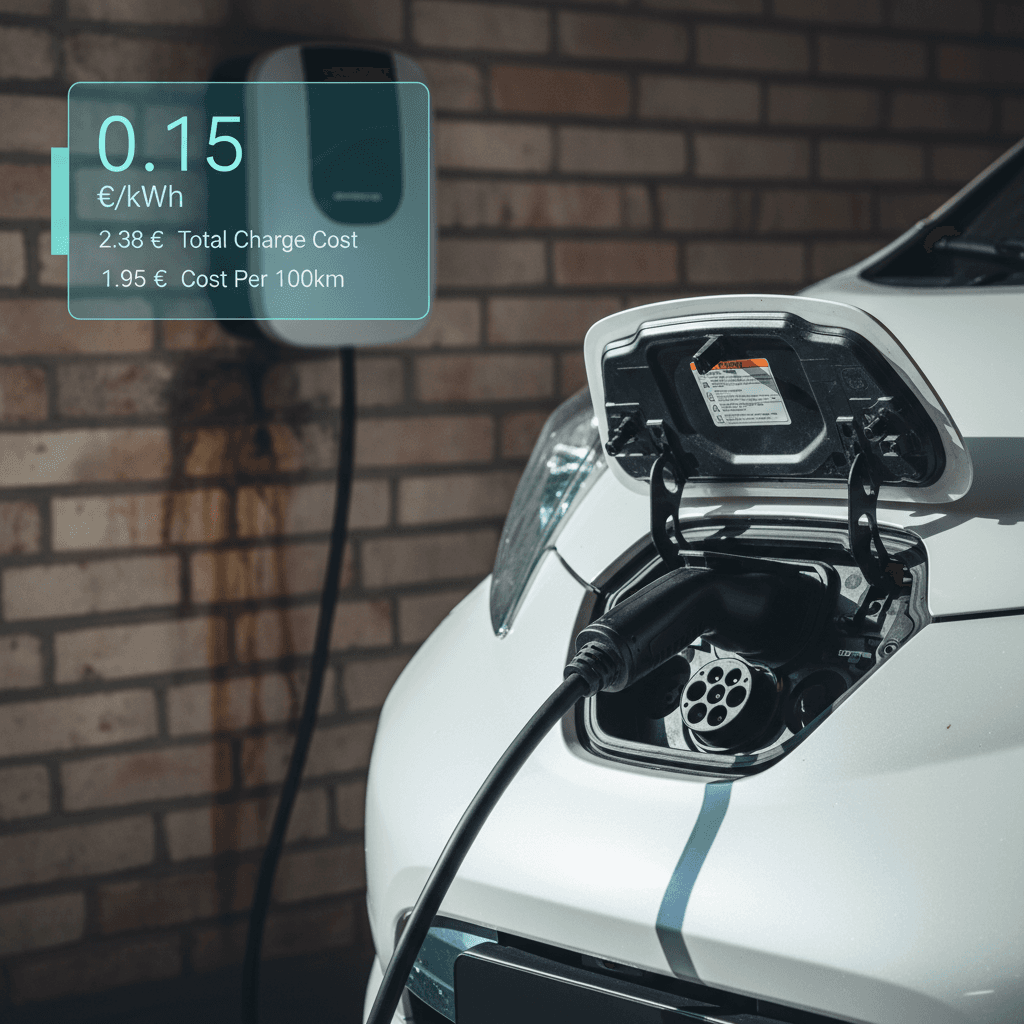
Home charging vs public charging: cost per mile
Everything so far has assumed you mostly charge at home. Sprinkle in public charging and the equation changes fast.
How charging location changes your Leaf’s cost per mile
Ballpark examples based on common pricing models in 2025–2026
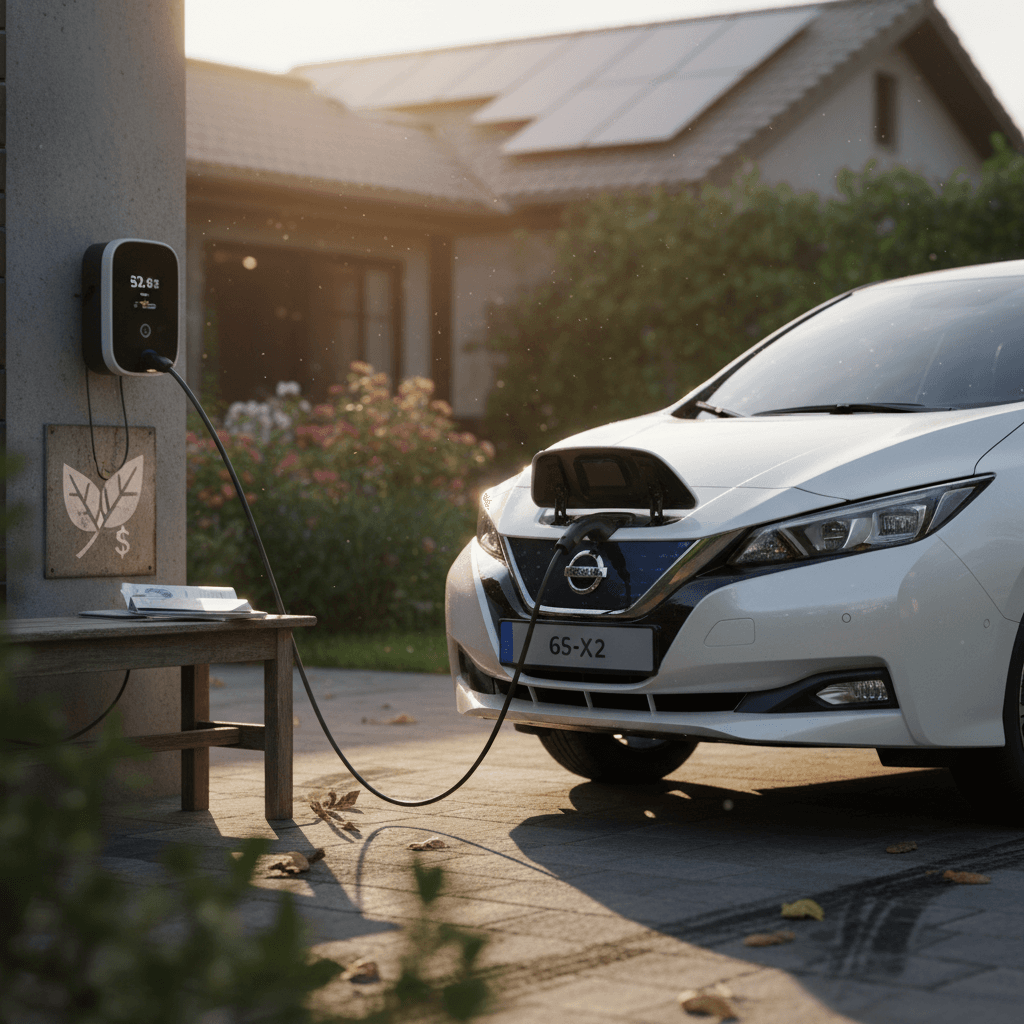
Home Level 2
$0.15–$0.20/kWh typical range:
- 31 kWh/100 mi → $4.65–$6.20
- ≈ $0.047–$0.062 per mile
Per‑kWh public DC fast charging
$0.30–$0.50/kWh is common:
- 31 kWh/100 mi → $9.30–$15.50
- ≈ $0.09–$0.16 per mile
Per‑minute public charging
Stations that bill by the minute can be tricky:
- Your effective $/kWh depends on how fast the Leaf is charging.
- If you linger at low charge rates, your cost per mile can exceed gas.
Don’t road‑trip on DC fast alone
If you’re apartment‑based with no home charging, run the numbers on workplace, community, and local public options. A Leaf can still make sense, but the easy half‑price‑vs‑gas story assumes you can plug in at home most nights.
How battery health changes your cost per mile
On a new or healthy Leaf, your cost per mile is mostly about electricity price and driving style. On an older or abused car, battery health can swing the equation.
- A healthy battery lets you use more of your miles on cheap home charging and less on expensive DC fast or public Level 2.
- Severe degradation forces more frequent charging stops, which can push you into higher‑priced public charging or less convenient times of day.
- In the extreme case, if you wind up paying for a replacement pack, your lifetime cost per mile balloons, especially if you don’t keep the car long enough to spread that cost out.
Why battery reports matter on a used Leaf
Used Nissan Leaf: what to look at before you buy
If you’re eyeing a used Leaf because of its low running costs, you’re on the right track, but only if you pick the right car. Here’s how to keep those pennies‑per‑mile promises from turning into a surprise.
Cost‑per‑mile checklist for used Leaf shoppers
1. Check your local kWh price
Before you fall in love with any EV, pull out your latest utility bill. If you’re paying 30+ cents per kWh with no off‑peak plan available, your Leaf’s cost per mile will still beat many gas cars, but not by as much as the internet memes suggest.
2. Understand your driving pattern
Short daily commutes with home parking? A Leaf is in its element. Long freeway slogs at 75 mph with no home charger? Your real‑world efficiency and cost per mile will be worse than the EPA sticker.
3. Get a real battery health read
Ask the seller for a recent battery diagnostic report. With Recharged, every Leaf listing includes a <strong>Recharged Score Report</strong> with verified battery health, projected range, and degradation insights so you aren’t guessing.
4. Look at prior charging habits
A car that lived on DC fast chargers will often have more degradation than one fed mostly by Level 2 at home. Ask about typical charging, and scan service records for repeated fast‑charge issues.
5. Budget tires and routine items
Fold in a realistic allowance for tires, cabin filters, and brake fluid. For many Leaf owners this averages <strong>2–4 cents per mile</strong>, still far below most gas cars once you include oil and other engine‑related service.
6. Compare to your current gas bill
Take your last few months of fuel receipts, divide total dollars by total miles, and compare directly to your Leaf estimate. That’s the real savings picture, not a generic nationwide average.
FAQ: Nissan Leaf cost per mile
Frequently asked questions about Leaf running costs
Bottom line: should you buy a Leaf for low‑cost driving?
If your goal is to drive as cheaply as possible without living in a science experiment, the Nissan Leaf makes a compelling case. Charged mostly at home on sane electricity rates, it delivers 5–10 cents per mile all‑in for energy and basic upkeep, with far less day‑to‑day hassle than most gas cars. The catch is that your exact cost per mile depends on three things you control: your electricity rate, your driving style, and the health of the battery in the car you buy.
If you’re shopping used, this is where Recharged leans in. Every Leaf on our marketplace comes with a Recharged Score Report that spells out battery health, projected range, and fair market pricing, so you can estimate your cost per mile with eyes wide open, not crossed fingers. Run the numbers, compare them to your current gas bill, and if the math pencils out, a Leaf can be one of the lowest‑cost ways to put real miles under your wheels in the next decade.