
When you think about Nissan Leaf maintenance costs, you probably focus on tires and brakes. But the coolant flush cost is one line item Leaf owners ignore until a dealer quote shows up on a service estimate. Understanding what a Nissan Leaf coolant flush really costs, and when it’s actually due, can save you money and help you care for the most expensive part of the car: the battery.
Quick answer
Why Nissan Leaf coolant service matters
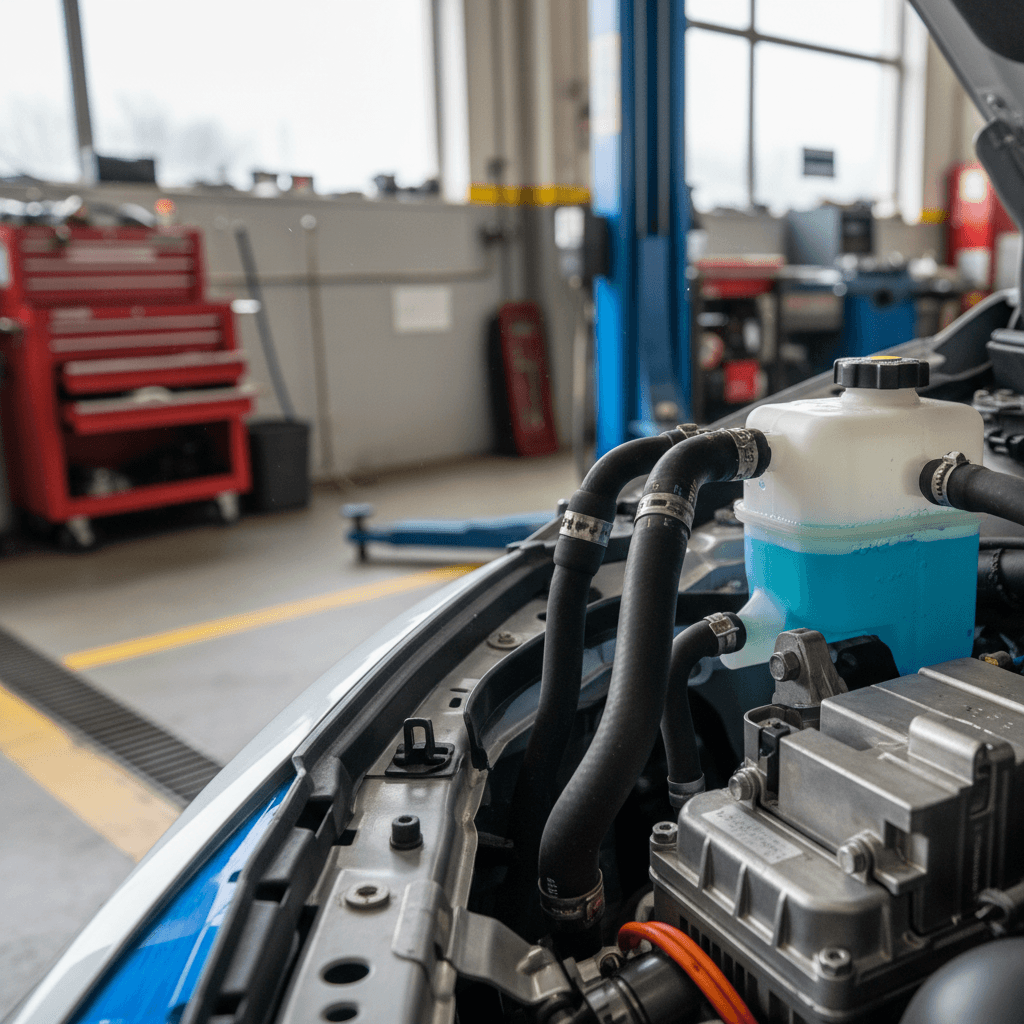
Even though the Leaf doesn’t have an engine or traditional radiator, it still uses coolant. Depending on the generation, that coolant helps control temperature for the onboard charger, inverter, electric motor, and sometimes the battery pack. If the fluid breaks down or the level drops, components can run hotter than they should, which can shorten their life or trigger power‑reduction warnings.
- Maintains proper temperature for power electronics and motor
- Helps protect seals, hoses, and aluminum components from corrosion
- Keeps the cooling pump from running dry or working harder than it should
- Supports long-term reliability, which matters on a used Leaf with an aging battery
Don’t confuse cabin heat with coolant
Typical Nissan Leaf coolant flush cost
What Leaf owners typically pay in the U.S.
Those ranges reflect what owners report and what many shops quote for a routine coolant change, not a major repair. Urban coastal markets and dealer‑dense areas tend to quote on the high end; smaller markets or non‑dealer shops are often lower. If your estimate is well above these ranges, it’s worth asking for a line‑item breakdown and verifying exactly what’s being done.
Sample Nissan Leaf coolant service pricing
Approximate price ranges for common coolant services on a Nissan Leaf in the U.S. These are ballpark figures, not guaranteed quotes.
| Service scenario | Where | Estimated total | What’s included |
|---|---|---|---|
| Basic coolant drain & fill | Independent shop | $150–$250 | Drain, refill with Nissan‑spec coolant, quick leak check |
| Coolant flush (power electronics only) | Nissan dealer | $220–$350 | Flush, refill, bleed, system test |
| Coolant flush including battery circuit (newer models) | Nissan dealer | $300–$450 | Two circuits serviced, extra coolant, longer labor time |
| Coolant check added to other service | Dealer or indie | $0–$40 | Top‑off and visual inspection during tire/rotation visit |
Actual pricing varies by dealer, local labor rates, and model year. Always request a written estimate.
Cost breakdown: parts, labor, and fees
Understanding where the money goes helps you decide whether a quote is fair. With the Leaf, parts are relatively inexpensive, labor and shop overhead are what move the needle.
Where your Nissan Leaf coolant money goes
Most of the cost is time, not fluid.
Coolant & parts
$40–$120 typically covers:
- Nissan long‑life coolant
- Possible clamps or hoses if needed
- Shop supplies and disposal fees
Labor time
0.7–1.5 hours is common:
- Accessing reservoirs and bleed points
- Draining, refilling, and bleeding air
- Running the system and checking for leaks
Fees & margin
Shops build in margin for:
- Service advisor time
- Warranty coverage and callbacks
- Shop overhead and profit
Ask for separate coolant circuits on the estimate
How often does a Nissan Leaf need a coolant flush?
Most Nissan maintenance schedules call for coolant replacement in the 75,000–125,000 mile range, or roughly every 8–10 years for typical drivers, with periodic inspections in between. Exact mileage and time intervals vary by model year and market, so it’s worth pulling the factory maintenance schedule for your specific Leaf.
- Check the maintenance guide in your glovebox or owner portal for your model year.
- Look for entries labeled "coolant replacement" or "EV system coolant."
- Note whether there are separate intervals for motor/inverter and battery coolant.
- Pay attention to the "whichever comes first" language for years vs. miles.
Quick rule of thumb
Signs your Leaf may need coolant service sooner
You don’t have to wait for the exact mileage on the schedule. If you see symptoms that hint at cooling‑system issues, move the coolant check higher on your list, even if that means an earlier drain and refill.
Warning signs to watch for
Low coolant level in the reservoir
If the level sits below the "MIN" mark when the car is cold, there may be a slow leak or past evaporation. Top‑offs alone won’t solve an underlying issue, have a shop inspect it.
Visible discoloration or debris
Coolant that looks rusty, brown, or cloudy, or has sediment floating in it, is a sign of breakdown or contamination. That’s a good reason to consider a flush and inspection.
System warnings or reduced power
If the Leaf flashes temperature‑related warning lights or drops power unexpectedly, a technician should check the cooling system along with other diagnostics immediately.
Unexplained pump noise or whine
A persistent whine or buzz from the front of the car when charging or driving might be a coolant pump working harder than it should. Don’t ignore new noises.
Don’t keep driving with temperature warnings
Dealer vs independent shop vs DIY
Where you get your Nissan Leaf coolant flush done has as much impact on price as the fluid itself. Each route has trade‑offs in cost, convenience, and risk.
Nissan dealer
- Pros: Technicians familiar with Leaf cooling layouts; factory parts and procedures; service records easy to document.
- Cons: Usually the highest labor rates; upsell pressure for extra services.
- Best for: Newer Leafs under warranty, owners who want factory documentation, or complex issues involving the battery circuit.
Independent EV‑savvy shop
- Pros: Often lower hourly rates; more flexibility on parts pricing; can still follow Nissan specs.
- Cons: Not every indie shop is comfortable working around high‑voltage systems; availability varies by region.
- Best for: Out‑of‑warranty Leafs and budget‑conscious owners who still want professional service.
DIY coolant change
- Pros: Lowest out‑of‑pocket cost if you already own tools; full control over fluid choice.
- Cons: Requires safe work with high‑voltage components nearby; risk of air pockets, leaks, or warranty issues; disposal requirements for used coolant.
- Best for: Experienced DIYers who understand EV safety procedures and have access to detailed service information.
High-voltage safety matters
Ways to save on Nissan Leaf coolant flush cost
Coolant service is a long‑interval item on a Leaf, which means it’s easy to forget, but also easy to plan for. A little timing and comparison shopping can shave a meaningful amount off the bill.
Smart ways to trim the bill
Bundle service visits
If your Leaf is due for a tire rotation, brake check, or cabin filter at the same time, ask whether the shop can <strong>discount the coolant service</strong> as part of a larger ticket.
Use coupons and dealer specials
Many Nissan dealers run seasonal maintenance packages. Even if "EV" isn’t mentioned, ask whether they’ll apply the discount to <strong>Leaf coolant service</strong> instead of an oil change.
Call two or three shops
Describe your model year and mileage and ask for an <strong>out‑the‑door price</strong> that includes coolant, labor, and fees. A few phone calls can easily save $50–$100.
Verify what’s actually needed
If your quote includes extra line items, coolant additive, system cleaner, or unrelated inspections, ask the advisor which ones are required by Nissan and which are optional upsells.
Time it with ownership milestones
If you’re near the end of a lease or planning to sell, weigh whether doing the coolant now adds enough value to justify the cost, or whether it’s better timing for the next owner.
Good news for budgets
Coolant service and buying a used Nissan Leaf
If you’re shopping the used market, coolant service should sit alongside battery health and tire condition on your checklist. You don’t want a surprise $400 maintenance bill right after you sign the papers, especially if the car is already due on age or mileage.
How to factor coolant into a used Leaf purchase
Reduce surprises by asking a few pointed questions.
Ask for service records
Request documentation showing when the coolant was last changed and what exactly was serviced, motor, inverter, battery loop, or all three. If the seller can’t produce records, assume you may need to budget for the service.
Inspect and plan ahead
During an inspection, have a shop check coolant condition and look for leaks. If the car is due soon, use that to negotiate price, either ask the seller to handle the service or factor $200–$450 into your offer.
How Recharged helps on used Leafs
Shopping online? You can browse inspected, used EVs, including Nissan Leafs, and get expert EV‑specialist support, financing, trade‑in options, and nationwide delivery through Recharged’s fully digital experience. That makes it easier to understand total ownership cost before you click buy.
FAQ: Nissan Leaf coolant flush cost and maintenance
Frequently asked questions
Bottom line: plan for coolant, protect the battery
For most owners, a Nissan Leaf coolant flush is a once‑in‑a‑long‑while expense rather than a regular headache. Expect to spend a couple hundred dollars, maybe a bit more at a dealer, and you’ll keep critical power electronics, and in some cases the battery, operating in their happy temperature zone.
If you already own a Leaf, pull out the maintenance schedule, see where you stand, and start budgeting if you’re approaching the next interval. If you’re shopping used, treat coolant service the way you would tires or brakes: a negotiable cost that still lands in your lap once you drive away.
And if you’d rather not guess at upcoming expenses, buying through Recharged gives you a used EV with a verified battery health report, fair market pricing, and EV‑specialist support that can walk you through real‑world maintenance costs before you commit.