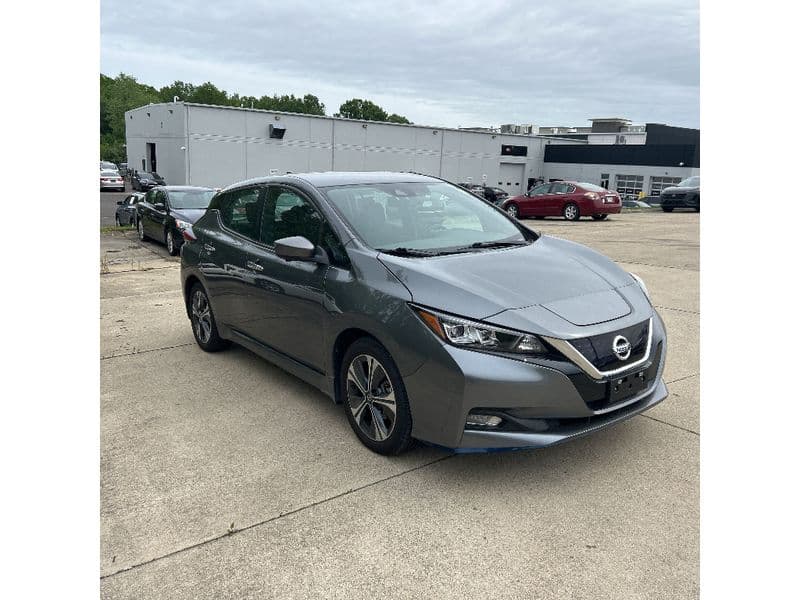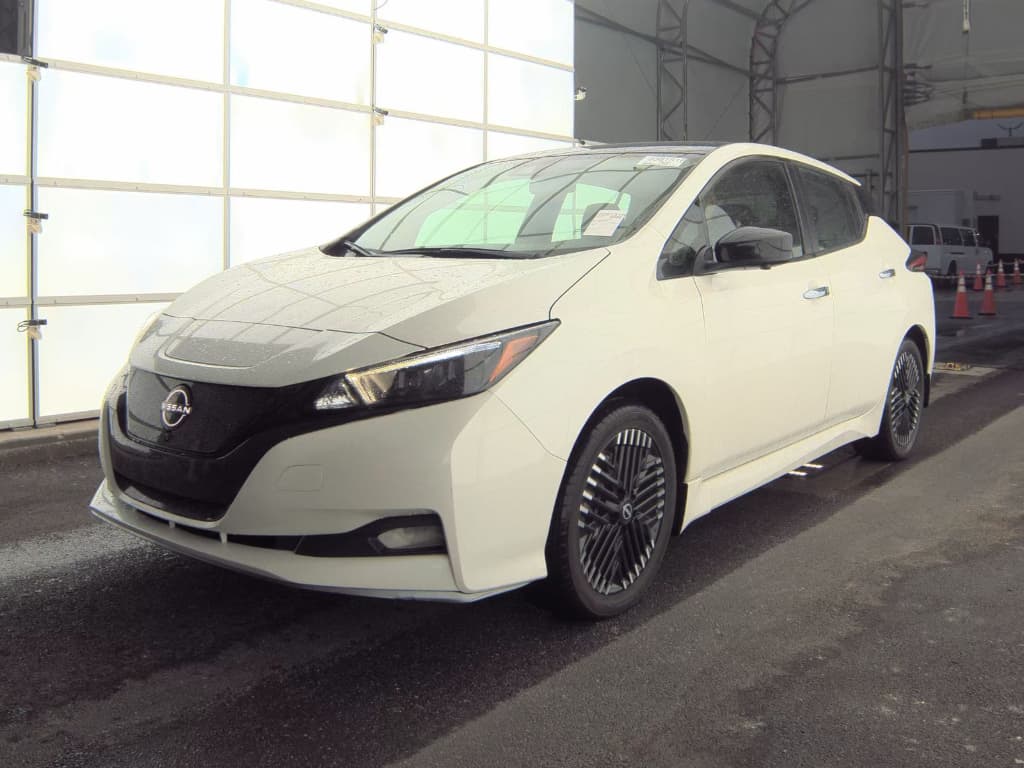
If you own (or are considering) a Nissan Leaf, a **charging speed test** is one of the fastest ways to understand how healthy the battery is and what to expect on road trips. Because the Leaf relies on the older CHAdeMO fast‑charging standard and has had several different battery sizes and cooling strategies over the years, charging performance can vary a lot from car to car, especially on used examples.
What this guide covers
Why Nissan Leaf charging speed tests matter
Compared with newer EVs, the Leaf’s charging story is… complicated. Early cars used 24 and 30 kWh packs with passive cooling, later models moved to 40 and 62 kWh packs, and in North America the Leaf has stuck with the **CHAdeMO** DC fast‑charging connector even as public networks shift to CCS and now NACS. Add age‑related battery wear and heat management limitations, and two Leafs of the same model year can show very different charging behavior in the real world.
- A slow‑charging Leaf can turn a road trip into a slog, especially if CHAdeMO options are sparse.
- Unusually slow charging can hint at **battery degradation**, thermal limits, or hardware faults.
- If you’re buying used, a quick charging speed test is a powerful complement to test drives and visual inspections.
Recent recall note for fast charging
Step 1: Know your Leaf battery and charging hardware
Before you run a Nissan Leaf charging speed test, confirm which **battery pack** and **on‑board charger** you have. That determines what’s realistic and what might be a red flag.
Nissan Leaf battery sizes & typical charging hardware
Approximate specs for common US‑market Leafs. Use these as ballpark expectations, not precise lab numbers.
| Model years (US) | Battery size | On‑board AC charger | DC fast‑charge connector | Typical DC fast‑charge peak* |
|---|---|---|---|---|
| 2011–2015 | 24 kWh | 3.3 kW (Level 2) | CHAdeMO | ~40–45 kW when new |
| 2016–2017 | 30 kWh | 3.3 or 6.6 kW (option) | CHAdeMO | ~40–45 kW |
| 2018–2024 (S/ SV) | 40 kWh | 6.6 kW Level 2 | CHAdeMO | ~46–50 kW up to ≈50% |
| 2019–2024 (Leaf Plus) | 62 kWh | 6.6 kW Level 2 | CHAdeMO | ~70–100 kW up to ≈30% |
| 2026+ all‑new Leaf** | 75 kWh (est.) | Higher‑power AC | NACS DC fast charge | Up to ~150 kW |
Actual charging speeds vary with temperature, charger quality, and battery health.
How to confirm your Leaf’s battery size
What “normal” Leaf charging speeds look like
Every Leaf is different, but most owners will see charging speeds in the following ranges under mild temperatures (50–80°F) with a reasonably healthy battery.
Typical real‑world Nissan Leaf charging speeds
Use these ranges as a reference when you run your own tests.
Level 1 (120 V)
Who it’s for: Occasional overnight top‑ups.
- Charge power: ~1.2–1.4 kW
- 24 kWh pack: 20+ hours from near empty
- 40 kWh pack: 30+ hours
- 62 kWh pack: 40+ hours
Useful in a pinch, but not ideal as your primary solution.
Level 2 (240 V)
Home & workplace workhorse.
- On‑board AC: 3.3–6.6 kW depending on model
- 24 kWh: ~2–4 hours (20–80%) on 6.6 kW
- 40 kWh: ~3.5–4.5 hours (20–80%)
- 62 kWh: ~5.5–6.5 hours (20–80%)
Most Leafs will gain 15–25 miles of range per hour on Level 2.
DC fast charging (CHAdeMO)
For road trips and quick top‑ups.
- 40 kWh: ~40–50 kW peak, 20–80% in ~40–60 minutes
- 62 kWh: ~70–100 kW peak when warm and healthy, 20–80% in ~35–50 minutes
- Charging tapers sharply after ~60–80% to protect the battery.
Older, degraded packs may be limited to 20–30 kW or less.
Don’t chase 0–100% times
How to run a Level 2 Nissan Leaf charging speed test
A Level 2 test is simple, gentle on the battery, and something every Leaf owner can do in a driveway or at a public 240‑volt station. It won’t show you the full DC fast‑charging curve, but it will reveal whether your on‑board charger and AC wiring are behaving as expected.
Step‑by‑step Level 2 charging speed test
1. Pick a reliable Level 2 charger
Use a known, properly wired 240 V station, ideally a 32–40 A home unit or a reputable public network. Make sure the circuit is not overloaded with other big appliances running at the same time.
2. Warm the battery to normal temps
Drive 10–20 miles to bring the pack to a moderate temperature if the car has been sitting in very hot or below‑freezing conditions. Extreme temps will skew your results.
3. Start around 20–30% state of charge
Note the starting SoC and odometer. Taking a photo of the dash (or the app, if available) is helpful for later comparison.
4. Plug in and note the time
Connect to the Level 2 charger and record the exact start time. If your EVSE or app reports power (kW), write that down too.
5. Record SoC at 30‑minute intervals
Every 30 minutes, write down the new SoC and any estimated time‑to‑full the car reports. For an older 3.3 kW Leaf, you might see ~10–12% per 30 minutes; a 6.6 kW car might gain ~20–25%.
6. Stop around 80% and calculate speed
Once you reach ~80%, note the end time. Compute energy added (battery size × % added) divided by elapsed hours. That gives you an approximate kW. Compare it to your car’s rated 3.3 or 6.6 kW capability.
What a good Level 2 result looks like
How to run a DC fast charging speed test on a Leaf
To understand how your Leaf will behave on road trips, you’ll want to test **CHAdeMO fast charging**. This is where Leaf quirks, thermal limits, degradation, and aging hardware, show up most clearly.
Step‑by‑step Nissan Leaf DC fast charging speed test
1. Find a quality CHAdeMO station
Use PlugShare or your network’s app to locate a modern CHAdeMO fast charger, ideally 50 kW or higher. Avoid obviously broken or poorly reviewed stations, as they can skew your test more than the car will.
2. Prepare the battery
Drive at least 20–40 miles right before the test so the battery is neither stone‑cold nor blazing hot. For Leafs without active cooling, repeated back‑to‑back DC fast charges in hot weather can cause heavy throttling.
3. Start between 10–20% SoC
Arrive with low state of charge so the car has room to accept maximum power. Record SoC, odometer, outside temperature, and pack temperature if you use an OBD app like Leaf Spy.
4. Plug in and watch peak kW
After initiating the session, most CHAdeMO stations display instantaneous power. On a healthy 40 kWh Leaf, you should briefly see around **40–50 kW**; on a good 62 kWh Leaf, peaks near **70–100 kW** are possible when conditions are ideal.
5. Track the 10–60% window
Note the time it takes to climb from 10% to 60%. For a 40 kWh pack, a ballpark healthy result is ~20–30 minutes in mild weather. Watch how quickly the power tapers as SoC rises.
6. Decide whether to push to 80%
Continue to ~80% if you want the full picture, but remember that charging usually slows significantly above ~60–70%. Beyond 80%, you’re mostly heating the pack and wasting time, not making fast progress.
7. Save your session data
Snap photos of the charger screen at the beginning, during peak power, and at unplug. Many networks also provide detailed session logs in their apps, these are gold for later comparison or for sharing with a seller when you’re evaluating a used Leaf.
Safety and etiquette reminder
Interpreting your results: what’s fast vs. what’s slow
Once you’ve run your tests, the real value comes from comparing your Leaf’s behavior to realistic expectations. You’re not chasing brochure numbers, you’re looking for major outliers that suggest a problem or heavy degradation.
Quick‑glance Leaf charging benchmarks (healthy battery, mild temps)
Signs your charging speed is normal
- Your Level 2 test averages within ~10–20% of the rated 3.3 or 6.6 kW.
- On DC fast, you see a clear peak early in the session, followed by a gradual taper as SoC rises.
- Time from 10–60% roughly matches published estimates (for example, ~20–30 minutes on a 40 kWh pack).
- Results are repeatable on different days and at different stations.
Signs something is off
- Level 2 power is stuck around 2–3 kW on a car that should do 6.6 kW.
- DC fast charging never exceeds 15–20 kW even at low SoC and moderate temps, while similar Leafs on the same station do much better.
- Charging slows dramatically after just a few minutes, even though SoC is still low.
- Session repeatedly disconnects or the car throttles severely in mild conditions.
In these cases, you may be looking at significant degradation, thermal throttling, a weak station, or a fault in the car’s charging hardware.
7 common reasons a Nissan Leaf charges slowly
If your Leaf fails the charging speed test, or just feels painfully slow on road trips, there’s usually a clear explanation. Some are harmless quirks; others point toward expensive battery problems that matter a lot when you’re buying used.
- **Aging, degraded battery pack.** As Leafs age, they lose usable capacity and can lose the ability to accept high power. Owners of older cars with several missing capacity bars often report DC fast‑charge speeds limited to 10–20 kW, making Level 2 almost as quick in some cases.
- **High battery temperature (especially on back‑to‑back fast charges).** Without active liquid cooling, the Leaf relies on the pack naturally shedding heat. After one or two fast charges in hot weather, the car may aggressively throttle power to protect the battery, turning a “fast” charge into a long wait.
- **Very cold battery.** In freezing conditions, chemical reactions in the pack slow down. The Leaf will restrict power from both Level 2 and DC fast chargers until the battery warms up through driving or cabin preconditioning.
- **Weak or misconfigured charging station.** Some public stations limit CHAdeMO power to 20–25 kW by design, and some Level 2 posts are capped at 16–24 A. Always compare your results with other EVs on the same hardware before blaming the car.
- **Undersized wiring or circuit at home.** A 40 A EVSE on a 20 A breaker, or long runs of thin wire, can limit your actual draw significantly below your Leaf’s rated 6.6 kW capability.
- **Software or BMS quirks.** Rare, but firmware issues or a confused battery‑management system can mis‑report SoC, trigger conservative limits, or end sessions early. In some cases, dealer software updates improve behavior.
- **Active recall or safety limit.** As mentioned earlier, some late‑model Leafs are under recall for potential thermal issues during Level 3 charging. Until the fix is applied, Nissan may recommend avoiding DC fast charging altogether.
Use multiple tests before you panic
Charging speed, battery health, and used Leafs
For used Leafs in particular, **charging speed is an indirect but powerful window into battery health**. A car with visible capacity loss and persistent DC fast‑charge throttling is a very different ownership proposition from a similar‑looking Leaf that still takes 40–50 kW happily on road trips.
How we look at Leaf charging performance when evaluating used cars
These are the same fundamentals you can apply yourself if you’re shopping privately.
1. Capacity bars & SoC behavior
First, note the number of capacity bars on the dash and how quickly SoC drops on a test drive. Heavy degradation will show up even before you plug in.
2. Short Level 2 or DC test
If possible, we run a real‑world charging test or review logs from the prior owner. Consistently low peak power or strange tapers can signal pack or BMS issues.
3. Temperature & history context
We consider climate history, mileage, and prior fast‑charging use. A Leaf that has lived its life in a hot southern city, fast‑charging daily, is more likely to show thermal limitations and slow DC speeds.
How Recharged simplifies this
Ready to find your next EV?
Browse Vehicles- Prefer cars that still achieve near‑normal Level 2 and DC fast‑charge speeds for their pack size.
- Be cautious about Leafs that heavily throttle DC fast charging early in a session without an obvious explanation (extreme heat, very high SoC, or a known weak station).
- Factor slower charging into your **total ownership cost**, a bargain purchase price doesn’t help if every trip demands long, inefficient charging stops.
FAQ: Nissan Leaf charging speed tests
Frequently asked questions about Nissan Leaf charging speed tests
Bottom line: how to use charging tests to shop smarter
A Nissan Leaf charging speed test won’t turn you into a battery engineer, but it will give you something just as valuable: **realistic expectations**. Knowing how fast your Leaf actually charges on Level 2 and CHAdeMO, versus what the brochure once promised, helps you plan road trips, spot emerging problems early, and, if you’re buying used, distinguish a solid car from a future headache.
If you’d rather not reverse‑engineer all of this yourself, that’s exactly why Recharged exists. Every used Leaf we sell comes with a **Recharged Score Report** that bakes in verified battery health, fair pricing, and expert guidance on charging behavior, so you can focus on how the car fits your life instead of worrying what’s hiding in the pack. And if you’re comparing options beyond the Leaf, you can browse EVs by range, charging speed, and budget to find an electric car that fits both your commute and your charging reality.