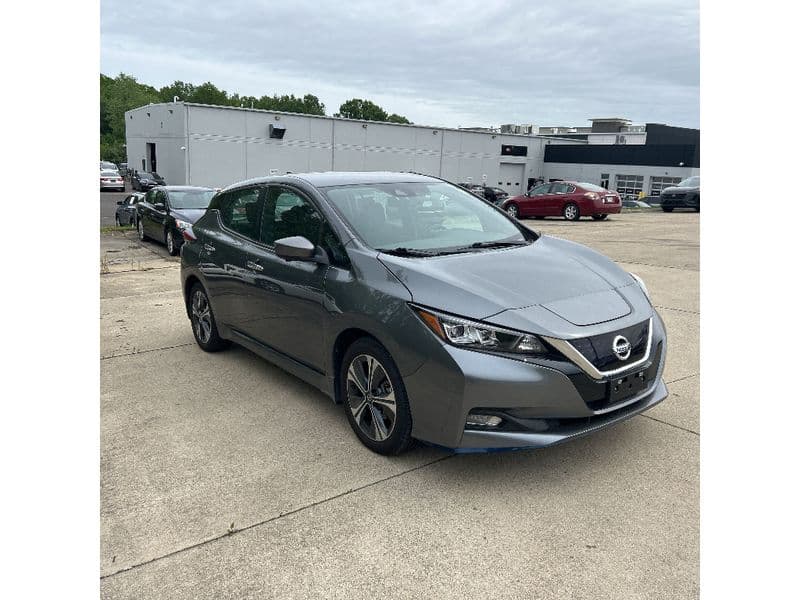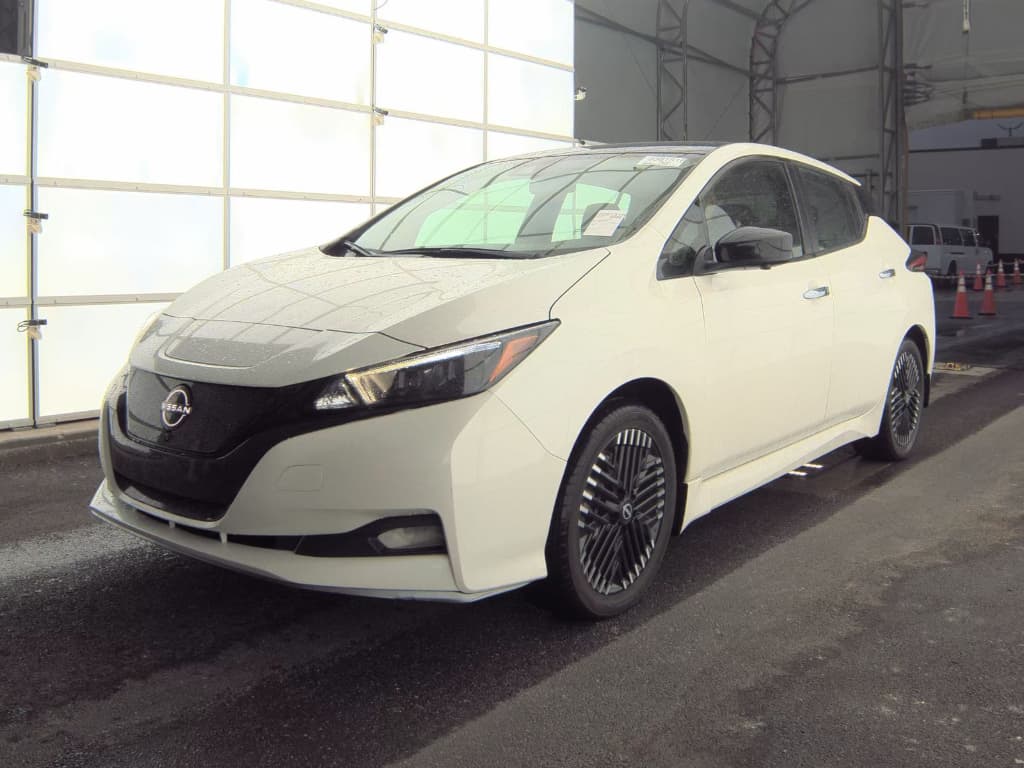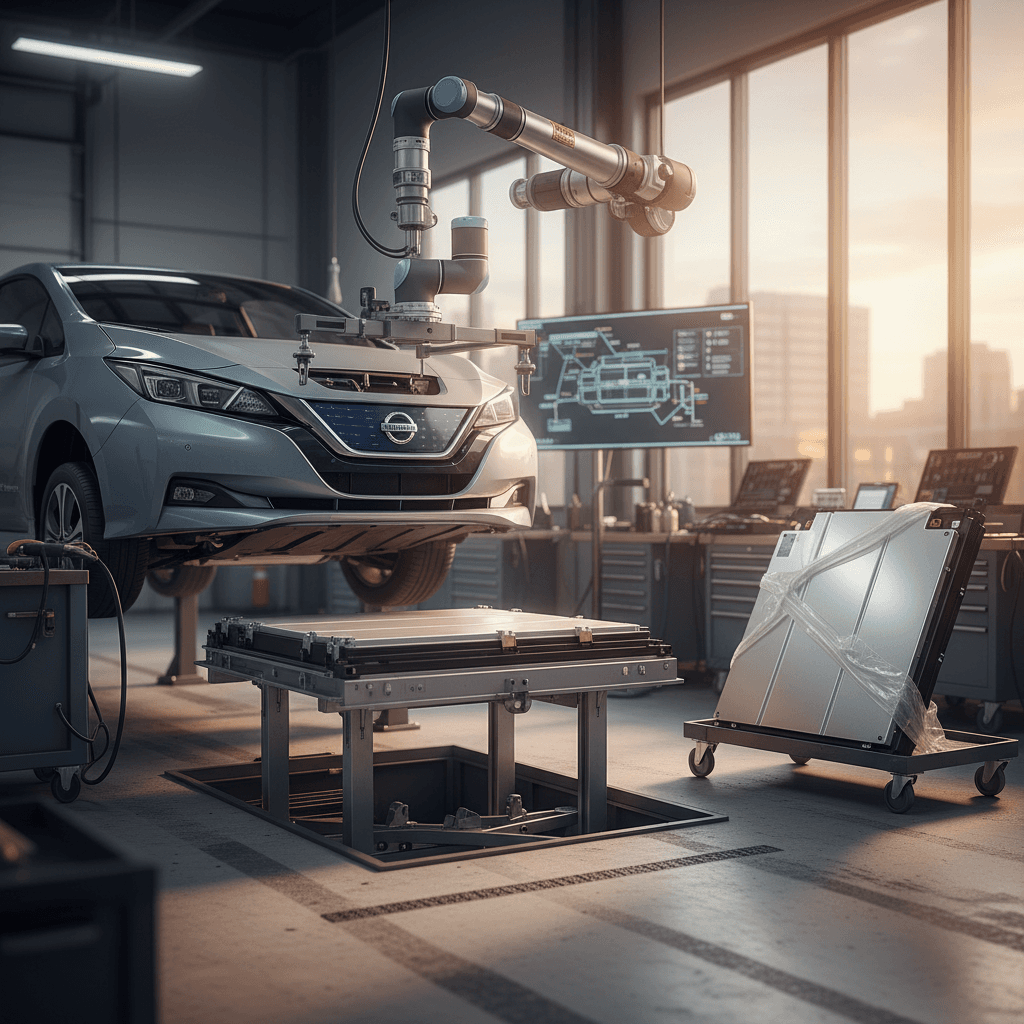
If you own or are shopping for a Nissan Leaf, you’ve probably heard the stories: early cars in hot states losing big chunks of range, replacement packs, mysterious missing bars. Nissan Leaf battery degradation is real, but it’s also often misunderstood. The truth is more nuanced, and if you understand how the Leaf’s pack works, you can both shop smarter and keep the range you have for longer.
Quick takeaway
Why Nissan Leaf batteries degrade differently
Every EV battery degrades over time, but the Leaf’s design choices make its story a little different from cars like the Chevy Bolt, Hyundai Ioniq 5, or Tesla models. The big one is thermal management. Early Leafs, especially 2011–2017 cars, use a passively air‑cooled battery pack. There’s no liquid cooling loop actively keeping the pack in its happy temperature zone. In hot climates or during repeated fast charging, that pack can spend a lot of time hotter than ideal, which accelerates chemical aging.
- The Leaf’s lithium‑ion cells age faster when they sit or charge hot, especially above roughly 86°F (30°C).
- Heat speeds up side reactions inside the cells, slowly reducing the amount of lithium that can shuttle back and forth.
- Unlike some rivals, the Leaf cannot aggressively chill the pack before or during DC fast charging, so repeated quick charges in summer can add up over the years.
Nissan has improved the chemistry over time, later 40 kWh and 62 kWh packs hold up better than the earliest 24 kWh versions, but the fundamentals haven’t changed: no active liquid cooling means heat management is largely up to you and your climate.
Hot‑climate Leaf? Pay extra attention
How much Nissan Leaf battery degradation to expect by model year
No two Leafs age exactly the same. Climate, storage, charging habits, and miles driven all matter. But after 15 years of Leafs on the road and a lot of owner data, we can sketch some realistic patterns. Think of the numbers below as ballpark ranges for a car with average use, not a guarantee.
Typical Nissan Leaf battery degradation by pack size
Approximate real‑world capacity loss for Leafs in moderate climates with mixed city/highway driving and mostly Level 2 charging.
| Pack & model years (US) | Original EPA range | Approx. loss at 5 years | Approx. loss at 10 years | Notes |
|---|---|---|---|---|
| 24 kWh (2011–2016) | 73–84 mi | 15–25% | 30–40% | Most heat‑sensitive; early Arizona cars famously lost capacity quickly. |
| 30 kWh (2016–2017) | 107 mi | 12–22%* | 25–35%* | Early data overstated loss before a BMS update; still more fragile in heat than later packs. |
| 40 kWh (2018–present S/SV) | 149–151 mi | 8–18% | 20–30% | Improved chemistry; still air‑cooled. Heat and DC fast charging are key variables. |
| 62 kWh (2019–2024 SV Plus/SL Plus) | 215–226 mi | 5–15% | 15–25% | Bigger buffer means the same % loss hurts range less; generally the most robust Leaf pack. |
These ranges are directional, not promises. A specific Leaf may be better or worse depending on how it was treated.
About those asterisks
Real‑world Leaf battery loss snapshots
The takeaway: a well‑cared‑for Leaf doesn’t suddenly fall off a cliff, but if you start with a shorter‑range pack and lose a third of it, you’ll feel it sooner than a larger‑battery owner will.
Leaf battery bars vs. SOH and real-world range
Nissan made one of the most user‑visible degradation indicators in the business: the 12 little capacity bars next to your state‑of‑charge gauge. These aren’t the same as the normal charge bars you watch while charging; they’re meant to show your battery’s long‑term health.
- 12 bars ≈ near‑new capacity (roughly 85–100% State of Health, or SOH).
- 11 bars ≈ about 85–90% SOH (roughly 10–15% loss).
- 10 bars ≈ around 78–85% SOH (15–22% loss).
- 9 bars ≈ ~72–78% SOH (20–28% loss).
- 8 bars ≈ under 70–72% SOH (roughly 30%+ loss).
The bars step down in chunks, so you can lose several percent of capacity before you actually see one disappear. That’s why many owners use LeafSpy, a third‑party app that reads battery SOH directly from the car’s diagnostic port. It gives you a clearer picture than the bars alone.
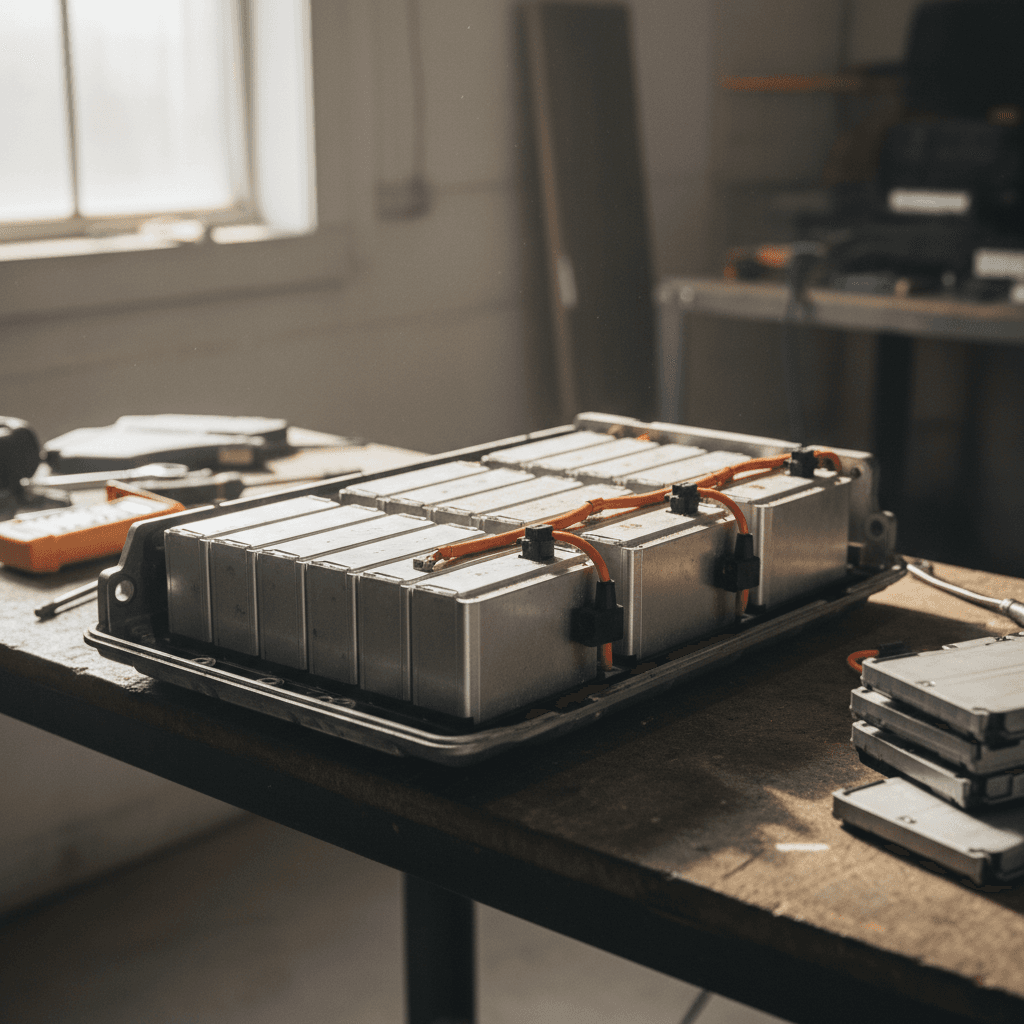
Shopping tip: don’t stop at the bars
Heat, fast charging, and driving style: what really hurts a Leaf battery
Three things dominate the Nissan Leaf battery degradation story: heat, high charge levels, and time spent at power extremes (fast charging and hard driving). Understanding how they interact helps you choose habits that preserve range without babying the car.
Main drivers of Nissan Leaf battery degradation
You can’t control time, but you can control how hard you are on the pack.
Heat
Heat is the Leaf’s biggest enemy.
- Parking in direct sun bakes the pack in a car with no active cooling.
- High ambient temps + high state of charge are especially tough on cells.
- Hot‑climate cars that lived outdoors age faster, even with low miles.
DC fast charging
The Leaf can handle DC fast charging, but it pays a price.
- Repeated quick charges on summer road trips push pack temps up.
- Unlike some EVs, it can’t chill the pack aggressively mid‑charge.
- Occasional DC is fine; daily DC in heat is where trouble starts.
High stress use
Running the battery at extremes isn’t ideal.
- Frequently charging to 100% and letting it sit for days.
- Regularly arriving home near 0% SOC in hot weather.
- Lots of hard acceleration when the pack is already hot.
Recent fire‑risk recalls
Practical tips to slow Nissan Leaf battery degradation
You can’t stop battery aging, but you can absolutely influence the slope of the curve. The Leaf rewards gentle, thoughtful use more than most EVs because of its air‑cooled design. Here are habits that make a real difference over a decade of ownership.
Everyday habits that protect your Leaf battery
Keep it cool when you can
Whenever possible, park in a garage or shaded area, especially in summer. Even a cheap reflective windshield shade helps keep cabin and pack temps down.
Avoid sitting at 100%
Charging to 100% right before a long drive is fine. Letting the Leaf sit full for days, especially in heat, is not. For daily use, many owners target roughly 40–80%.
Use DC fast charging sparingly
Don’t fear the occasional road‑trip quick charge. Do think twice about using DC fast charging as your primary fueling method, particularly in hot weather.
Don’t obsess over Level 1 vs. Level 2
Real‑world owner data shows that reasonable Level 2 charging at home isn’t some battery killer. Focus more on <strong>temperatures and time at high state of charge</strong> than the exact AC voltage.
Avoid deep discharges in heat
Running the pack close to empty occasionally is okay. Making a habit of arriving home near 0% on 100°F days is harder on a Leaf than on many liquid‑cooled EVs.
Drive smoothly when the pack is hot
If your battery temperature bars are high after a quick charge, back off the hard launches and aggressive regen until it cools a bit.
Good news for cooler‑climate owners
Buying a used Nissan Leaf with battery health in mind
On the used market, the Leaf can be a screaming deal, or a cheap car with range that no longer fits your life. Battery health is the difference. When Recharged inspects a Leaf, we treat the pack as the headline story, not a footnote.
Step 1: Match pack size to your life
- 24 & 30 kWh Leafs: Best as second cars or short‑range commuters. After typical degradation, think 40–65 miles of comfortable real‑world range.
- 40 kWh Leafs: Solid for many US commutes. Even with 20–25% loss, you’re often looking at ~90–115 miles of everyday range.
- 62 kWh Leafs: The sweet spot if you want to road‑trip or keep the car a long time. Plenty of buffer against future degradation.
Step 2: Read the battery’s story
- Check capacity bars; be wary of anything at 8 bars or fewer unless the price assumes a short‑range car.
- Use LeafSpy or a professional battery report to see SOH and cell balance.
- Ask where the car spent its life. A 2015 Leaf from Seattle can be a very different prospect from a 2015 Leaf from Phoenix.
- Review DC fast‑charging history if available; nonstop road‑trip life shows in the data.
How Recharged helps Leaf shoppers
Which used Leaf fits which buyer?
Think in use‑cases, not just model years.
Urban commuter
Best bet: 24, 30, or 40 kWh with 10–12 bars.
If your daily round trip is under 40–50 miles, a well‑cared‑for older Leaf can be an incredibly cheap, cheerful runabout, even with some degradation.
Suburban all‑rounder
Best bet: 40 kWh, 10–12 bars.
For mixed errands, school runs, and a 50–70 mile commute, a healthy 40 kWh car balances price and usable range nicely.
Road‑trip capable
Best bet: 62 kWh Leaf Plus, 11–12 bars.
Still not a cross‑country fast‑charger king, but with its larger pack, occasional weekend trips are much more realistic even after years of aging.
Nissan Leaf battery warranty and recent recalls
Warranty and recall status can dramatically change how you feel about degradation risk, especially on a used Leaf. Nissan’s coverage has evolved with the car.
High‑voltage battery warranty basics (US market)
General patterns for US Leafs; always confirm specifics for the exact VIN and model year you’re considering.
| Model years | Defect warranty | Capacity warranty | Trigger for capacity repair |
|---|---|---|---|
| Most Leafs 2011–present | 8 yrs / 100k mi (defects in materials/workmanship) | 8 yrs / 100k mi on many US‑market cars | Dropping to 8 or fewer capacity bars within warranty window, subject to terms. |
| Some early leases & regional specials | Varies by contract | May differ by market | Always check owner’s manual and Nissan USA for the VIN. |
Capacity warranties are tied to bars lost within a time and mileage window, not a specific range estimate.
Capacity warranty ≠ “like‑new forever”
On top of that, recent recalls have focused on thermal safety during DC fast charging, not routine degradation. For affected 2019–2022 Leafs, Nissan is rolling out software updates that prevent charging from continuing if the pack overheats during quick charging. If you regularly use Level 3 chargers, make sure recall work is done and documented.
FAQ: Nissan Leaf battery degradation
Frequently asked questions about Nissan Leaf battery degradation
The bottom line on Nissan Leaf battery life
The Nissan Leaf’s battery reputation is a mix of hard‑earned lessons from the early cars and quieter success stories from newer, well‑treated packs. Yes, the Leaf is more sensitive to heat and hard fast‑charging use than many liquid‑cooled rivals. But in the right climate, with sane charging habits and realistic expectations, it can deliver a decade or more of useful service.
If you’re looking at a used Leaf, think like a battery detective: pack size, capacity bars, SOH, climate history, and how you’ll actually use the car all matter more than the badge on the hatch. That’s exactly how Recharged evaluates Leafs for our marketplace, so when you see a Recharged Score on a listing, you’re seeing the battery’s story in plain language, not just a guess based on age and miles.
Get those pieces right, and Nissan Leaf battery degradation becomes something you manage, not something that manages you.