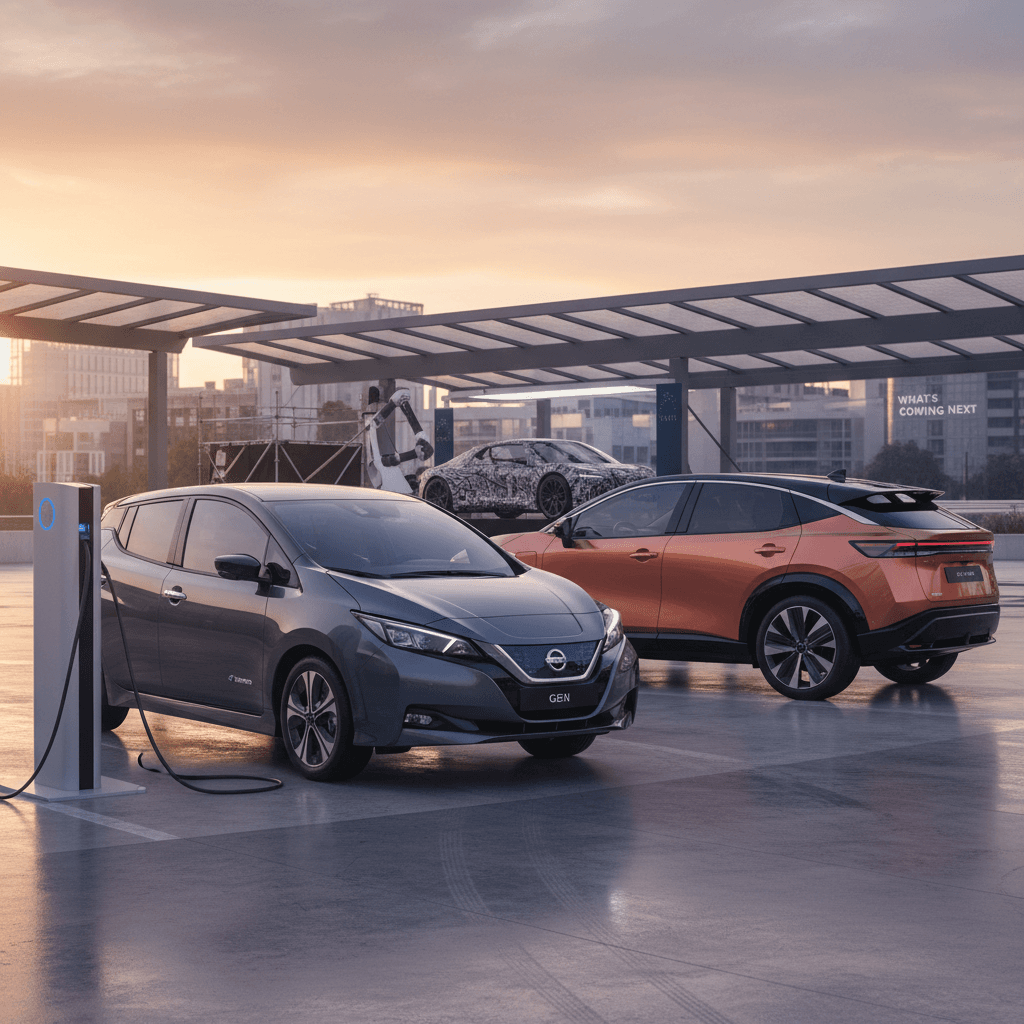
Nissan EV cars helped kick off the modern electric revolution. The original Nissan Leaf put mainstream, all‑electric driving on the map back in 2011, and today it’s one of the most common used EVs you’ll see in classifieds and on lots. If you’re trying to untangle where the Leaf, Ariya, and Nissan’s future EVs fit, and whether a Nissan EV belongs in your driveway, this guide is for you.
Quick snapshot
Why Nissan EV cars still matter in 2025
Scroll through any EV forum and you’ll notice something: Nissan Leaf owners tend to hang onto their cars. That’s because Nissan EV cars are simple, practical, and usually very affordable, especially on the used market. While the industry chases 300‑mile range and wild performance, Nissan has mostly focused on city and commuter duty, exactly how many people actually use their EV every day.
Nissan EVs by the numbers (current Leaf)
From a shopper’s perspective, that adds up to something important: Nissan EV cars are one of the easiest ways to get into electric driving without blowing your budget. The trade‑off is that you’ll live with shorter range and, on older Leafs, a different fast‑charging standard (CHAdeMO) that’s fading in North America. We’ll unpack exactly what that means for you.
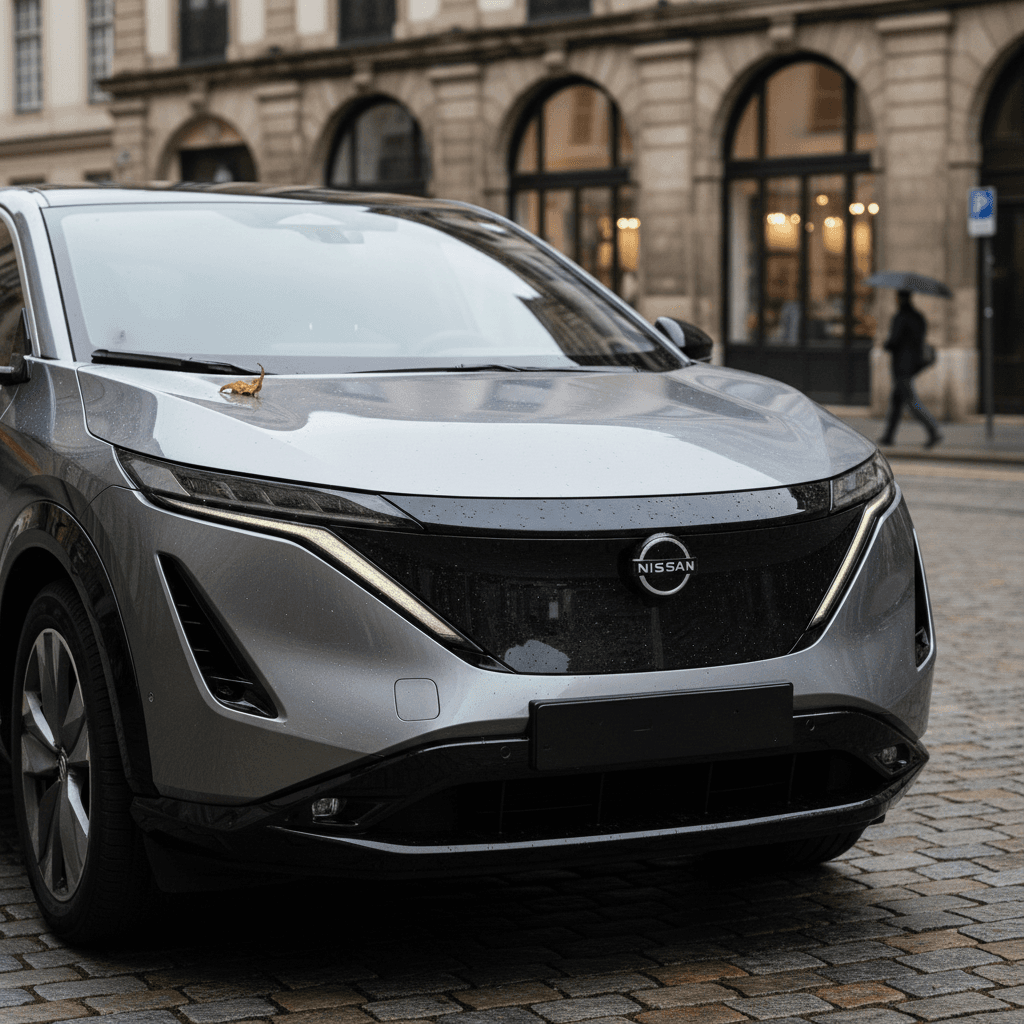
Current Nissan EV lineup in the U.S.
Nissan EV cars you’ll actually find in the U.S. today
What’s on sale new, and what’s mostly a used‑market story now
Nissan Leaf (hatchback)
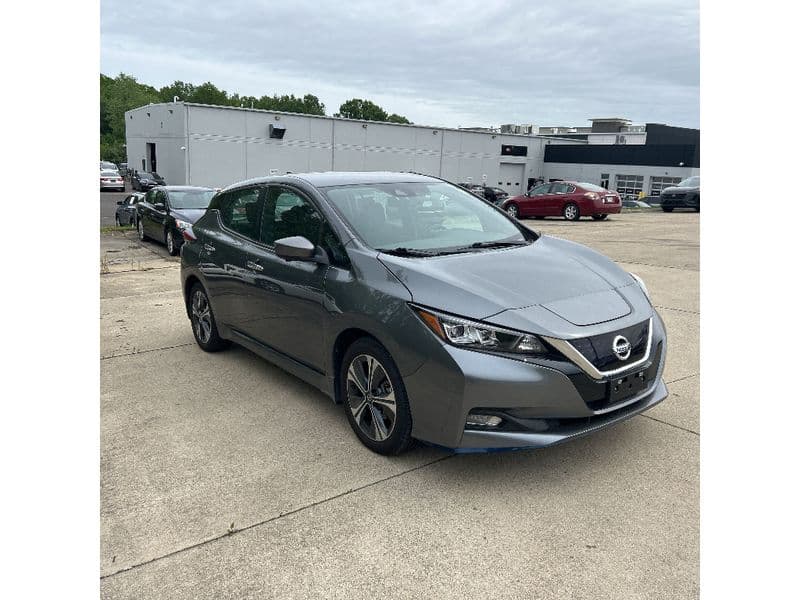
The Leaf is Nissan’s long‑running compact electric hatchback and the brand’s main EV in the U.S. right now.
- Body style: 5‑door hatchback
- Range: roughly 149–212 miles, depending on battery and trim
- Charging: AC Level 1 & 2, DC fast charging via CHAdeMO on current models
- Best for: Daily commuting, short‑to‑medium trips, budget‑minded buyers
Nissan Ariya (compact SUV)
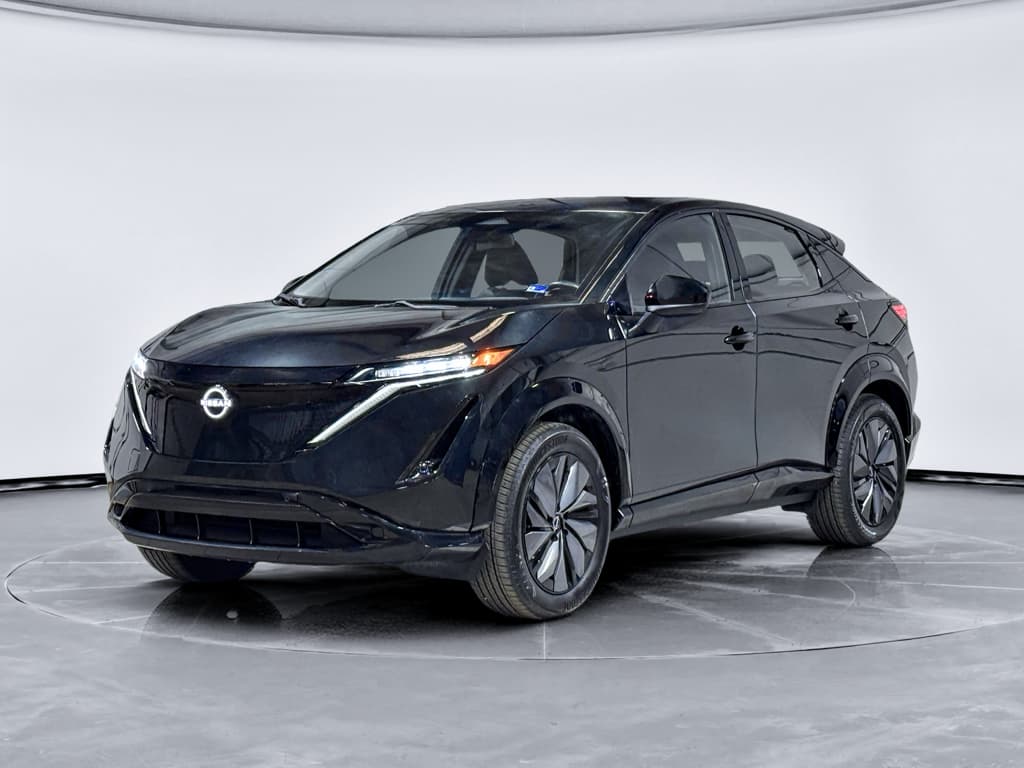
The Ariya is a stylish electric SUV that launched for 2023. Nissan has since decided to stop offering it in the U.S. after the 2025 model year, but new and nearly new examples will still be on lots for a while.
- Body style: 2‑row compact SUV
- Range: typically ~200–300 miles depending on configuration
- Charging: CCS fast charging, more in line with newer EVs
- Best for: Families wanting SUV space and comfort
Ariya availability caveat
Outside the U.S., Nissan is rolling out additional EVs like the electric Micra supermini in Europe and has teased a new, more aerodynamic Leaf‑successor for global markets. In the States, though, your Nissan EV choices today are essentially the Leaf and leftover Ariyas, plus a very deep pool of used Leafs stretching back more than a decade.
Nissan Leaf: range, battery and charging
If you search for “Nissan EV cars” in most U.S. cities, the Nissan Leaf dominates the results. It’s the car most people mean when they say “Nissan EV,” and it’s where we’ll spend the most time, especially from a used‑buying perspective.
2024–2025 Nissan Leaf key specs (U.S.)
High‑level specs for the two Leaf trims most shoppers will run into on dealer lots and in used listings.
| Trim | Battery | EPA range | Motor output | Fast charging | Approx. MSRP new |
|---|---|---|---|---|---|
| Leaf S | 40 kWh | 149 miles | 110 kW (147 hp) | CHAdeMO DC fast charge up to ~50 kW | ≈ $28,000 |
| Leaf SV Plus | 60 kWh | ≈ 212 miles | 160 kW (214 hp) | CHAdeMO DC fast charge up to ~100 kW | ≈ $36,000 |
Always double‑check a specific car’s window sticker or Monroney for exact equipment and EPA range.
CHAdeMO vs CCS vs NACS
- Home charging: with a 240V Level 2 charger, a Leaf S can typically go from empty to full in around 7–8 hours; the SV Plus with the larger pack takes closer to 11 hours.
- Public fast charging: newer Leafs include DC fast‑charge capability; older base trims may be slower or lack DC fast charge entirely, check the port and spec sheet.
- Real‑world range: highway driving, cold weather, and fast speeds can trim 15–30% off the EPA number. Treat 100–120 miles (40 kWh) or ~170–190 miles (60 kWh) as practical, everyday expectations for most drivers.
How to sanity‑check Leaf range on a test drive
Nissan Ariya: where it fits now
The Nissan Ariya arrived as a stylish, more premium electric SUV with a usable 200‑plus‑mile range, available all‑wheel drive, and a quieter, more upscale cabin than the Leaf. It also switched to CCS fast charging, which plays much more nicely with today’s public DC fast‑charge networks in the U.S.
Why consider a used or leftover Ariya
- Modern architecture: CCS fast charging, liquid‑cooled battery, and longer‑range packs make it more future‑proof than an older Leaf.
- SUV practicality: Higher seating position, more cargo space, and nicer interior appointments than the Leaf.
- Discount potential: With Nissan exiting the Ariya in the U.S. after 2025, dealers may deeply discount remaining stock.
What to keep in mind
- Model run is short: Because Nissan is discontinuing it in the U.S., long‑term parts and resale values are a bit of a question mark.
- Price point: New, the Ariya often stickers above $40,000. Used prices are easing, but it’s still not a bargain‑bin EV.
- Charging competition: You’re shopping in the same space as Hyundai Ioniq 5, Kia EV6, Tesla Model Y, and others with huge charging‑network support.
Where the Ariya shines
Battery life & reliability in used Nissan EVs
Mention “used Nissan Leaf” and someone will immediately bring up battery degradation. That’s fair, early Leafs used an air‑cooled pack that lost usable range more quickly in hot climates than many newer EVs. The full story is a little more nuanced, and it’s the key to getting a good deal instead of a frustrating one.
What actually affects Leaf battery health
Three big levers that change how much range a used Leaf still has
Climate
Heat is the enemy. Leafs from Phoenix, Las Vegas, or Florida often show more capacity loss than those from Seattle or Boston.
Ask where the car spent most of its life and look for documentation, this matters as much as model year.
Fast‑charging habits
Occasional CHAdeMO fast charging isn’t a problem, but heavy DC‑fast use (daily, or multiple times a day) can accelerate battery wear.
Frequent road‑trip use can show up as fewer remaining capacity bars on the dash.
Age & mileage
All lithium‑ion batteries lose some capacity over time. A 10‑year‑old Leaf with 80,000 miles will almost certainly have less usable range than a 4‑year‑old Leaf with 20,000.
The trick is knowing how much it has lost.
Don’t skip a battery health check
Recharged was built with this problem in mind. Every EV we list comes with a Recharged Score Report that includes verified battery health diagnostics, so you can see how much capacity is left compared with new. That’s especially useful on a platform like the Leaf, where the same model year can have very different real‑world range depending on how it’s been used and where it’s lived.
Which Nissan EV car is right for you?
Match your life to the right Nissan EV
1. Mostly city and suburban driving
If your days look like school runs, errands, and a commute under 40–50 miles, a Leaf, especially a newer 60 kWh SV Plus, can be a perfect, low‑stress EV. You’ll charge at home, rarely visit public chargers, and save a pile of fuel money.
2. Occasional road trips
If you’d like to take 200‑mile weekend trips a few times a year, a newer Leaf can work, but you’ll need to plan around CHAdeMO fast‑charge availability. The Ariya (or a different CCS/NACS‑equipped EV) will make those trips easier.
3. Need SUV space and comfort
If you routinely carry kids and gear or just prefer a higher seating position, the Ariya is the Nissan EV to look at. Otherwise, you’ll be cross‑shopping non‑Nissan EV SUVs like the Hyundai Ioniq 5, Kia EV6, or Tesla Model Y.
4. Chasing the lowest possible EV payment
Older Leafs are some of the cheapest used EVs you can buy. They’re ideal if you mostly drive around town and can accept 70–100 miles of real‑world range. Just be ruthless about battery health checks.
Leasing vs buying a Nissan EV
How to shop a used Nissan EV with confidence
Shopping used Nissan EV cars doesn’t have to feel like detective work. A little structure goes a long way. Here’s a simple process you can follow whether you’re browsing local classifieds or looking at a curated marketplace like Recharged.
Used Nissan EV buying checklist
1. Start with your real range needs
Write down your longest regular round‑trip miles in a typical week, then add a 25–30% buffer. That’s the <em>minimum</em> real‑world range you should shop for.
2. Decode the trim and battery
On a Leaf, verify whether you’re looking at a 40 kWh or 60 kWh pack and whether DC fast charging is included. On an Ariya, confirm battery size, drive (FWD vs AWD), and fast‑charge capability.
3. Get an objective battery health report
Avoid guessing from the dash alone. A proper diagnostic will estimate remaining capacity and flag any cells that are out of spec. Every EV on Recharged includes a Recharged Score Report with this data baked in.
4. Check charging options where you live
Use apps like PlugShare or Chargeway to see how many CHAdeMO, CCS, or NACS fast chargers are near your regular routes. A Leaf with a tired battery and few CHAdeMO plugs nearby will be a headache.
5. Review warranty status
Look at both the basic vehicle warranty and the battery warranty. Many Nissan EVs carry an 8‑year/100,000‑mile battery warranty from new, but older cars may be near the end of that window.
6. Run the usual used‑car checks
Don’t let the EV part distract you from basics: accident history, service records, tire and brake condition, and verification that all driver‑assistance systems work as advertised.
Where Recharged fits in
Ready to find your next EV?
Browse VehiclesThe future of Nissan EV cars
Nissan has publicly committed to rolling out a broader electric lineup under its long‑term strategy, with heavy emphasis on more affordable EVs and next‑generation battery tech later in the decade. In Europe, the new electric Micra is already arriving as a compact hatch based on Renault’s EV platform, and Nissan has shown concepts that preview a more aerodynamic, crossover‑style successor to today’s Leaf.
What to expect in the near term (next 2–3 years)
- Leaf refresh and redesigns: Nissan is heavily signaling a new‑generation Leaf with more range, sleeker styling, and a target starting price under $30,000 to keep it competitive as a budget EV.
- Charging standard shifts: As more automakers move toward NACS in North America, expect future Nissan EVs here to follow suit and offer native Tesla‑style ports or adapters.
- More tech, similar mission: Nissan’s likely to stick with the “practical and affordable” lane rather than chasing luxury EVs.
Longer‑term (3–7 years)
- Expanded EV lineup: Additional crossovers and maybe a small truck or van are on the table globally, though not all will reach the U.S.
- New battery tech: Nissan has been working on solid‑state batteries, with the goal of higher energy density and faster charging at lower cost. Expect that to show up first in Japan or Europe, then filter to the U.S.
- More used EV value: As new Nissan EVs arrive, today’s Leafs and Ariyas are likely to get even more affordable on the used market.
What this means if you’re shopping now
FAQ: Nissan EV cars
Frequently asked questions about Nissan EV cars
Nissan EV cars aren’t the flashiest entries in today’s electric world, but they quietly do exactly what many drivers need: offer affordable, straightforward electric transportation that just works. Whether you’re eyeing a bargain used Leaf, considering a discounted Ariya, or waiting for Nissan’s next wave of EVs, the key is to be honest about your range needs, understand the charging landscape where you live, and get clear data on battery health. Do that, and a Nissan EV can be one of the smartest ways to plug into electric driving, especially if you let a transparent marketplace like Recharged shoulder the hard parts of shopping and evaluation.