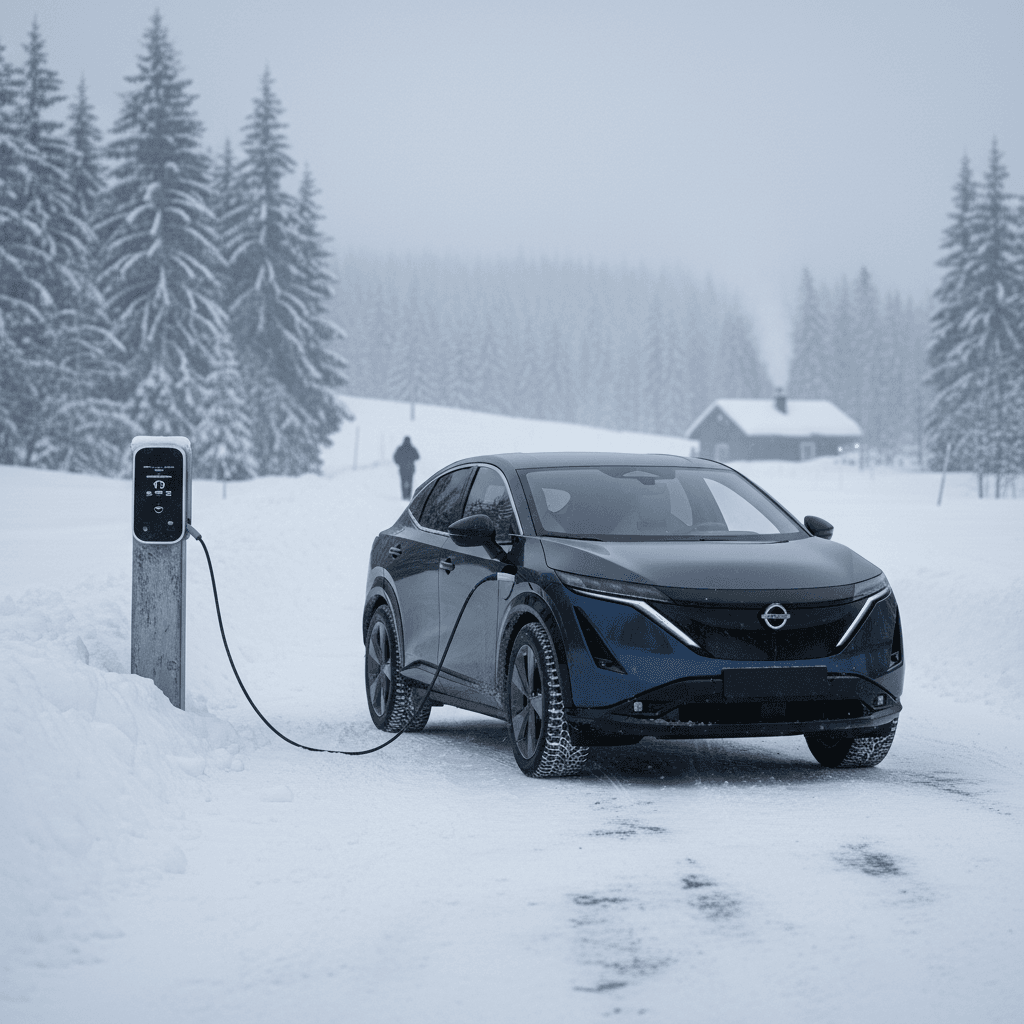
If you’re shopping for a Nissan Ariya, or already own one, the big winter question is simple: how much range will my Ariya lose in cold weather? Like every EV, the Ariya’s real-world range drops when temperatures fall, but by how much depends on your trim, driving style, and how you use the climate controls. This guide breaks down what you can realistically expect and how to get the most miles out of every winter charge.
Quick takeaway
How cold weather affects Nissan Ariya range
On paper, the Nissan Ariya delivers up to around 300 miles of EPA-rated range, depending on battery size and drive configuration. In reality, when temperatures fall below freezing and you’re running the cabin heat, your usable range shrinks. Owners in cold-climate states like New York and Massachusetts commonly report winter ranges in the 200–230 mile zone for the big-battery front-wheel-drive trims, and even less for the all-wheel-drive e-4ORCE models.
- In mild cold (around 32–40°F), many Ariya drivers see roughly 15–25% less range than in summer.
- In typical winter cold (around 15–30°F with heat on), a 20–35% range loss is normal.
- In deep cold (near or below 0°F), especially with short trips, you can see 40–50% or more range loss.
Don’t panic at the first cold day
EPA range vs real Nissan Ariya winter range by trim
The Ariya comes with two usable battery sizes, about 63 kWh and 87 kWh, and both front-wheel drive (FWD) and dual-motor all-wheel drive (e-4ORCE). EPA combined range ratings for the 87 kWh trims run as high as roughly 300 miles for efficient FWD versions and closer to the 250–270 mile range for heavier AWD models. Smaller-battery trims sit well below that.
Estimated Nissan Ariya winter range by trim
Ballpark winter range expectations for common 87 kWh Ariya trims at U.S. highway speeds with cabin heat on. These are estimates, not guarantees.
| Trim & battery (example) | EPA rated range (approx.) | Typical winter range 30–40°F | Typical winter range 10–20°F |
|---|---|---|---|
| FWD, 87 kWh (e.g., Venture+/Engage+ FWD) | 285–300 mi | 215–240 mi | 190–215 mi |
| AWD e-4ORCE, 87 kWh (e.g., Evolve+/Platinum+) | 255–270 mi | 190–220 mi | 160–200 mi |
| AWD e-4ORCE, 63 kWh | ~205 mi | 145–170 mi | 125–150 mi |
Use these numbers as planning baselines, not promises, your speed, temperature, wind, elevation, and driving style all matter.
How to use these numbers
Nissan Ariya winter range at a glance
Why the Ariya (and every EV) loses range in the cold
Cold-weather range loss isn’t a Nissan problem, it’s a physics problem. But the way the Ariya is engineered influences how noticeable that loss feels. Four main factors are at work:
- Cold battery chemistry: Lithium-ion cells are less efficient when cold. They can’t accept or deliver energy as easily, which cuts efficiency and reduces regenerative braking until the pack warms up.
- Cabin heating load: Unlike gas cars that get “free” cabin heat from wasted engine heat, EVs use electricity from the battery to stay warm. The Ariya’s electric heater and heat pump can draw several kilowatts when warming a cold cabin.
- Thicker air and rolling resistance: Denser cold air and stiffer, cold tires increase drag, so you burn more energy to hold speed.
- Short trips vs long runs: Repeatedly warming a cold pack and cabin for short hops is much less efficient than one longer drive after everything is warmed up.
Watch your regen in the cold
How the Ariya’s heat pump and preconditioning help in winter
The good news is that Nissan didn’t ignore winter. Many Ariya trims include a heat pump–based climate system and battery heating to reduce the cold-weather penalty. The owner’s manual also points out that range will be reduced when the heater is used and when battery temperature drops below about 77°F, and suggests using preconditioning to offset that.
Key winter features in the Nissan Ariya
These systems won’t break the laws of physics, but they can stack the deck in your favor.
Heat pump HVAC
On equipped trims, a heat pump moves heat instead of just making it with resistive elements, cutting energy use once the cabin is warmed up. It’s especially helpful in mild to moderate cold.
Battery heating
The Ariya’s liquid‑cooled battery can also be heated to a suitable temperature for performance and DC fast charging, reducing the worst efficiency losses and helping regenerate sooner.
Remote preconditioning
Using the MyNissan app or in‑car timers, you can preheat the cabin while plugged in so much of that energy comes from the grid, not your battery.
Preheat smart, not hard
City vs highway: winter range differences that matter
When people talk about “winter range,” they often blur together very different driving patterns. The Ariya, like most EVs, can actually be more efficient at lower city speeds than on the highway, even in winter, if you’re not constantly reheating a cold cabin over and over.
Urban and suburban driving
- Lower speeds mean less aerodynamic drag, which helps efficiency.
- Frequent stops allow more regenerative braking once the pack is warm.
- But lots of short trips from a cold start will hammer range because you’re constantly reheating the car.
If your Ariya lives in a garage and you precondition while plugged in, winter city range can stay surprisingly close to your summer experience.
Highway and interstate driving
- Above about 65–70 mph, cold air drag is your enemy, and the heater runs constantly.
- That’s why many Ariya owners see the biggest winter range hits on fast highways.
- Plan on a larger buffer at 70–75 mph in winter than you would at 55–60 mph.
For long winter road trips, driving 5 mph slower can easily add 10–15% to your effective range.
Practical tips to maximize Ariya range in cold weather
You can’t eliminate winter range loss, but you can cut it from brutal to manageable. Here are the most effective strategies for everyday Ariya drivers.
Winter range optimization checklist
1. Precondition while plugged in
Whenever possible, warm the cabin (and indirectly the battery) while the Ariya is still charging. Use the MyNissan app or climate timer so most of the heating energy comes from the wall, not your battery.
2. Use seat and steering wheel heaters first
Heated seats and steering wheels use far less energy than blasting hot air. Set the cabin temperature a bit lower, then let the seat heaters keep you comfortable.
3. Choose Eco mode for winter commuting
Eco mode softens throttle response and tames climate output, which helps avoid unnecessary energy spikes. It won’t transform physics, but over a week of commuting it can add meaningful miles.
4. Keep speeds reasonable on the highway
Above 70 mph, energy use rises fast in cold, dense air. Cruising at 65 instead of 75 mph can be the difference between making the next charger comfortably and arriving with single‑digit state of charge.
5. Avoid repeated short trips from a cold soak
If you can batch errands into one longer outing, do it. The car pays a big energy penalty each time it has to warm a fully cold cabin and pack, so one 30‑mile trip is much kinder to your range than three 10‑mile cold starts.
6. Watch tire pressure
Cold weather drops tire pressure, increasing rolling resistance. Check pressures at least monthly in winter and keep them at the recommended PSI on the door jamb (measured when tires are cold).
7. Don’t obsess over 100% charges
In brutal cold and long trips, charging closer to 100% occasionally can make sense. But for daily use, 70–90% is usually enough and gentler on long‑term battery health.
Good news for daily drivers
Planning winter road trips in a Nissan Ariya
Winter is where planning matters most. A front‑wheel‑drive, big‑battery Ariya can be a capable road tripper even in cold weather, but you have to plan around both range and charging speed, especially if you’re relying on DC fast chargers.
Winter road trip planning priorities
Think about energy use, charging options, and safety, roughly in that order.
1. Shorten your planning range
If your EPA rating is ~289–300 miles, plan winter highway legs of 150–190 miles instead, depending on temperature and elevation. That buffer keeps you out of white‑knuckle territory.
2. Prioritize reliable fast chargers
Use apps like PlugShare, Chargeway, or your preferred network’s app to favor well‑reviewed sites. In cold weather, a failed charger is more than an inconvenience.
3. Add time for slower charging
Cold batteries charge more slowly. Arrive with at least 10–20% state of charge when possible so the pack is warmer, and expect longer sessions than in summer, especially for your first stop of the day.
Be realistic about mountains and headwinds
Battery health, cold weather, and used Nissan Ariyas
Short‑term winter range loss is mostly temperature and usage, not permanent degradation. Once temperatures warm up, most Ariya owners see their range estimates bounce back toward normal. But if you’re considering a used Ariya, or worried about your own car, it’s worth separating normal seasonal swings from true battery health issues.
Normal winter behavior
- Range drops in cold and rebounds in spring.
- Regen is limited until the battery warms up.
- Short trips and high heater use look especially inefficient.
If this matches your experience, your battery is probably fine and you’re seeing the same patterns as most EV drivers.
Possible battery concern
- Range remains significantly reduced even in mild weather.
- You see substantial loss compared with similar Ariyas at similar mileage.
- Fast‑charging speeds are consistently far below what peers experience in similar conditions.
In those cases, a professional battery health report is worth considering, especially before you buy a used Ariya.
How Recharged helps with used Ariya battery health
FAQ: Nissan Ariya range in cold weather
Common questions about Ariya winter range
Bottom line: Is the Nissan Ariya good in winter?
In cold weather, the Nissan Ariya range behaves like a modern mainstream EV: you’ll see a real hit to range and charging speed when temperatures drop, but not in a way that makes the car unusable if you plan for it. Big‑battery FWD trims remain very workable winter commuters and road‑trippers with realistic leg lengths, and the e‑4ORCE AWD models add confident snow traction at the cost of some efficiency.
If you understand that a 300‑mile EPA rating might look more like 200–230 miles on a cold highway, use preconditioning and cabin heaters smartly, and plan conservative buffers for road trips, the Ariya can be a trustworthy, comfortable winter EV. And if you’re shopping used, leaning on transparent battery‑health data, like the Recharged Score Report included with every EV on Recharged, is one of the best ways to make sure the winter range you experience matches the winter range you expect.