If you’re hunting for the **Chevy Blazer EV maintenance schedule**, you’ve probably discovered an awkward truth: the owner’s manual is long, dealer advice is vague, and everyone keeps saying, “EVs don’t need much.” That’s true, but “not much” is not the same as **nothing**. The Blazer EV still has tires, brakes, coolant, and a lot of software depending on your attention.
Quick take
Chevy Blazer EV maintenance schedule at a glance
Blazer EV maintenance by the numbers
Chevrolet structures the **Blazer EV maintenance schedule** around a simple 7,500‑mile rhythm, similar to other GM EVs on the Ultium platform. Here’s the high‑level view that applies to most drivers in normal conditions (always confirm in your specific model year owner’s manual):
- Every 7,500 miles: Tire rotation, multi‑point inspection, brake check, visual suspension and steering inspection.
- Every 22,500 miles: Everything above, plus cabin air filter replacement and a closer look at electrical connections and the charge port.
- Around 36,000 miles: More detailed brake assessment and coolant system check for the high‑voltage battery, plus ADAS (driver‑assist) system review.
- Around 5 years: Brake fluid flush and high‑voltage battery coolant inspection/service if specified by GM.
- Any time: Software updates, recalls, and keeping the charge port, cables, and tires in good shape.
Use your first free visit
Core Chevy Blazer EV maintenance intervals
Let’s walk through the **mile‑by‑mile Blazer EV maintenance schedule** you’ll see most often. Think of these as the backbone; time‑based items will layer on top.
Every 7,500 miles: The basic Blazer EV service
Whether you’re driving an LT, RS, or SS trim, the Blazer EV’s first real check‑in comes at **7,500 miles** (and then roughly every 7,500 miles after that). At this visit, you can expect your dealer, or trusted EV shop, to handle:
- **Tire rotation** (front to rear, side to side as specified): EVs are heavy and torquey; even wear is everything.
- **Brake system inspection**: Pads, rotors, calipers, and brake hoses get a visual check. Regen braking means pads can last a long time, but you still want eyes on them.
- **Multi‑Point Vehicle Inspection (MPVI)**: A structured walk‑around and under‑body check of suspension, steering components, boots, leaks, and obvious damage.
- **Basic EV health check**: Quick look at high‑voltage cables, charge port condition, and 12‑volt battery status.
- **Software/recall check**: Confirm any open campaigns or updates while the car is in the bay.
Don’t skip tire rotations
Every 22,500 miles: First cabin filter and deeper checks
Around **22,500 miles**, the maintenance schedule starts to add a few extra items on top of the 7,500‑mile basics. Many dealers, and GM’s own EV guidance, call for:
- **Cabin air filter replacement**: Keeps the HVAC clean and your lungs happier, especially if you drive in urban traffic or dusty areas.
- **Charge port and cable inspection**: Look for corrosion, damaged pins, or physical wear on the charge door and latch.
- **Key electrical connections check**: Visual inspection of major harnesses, ground points, and under‑hood/under‑floor connectors for damage or water intrusion.
- Repeat of: tire rotation, brake inspection, multi‑point inspection.
If you lease a Blazer EV and expect to drive around **20,000–24,000 miles in two years**, this 22,500‑mile service is the only one beyond basic rotations you’re likely to see before turning the car back in.
Around 36,000 miles: Brakes and cooling under the microscope
At or before **36,000 miles**, the Blazer EV schedule typically adds a more thorough look at systems that don’t wear fast but matter hugely to safety and longevity:
- **Comprehensive brake system assessment**: Checking pad thickness, rotor condition, caliper slides, brake hoses, and electronic parking brake operation.
- **High‑voltage battery coolant system inspection**: Looking for leaks, line chafing, and proper coolant level and condition in the Ultium battery cooling loop.
- **ADAS (driver‑assistance) system review**: Cameras and radar sensors depend on correct aim and clean mounting; technicians verify there are no stored faults and that calibration is within spec.
- **Suspension and steering deep dive**: Bushings, ball joints, tie rods, and shocks/struts get a closer inspection for wear, which can happen earlier on heavy EVs with big wheels.
Where’s the oil change?
Time-based maintenance: what to do every year
Not every owner racks up 12,000–15,000 miles a year. Chevy also builds **time‑based recommendations** into the Blazer EV maintenance schedule, so low‑mileage drivers still keep the car in fighting shape.
Annual Blazer EV maintenance checklist
Even if you drive very few miles, these are worth doing once a year.
1. Tires & alignment
Check tread depth, look for edge wear, and verify pressures (especially before long trips). Rotate at least once a year even if you’re below 7,500 miles.
2. Visibility & safety
Inspect wiper blades, washer fluid, exterior lights, and windshield for chips or cracks. Cheap to fix now, pricey to ignore.
3. Software & settings
Have your dealer check for updates, recalls, and verify that driver‑assist and charging settings still match how you actually use the car.
You can handle some of this yourself, tire pressure checks and wiper blades are easy driveway jobs, but it’s smart to let a technician look over the car **at least once a year**, especially while the Blazer EV is under warranty.
Good news for low‑milers
5-year and long‑term services for the Blazer EV
The Blazer EV’s long‑term maintenance is where it quietly diverges from a gas Blazer. You don’t have timing belts or transmission fluid changes at strict mileage points, but you **do** have a high‑voltage battery cooling system and brake fluid that eventually age out.
Brake fluid service
Brake fluid absorbs moisture over time, which can corrode internal components and lower its boiling point. Many EV‑focused service guides recommend a **brake fluid flush around the 5‑year mark**, regardless of miles.
- Critical if you live in humid or coastal climates.
- Often paired with a detailed brake hardware inspection.
- Less frequent than on gas cars thanks to regenerative braking.
Battery coolant inspection/service
The Ultium battery pack uses liquid coolant to keep temperatures in range. GM designs this system for long life, but most EV maintenance guides call for **coolant checks and possible replacement around 5 years**.
- Inspect for leaks, damaged lines, and proper level.
- Coolant quality may be tested and replaced if degraded.
- Should only be serviced by technicians trained on high‑voltage systems.
High‑voltage caution
Beyond these items, long‑term maintenance for the Blazer EV mainly comes down to **tires, suspension wear, and keeping corrosion at bay** if you live where roads are salted. In other words, you’re maintaining the vehicle around the battery pack more than the battery pack itself.
Software updates, recalls, and warranty visits
If you’ve spent more than five minutes on a Blazer EV forum, you’ve seen it: owners comparing stories about **software updates that take hours, or days, at the dealer**. On a modern GM EV, software is as much a maintenance item as tire rotations.
- GM occasionally issues large software campaigns for infotainment, charging behavior, or safety systems. These often require a **dealer visit** and can take time, because dozens of modules are updated in sequence.
- Smaller bug fixes and feature tweaks may arrive as **over‑the‑air updates**. You’ll see prompts in‑car or in the myChevrolet app when these are ready.
- Your **first free service visit** is a great time to check for open recalls and big software packages, so you’re not burning a separate trip just for an update.
- If your Blazer EV is in for any service, ask them to print or email a brief report of **completed software and recall work** so you have it for your records.
Plan for update downtime
DIY vs. dealer: what you can handle yourself
The Blazer EV is friendlier to **DIY maintenance** than most luxury EVs, but you still need to pick your battles. Here’s a practical split of what many owners do at home versus what’s smart to leave to pros.
Blazer EV maintenance: DIY or dealer?
Save money where it’s safe, lean on experts where it counts.
Good DIY candidates
- Checking and adjusting tire pressures
- Inspecting tread wear and sidewalls
- Replacing wiper blades
- Topping up washer fluid
- Cabin air filter replacement (if you’re handy)
These jobs are low‑risk and can save you an hour at the service desk.
Best left to the pros
- Tire rotations if you don’t have proper jacks/stands
- Brake fluid flushes and brake hardware work
- High‑voltage battery coolant service
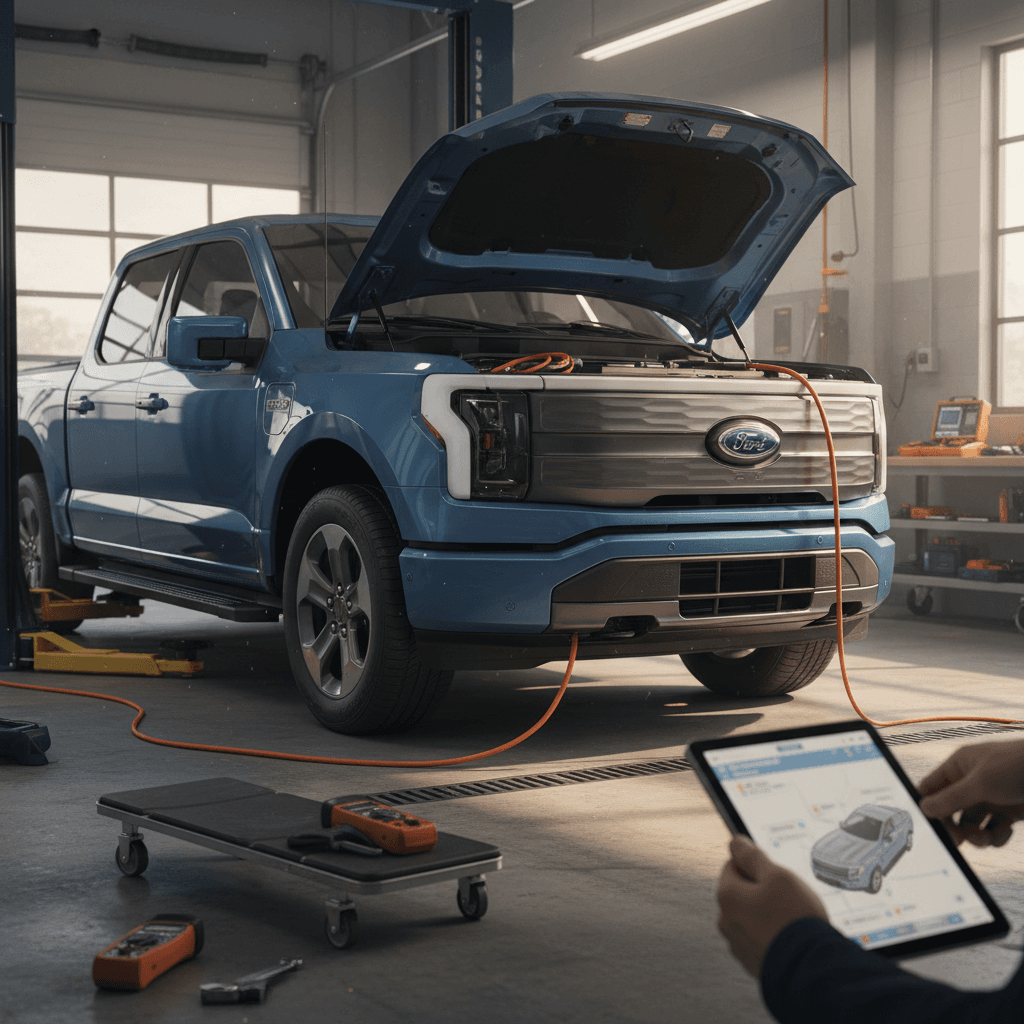
- Any repair involving orange‑sheathed cables
- Software recalls and deep diagnostics
The risk of damaging an Ultium‑based EV, or hurting yourself, outweighs any savings here.
Document your DIY work
Real‑world cost of maintaining a Blazer EV
So what does this **Chevy Blazer EV maintenance schedule** actually cost in the real world? Exact prices vary by dealer and region, but the pattern is consistent: **routine service is dramatically cheaper than on a gas SUV**, with most of your money going into tires over time.
Typical Blazer EV maintenance costs (ballpark, U.S.)
Rough estimates for planning, not quotes. Always check current pricing with your service provider.
| Service | Typical Timing | What’s Included | Rough Cost |
|---|---|---|---|
| First visit | Within 1 year or 7,500 mi | Tire rotation, multipoint inspection, basic EV/system check | Often $0 (included with new Chevy) |
| Routine check | Every 7,500 mi | Tire rotation, brake and suspension inspection, report of findings | $80–$150 |
| Cabin filter + checks | Around 22,500 mi | All of the above plus cabin air filter | $150–$250 |
| Brake fluid flush | Around 5 years | New brake fluid, bleeding, brake hardware inspection | $150–$250 |
| Battery coolant check/service | Around 5 years | Coolant inspection, possible drain/refill, leak check (high‑voltage area) | $250–$500+ |
| Tire set | Every 25,000–45,000 mi (driving‑style dependent) | Four new EV‑rated tires, mount and balance, alignment | $1,000–$1,600 on larger wheel packages |
Routine visits are mostly tire rotations and inspections; major fluid work is infrequent.
Maintenance plans: worth it?
Maintenance checklist for a used Chevy Blazer EV
If you’re eyeing a **used Blazer EV**, or already bought one, maintenance history matters more than the odometer alone. The good news: because the official schedule is relatively light, it’s not hard to get a used example back on track.
Used Blazer EV maintenance catch‑up list
1. Verify tire condition and age
Check for uneven wear, sidewall damage, or mismatched brands. Ask for alignment records if the tread looks chewed on one side, heavy EVs can eat tires when alignment is off.
2. Confirm 7,500‑mile services were done
Look for documentation of tire rotations and inspections at least every 7,500–10,000 miles. If there’s a gap, schedule a rotation and inspection immediately after purchase.
3. Replace the cabin air filter if in doubt
If there’s no clear record around the 20,000–25,000‑mile mark, a fresh cabin filter is cheap insurance for HVAC performance and odor control.
4. Ask about brake fluid and coolant age
On Blazer EVs approaching **5 years**, ask specifically whether the brake fluid and high‑voltage coolant have been inspected or serviced. If not, budget to do them soon.
5. Scan for software updates and recalls
Have a Chevy dealer run the VIN for outstanding software campaigns or recalls. Getting these done early can improve charging behavior, range prediction, and infotainment stability.
6. Get an EV‑savvy pre‑purchase inspection
If you’re still shopping, have a technician familiar with Ultium‑based EVs inspect the car. At Recharged, every vehicle gets a **Recharged Score Report** with verified battery health and a transparent view of past maintenance and wear.
How Recharged helps on used Blazer EVs
Ready to find your next EV?
Browse VehiclesChevy Blazer EV maintenance FAQ
Frequently asked questions about Blazer EV maintenance
Bottom line: keep your Blazer EV happy with minimal fuss
The **Chevy Blazer EV maintenance schedule** is refreshingly simple. You’re not married to oil changes or timing belts; you’re married to **tires, inspections, and software**. Rotate every 7,500 miles, let someone who knows EVs look under the skin once a year, and plan for a couple of fluid services over a five‑year span. That’s the real workload.
If you’re shopping for a Blazer EV, or trying to understand the long‑term cost of the one in your driveway, this schedule is your roadmap. And if you’d rather not decode service records alone, Recharged can help with **used Blazer EVs that include a Recharged Score battery health report, transparent pricing, and expert EV guidance** so your next SUV feels like an upgrade, not a science project.