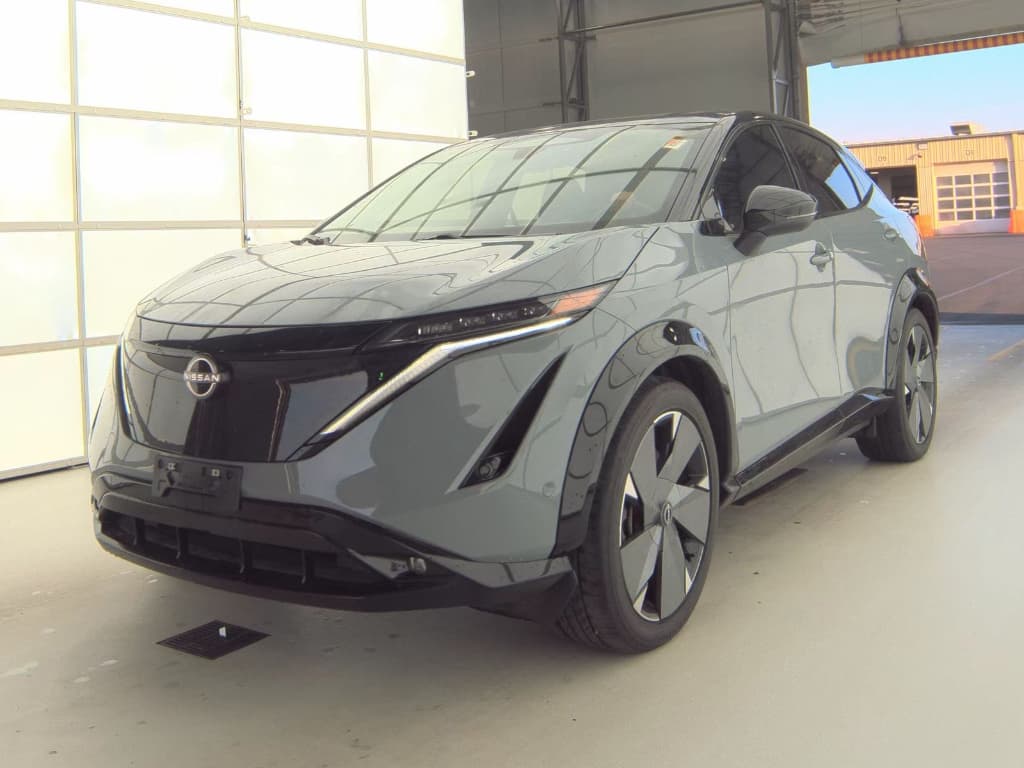
Electric SUVs like the Nissan Ariya don’t need oil changes or spark plugs, but they’re not completely maintenance-free. If you’re trying to understand the Nissan Ariya maintenance schedule, or you’re eyeing a used Ariya and want to know what it’ll cost to keep one happy, this guide walks you through every major service item in plain English.
Quick note on U.S. availability
Nissan Ariya maintenance schedule at a glance
Ariya maintenance in numbers (typical use)
Nissan’s official documents break the Ariya service schedule into mileage and time intervals, whichever comes first. In practice, most owners will see their service advisor about once a year for inspections and tire rotation, with larger jobs like brake fluid and coolant happening much farther down the road.
- Regular inspections, tire rotations, and cabin air filter changes
- Brake system checks and periodic brake fluid replacement
- Coolant service for the battery and power electronics at long intervals
- Visual checks of the reduction gear oil (no routine gear oil change listed for normal use)
- Software updates and recalls when needed
Where to find your exact schedule
Service intervals by mileage and time
Different markets publish the Ariya maintenance schedule in slightly different ways, but the underlying pattern is the same: regular inspections and tire care early on, then fluid changes and a few replacements as mileage adds up. Below is a simplified overview using common North American style intervals.
Typical Nissan Ariya maintenance intervals
Key maintenance items and when you’ll usually see them on the schedule. Always follow the exact table in your owner’s manual.
| Mileage / Time | What’s normally done | Notes |
|---|---|---|
| Every 10,000–12,000 mi or 12 months | Multi‑point inspection, tire rotation, software updates (if available) | Dealer checks brakes, suspension, steering, lights, wipers, charging port, 12V battery and tires. |
| 30,000–37,500 mi (~3 years) | Cabin air (micro) filter replacement, plus regular inspections | You may see the in‑cabin microfilter called out around this point; some dealers do it sooner. |
| 60,000–75,000 mi (~5 years) | Repeat inspections, cabin filter, tire rotation; possible brake service | Pad life depends heavily on driving style and climate. |
| ~82,500 mi / 66 months | Key fob battery replacement, tire rotation, inspections | The schedule calls out the intelligent key battery based on time more than mileage. |
| 96,000–100,000 mi (~8 years) | Brake fluid replacement, cabin filter, tire rotation, full inspection | This is an important safety service; don’t skip it. |
| 120,000 mi / 96 months | Brake fluid, cabin filter, tire rotation, full suspension and steering inspection | A bigger check‑up visit as the vehicle ages. |
| 125,000 mi / 15 years | First coolant replacement for EV system | After this, coolant is usually every 75,000 mi or 5 years. |
Miles and months are “whichever comes first.” Severe use may require shorter intervals.
Miles vs. months really matters
Standard vs. severe Nissan Ariya maintenance
Like most automakers, Nissan publishes two schedules for the Ariya: standard and severe. Most suburban commuting falls under standard, but plenty of owners actually qualify for severe use without realizing it.
Which maintenance schedule do you fall under?
Match your driving habits to Nissan’s recommendation.
Standard schedule is for you if…
- You mostly drive on paved roads.
- Trips are usually 10+ miles once the car is warmed up.
- You rarely tow and don’t live on steep mountain roads.
- You don’t see extreme heat or cold for long stretches.
In this case, you’ll follow the basic intervals: annual inspections, long coolant intervals, and brake fluid roughly around the 96,000‑mile mark.
Severe schedule is for you if…
- You frequently drive in stop‑and‑go traffic or short trips only.
- Roads are dusty, unpaved, or heavily salted in winter.
- You live in very hot or very cold climates.
- You tow regularly or often drive at high speed in hilly areas.
Here, Nissan calls for more frequent inspections and earlier brake fluid replacement to keep the system safe.
Don’t ignore a severe‑use life
How Ariya maintenance compares to gas SUVs
What you don’t service on an Ariya
- No engine oil or oil filter – there’s no engine to lubricate.
- No spark plugs or ignition coils.
- No timing belt or timing chain service.
- No traditional automatic transmission with fluid and filter changes.
- No exhaust system (no mufflers or catalytic converters to rust out).
That’s a long list of line items that simply don’t exist on your bill.
What you still need to watch
- Brakes – Pads may last longer thanks to regen, but calipers and fluid still age.
- Tires – EV torque and weight wear tires faster than many gas SUVs.
- Suspension – Same potholes, same ball joints and bushings.
- HVAC and cabin filter – Especially important to keep defrost and battery cooling happy.
- 12V battery – Still there, and still a common failure point on modern EVs.
Big picture: less maintenance, not zero
Common Nissan Ariya service costs
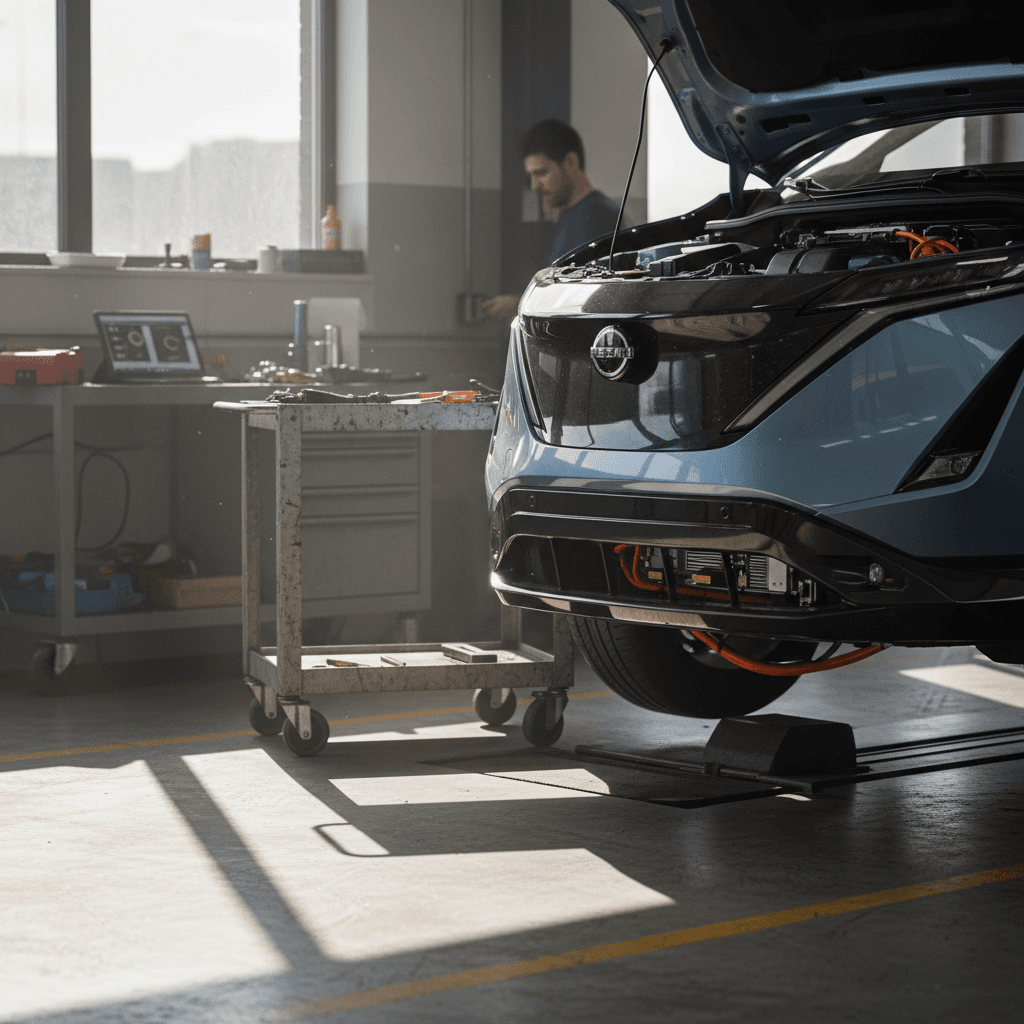
Service pricing will vary by region and by dealer, but you can use these ballpark numbers to plan your Ariya’s upkeep. Independent shops that are EV‑savvy can sometimes save you money on non‑warranty work, while dealers may bundle services at set prices.
Typical Ariya maintenance items and ballpark costs (U.S.)
Approximate retail prices at many dealerships or reputable independent shops. Taxes and shop fees not included.
| Service | Typical Interval | Approx. Cost (USD) | Notes |
|---|---|---|---|
| Annual inspection & tire rotation | 10,000–12,000 mi / 12 months | $120–$220 | Many dealers bundle the checkup and rotation; some include a wash and software updates. |
| Cabin air (micro) filter | Every 1–2 years | $60–$140 | Parts plus labor; DIY is usually cheaper if you’re handy. |
| Brake fluid change | ~96,000 mi / 8 years (or per manual) | $150–$250 | More often for severe use or very humid climates. |
| Brake pads & rotor service | 60,000–90,000+ mi (varies widely) | $350–$800/axle | EVs often go longer on pads, but rotors can rust if the car sits. |
| Coolant service (EV system) | 125,000 mi / 15 years (first) | $300–$600 | Depends on labor rates and how much coolant system needs to be bled. |
| 12V battery replacement | 4–7 years | $180–$350 | Common aging‑related repair on many EVs, Ariya included. |
| Tire replacement (set of 4) | 25,000–45,000 mi | $800–$1,200+ | Depends on wheel size and tire brand; EV‑rated tires can cost more. |
These are estimates only, always ask for a written quote from your service provider.
Ask about EV‑specific service packages
Maintenance tips if you’re buying a used Ariya
With Ariyas beginning to hit the used market in larger numbers, understanding its maintenance history is just as important as knowing the battery’s state of health. This is exactly why Recharged includes a Recharged Score battery and condition report with every used EV we sell, so you’re not guessing about how the previous owner treated the car.
Used Nissan Ariya maintenance checklist
1. Verify basic services and recalls
Ask for service records showing at least annual inspections and tire rotations, plus any recall or campaign work. A car that’s been to the dealer or a trusted EV shop once a year is usually a safer bet.
2. Check tire condition and alignment
Uneven front‑tire wear can hint at pothole damage or alignment issues. Budget for new tires if tread is low or if the wear pattern looks strange.
3. Look for brake service documentation
Many Ariyas won’t need pads early, but a car that sat for long periods may have rusty rotors and sticky calipers. Fresh pads and rotors are not a dealbreaker, but it’s good to know if and when the work was done.
4. Ask about software updates
Infotainment, driver‑assist, and charging behavior can all improve with software updates. Ask if the previous owner kept up with dealer updates or over‑the‑air campaigns.
5. Confirm coolant and brake fluid timing
Most used Ariyas on the market today won’t be anywhere near the coolant interval, but older, higher‑mileage imports might. If the car is close to a big fluid service, use that as a bargaining chip on price.
6. Get an independent EV inspection
When you’re serious about a particular Ariya, a pre‑purchase inspection from an EV‑literate shop, or a retailer like Recharged that already performs this check, can reveal suspension, brake, or charging issues a quick test drive misses.
How Recharged helps
Ready to find your next EV?
Browse VehiclesDIY vs. dealer service for the Ariya
You don’t have to be a master technician to handle some Ariya maintenance yourself, but there are clear lines where it’s smarter to let a dealer or EV specialist take over, especially while the high‑voltage system is under warranty.
Easy DIY tasks
- Tire checks and rotations – If you have jack stands and know proper torque specs, you can rotate at home.
- Cabin air filter replacement – Typically a glovebox‑area job with basic tools.
- Wiper blades and washer fluid – Simple and cheap, just like any other car.
- Key fob battery – The schedule calls this out around the 5–6 year mark, but you can swap it in minutes.
For these items, following a video tutorial plus the owner’s manual is usually enough.
Best left to EV‑trained pros
- Brake fluid bleeding – The Ariya uses electronic brake systems; improper bleeding can compromise safety.
- High‑voltage coolant service – Mistakes here can damage the battery or power electronics.
- Suspension and steering repairs – Require proper torque, alignment, and sometimes special tools.
- Software and control‑module updates – Dealer‑level tools or factory‑approved equipment required.
For these, a Nissan dealer or independent EV specialist, and the right diagnostic tools, are worth every penny.
Battery health, coolant, and long-term care
The heart of your Ariya is its high‑voltage battery pack. While there’s no user‑serviceable maintenance here, a few items on the schedule quietly support battery health over the long haul, especially coolant and keeping the thermal system leak‑free.
- The owner’s manual specifies the first coolant replacement at roughly 125,000 miles (200,000 km) or 15 years from new, whichever comes first.
- After the first change, Nissan calls for coolant about every 75,000 miles (120,000 km) or 5 years.
- Dealers also inspect for leaks around the traction motor, reduction gear, and battery coolant lines at regular visits.
- Software updates can adjust how the car charges and manages temperature, which can help the battery age more gracefully.
Habits that help the battery age gracefully
An EV’s maintenance schedule is only half the story. The other half is how the first owner actually treated the car, charging habits, storage, and whether they fixed little problems before they became big ones.
Nissan Ariya maintenance FAQ
Frequently asked questions about Ariya maintenance
Bottom line: keeping your Nissan Ariya healthy
The Nissan Ariya’s maintenance schedule is refreshingly simple compared with a gas SUV: fewer fluids, fewer moving parts, and fewer opportunities for expensive surprises. But simple doesn’t mean optional. Staying on top of inspections, tire rotations, brake fluid, and long‑interval coolant service will make the difference between an Ariya that feels tight and confident at 10 years old and one that starts to feel tired well before its time.
If you already own an Ariya, use this guide alongside your Owner’s Manual to plan out the next decade of service and budget. And if you’re shopping for a used Ariya, or any used EV, consider buying through Recharged, where every vehicle includes a Recharged Score battery‑health report, transparent pricing, and EV‑specialist support from your first question to delivery. That way, the only surprises in your electric future are the good kind, like how little time you spend visiting the service bay at all.