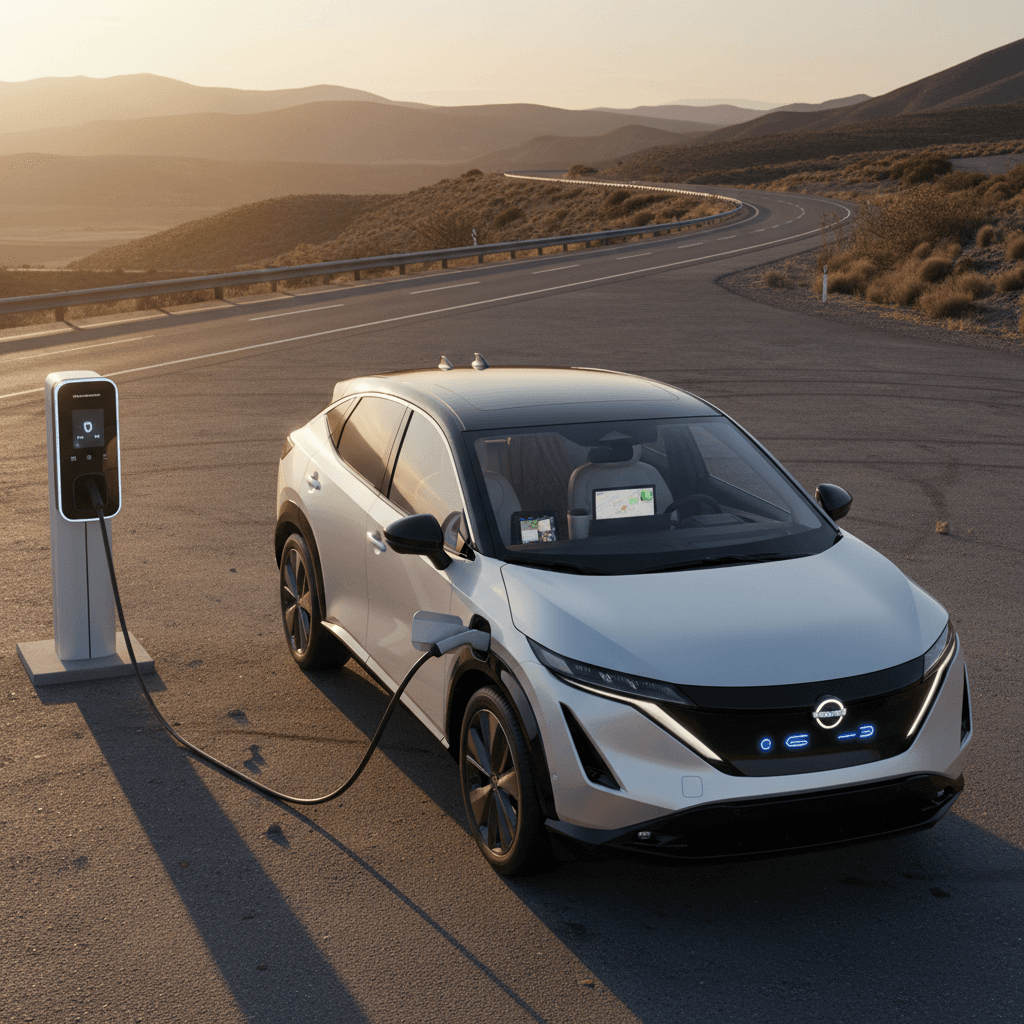
If you own a Nissan Ariya or you’re thinking about buying one, you might be wondering how it really performs on a long highway drive. The good news is that with the right strategy, the Nissan Ariya is a very capable long-distance EV. These Nissan Ariya long distance driving tips will help you plan smarter routes, charge efficiently, and arrive more relaxed, whether you’re commuting across the state or taking a multi‑day road trip.
Quick Ariya road-trip snapshot
Can the Nissan Ariya Handle Long-Distance Driving?
On paper, the Nissan Ariya’s range and 130 kW DC fast‑charging specs look solid for road‑trip duty. Real‑world testing has shown that both the 63 kWh and 87 kWh packs can sustain respectable charging speeds and deliver efficiency in the mid‑3 mi/kWh range in moderate conditions, which is competitive with other midsize crossovers. That said, your highway speed, weather, and charging habits will make or break your experience.
- Best suited for: 200–500 mile days with 1–2 DC fast‑charge stops
- Works for: Multi‑day cross‑country trips with thoughtful planning
- Challenging for: Very sparse charging corridors or towing at high speed
Be honest about your route
Know Your Ariya: Battery Sizes, Trims & Real-World Range
Before you think about road‑trip tactics, you need to know which Ariya you’re driving. Nissan offers two usable battery sizes, about 63 kWh and 87 kWh, and several trims with front‑wheel drive (FWD) or all‑wheel drive (e‑4ORCE). Their official EPA or WLTP ratings vary, but your highway range will depend more on speed and conditions than lab numbers.
Nissan Ariya Battery & Range Basics (U.S. trims)
Approximate official ranges and what to expect at real‑world highway speeds in mild weather.
| Battery / Trim example | Drivetrain | Official rating (up to) | Typical highway planning range* |
|---|---|---|---|
| 63 kWh ENGAGE FWD | FWD | Around 210–220 miles | 140–170 miles |
| 63 kWh ENGAGE e-4ORCE | AWD | Around 200–210 miles | 130–160 miles |
| 87 kWh VENTURE+ / EVOLVE+ FWD | FWD | Around 280–300+ miles | 190–240 miles |
| 87 kWh e-4ORCE trims | AWD | Around 260–270 miles | 180–230 miles |
Numbers are rounded and intended as planning baselines, not guarantees.
How to set your personal range estimate
In real owner reports and independent highway tests, many Ariya drivers see 2.7–3.3 mi/kWh at 70–75 mph in mild weather. In cold, wet, or very hot conditions with climate control running hard, it’s common to dip toward 2.2–2.5 mi/kWh. The larger 87 kWh pack obviously stretches those miles further, which is why it’s the better choice if you plan frequent long‑distance travel.
Planning Your Route and Charging Stops
Long‑distance EV driving is less about absolute range and more about stringing together reliable chargers. The Ariya’s CCS fast‑charging port gives you access to most major U.S. public networks today, and as networks expand and more NACS options appear, your routes will only get easier.
Three Smart Ways to Plan Ariya Road Trips
Use at least two of these tools before any new long‑distance route.
1. EV‑focused route planner
Apps like A Better Routeplanner (ABRP) or other EV‑specific planners let you:
- Enter your exact Ariya trim and battery size
- Customize speed, temperature, and desired arrival SOC
- Preview estimated charging stops and times
2. Charging-network apps
Install apps from major networks that support CCS fast charging:
- Check station status and live availability
- Read recent user reviews
- Verify power level (look for 150 kW+ stations)
3. In‑car navigation & NissanConnect
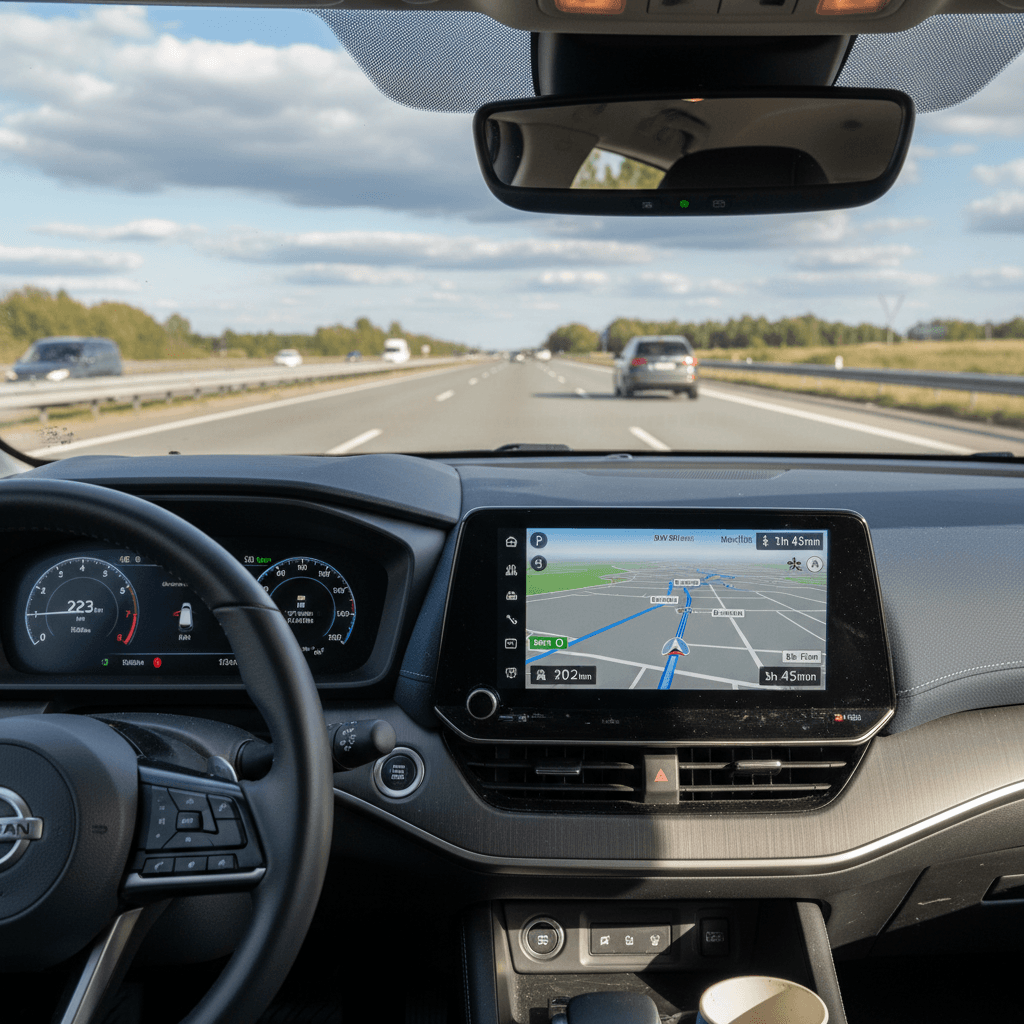
Use the Ariya’s built‑in navigation and connected services to:
- Locate nearby chargers on the move
- Route to DC fast chargers when low
- Get real‑time traffic along your route
Aim for 10–20% on arrival
How far between stops?
For most Ariya trims, spacing DC fast‑charge stops about 120–170 miles apart works well on interstates. That’s usually 2–3 hours of driving between breaks, which also lines up nicely with rest stops, meals, and driver fatigue.
How long to charge?
On a healthy 130 kW‑capable charger with a warm battery, expect a 10–80% session in roughly 30–40 minutes on the larger pack, slightly less on the 63 kWh battery. If you regularly charge past 80–90%, expect the last 10–20% to feel much slower, that’s normal for battery protection.
Optimizing Highway Efficiency: Speed, Modes & Climate
At highway speeds, aerodynamic drag becomes your number‑one enemy. In the Ariya, jumping from 65 mph to 80 mph can easily erase 40–60 miles of potential range over a full battery. The goal isn’t hypermiling; it’s finding a comfortable, steady pace that respects physics and keeps your day moving.
How Highway Speed Affects Ariya Range (Typical Conditions)
- Use ECO mode on long, flat highway stretches to smooth throttle inputs and reduce climate load.
- Set adaptive cruise a few mph under the flow of traffic to stay efficient without feeling like an obstacle.
- If traffic allows, tuck in behind a large vehicle at a safe following distance; reduced wind drag can bump efficiency slightly.
- Avoid rapid bursts of acceleration; the Ariya’s instant torque is fun, but those sprints cost range.
- Use e‑Pedal or B‑mode in rolling terrain to recapture energy on descents instead of riding the brakes.
Smart climate control use
Making the Most of DC Fast Charging
The Ariya’s DC fast‑charging peak, around 130 kW when conditions are right, may not grab headlines like some ultra‑fast rivals, but its relatively flat charging curve means it can hold solid power deeper into the session. For road trips, that consistency is often more important than a flashy peak that fades quickly.
DC Fast-Charging Best Practices for Ariya Owners
1. Start low, stop around 70–80%
You’ll get the best kW and miles‑per‑minute when charging from roughly 10–20% up to 70–80%. Past 80%, charging slows significantly, so it’s usually smarter to unplug and drive to the next stop.
2. Pre‑warm the battery before a big charge
If your route planner or in‑car nav allows, set the fast charger as a destination well before you arrive and drive the last 20–30 minutes at highway speeds. A warm pack charges faster than one that’s been sitting cold.
3. Pick the right station
When you can, favor 150 kW or 200+ kW chargers over 50 kW units. The Ariya can use that higher power up to its 130 kW cap, shortening stop times.
4. Avoid hopping between many short charges
Two longer, well‑timed sessions are usually better than three or four short top‑ups that start at a high state of charge, where speeds are slower.
5. Watch both kW and SOC, not just time
Many public chargers show live kW. When you see power dropping sharply and your battery is near 70–80%, that’s your cue to wrap up the session.
Don’t chase 100% on DC fast charging
Using Ariya Tech Features for Less-Fatiguing Trips
One of the Ariya’s strengths on long trips is its driver‑assistance and comfort tech. Used wisely, those features can reduce fatigue while still keeping you engaged and in control.
Comfort & Driver-Assistance Features to Lean On
Let the car help with the boring parts so you can focus on the drive.
ProPILOT Assist / 2.0
Helps with lane‑centering and adaptive cruise on compatible highways. It won’t drive for you, but it can dramatically reduce the mental load in heavy traffic or long interstate stints.
Heated seats & steering wheel
These use less energy than cranking cabin heat. In cool weather, keep cabin temp moderate and let the seat and wheel heaters keep you comfortable.
NissanConnect & EV info screens
Use the energy‑usage displays to see how speed and climate settings affect your consumption, then adjust to stretch your next leg if needed.
Stay engaged even with driver aids
Cold-Weather and Hot-Weather Road Trips
Extreme temperatures are where expectations and reality often clash. The Ariya is better than many first‑generation EVs at managing cold and heat, but physics still applies: heating and cooling demand energy, and batteries are less efficient at temperature extremes.
Cold-weather road trips
- Preheat the cabin and battery while plugged in before departure.
- Expect 20–30% less range at freeway speeds in freezing conditions; plan shorter legs.
- Use seat and wheel heaters liberally and keep cabin temp a bit lower.
- Allow extra time for DC fast charges; cold packs ramp up more slowly.
Hot-weather road trips
- Park in the shade when possible to reduce A/C workload.
- Use the Ariya’s pre‑cooling features so the car is already comfortable when you start driving.
- At very high ambient temps, you may see DC charging power taper sooner as the car protects the battery.
- Carry water and don’t be afraid to let the A/C work, just account for the modest efficiency hit.
Never sacrifice safety for range
Packing, Cabin Comfort & Family-Friendly Tips
The Ariya’s interior was clearly designed with comfort in mind, which pays dividends on long days. You’ll get the best out of it by thinking about how you pack and how your passengers will actually use the space over hours, not minutes.
- Avoid stacking luggage so high that it blocks rear visibility or puts extra weight on one side; even weight distribution helps handling and ride quality.
- If you’re traveling with kids, keep snacks, headphones, chargers, and small bags within reach so you’re not constantly digging in the cargo area.
- Use the Ariya’s quiet cabin to your advantage, playlists, podcasts, and conversation go a long way toward making 30‑minute charging stops feel shorter.
- On overnight trips, bring a compact Level 1 or Level 2 portable EVSE if you’re staying with friends or at rentals; even slow overnight charging can save a fast‑charge stop the next day.
- Plan driver swaps at charging stops so nobody drives past their alertness window just to “make it to the next charger.”
Protecting Battery Health if You Road Trip Often
Using your Ariya as a true road‑trip machine doesn’t have to mean abusing the battery. Nissan has built in buffers and safeguards, and the Ariya uses a modern liquid‑cooled pack, but your habits still matter, especially over many years of ownership.
Long-Term Battery Care Tips for Ariya Owners
Keep road‑tripping while preserving range for years to come.
Everyday charging vs. trip charging
Day to day, it’s healthier to keep the battery mostly between about 20–80% on home charging. Save frequent 90–100% charges for mornings when you’re about to hit the road and use that range immediately.
Limit time spent at 0% or 100%
Occasionally running down to very low SOC on a trip is fine, but don’t leave the car sitting near empty or full for days. Charge back into a mid‑range and store the car there when possible.
Prefer AC charging when you’re not in a rush
DC fast charging is a tool, not a lifestyle. It’s okay to use it heavily during trips, but at home or at your destination, lean on Level 2 charging for gentler, overnight top‑ups.
Monitor range over time
Pay attention to how your real‑world highway range changes year over year on the same routes. Modest loss is normal; a big step‑change may be worth discussing with a qualified EV technician.
How Recharged helps with battery peace of mind
Pre-Trip Checklist for a Nissan Ariya Road Trip
Before any long drive, especially your first big EV road trip, take a few minutes to prep the car and your plan. It’s the difference between an easy, predictable day and a stressful one.
One-Day Road Trip Checklist for Nissan Ariya Owners
Confirm your trim, battery size, and realistic range
Know whether you have the 63 kWh or 87 kWh pack, and base your plan on recent highway energy use rather than the dash estimate alone.
Map your charging strategy
Use an EV route planner plus at least one network app to choose 2–3 primary fast‑charge stops and a couple of backups along your route.
Update and test your charging apps
Sign in, add payment methods, and, if possible, start a test session near home so you’re not debugging apps at a remote station.
Inspect tires and tire pressures
Set pressures to the door‑jamb spec when the tires are cold. Under‑inflation hurts both efficiency and safety, especially at highway speeds.
Pack your charging kit
Bring your portable EVSE, any adapters you own, a pair of work gloves, and a microfiber towel for wiping off dirty handles.
Plan your first departure charge
Schedule home charging to finish shortly before you leave, ideally at 90–100% on trip mornings so you’re rolling right after hitting full.
Nissan Ariya Long-Distance Driving: FAQ
Common Questions About Long-Distance Driving in the Nissan Ariya
Is a Used Nissan Ariya a Good Road-Trip EV?
For many shoppers, a used Nissan Ariya offers a compelling blend of price, comfort, and long‑distance capability. You get a quiet, upscale cabin; a modern liquid‑cooled battery; and DC fast charging that’s competitive with other mainstream EV crossovers. The key is to buy with eyes wide open about battery health and charging behavior.
That’s where a verified battery report becomes valuable. When you shop through Recharged, every used EV, including the Ariya, comes with a Recharged Score that includes independent battery health diagnostics, real‑world range insights, and fair‑market pricing. Our EV‑specialist team can also help you think through your specific routes, charging options, and whether a 63 kWh or 87 kWh Ariya fits your road‑trip expectations.
If you understand its strengths and respect its limits, the Nissan Ariya is more than capable of long‑distance duty. Plan your route around dependable CCS fast chargers, keep highway speeds reasonable, and use the car’s tech to stay comfortable and alert. Do that, and you’ll find that road‑tripping in an Ariya isn’t about enduring range anxiety, it’s about enjoying the quiet, smooth, and surprisingly relaxing rhythm of electric travel.