If you’re looking at a Porsche Taycan, whether new or used, battery degradation is probably high on your list of concerns. You’re not alone. The Taycan is a high‑performance EV with an 800‑volt architecture and blisteringly quick DC fast‑charging, so it’s fair to ask: does that performance come at the cost of long‑term battery health? In this guide we’ll unpack how Porsche Taycan battery degradation actually behaves, what’s normal, what the warranty covers, and how you can protect both range and resale value.
Quick takeaway
Why Porsche Taycan battery degradation matters
On a combustion Porsche, long‑term worries revolve around turbos, transmissions, and maintenance history. On a Taycan, the traction battery pack is the single most valuable component in the car. Even modest changes in battery health can impact:
- Real‑world range and how far you can drive between charges
- How often you need to stop for DC fast charging on road trips
- Acceleration repeatability (especially at low state of charge)
- Long‑term ownership costs and confidence beyond the warranty
- Resale value if you decide to sell or trade the Taycan later
For used‑EV buyers, understanding actual and expected degradation is even more important. Two Taycans that look identical on the outside can have very different battery health profiles depending on how they were driven and charged.
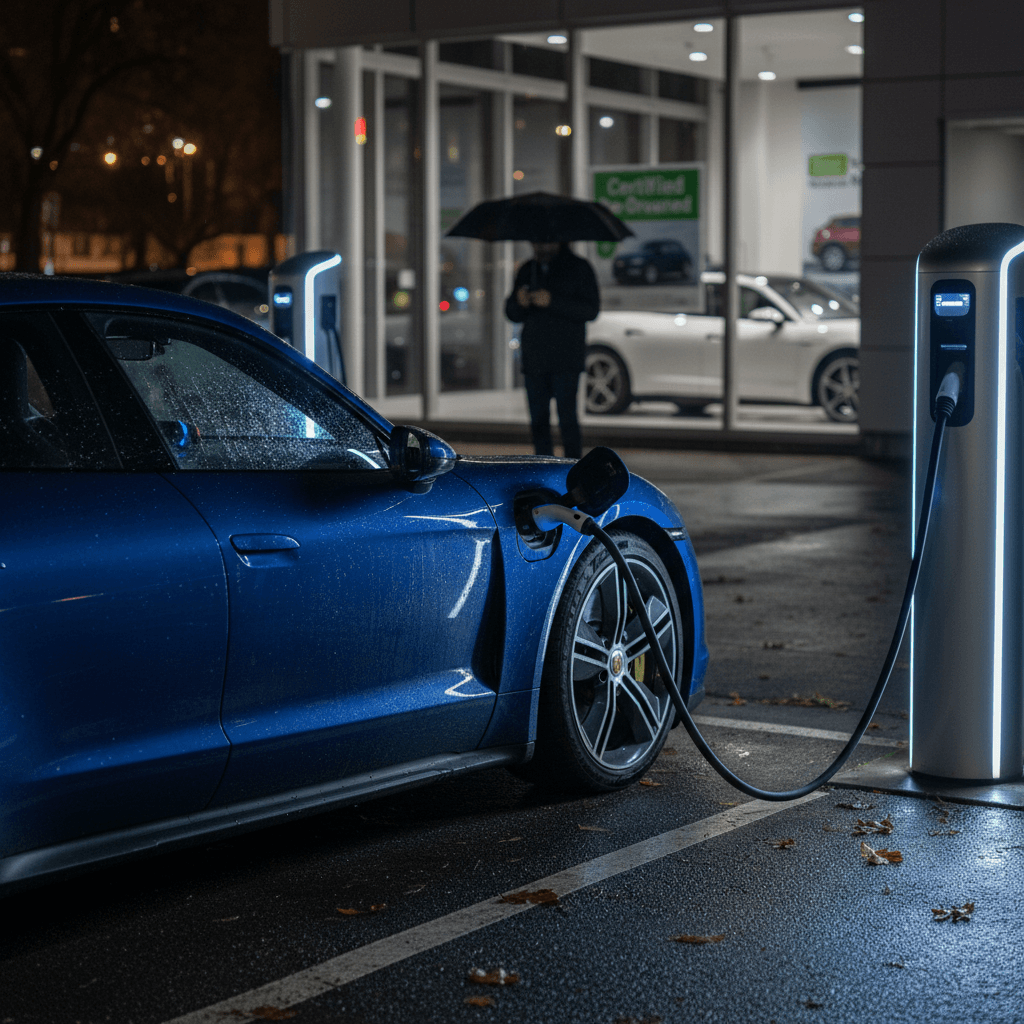
How EV battery degradation works (and where Taycan fits)
All modern EVs, including the Taycan, use lithium‑ion battery packs. Capacity loss over time comes from two broad mechanisms:
Two kinds of EV battery degradation
Understanding these helps you read your Taycan’s behaviour
Calendar aging
Capacity slowly declines simply with time at elevated state of charge and temperature, even if the car isn’t driven much. A Taycan stored at 100% in a hot climate will age faster than one sitting at 40–60% in a cool garage.
Cycle aging
Every charge–discharge cycle causes a tiny amount of wear. Deeper cycles (0–100%) are harder on the pack than shallow ones (30–70%), and repeated high‑power fast‑charging adds extra thermal stress.
The Taycan’s 800‑volt system, sophisticated thermal management, and relatively conservative usable capacity window all work in your favour. Porsche keeps some buffer at the top and bottom of the pack that you can’t access, which helps slow degradation compared with a pack that lets you use every last electron.
Think in terms of heat, time and depth
Real‑world Porsche Taycan battery degradation so far
Porsche doesn’t publish fleet‑wide degradation curves for the Taycan, but we can triangulate from owner data, independent testing of similar packs, and Porsche’s own warranty stance.
What current data suggests about Taycan battery life
Early‑build 2020–2021 Taycans now have several years and significant mileage on them. The pattern emerging from owner reports is boring in the best possible way: mild initial capacity loss in the first 1–2 years, followed by a slower decline. That “early drop then flattening” curve is consistent with other modern EVs.
Good news for used buyers
Warranty: what Porsche actually covers on Taycan batteries
Battery warranties are where an automaker puts its money where its mouth is. For the Taycan, Porsche offers a dedicated high‑voltage battery warranty that typically covers:
Typical Porsche Taycan high‑voltage battery warranty coverage
Exact terms vary a bit by market and model year; always confirm against the warranty booklet for the specific car you’re considering.
| Item | Typical Coverage | What It Means For You |
|---|---|---|
| Time & mileage | 8 years / 100,000 miles (approx.) | You’re protected for a long stretch of ownership, well into used‑car territory. |
| Capacity threshold | Around 70% remaining capacity | If the pack won’t hold roughly 70% of its original usable capacity or more, the warranty may trigger repair or replacement. |
| Defects & failures | Manufacturing defects, module failures, BMS issues | If a cell group or module fails prematurely, Porsche repairs or replaces under warranty. |
| Exclusions | Abuse, improper modifications, severe accident damage | Track use, frequent DC charging, or hot climates alone typically don’t void coverage, but abuse can. |
For U.S. cars, the Taycan battery is generally covered for 8 years or 100,000 miles against defects and abnormal capacity loss, subject to conditions.
Used‑car nuance
6 factors that speed up Taycan battery degradation
No EV is immune to poor treatment. The Taycan’s pack is robust, but certain patterns will age it faster than necessary. The big culprits:
Six common Taycan battery stressors
1. Living at 100% charge
Routinely parking a Taycan at or near 100% state of charge, especially in heat, accelerates calendar aging. Think of 100% as a launch state for a trip, not an all‑day storage setting.
2. Repeated deep discharges
Frequently running the battery very low (into single‑digit percent) and then charging back to 100% is harder on the cells than operating in a moderate window like 20–80%.
3. Constant high‑power DC fast charging
The Taycan’s 800‑volt system can accept stunning fast‑charge rates, over 300 kW on newer models, but using that capability as your primary fueling method, day‑in and day‑out, adds extra heat and wear.
4. High average battery temperature
Regularly parking in direct sun, living in a very hot climate, or towing/track use without cooldown time can keep the pack hotter than ideal. The Taycan has liquid cooling, but it can’t change the weather.
5. Aggressive track use with no cooldown
Hard lapping followed immediately by a high‑power DC fast charge is about the toughest duty cycle you can give an EV pack. Occasional fun is fine, just build in cool‑down and don’t do this every weekend.
6. Poor charging hardware or installation
Undersized or overheating home wiring, unreliable public chargers, or damaged connectors won’t necessarily kill range overnight, but repeated stress and interruptions are not ideal for long‑term pack health.
How to slow Porsche Taycan battery degradation in daily use
The good news: you don’t have to baby your Taycan or drive it like a Camry hybrid to keep the battery healthy. Porsche expects owners to enjoy the performance. But a few habits make a measurable difference over 8–10 years.
- Use AC charging at home or work whenever practical, and treat DC fast charging as a long‑trip tool, not a daily habit.
- For day‑to‑day use, aim to keep the charge window roughly between 20% and 80%. Bump to 90–100% only when you’re about to depart on a longer drive.
- If your Taycan offers a battery‑saving or charging‑limit mode, enable it for routine overnight charging in the garage.
- Park in the shade or indoors when possible. Avoid leaving the car fully charged in blazing summer heat for days on end.
- After spirited driving, give the car some time to manage pack temperature before hitting a high‑power DC fast charger.
- Update software as recommended; thermal and charging strategies often improve over time with OTA or dealer updates.
Think “good enough” for daily range
Fast‑charging the Taycan without killing the battery
One of the Taycan’s killer features is charging performance. Updated models can peak around 320 kW at 800‑volt DC stations and hold more than 300 kW for several minutes, shrinking a 10–80% session to roughly 18 minutes in ideal conditions. That’s sports‑car‑fast fueling in EV terms, but it doesn’t mean you should sprint charge all the time.
When DC fast charging is worth it
- On road trips where time matters more than long‑term wear.
- When you need to make multiple long highway legs in a day.
- In rare situations where home charging isn’t available and you must rely on public DC for a stretch.
How to make it easier on the pack
- Arrive near 10–20% state of charge so the car can use the high‑power plateau efficiently.
- Unplug around 60–80% on the road rather than waiting to 100%; charging slows dramatically at the top anyway.
- On longer stops, use Porsche’s battery‑saving charge limit features to cap power and temperature.
Fast doesn’t have to mean abusive
Battery health checks when buying a used Porsche Taycan
If you’re cross‑shopping used Taycans against other EVs, or against an internal‑combustion Porsche, battery health is the linchpin for long‑term value. Here’s how to approach it like a pro.
Used Taycan battery due‑diligence checklist
1. Review remaining battery warranty
Confirm in‑service date, mileage, and any prior warranty claims. A Taycan with several years of warranty left offers a real safety net if capacity loss accelerates unexpectedly.
2. Ask for a battery health report
A proper diagnostic will estimate usable capacity and look for imbalances between modules. At Recharged, every EV gets a <strong>Recharged Score battery health report</strong> based on verified data, not guesswork.
3. Look at charging history
Heavy reliance on DC fast charging, especially at very high power, isn’t an automatic deal‑breaker, but two similar cars, one mostly home‑charged and one DC‑only, won’t age identically.
4. Test range in realistic conditions
On a test drive, reset a trip computer, drive a known distance at highway speeds, and compare energy use (kWh/100 km or mi/kWh) to published figures. Big deviations can hint at tire choices, alignment, or occasionally battery issues.
5. Scan for software faults or HV warnings
Stored fault codes relating to the high‑voltage system, contactors, or battery cooling should be resolved before you buy. They can indicate more than a simple sensor glitch.
6. Inspect charging behaviour
Plug into a known‑good DC fast charger and watch the curve. An early, unexplained power taper could signal thermal issues or pack health problems that deserve deeper diagnosis.
How Recharged evaluates Taycan battery health
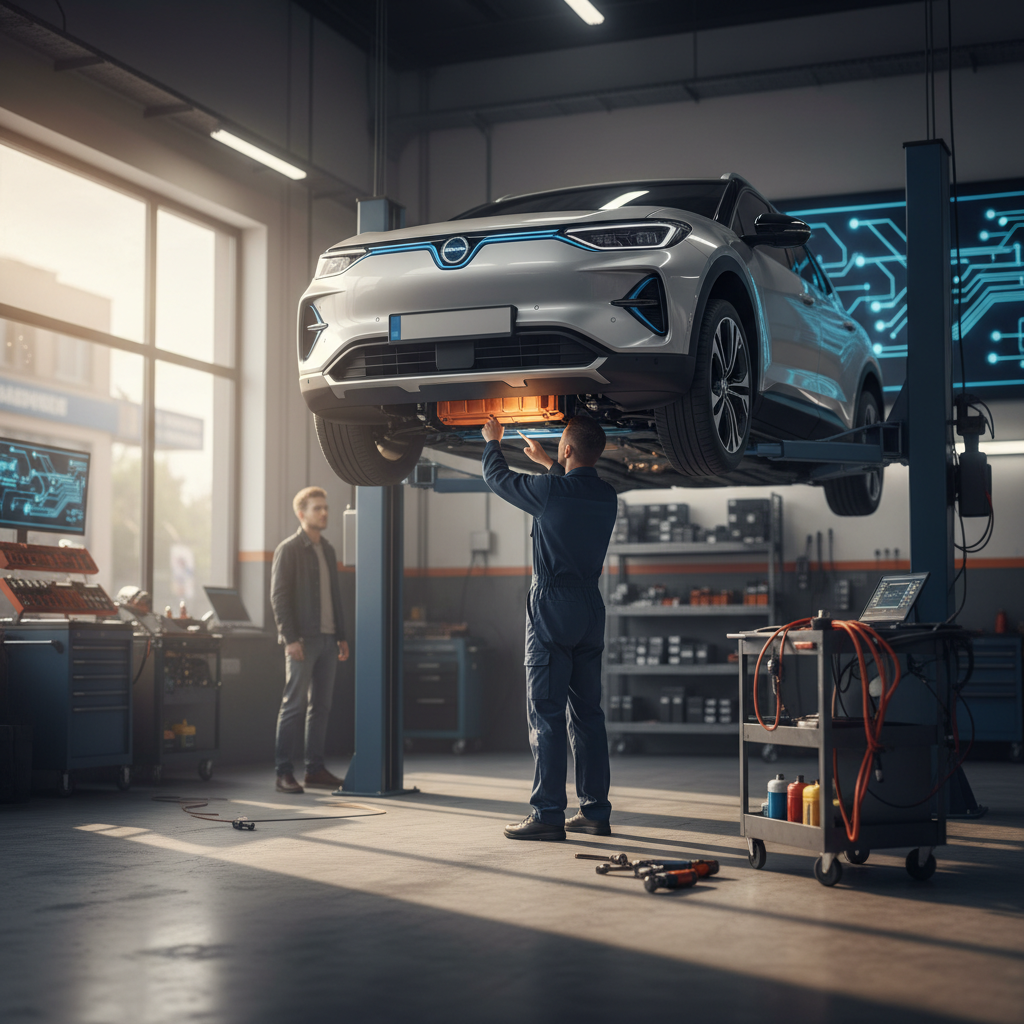
Because the battery is so central to a Taycan’s value proposition, a visual once‑over isn’t enough. At Recharged, every Taycan we buy or consign goes through a structured EV‑specific process designed to take the guesswork out of battery health.
Inside a Recharged Taycan battery assessment
What goes into the Recharged Score you see on every listing
Pack health diagnostics
We use specialised tools and OEM‑level data where possible to estimate remaining usable capacity, check for module imbalances, and confirm that the pack is operating within Porsche’s expected parameters.
Charging & usage profile
We look at how the car was actually used: proportion of DC fast charging vs AC, mileage patterns, climate exposure, and any evidence of track or towing use that could affect long‑term battery health.
Transparent Recharged Score report
Findings roll into a Recharged Score Report that sits alongside each vehicle listing, so whether you shop fully online or visit our Experience Center in Richmond, VA, you’re not buying blind.
Why this matters for Taycan shoppers
FAQ: Porsche Taycan battery degradation
Frequently asked questions about Taycan battery life
Bottom line: what to expect from Taycan battery life
The Porsche Taycan pairs serious performance with one of the most advanced EV powertrains on the market. That combination naturally raises questions about battery longevity, but so far, the story is encouraging. In the real world, Taycan packs are aging in line with other modern EVs, not burning through capacity the way first‑generation electric cars sometimes did.
If you keep an eye on charging habits, avoid living at the extremes of state of charge, and use DC fast charging as a tool rather than a lifestyle, you can reasonably expect your Taycan to retain the bulk of its usable capacity through and beyond the 8‑year battery warranty window. For shoppers considering a used Taycan, the key is shifting your focus from paint and options to verified battery health and charging history, exactly the areas where Recharged’s battery diagnostics and Recharged Score are designed to help.
Whether you’re trading into a Taycan, getting an instant offer on your current EV, or browsing our digital showroom from your couch, Recharged is built around a simple idea: make EV ownership as transparent as it should be. With the right information about battery degradation, a Porsche Taycan isn’t a gamble, it’s a deeply capable, genuinely sustainable sports sedan you can enjoy for the long haul.