If you’re looking at a 2024 Rivian R1S, you’ve probably seen the headline numbers: up to 400 miles of EPA range with the Dual‑Motor Max pack, or 352 miles with the Large pack on 21‑inch wheels. On paper that’s impressive, but what most shoppers really care about is this: how far will a 2024 Rivian R1S actually go in real‑world range tests, especially at 70–75 mph on the highway?
Why range tests matter
2024 Rivian R1S range overview
For 2024, Rivian offered the R1S with several battery packs and motor configurations. The most common combinations you’ll see in the wild are Dual‑Motor (DM) and Performance Dual‑Motor with Standard, Standard+, Large, or Max packs. With default 21‑inch road tires, EPA combined range spans roughly 270 to 400 miles, depending on configuration.
2024 Rivian R1S EPA range at a glance (21" wheels)
Wheel choice matters
EPA ratings vs real‑world range tests
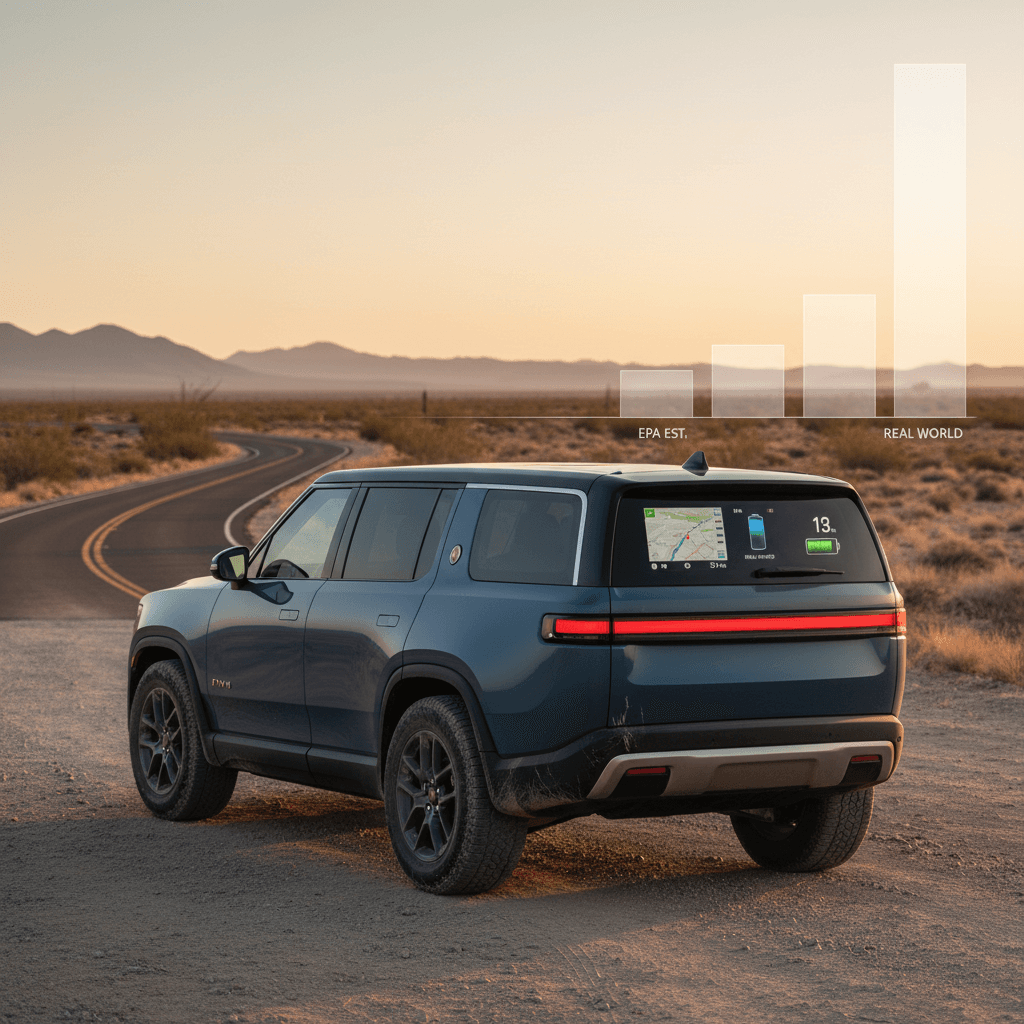
Independent testing has shown a consistent pattern with the R1S: it’s more efficient in mixed city driving than at steady high speeds. Car and Driver, for example, recorded only about 230 miles from a Quad‑Motor Large‑pack R1S in a 75‑mph highway test, versus an EPA combined rating in the low 300s for that configuration. That’s roughly a 25–30% gap between the label and real highway range.
What EPA range actually measures
- Mix of city and highway driving cycles
- Moderate speeds, gentle acceleration
- Controlled temperatures and loads
- Great for comparing EVs on a level playing field
What highway range tests measure
- Usually a steady 70–75 mph cruise
- Higher aero drag on tall SUVs like the R1S
- Often includes some elevation and wind
- Great for road‑trip reality checks
Use EPA as a ceiling, not a promise
How much range do you really get in a 2024 R1S?
Exact numbers depend on wind, temperature, grade, tires, and how you drive. But by triangulating Rivian’s own data, EPA labels, and independent 70–75 mph tests on similar configurations, we can outline realistic expectations for a 2024 R1S on 21‑inch road tires in decent conditions (50–75°F, light wind, relatively flat).
Realistic Rivian R1S range bands (highway‑heavy driving)
Approximate 70–75 mph range estimates for 2024 models in mild weather
Standard & Standard+ packs
- Standard (270 EPA): ~185–210 miles usable at 70–75 mph
- Standard+ (315 EPA): ~220–250 miles highway
- Best for: commutes & regional trips with dense fast‑charging
Large & Max packs
- Large (352 EPA): ~245–280 miles highway
- Max (400 EPA): ~280–320 miles highway
- Best for: frequent road‑trippers, mountain or winter driving
Quad‑Motor & Tri‑Motor caveat
Highway 75‑mph range testing: methodology
When you see a YouTube video or a magazine talk about a “range test” for the Rivian R1S, it’s worth checking how they tested. A well‑designed 75‑mph highway test tends to follow the same playbook so results across different EVs are comparable.
- Start near 100% state of charge, then join a freeway loop or point‑to‑point route.
- Set cruise control to a true GPS‑verified 70–75 mph.
- Use the same drive mode and climate settings across cars, usually All‑Purpose with 70–72°F cabin temp.
- Drive until the battery reaches a low but safe state of charge (often 0–5% indicated).
- Record miles driven, consumption (mi/kWh or Wh/mi), elevation change, and weather.
- Repeat in both directions or on a loop if possible, to average out wind and grade.
Cold‑weather testing is a different animal
Real‑world range by battery pack and wheels
Let’s pull it together and look at approximate usable highway range for popular 2024 Rivian R1S configurations. These aren’t lab numbers, they’re realistic planning figures for a steady 70–75 mph cruise, mild weather, and a typical 10% buffer (charging from ~90% down to ~10%).
2024 Rivian R1S: practical highway range estimates
Approximate 70–75 mph range in mild conditions, assuming 90% to 10% useable charge window.
| Battery & powertrain | Wheels/tires | EPA combined (mi) | Realistic 90–10% highway range (mi) | Who it fits best |
|---|---|---|---|---|
| Dual‑Motor Standard | 21" road | 270 | 180–190 | Daily drivers and regional commuters with frequent DC fast chargers. |
| Dual‑Motor Standard+ | 21" road | 315 | 215–230 | Families who road‑trip occasionally but live in dense charging corridors. |
| Dual‑Motor Large | 21" road | 352 | 245–265 | Ideal sweet spot for most R1S buyers balancing cost and highway range. |
| Dual‑Motor Max | 21" road | 400 | 280–300 | Long‑distance travelers, rural drivers, and heavy cold‑weather users. |
| Dual‑Motor Large | 22" road | 341 | 235–250 | Stylish setup; expect a modest but noticeable range penalty vs 21". |
| Dual‑Motor Large | 20" AT | 307 | 210–225 | Adventure build; range trade‑off for off‑road grip and stance. |
| Quad‑Motor Large (earlier gen) | 21" road | ~321 | 200–230 | Performance‑oriented buyers who value acceleration and traction over range. |
Use these numbers for trip planning, not as guaranteed outcomes. Terrain, temperature, and wind can shift them significantly.
Max pack isn’t always “required”
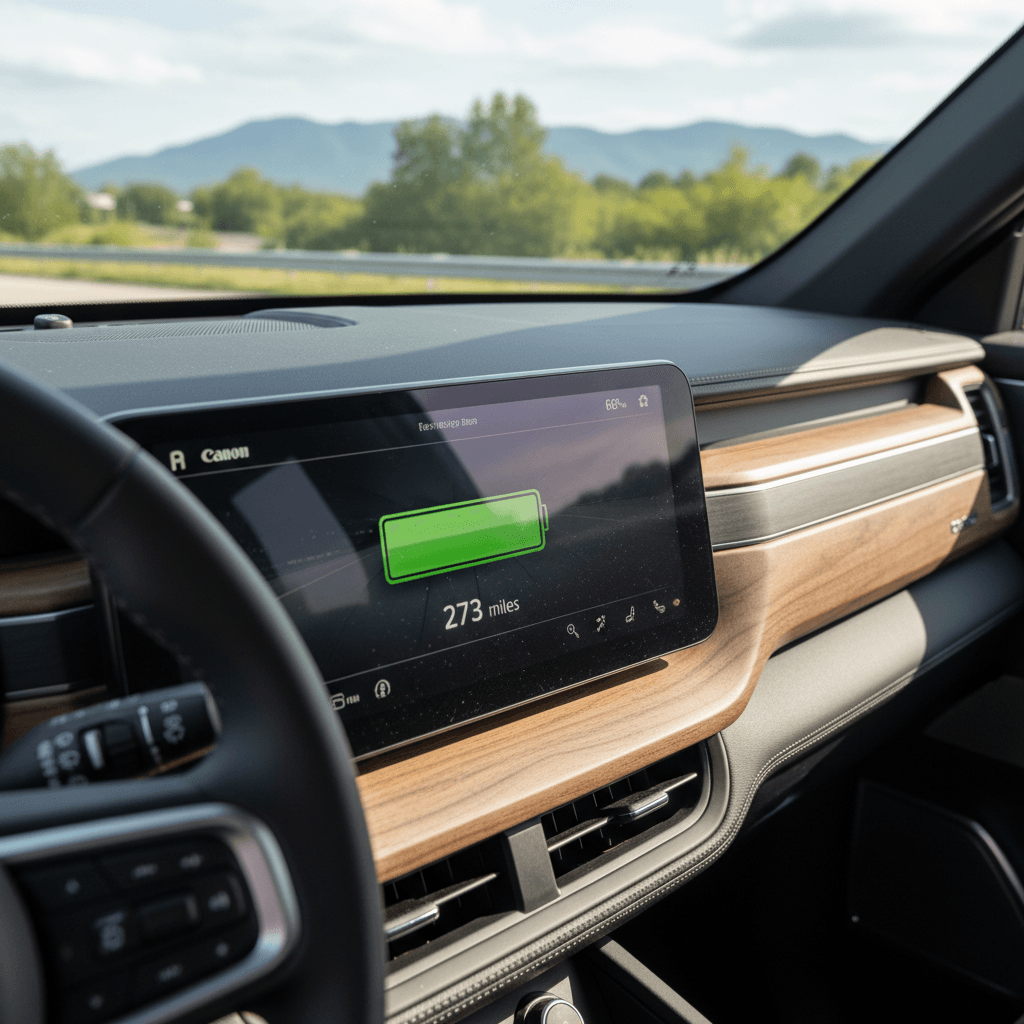
7 factors that kill (or boost) R1S range
What really moves the needle on R1S range
Some you control, some you don’t, but all are predictable once you know them.
1. Speed & aero drag
2. Temperature & HVAC
3. Elevation & grade
4. Tires, wheels & aero bits
5. Drive mode & suspension
6. Weight & payload
7. Driving style
Let the energy screen be your coach
Planning road trips in a Rivian R1S
Range tests don’t matter unless you turn them into a usable plan. The good news is that the R1S’s combination of big battery options and DC fast‑charging makes road‑tripping straightforward once you calibrate your expectations.
Onboard trip planning
- Use Rivian’s built‑in nav or apps like A Better Routeplanner.
- Assume 70–80% of EPA for highway legs when you set up a route.
- Target arriving with 10–20% battery, this gives margin for wind or detours.
- Plan to charge more often, but only to 60–75% for the quickest travel time.
Charging strategy
- Take advantage of high‑power DC fast chargers along major corridors.
- On a Max or Large pack, 150–200‑mile legs are usually the sweet spot.
- In winter or mountains, shorten legs by 20–30%.
- Always sanity‑check the nav’s prediction against what you’re seeing in the Energy app.
How Recharged can help on road‑trip‑ready R1S models
Buying a used Rivian R1S: what range to expect
Battery degradation is the wild card for any used EV, especially a large one like the R1S. The encouraging news so far is that Rivian’s packs appear to be holding up relatively well in early fleet data, with many owners reporting only modest capacity loss over the first several years. Still, your real‑world range will be shaped by both how the previous owner treated the pack and the configuration you choose.
Used 2024 Rivian R1S range expectations by scenario
How prior use and configuration translate into today’s range.
Low‑mileage, gently used R1S
- Mostly home‑charged, few DC fast‑charge sessions.
- Expect single‑digit % degradation in the first 3–4 years.
- Practical highway range may be 5–10% below a brand‑new 2024 with the same spec.
High‑mileage, DC‑fast‑charged R1S
- Frequent 100% fast‑charges, ride‑hail or heavy fleet use.
- Degradation could be meaningfully higher.
- Plan for a noticeable range haircut and verify with a battery health report before you buy.
Don’t rely on the dash number alone
This is exactly why Recharged built the Recharged Score: an independent, standardized battery and range assessment across used EVs. Instead of guessing how a prior owner’s habits affected a 2024 R1S, you see a transparent health rating, charge history indicators, and range expectations under real‑world conditions.
Checklist: getting the best range from your R1S
Range‑maximizing checklist for Rivian R1S owners
1. Start with the right tire setup
If you don’t genuinely need all‑terrain rubber, consider the 21‑inch road‑tire setup for better efficiency. Check pressures regularly, under‑inflation quietly eats range.
2. Dial‑in your drive mode for the route
Use Conserve or efficient highway‑oriented modes for long interstate stints, and avoid high ride heights unless you need them. Even a small aero gain helps on a tall SUV.
3. Plan legs with honest assumptions
When using route planners, plug in 70–80% of EPA range for highway legs and add extra buffer in extreme temperatures or mountains.
4. Treat 10–20% as your real “empty”
For comfort and pack longevity, plan your charging stops so you typically arrive with 10–20% remaining instead of pushing to 0%.
5. Charge for time, not for 100%
On road trips, stop more often and leave around 60–75% instead of waiting for a full charge. The R1S, and most EVs, charge fastest in the middle of the pack.
6. Use pre‑conditioning when it counts
In cold weather, pre‑heat the cabin while plugged in and pre‑condition the battery before DC fast‑charging. You’ll recover much of the energy you’d otherwise burn on the road.
7. Watch consumption, not just miles
Keep an eye on Wh/mi and the energy graph. If you see consumption creeping up due to headwinds or hills, shorten your next leg or slow down a bit.
2024 Rivian R1S range test FAQ
Frequently asked questions about 2024 Rivian R1S range tests
Key takeaways for 2024 Rivian R1S range
The 2024 Rivian R1S earns its reputation as a long‑legged electric SUV, but understanding how it behaves in real‑world range tests is the difference between a relaxed road trip and white‑knuckle hyper‑miling. Highway‑only driving at 70–75 mph will usually land you in the 70–80% of EPA window, with Large and Max packs delivering the most flexibility.
If you’re shopping new or used, focus less on the biggest number on the spec sheet and more on your actual use case: how far you drive between stops, where you’ll charge, and how often you face cold, hills, or towing. And if you’re considering a used R1S, a verified battery health and range report, like the Recharged Score that comes standard on every Recharged vehicle, turns range anxiety into a straightforward, data‑driven decision.