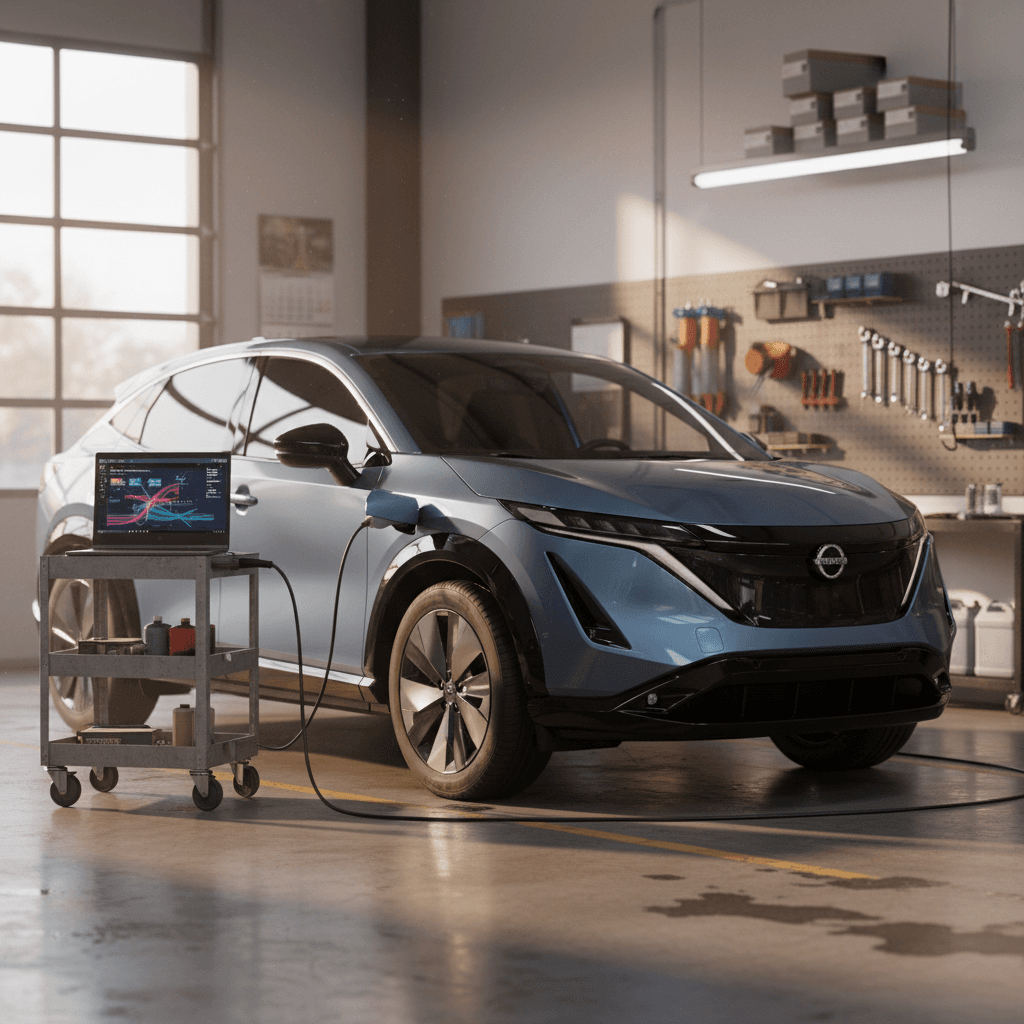
Ask ten Ariya owners what they spend on upkeep and you’ll hear a common refrain: **“Way less than my last gas SUV.”** But when you’re trying to budget real dollars, you need more than vibes. Let’s put hard numbers to the question of Nissan Ariya annual maintenance cost, and look at what you actually have to service on this EV from year to year.
Quick answer
How much does Nissan Ariya maintenance cost per year?
Let’s start with the big picture. Third‑party ownership cost models that include dealer service estimates put 2025 Nissan Ariya maintenance and repair around the mid‑hundreds per year over the first five years, roughly in the same ballpark as Kelley Blue Book’s estimate of about $570 per year for scheduled service and repairs on a new Ariya. That’s an average across early years when many services are covered and later years when more work comes due.
Nissan Ariya maintenance at a glance (U.S., 2025–2026)
Remember that averages smooth out a messy reality. For the first two or three years, many Ariyas are covered by Nissan’s EV maintenance plans or dealer “free maintenance” programs, which can drop your out‑of‑pocket costs below $200 per year. Once that coverage ends and big‑interval items like brake fluid and coolant come due, a given year might spike into the $600–$800 range, then fall back to a cheap year of inspections and a cabin filter.
Watch what’s included
What maintenance does a Nissan Ariya actually need?
The Ariya’s maintenance schedule looks almost boring next to a gas SUV. There’s no oil to change, no spark plugs, timing belts, or exhaust system. Instead, Nissan focuses on a short list of items that keep an EV safe and efficient:
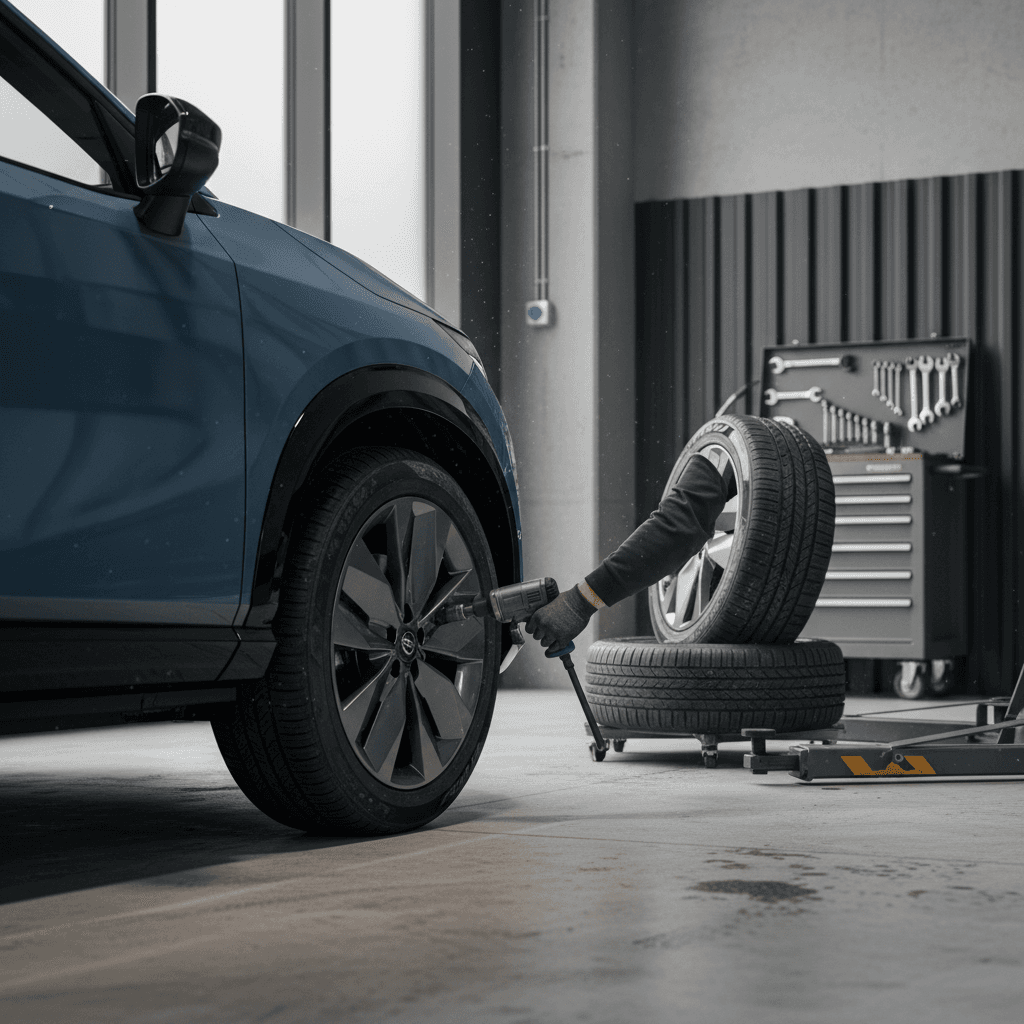
- Tire rotation and inspections – Typically every 7,500–10,000 miles or around once a year. Heavy EVs like the Ariya are tough on tires, so this matters more than in a small sedan.
- Cabin air filter – Swapped about every 15,000 miles or 1–2 years, depending on climate and dust.
- Brake fluid – Usually every 3–4 years or ~30,000 miles. Regenerative braking saves your pads and rotors, but the fluid still ages.
- Coolant for the battery and power electronics – Infrequent, long‑interval service (often 8+ years or high mileage) to keep the pack and inverter thermally healthy.
- General EV health checks – Software updates, visual inspections, suspension and steering checks, and occasional 12‑volt battery replacement.
Skip the “oil change” upsell
Nissan Ariya service intervals: time vs. miles
Nissan structures Ariya maintenance around a roughly 12‑month / 15,000‑mile cadence in many markets. In practice, U.S. dealers tend to call you in for service about once a year regardless of miles, then layer on specific items at mileage milestones.
Illustrative Nissan Ariya maintenance intervals (U.S., typical use)
Always confirm the exact schedule for your model year and region in the owner’s manual or NissanConnect app.
| Odometer / Time | Key items | What it usually means for your wallet |
|---|---|---|
| 7,500–10,000 miles / ~12 months | Tire rotation, multi‑point inspection | $80–$150 at a dealer; less at an independent shop. |
| 15,000 miles / ~1–2 years | Tire rotation, cabin air filter, inspections | $150–$300 depending on labor rates and cabin filter markup. |
| 30,000 miles / ~3–4 years | Brake fluid change, rotations, inspections | $250–$450 if done together at a dealer. |
| 60,000+ miles / ~6–8 years | Coolant service, brake fluid, filters, rotations | $400–$800 when major fluid jobs and inspections stack in one visit. |
Time‑based intervals often apply even if you drive very few miles.
Miles aren’t everything
Typical Nissan Ariya service prices by job
Service pricing is where things get squishy. A tire rotation that should be a $60 line item somehow balloons to $250 once a cabin filter and a “battery health check” are stapled on. Here’s a realistic snapshot of what Ariya owners in the U.S. are seeing at dealers and independent EV‑friendly shops in 2025–2026.
Common Nissan Ariya maintenance jobs and price ranges
Dealer pricing tends to sit at the upper end; independents at the lower end.
Tire rotation & inspection
Typical range: $60–$140
Quick job that keeps wear even on a heavy EV. Many shops bundle this with a multi‑point inspection.
DIY‑friendly if you have a jack, stands, and the patience.
Cabin air filter replacement
Typical range: $40–$160
Part often under $30 online; the spread is all labor and markup. Some owners change this in their driveway in 10–15 minutes.
Brake fluid change
Typical range: $120–$220
Usually needed every 3–4 years. The job is similar to a gas car but done less often because regen braking reduces heat and wear.
Battery & inverter coolant service
Typical range: $250–$500
Long‑interval job, think 8+ years, designed to keep the high‑voltage pack and power electronics in their comfort zone.
12‑volt battery replacement
Typical range: $180–$350
Every EV still relies on a modest 12‑volt battery. When it goes, so does your ability to "boot" the car.
“EV service” annual visit
Typical range: $150–$350
Often a bundle of tire rotation, inspections, and maybe a cabin filter. Read the itemized list to see what you’re truly buying.
Beware the mystery line item
EV vs. gas: how the Ariya saves you money on maintenance
Nissan as a brand doesn’t always top the charts for long‑term maintenance cost among gas vehicles, but the Ariya plays by EV rules. Most of the big‑ticket pain points in a typical SUV simply don’t exist here.
Where the Ariya is cheaper
- No oil changes – That’s $60–$100 every few months that simply disappears.
- Fewer wear parts – No spark plugs, timing belts, mufflers, or catalytic converters.
- Gentler brakes – Regenerative braking means pads and rotors can last shockingly long if you’re not tailgating every commute.
- Less diagnostic time – EV drivetrains are mechanically simpler, so techs spend less time chasing rattles inside a hot engine bay.
Where costs can sneak back in
- Tires – Heavier curb weight and instant torque chew through rubber faster than a compact gas car.
- High‑tech features – Panoramic roofs, motorized tailgates, and complex driver‑assist suites are still expensive to fix if something fails.
- Out‑of‑warranty electronics – The battery and drive unit are heavily protected early on, but long‑term outliers can be costly.
The big picture
How annual maintenance costs change as the Ariya ages
The Ariya’s maintenance graph doesn’t climb in a straight line. It comes in waves, cheap, cheap, slightly expensive, cheap again. Here’s how a “typical” pattern looks if you drive 12,000–15,000 miles per year and pay a shop for most work:
Illustrative Ariya yearly maintenance pattern
Years 1–2: Often subsidized
Factory coverage, EV‑specific maintenance plans, and dealer freebies mean you might only pay for a tire rotation or two, say $150–$300 per year out of pocket.
Years 3–4: Fluids start to matter
Brake fluid, filters, and more involved inspections bundle together. Plan for a $400–$600 year when these stack, followed by a cheaper year around $250–$350.
Years 5–7: The “steady state”
By now, you fall into a rhythm: one multipoint service per year, occasional filters, and whatever tire work you need. Many owners land around $350–$700 annually here, depending on tires and shop choice.
Years 8+: Coolant and aging hardware
Battery and inverter coolant, plus age‑related odds and ends, can push a particular year higher. The average can still stay reasonable if you’ve banked cheaper years early on.
Depreciation vs. maintenance
Nissan Ariya maintenance costs owners aren’t expecting
If there’s a villain in the Ariya maintenance story, it’s rarely a blown battery pack. It’s the mundane stuff owners expect to be cheap and then discover…isn’t.
- Tires for a heavy EV – A set of quality all‑season tires in 19–20 inch sizes can easily run $900–$1,300 installed. If you’re enthusiastic with the right pedal, expect to be on the low end of the tread‑life range.
- Dealer markups on simple jobs – Reports of $250–$300 bills for a tire rotation and cabin filter are not rare. You’re often paying for convenience, a nice waiting room, and a branded floor mat.
- 12‑volt battery surprises – When the small battery gets weak, the Ariya can act up in ways that feel bigger than they are. Budget for a replacement around the mid‑years of ownership.
- Region‑specific service intervals – European and Canadian Ariya owners sometimes see different time/mileage recommendations, which can mean more frequent visits than U.S. drivers expect.
Warranty fine print still applies
Ways to lower your Ariya’s annual maintenance cost
The Ariya starts with a low maintenance floor; smart habits just make the math friendlier. You don’t have to wrench in your driveway to keep yearly costs under control, although that certainly helps.
Practical ways to keep Ariya maintenance costs in check
Pick the ones that fit your comfort level and driving style.
1. Separate “need” from “nice to have”
Before you sign a repair order, compare the list to the Nissan EV maintenance schedule. Politely decline fuel‑system cleaners, engine treatments, or anything that assumes there’s a combustion engine under the hood.
2. Price shop beyond the dealer
Plenty of independent shops now advertise EV service. For rotations, filters, and 12‑volt batteries, an EV‑savvy independent can save you 20–40% compared with big‑brand dealers.
3. Drive like your tires count
Smooth acceleration and keeping your tire pressures in spec do more for long‑term costs than almost anything else. Tires are the one maintenance line item that can absolutely erase the EV savings if you’re hard on them.
4. DIY the easy stuff
If you’re comfortable popping a glovebox and using basic tools, cabin filters and wiper blades are low‑risk DIY projects. Many Ariya owners handle these at home and let the pros tackle brake fluid and coolant.
5. Use free maintenance while it lasts
Many new Ariyas were sold with multi‑year tire rotation and cabin‑filter packages. Set reminders in your phone or app so you’re not leaving “free” maintenance on the table.
6. Track costs year by year
A simple spreadsheet or notes app that logs each service visit keeps you honest about what you’re really spending, and makes it easier to spot upsells creeping into the bill.
Maintenance history and the Recharged Score
If you’re shopping used, the Ariya’s low maintenance appetite is only half the story. The other half is whether the previous owner actually fed it on time. That’s where documentation, and Recharged, come in.
Why service records matter
- Verified brake‑fluid and coolant changes show the high‑voltage system has been cared for.
- Consistent tire rotations hint at even wear and less risk of premature replacement.
- Documented software updates and recalls reduce your odds of chasing gremlins later.
How Recharged helps Ariya shoppers
Every used EV sold through Recharged comes with a Recharged Score Report that goes beyond a generic Carfax. We verify battery health, cross‑check service records when available, and sanity‑check pricing against the market so you understand the real cost of ownership before you click “buy.”
If you’re trading in an Ariya, a clean maintenance story can help your car stand out and support a stronger offer.
Thinking about a used Ariya?
Ready to find your next EV?
Browse VehiclesFAQ: Nissan Ariya annual maintenance cost
Frequently asked questions about Ariya maintenance costs
The Ariya’s great party trick isn’t just that it runs on electrons; it’s that it asks for comparatively little in return. A handful of inspections, a few fluid changes spaced over many years, and some thoughtful tire care are the pillars of its maintenance story. If you budget for those modest, predictable costs, and verify the history when you shop used, you can enjoy an EV that’s both serene to drive and pleasantly uneventful to own.